
In the same week that UNABOMBER remained Netflix’s most-watched film worldwide, growing from 16.4 million to 24.9 million views, Monster: The Lizzie Borden Story still ranked second among English-language series after leading the global chart for two weeks. The coincidence helps confirm something streaming platforms have known for a long time: true crime is not a passing trend, nor does it belong exclusively to Netflix. It responds to an almost universal behavioral curiosity.
Ted Kaczynski and Lizzie Borden could hardly be more different. He was a late-20th-century domestic terrorist who was identified, arrested, and convicted of a series of bombings. She was a woman from Victorian New England who was acquitted of murdering her father and stepmother but condemned forever in the popular imagination. Even so, productions built around both cases ask similar questions. At what point did that person become capable of killing? Were there signs? Did the family notice? Could society have prevented it? Above all, is there an explanation capable of reassuring us?

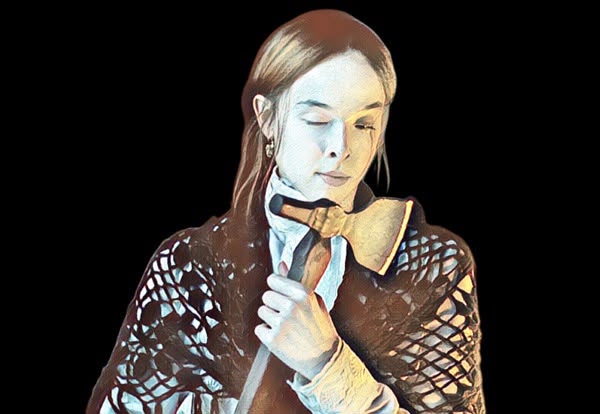
That promise is precisely what keeps true crime alive. We watch because real crime offers us a kind of behavioral laboratory in which we believe we can observe evil from a safe distance. We search for childhood experiences, trauma, humiliation, family relationships, contradictions, and small gestures that, once arranged after everything has happened, appear to form an inevitable path. The important word, however, is “after.” Once we already know about the crime, every earlier detail risks being transformed into an omen.
Netflix Did Not Invent the Fascination, but It Learned How to Organize It
Netflix has turned true crime into one of its most recognizable languages. Making a Murderer helped create the feeling that viewers were not merely an audience but investigators. The Keepers, Night Stalker, The Tinder Swindler, American Murder, The Staircase, and the various productions about Ted Bundy, Jeffrey Dahmer, and the Menendez brothers have kept the genre in constant circulation, alternating between documentaries, dramatizations, and hybrid formats.
Ryan Murphy’s Monster anthology took the formula one step further by turning criminals and historical cases into recurring characters in pop culture. After Dahmer and the Menendez brothers, Lizzie Borden returned not only as the suspect in an unsolved crime but as the protagonist of a narrative that combines facts, theories, invention, and contemporary interpretations. That is precisely where the danger lies: the more polished and well-acted the series is, the easier it becomes to forget where documentation ends, and fantasy begins.
The platform itself has perfected a system of continuity. Viewers finish a dramatized series and are immediately offered documentaries, interviews, ending explainers, timelines, and other similar stories. True crime stops being an isolated title and becomes an endless corridor. One crime leads to another because they all promise the same reward: perhaps this time, we will finally understand.


The Genre Is Everywhere
HBO had already demonstrated the power of this obsession with The Jinx, whose narrative became part of the Robert Durst case itself. I’ll Be Gone in the Dark followed not only the investigation into the Golden State Killer but also Michelle McNamara’s obsession with identifying him. Max dramatized The Staircase, a story that had already been examined for years in documentary form, proving that the same case can be retold repeatedly because each version promises access to a different truth.
On Hulu, and through Disney+ in several markets, The Act reconstructed the case of Gypsy Rose Blanchard, while Under the Bridge revisited the murder of teenager Reena Virk. The Girl from Plainville examined Michelle Carter’s emotional and legal responsibility for Conrad Roy’s death. Peacock turned Dr. Death into a franchise; Apple TV found a combination of thriller, investigation, and psychological profiling in Black Bird; Prime Video approached Ted Bundy through the women who knew him in Ted Bundy: Falling for a Killer. On MGM+, American Hostage revived a kidnapping in which the criminal used a radio broadcast to negotiate, manipulate the audience, and construct his own public narrative.
The styles and platforms may differ, but the mechanism remains recognizable. We want to know who lied, who realized the truth too late, which detail was overlooked, and whether we would have recognized the danger. True crime turns the audience into a jury, a detective, a psychologist, and sometimes an unwitting accomplice to the spectacle.


The Fantasy That We Can Recognize Evil
On some level, consuming true crime is an attempt to gain control. Real crime confronts us with chance, unexpected violence, and the possibility that seemingly ordinary people may be hiding something terrible. By reconstructing events, we try to restore order. If there is a clear cause, a pattern, or an identifiable behavior, then perhaps the danger can be predicted.
That is why criminal profiles are so fascinating. It is not enough to know what happened; we want to know who that person “really was.” The question may appear objective, but it carries a reassuring fantasy: the belief that monsters are always recognizable. When a production presents a traumatic childhood, increasing isolation, humiliation, or obsession, we feel that we have found the missing piece. The problem is that millions of people live through similar experiences without becoming killers, while many criminals do not fit the perfect psychological narrative that film and television would like to construct.
There is also a difference between understanding and justifying. Investigating how someone was psychologically formed does not mean absolving them, but entertainment frequently makes that boundary uncomfortably vague. The more time we spend with the criminal, the greater the risk that their intelligence, pain, or charisma will take center stage while their victims are reduced to the event that made the story possible.
Why Do So Many Women Watch?
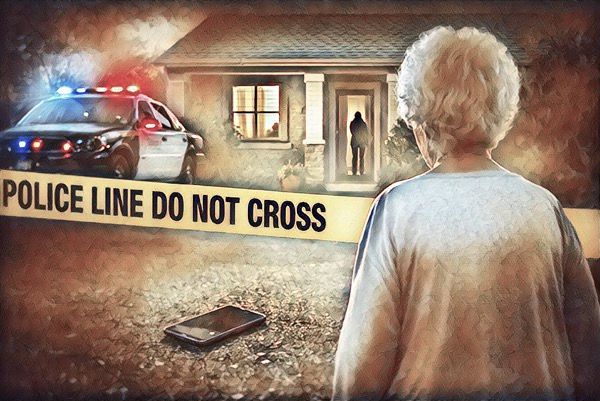
Research and interpretations of the true crime audience frequently point to its strong female presence. The most common explanation is that many women consume these stories as a form of education: they want to recognize signs of abuse, manipulation, and violence, understand how victims were drawn into certain situations, and imagine how they themselves might escape.
There is some logic to that idea, but the answer cannot be reduced to a kind of survival manual. Women have also grown up being taught to manage risk, distrust strangers, observe escape routes, tell others where they are going, and quickly interpret the moods of the men around them. True crime organizes fears that already exist. It gives names, faces, and conclusions to diffuse threats, allowing the viewer to experience danger with the guarantee of being protected on the other side of the screen.
Even so, the promise of learning can be deceptive. Many crimes happen inside the home, involve people the victim knows, and do not present the clear warning signs that narratives emphasize afterward. The genre offers a sense of preparedness, but it can also feed paranoia, reinforce stereotypes, and create the impression that every tragedy could have been prevented if someone had simply paid closer attention.

When the Victim Disappears Again
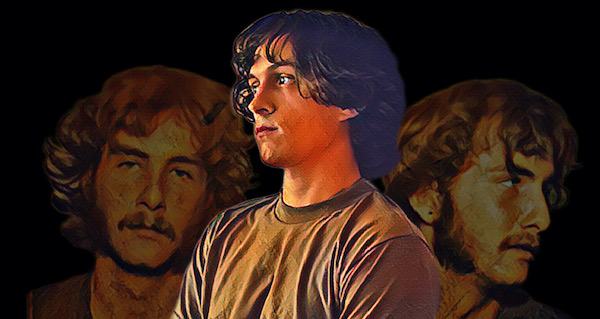
True crime’s greatest ethical problem arises when the story begins to belong more to the platform, the producer, the actor, and the audience than to the people who lived through it. Families discover that their trauma will be dramatized without their involvement, victims receive only a few minutes of context, and criminals are given prestigious performances, publicity campaigns, and a new generation of admirers.
Netflix was particularly criticized for this imbalance in Dahmer. The series intended to restore humanity to the victims, but Jeffrey Dahmer remained the face, the name, and the central object of fascination. The same risk appears whenever the question “How could someone do this?” takes up so much space that we stop asking who suffered, who survived, and who must relive the worst moment of their life because a platform decided to turn it into content.
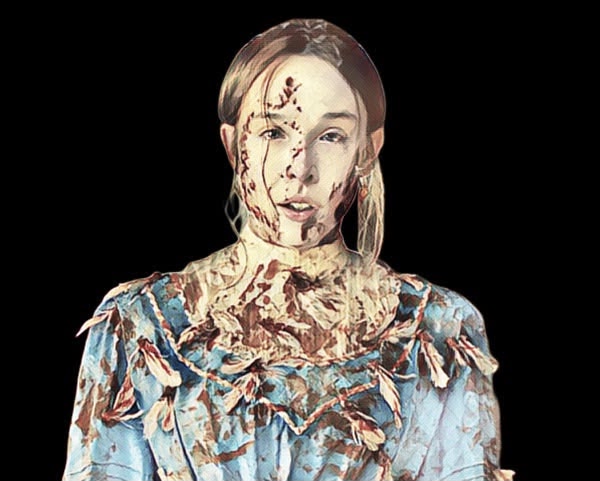
Lizzie Borden presents another complication. Because she was acquitted and the crime remains unsolved, any production must choose between preserving the uncertainty and giving the audience the satisfaction of an answer. Fiction usually prefers the second option. The mystery is commercially powerful, but an invented solution is dramatically more comfortable.
The Mirror Is Not the Criminal. It Is Us
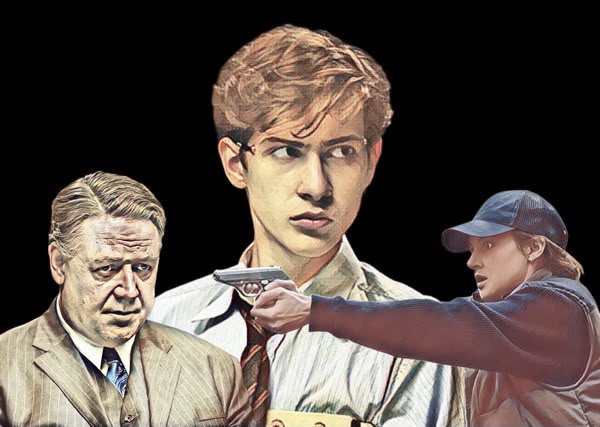
The power of true crime does not come only from horror, mystery, or morbid curiosity. It comes from our need to find causality where there is chaos. We like to believe that, if we look carefully enough, we will understand the criminal, protect the victim, and recognize the danger before it crosses the threshold.
That is why the genre survives changes in platforms, formats, and generations. Before streaming series, there were books such as Truman Capote’s In Cold Blood, sensationalist newspapers, trials turned into public spectacles, and crowds drawn to executions. Technology changed the means of distribution, not the impulse itself.
The simultaneous success of UNABOMBER and Monster: The Lizzie Borden Story confirms that true crime remains a universal language because it offers two things we rarely find in real life: an organized narrative and the promise of an explanation. Perhaps what keeps us watching is not only the desire to understand evil, but the hope that evil can, in fact, be understood. And if it can be understood, perhaps it can also be recognized, controlled, and kept at a safe distance.
Descubra mais sobre
Assine para receber nossas notícias mais recentes por e-mail.

