
What do an American family that held its own children captive, a racist Instagram account, Joan of Arc, and a mother who managed to lift a car to save her son have in common? Apparently, nothing. But Mike Flanagan found connections between these stories to create his new adaptation of Stephen King’s Carrie, which premiered on Prime Video in October 2026. What’s most surprising is that some of the events that seem invented for the series actually happened, while others belong to the world of urban legends that the director decided to incorporate into his mythology of telekinesis.
Stephen King’s novel, published in 1974 and immortalized on screen by Brian De Palma in 1976, has always been a story about abuse, isolation, religious fanaticism, and teenage cruelty. The supernatural serves as an extreme consequence of everything Carrie White suffers at the hands of her mother and classmates. Fifty years after the film, Flanagan needed to find a way to update this tragedy without simply repeating what we already knew. To do so, he started with a rather disturbing question: what would it mean to grow up completely isolated from the world in a society where everyone seems permanently connected?
The Turpin Family and the Horror of Growing Up in Captivity
The answer came from a real crime that shocked the United States in January 2018. In Perris, California, David and Louise Turpin kept their 13 children in appalling conditions of abuse, food deprivation, violence, and confinement. Some were chained to their beds. The case was uncovered when one of their daughters, aged 17, managed to escape through a window and call the police, revealing a reality that had remained virtually invisible to the neighbors.
What made the case even more terrifying was the apparent normality of the house. This wasn’t an isolated property in some remote location, but a home in a contemporary American city, surrounded by other families. How could so many children and young adults grow up deprived of contact with the outside world without anyone noticing the extent of what was happening inside? In 2019, the parents pleaded guilty to 14 criminal charges each, involving 12 of their children. The youngest was not included in the charges.
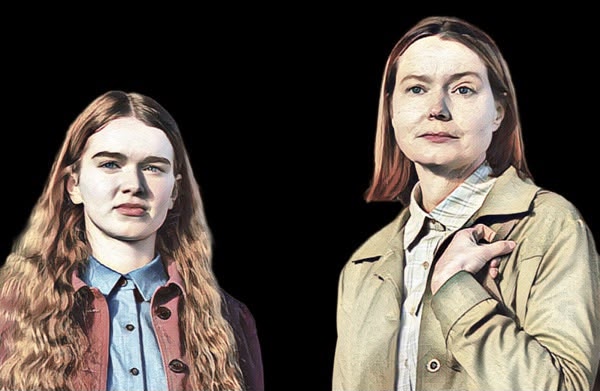
Flanagan confirmed that the Turpin case was a direct inspiration for his adaptation and is even mentioned in the pilot episode. The most important difference from the novel is that his Carrie never attended school until high school. She grew up under the absolute control of her mother, Margaret White, without the social experiences that might have prepared her to interact with other people. Her ignorance of how the world works isn’t simply teenage innocence, but the consequence of a deliberately restricted existence.
This choice makes Margaret’s abuse even more frightening. We tend to associate domestic violence with physical aggression, but isolation is also a brutal form of control. Preventing someone from meeting other people, accessing information, and developing autonomy means denying them the very tools necessary to recognize their own situation. Carrie doesn’t fully understand what has been taken from her because she has never had the opportunity to experience another way of living.
Albany, 2017: When Bullying Poisoned an Entire Community
If the Turpin case helped Flanagan explain the horror inside Carrie’s home, another real-life event inspired what she encounters when she finally steps outside.
In 2017, at Albany High School in California, the discovery of a private Instagram account triggered a crisis that extended far beyond the school environment. Created by one student and followed by just over a dozen classmates, the account featured racist and sexist posts, offensive images, and attacks directed at other students, particularly Black girls. Many of those involved knew one another personally, and some were friends.
When the posts were discovered, the situation quickly escalated into a collective conflict. There were protests, disputes over disciplinary measures, lawsuits, and deep divisions among students, parents, and teachers. What had initially been an act of aggression confined to a small group ended up involving an entire community, revealing how digital violence can continue to have consequences long after an image has been posted.
Journalist Dashka Slater investigated the case for five years and published Accountable: The True Story of a Racist Social Media Account and the Teenagers Whose Lives It Changed in 2023. Her work examines not only the victims’ suffering but also the behavior of those responsible for the posts, those who followed the account, and the adults who tried to manage the consequences. There is no confirmation that Flanagan specifically used the book, but he identified the Albany case as one of the central references for his series.
The director realized that this was the key to updating the bullying in Carrie. Teenage cruelty was already at the heart of King’s novel, but the way it operates has changed profoundly. Humiliation that once took place in locker rooms or school hallways can now be recorded, shared, and turned into a spectacle. The victim is no longer confronted only by those who witnessed the aggression but must live with the possibility that the images will circulate indefinitely.
The case also raises an important question about collective responsibility. Not everyone involved needs to create an offensive post to participate in the violence. Some encourage it, those who share it, those who watch silently, and those who join the persecution because they are afraid of becoming the next targets. This is precisely the dynamic Flanagan seeks to develop among Carrie’s classmates, offering different perspectives without necessarily justifying their choices.
Columbine and the Generation That Grew Up Fearing School Shootings
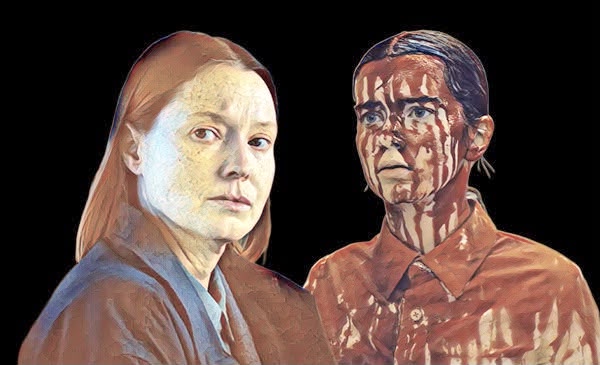
The modernization also incorporates another aspect of the American teenage experience: the fear of school shootings. On April 20, 1999, the Columbine massacre in Colorado left 12 students and one teacher dead, along with the two perpetrators. The tragedy became a defining moment in discussions about school safety in the United States, although, unfortunately, it would not be the last.
In the decades that followed, particularly after the Sandy Hook massacre in 2012, active shooter drills became part of everyday life for many American students. Children learn procedures for hiding, locking doors, and responding to the possibility of an armed attacker entering their school. It is an experience that previous generations simply did not face with the same frequency.
Flanagan explained that his concern with this reality is also personal. Watching his own children go through school, he realized that today’s teenagers live with fears and pressures different from those that shaped his youth. While writing Carrie, he consulted young people and sought to better understand a generation accustomed both to permanent exposure on social media and to the possibility of violence inside the classroom.
Columbine was not identified by him as an event specifically recreated in the series, but it is part of the historical context that transformed the American school experience. And that is a fundamental difference from 1974. King’s horror remains recognizable, but the world surrounding Carrie has become even more threatening.
The Mother Who Lifted a Car and the History of Extraordinary Women
The real-life references, however, are not limited to abuse and school violence. Flanagan also researched historical events and urban legends that could be interpreted as possible manifestations of telekinesis. In an interview with Letterboxd, he explained that the writers’ room looked for stories that already existed and added a supernatural interpretation to them.
One of the best-known incidents took place in Georgia in 1982. Angela Cavallo reportedly managed to lift part of a Chevrolet Impala when the vehicle fell on her son Tony while he was working on repairs. According to accounts, she held up the weight of the car while neighbors helped free him.
The incident became a famous example of so-called hysterical strength, a term used to describe extraordinary displays of physical force during emergencies. Similar stories have been reported in different countries, although their circumstances and the exact amount of force involved are difficult to verify scientifically.
For Flanagan, the appeal lay precisely in the possibility of reinterpreting a familiar story. What if that mother had briefly manifested an ability that normally remained dormant? What if other seemingly inexplicable events were also connected to people with abilities similar to Carrie’s?
The series turns these questions into a kind of genealogy of telekinetic powers, connecting different women throughout history. It is a significant expansion of King’s universe, built around the idea that telekinesis might be hereditary.
The 12-Day Traffic Jam in China
Another episode Flanagan drew upon took place in August 2010, when a monumental traffic jam brought a highway in China to a standstill. Heavy traffic, truck movements, and road construction contributed to a line of vehicles stretching approximately 100 kilometers. The situation lasted around 12 days, forcing drivers to endure long periods with virtually no movement.
The story sounds absurd, but the traffic jam really happened. What did not happen was the supernatural manifestation added by the series: a woman who, while attempting to meditate to endure the desperate situation, begins levitating above her car.
Flanagan explained that he preserved the historical elements of the event and changed only its outcome, imagining what might happen if someone under such extreme pressure manifested a telekinetic ability. It is a curious way of transforming an everyday occurrence, however extreme, into part of a fantasy mythology.
Joan of Arc and Women Persecuted Throughout History
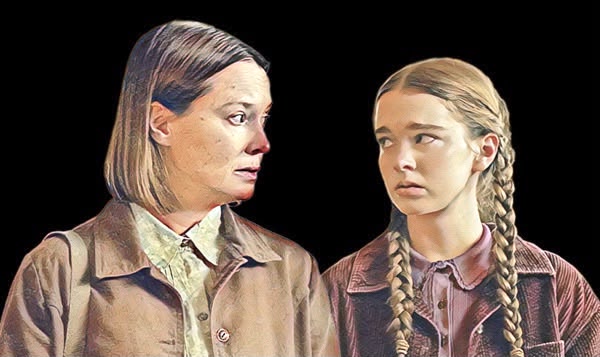
Among the historical references is Joan of Arc, who lived in 15th-century France and claimed to receive guidance from divine voices. Her participation in the Hundred Years’ War, her trial for heresy, and her execution in 1431, at the age of 19, are part of a documented life that has resonated through the centuries, eventually turning her into a religious and political symbol.
Flanagan is not suggesting that Joan actually possessed telekinetic powers. His proposal is to imagine her within a fictional universe in which women capable of extraordinary feats might have been regarded as saints, witches, or threats to the established order.
The team also researched stories of women accused of witchcraft, an especially interesting association when we consider how women who challenged social norms or were perceived as different were treated. The Salem witch trials of 1692, during which 20 people were executed in Massachusetts, are among the best-known examples of such persecution, although there is no confirmation that Flanagan specifically used those events.
The director also revealed that he researched the legend of the Mothman, a creature associated with alleged sightings in Point Pleasant, West Virginia, during the 1960s. The story ultimately did not make it into the season, but it demonstrates the scope of the research conducted by the writers.
The idea is to imagine that some legends passed down through generations might conceal stories of women with extraordinary abilities, whose manifestations were interpreted according to the beliefs and fears of their time. The connection to Carrie is obvious: Margaret White also attempts to explain her daughter’s powers through her religious convictions, treating what she cannot understand as a spiritual threat.
The “real” cases of telekinesis mentioned in Carrie
Alongside its contemporary references, Carrie revisits names from the history of investigations into alleged paranormal phenomena. These women existed, and their cases sparked curiosity, controversy, and researchers’ interest. That does not mean their powers were proven.
In France, Angélique Cottin became known as the “electric girl” in 1846, when she was 14. According to accounts, furniture and objects moved in her presence. The case attracted the attention of scientist François Arago, but the investigations did not establish the existence of a paranormal force. Movements produced by the teenager herself were among the explanations considered.
Italy’s Eusapia Palladino became one of the most famous mediums of the late nineteenth and early twentieth centuries. During séances, movements and levitations of tables and objects were attributed to her. Researchers investigated her; she gained supporters, and she was also caught using tricks — a contradiction that followed her throughout her fame.
Polish medium Stanisława Tomczyk, studied by psychologist Julian Ochorowicz from 1908 onward, became known for demonstrations of the supposed levitation of small objects, including a pair of scissors. The identification of fine threads between her hands fuelled criticism and offered a physical explanation for these manifestations.
Annemarie Schaberl, a 19-year-old employee at a German law office, was associated with the so-called Rosenheim poltergeist in 1967. Parapsychologist Hans Bender attributed electrical disturbances and movements of objects to the young woman’s alleged unconscious psychokinesis, linked to her emotional tensions. Both his interpretation and the investigation’s methods were challenged.
In the Soviet Union, Nina Kulagina, also known as Ninel Kulagina, gained recognition from the 1960s onward through filmed demonstrations in which small objects appeared to move without contact. Her case attracted Soviet and Western researchers, but it did not establish reliable scientific proof of telekinesis.
The reference to Isabel Rodríguez adds religious persecution to this collection. Her torture by the Inquisition was depicted in a print published in El Libro Rojo in 1870. The image documents a historical representation of that violence; on its own, it does not establish an accusation of witchcraft or any connection to telekinetic powers.
In Carrie, these references bring the fantasy closer to a past in which women were surrounded by suspicion, examined or persecuted. The historical records exist. The power to turn suffering and anger into a force capable of moving objects belongs to fiction.
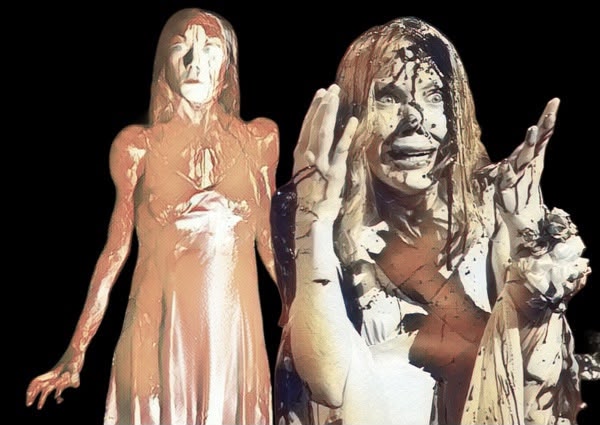
The Real Horror Remains Human
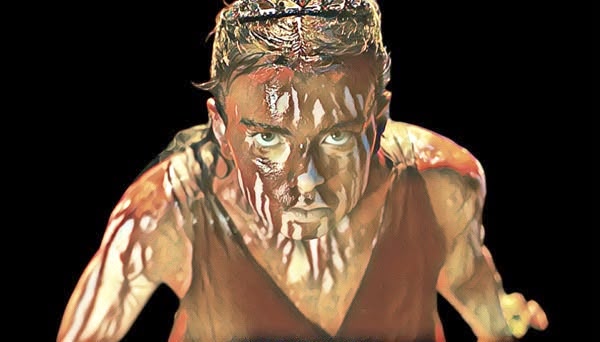
It is fascinating to see how Flanagan built his adaptation along two seemingly different paths. On one hand, he researched real crimes and contemporary experiences to show how isolation, domestic violence, and bullying remain devastating. On the other, he revisited historical events and legends to suggest that Carrie’s abilities might belong to a much larger story.
But there is a connection between these two approaches. In all of them, we encounter people subjected to extreme circumstances, victims of persecution, or individuals confronted with situations that seem impossible to endure. Telekinesis is the fantastical explanation Flanagan adds to some of these stories, but the violence, fear, and suffering surrounding them are entirely real.
Stephen King published Carrie in 1974, when social media did not exist and the terror of school shootings was not yet part of everyday American school life in the way we know it today. Even so, the essence of his story remains extraordinarily relevant. Carrie White is still a girl who does not fully understand her own body, does not know how to defend herself against the world, and discovers her abilities amid humiliation and abandonment.
Fifty years after Brian De Palma, Flanagan has found real-life events to demonstrate that this tragedy remains possible, even without supernatural powers. Perhaps that is precisely what makes his update so disturbing: we can debate whether a woman could lift a car with the power of her mind, but we do not need to imagine what happens when a family holds its children captive or when teenagers turn the humiliation of their classmates into entertainment.
Those things have already happened. And they needed nothing supernatural to be terrifying.
Descubra mais sobre
Assine para receber nossas notícias mais recentes por e-mail.

