
This review contains spoilers for the first season.
I finished Mike Flanagan’s Carrie feeling torn. My assessment is more positive than negative: there is an excellent cast, performances that carry even the choices that bothered me, and a very well-crafted update of the bullying. But I also found a story that, at certain points, strays so far from the original that I had to ask myself how much of that tragedy was still there.
I am a purist, I admit it. That does not mean an adaptation needs to repeat every scene, especially when Brian De Palma’s 1976 film already holds such a powerful place in our collective memory. What interests me is the effect of the changes. Some deepen what Stephen King wrote. Others alter the nature of the conflict. Flanagan does both, which is why I did not come away with a simple answer.
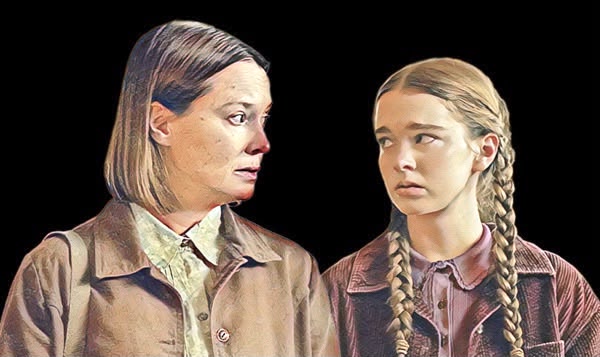
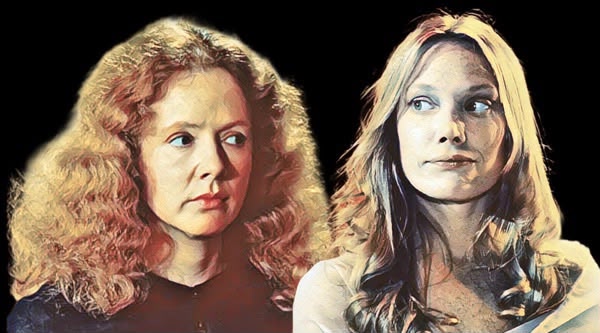
The update works particularly well when it examines cruelty among teenagers. Bullying acquires different forms, causes, consequences, and a reach that does not end when the victim leaves school. There is humiliation in person, followed by its reproduction online, where an embarrassing moment can be replayed, shared, and turned into entertainment. The series also follows those who participate, those who look away, and those who try to make amends.
Chris Hargensen, played by Alison Thornton, is one of its greatest successes. The antagonist inspires the anger she always did, but now we understand much better how she got there. Giving her cruelty context does not make her any less responsible for it. She is a more fully developed character, and that improves the story. Billy Nolan, played by Arthur Conti — John Travolta’s role in the film — also gets more room, while Siena Agudong does a solid job as Sue Snell, immortalized by Amy Irving.
The entire young cast works, as does the adult ensemble. Expanding the teachers’ roles and the relationships around Carrie helps make this feel like a school inhabited by people with their own interests and limitations. I think this story could have been told in six episodes. Eight give the characters room, but also leave the impression that some detours exist to prolong the journey.
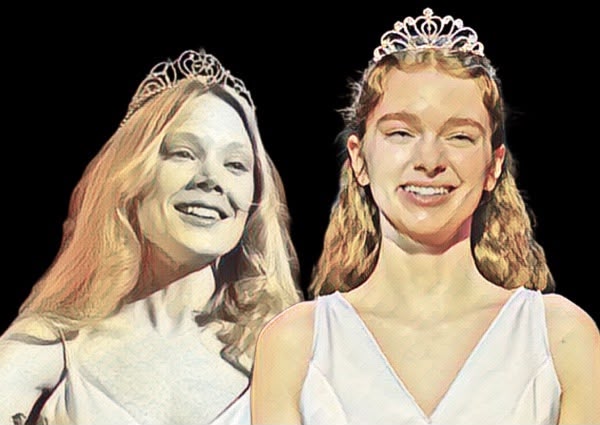
Summer H. Howell deserves special praise. Her Carrie combines innocence, strength, vulnerability, and a very particular difficulty understanding the world. The actress avoids imitation and clichés: she creates a girl who interests us before she frightens us. That is no small achievement in a role so closely associated with Sissy Spacek.
The Mother Gets Context, but the Conflict Changes
Samantha Sloyan, as Margaret White, is also outstanding. Her performance is one of the best reasons to watch the series. My reservation concerns the character’s development and the change in her relationship with her daughter.
Flanagan shifts some of the weight of religious obsession toward a paranoia we recognize today: conspiracy theories, distrust of institutions, fear of the government, and a need to control her daughter’s contact with the world. There is plenty of relevance in that choice. Domestic isolation and permanent suspicion can create a prison as tangible as one imposed by fanaticism.
The problem is how this woman begins to operate outside it. Margaret kept Carrie away from society and technology, but when she needs to act, she seems perfectly comfortable with phones, cameras, social media, and livestreams. Carrie barely knows what a computer is, while her mother quickly masters tools that their isolated life seemed to reject. I understand that forbidding her daughter to use something does not mean she knows nothing about it herself. Even so, I wanted a transition that made that difference more convincing.
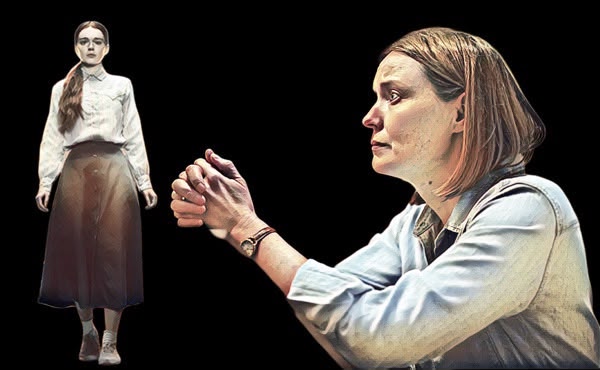
More consequential is Margaret’s transformation into a mother who takes on the world to defend Carrie. She remains controlling and capable of violence; religion does not disappear entirely, either. But the space given to protection changes the weight of repression. At several points, I see an objectionable, authoritarian, overbearing woman who also fights for her daughter.
In the original, home is an essential part of the horror. Carrie suffers at school and returns to a mother who may punish her for things she does not understand and things that are not her fault. Her body, her sexuality, and her powers are all entangled with fear and shame. Repression at home contributes to the explosion.
That is why I do not think updating Margaret required reducing the weight of religious fanaticism so much. It remains entirely plausible in the present. Distrust of institutions could have been added to religion, preserving that suffocating dimension. I wanted to understand the mother better without Carrie finding so much protection in her along the way.
Chris demonstrates that this was possible: she gains context and remains an antagonist. Margaret also gains context, but her function shifts in a way that changes my experience of the story. The complexity is welcome; the reduction in the fear she inspires in her daughter leaves me torn.
The Supernatural Mystery That Seems to Belong to Another Series
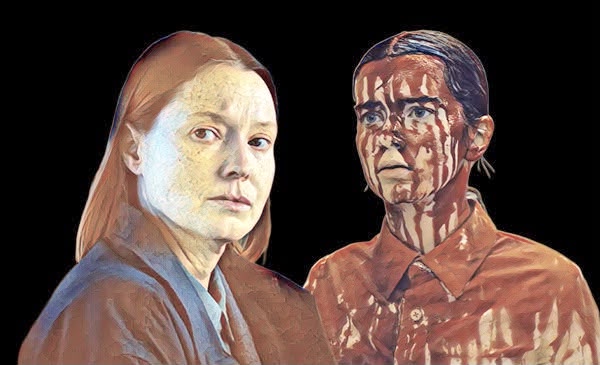
I also struggled with Emaline, played by Thalia Dudek. The presence of this supposed friend, who seems to exist only for Carrie, produces an effect reminiscent of Fight Club: we have to reconsider what we saw and who was actually present in that relationship.
A distinction is necessary here: the ending explains Emaline as someone capable of astral projection, rather than simply an imaginary friend who would allow us to diagnose Carrie. She intervenes in the massacre and later appears physically to take her away. The mother also manifests powers, using them to protect herself when the house collapses.
The explanation answers some of the questions, but does not resolve my discomfort with the choice. Why add this intermediary to Carrie’s relationship with her own strength? The story already contained enormous tension between a repressed girl and the possibility of no longer being powerless. Having another character direct part of the violence changes that tension.
The figures investigating her powers take the story even further off course. Flanagan explained to Entertainment Weekly that he created a society of women with psychic abilities, led by Adelaide, played by Kate Siegel. The idea draws on King’s wider universe without directly adapting The Institute.
I understand the intention. But while watching, I felt these characters were opening up another story when I still wanted to follow this one. Who are they, what do they want, and why does Carrie need to become part of this struggle? The curiosity is there, but I do not think it automatically improves the tragedy that brought the audience this far.
An Impressive Massacre, with Unclear Escapes
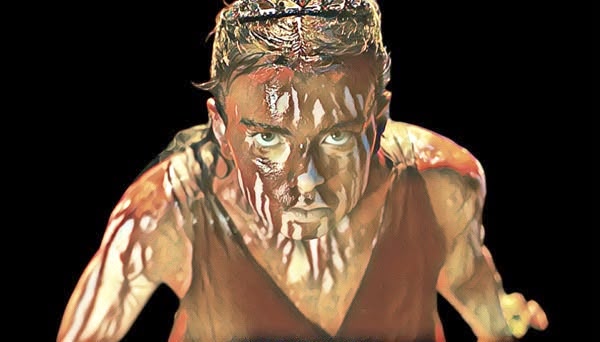
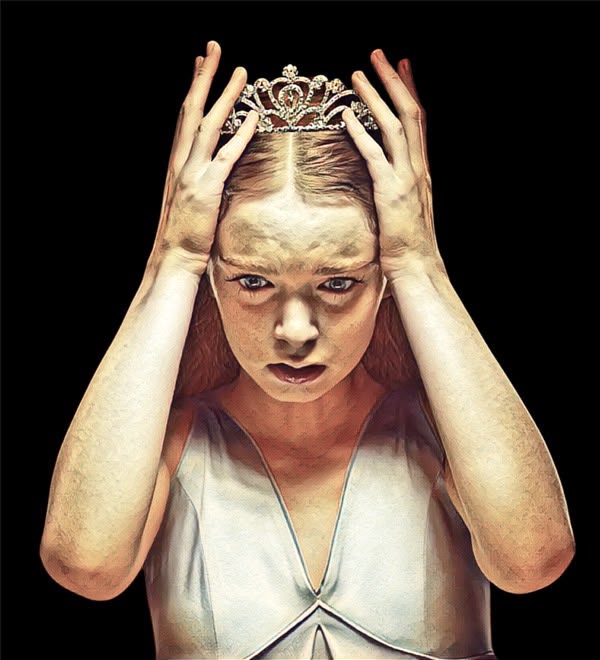
The staging of the prom is spectacular. Flanagan builds the humiliation, the attack, and the destruction with force. Howell holds the emotional center of a sequence that demands a great deal of her, and the physical horror works.
What bothered me was the clarity of the survivors’ escapes. In the 1976 film, Sue is outside after being thrown out by the teacher, and that position explains why she survives. In the series, she enters the disaster, and her survival, like Tina’s, left me looking for the transition between being trapped in that space and managing to get out.
Some elements explain it: Sue climbs onto the stage to try to help Tommy, keeping her safe from electrocution; Tina manages to escape during a lapse in Carrie’s concentration. Those are the explanations identified in JustWatch’s analysis of the ending. But I did not feel the editing gave them the clarity and weight they needed, considering the scale of the destruction. Keeping Sue safe from the electricity does not, by itself, settle the question of the fire and her escape.
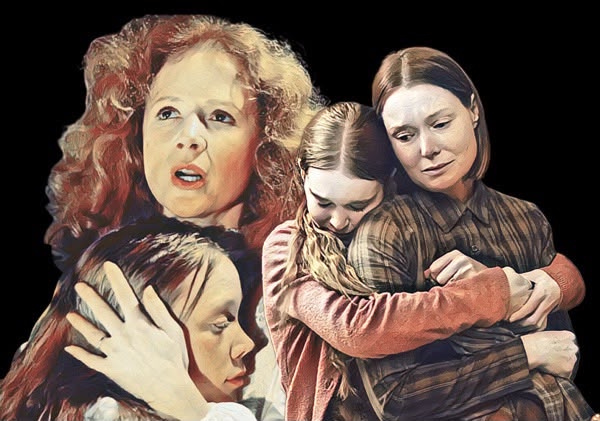
We also need to distinguish between versions. Sue is not the only survivor in the novel, and Tina Blake already exists in the book: Flanagan expands the character rather than inventing her. My strongest visual reference is De Palma, but it would not be accurate to treat every choice in the film as though it were exactly King’s.
Margaret’s escape from the house also has a supernatural explanation, as the ending reveals. Even so, the succession of characters kept alive reinforced my feeling that the finale was busy creating possibilities for a continuation. The existence of survivors does not bother me. Having to reconstruct so much of the logic of how they survived, in a sequence built around devastation, does.
What the Critics, King, and Flanagan Said
The critical reception helps put this division into perspective. Like me, critics have praised the updating of the themes, but some feel that by moving away from horror and embracing drama, the series became less frightening than it should or could have been. And yes, we also share reservations about stretching the novel into a television series.
The addition of Emaline was not universally welcomed either: some argue that by giving her the decisive role in the violence, the series weakens Carrie’s responsibility and the ambiguity between victim and perpetrator. That discussion helps explain how much the supernatural expansion changes the story’s center.
Since Flanagan described three seasons as his ideal scenario, he needed to leave some threads open for further development. But with no renewal confirmed yet, that choice weakened this season’s conclusion.
Perhaps that open door is precisely what explains some of my resistance. I liked the update, the examination of bullying, the depth given to Chris, and, above all, the performances. But I finished wanting the series to place more trust in that girl’s strength and in the conflict that already existed around her. When the road ahead becomes so important, tragedy stops being a destination and begins to look like a starting point. It is a legitimate choice. For this purist, it is also the moment when Carrie begins to become another story.
Descubra mais sobre
Assine para receber nossas notícias mais recentes por e-mail.

