
Before becoming two towering figures in music, Miles Davis and Juliette Gréco fell in love in Paris. It sounds like one of those combinations cinema would invent: a young American trumpeter, a Frenchwoman beginning to find her place, and a city where, after the war, artists and intellectuals gathered in the same cafés. But the romance was real. And now it is coming to the screen in Miles & Juliette, with Damson Idris and Anamaria Vartolomei in the leading roles.
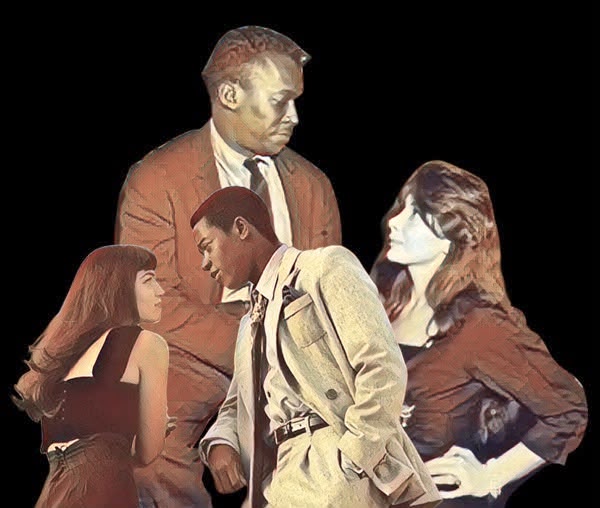
Production has begun in Paris, and the first image was released in October. Bill Pohlad, who directed Love & Mercy, about Brian Wilson, takes the director’s chair, with a screenplay by Zora Howard and Mick Jagger among the producers. The approach is especially interesting because it follows the encounter between two young people who did not yet carry the weight of their own legends. No release date has been announced.
They met in 1949, when Miles travelled to France to perform at the International Jazz Festival at the Salle Pleyel. Juliette was taken backstage by Michèle Vian, Boris Vian’s wife. She could not afford a ticket. Years later, she would recall the beauty of the musician’s profile and the impression made by the combination of that man, his instrument and the sound he produced. Their attraction preceded any ease of communication: she barely spoke English, and he spoke no French.
It is a delightful detail, but what makes this story more powerful lies in what happened afterwards. The romance encountered a barrier neither could overcome through desire alone: racism. As Juliette remembered it, Jean-Paul Sartre once asked Miles why he did not marry her. His answer was reportedly that he loved her too much to make her unhappy. What might sound like a romantic excuse was connected to what living together in the United States would mean.
Juliette would come to understand that difference when she met him again in New York. During dinner at the Waldorf-Astoria, according to her account to Europe 1, their plates were practically thrown onto the table. Later, Miles called to say he did not want to see her there again, to spare her harm. The violence of that treatment exposed the Frenchwoman to a reality their encounter in Paris had not forced upon her in the same way.
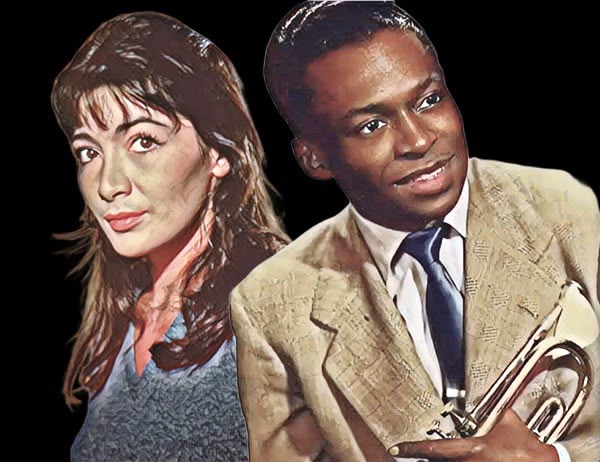
There is an obvious risk in turning all this into nothing more than an impossible love story, accompanied by jazz and beautiful images of Paris. What interests me is precisely how a social structure intrudes upon intimacy and shapes a choice that should belong to the couple. It will be interesting to see how much room the film gives to Juliette’s experience and Miles’s awareness of the world to which he would have to return.
They never married, but neither did they disappear from each other’s lives. Juliette said they continued to meet during their tours and that he would leave little notes in places she was due to visit. Miles visited her months before his death in 1991. Their Parisian romance was brief; their bond lasted for decades.
Robert Glasper is composing the score and serving as music producer, a considerable responsibility when one of the protagonists is Miles Davis. But the promise that interests me most lies in that moment before their rise to fame. The story already has music, passion and extraordinary characters. I hope the film also preserves the discomfort of knowing that the feelings were there, but the freedom to live them was not the same for both.
Descubra mais sobre
Assine para receber nossas notícias mais recentes por e-mail.

