
When we think of the Royal Ballet, we immediately think of Margot Fonteyn, Rudolf Nureyev, Frederick Ashton, Kenneth MacMillan, and some of the most beautiful productions in the history of dance. But before any of that was possible, a young Irish ballerina had an idea that seemed rather ambitious for England in the 1920s: to establish a school capable of training dancers and, from that foundation, a company that could develop its own artistic identity.
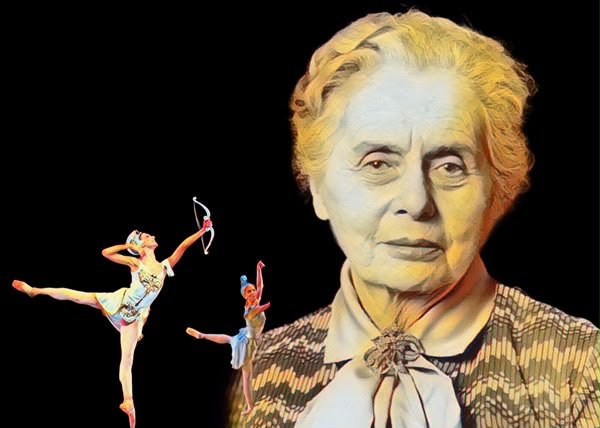
That woman was Ninette de Valois, and in 1926, at the age of 27, she founded the Academy of Choreographic Art in London, the institution that would eventually become the Royal Ballet School. One hundred years later, it is considered one of the world’s most important ballet schools and celebrates its centenary with special performances at the Royal Opera House in Covent Garden, from October 8 to 10, bringing together students and dancers from the Royal Ballet and Birmingham Royal Ballet.
This celebration represents much more than the anniversary of a school. After all, we are talking about an institution that helped transform the history of dance in the 20th century, established an internationally recognized artistic tradition, and trained some of the greatest stars ever to grace the stage.
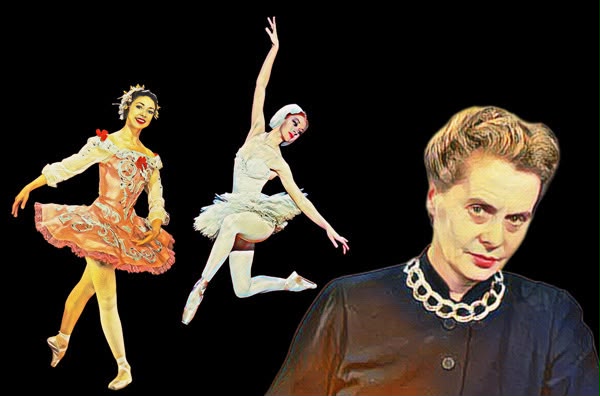
An Irishwoman Who Wanted to Create British Ballet
Ninette de Valois, born Edris Stannus in Ireland in 1898, had danced with Sergei Diaghilev’s Ballets Russes, the company responsible for revolutionizing dance in the early 20th century. There, she encountered a tradition that combined the excellence of Russian classical technique with artistic experimentation, music, painting, and theater.
But her ambition was not simply to reproduce what she had learned. She wanted England to have a school, a company, choreographers, and dancers capable of establishing their own identity. And that meant thinking beyond technique. It was necessary to train artists, not merely bodies capable of executing difficult steps.
Her partnership with Lilian Baylis, who managed the Old Vic and later took over the Sadler’s Wells Theatre, proved decisive. In 1931, the school moved to Sadler’s Wells and began supplying dancers to the company that would eventually become the Royal Ballet. Gradually, De Valois’s vision began to take shape.
It was also in this environment that Frederick Ashton developed a choreographic language that would become one of the defining characteristics of British ballet. While the school provided dancers with a solid technical foundation, Ashton explored musicality, fluid arm movements, quick footwork, and, above all, a very particular theatrical elegance.
Later, Kenneth MacMillan would take this tradition into even more intense psychological and dramatic territory. His ballets, such as Romeo and Juliet, Manon, and Mayerling, demonstrated that classical dance could express complex human conflicts, violence, desire, love, and despair without relying on a single word.
It is this combination of technical discipline and dramatic interpretation that helped make the Royal Ballet so special.

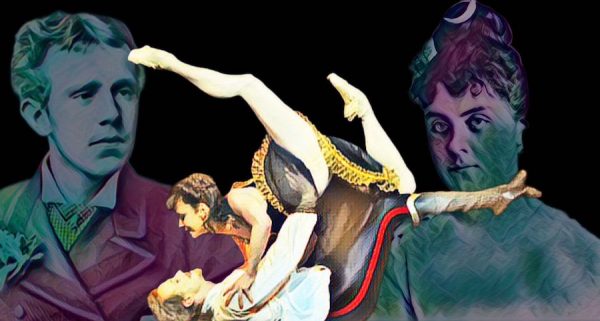
What Sets the British School Apart?
Although all the great schools of classical ballet share a common technical foundation, each has developed its own characteristics. Understanding these differences helps explain why Ninette de Valois’s project was so important.
The Russian school, particularly the Vaganova method, emphasizes expansive movement, expressive arms, the use of the back, and the coordination of the entire body. The French school, historically associated with the Paris Opera, is known for its elegance, clarity of positions, and precision. The Italian tradition, associated with the Cecchetti method, emphasizes control, balance, strength, and the rigorous organization of exercises. Meanwhile, the American tradition, particularly the one developed by George Balanchine, established its own identity through speed, elongated lines, and an exceptionally dynamic relationship with music.
The British school emerged from a combination of different influences, including Cecchetti, Legat, and the Russian tradition, but Ninette de Valois did not want to simply reproduce any of them. Her goal was to develop a recognizable style characterized by quick, precise footwork, fluid movement, musicality, and an ability to convey emotion without sacrificing classical rigor.
It is also important to distinguish the training offered by the Royal Ballet School from the system developed by the Royal Academy of Dance, or RAD. Although both institutions are fundamental to the history of British ballet, they do not simply follow the same method. The Royal Ballet School developed its own approach, directly connected to the artistic and technical needs of its companies.

One person who explained this distinction particularly well was Brazilian ballerina Márcia Haydée, one of the greatest dancers of the 20th century. Initially trained in the Russian tradition, she arrived at the Royal Ballet School in the mid-1950s and had to adapt her technique.
In an interview with the Voices of British Ballet project, Márcia recalled that her previous training placed considerable emphasis on the arms, back, and head, while in England she encountered a much greater demand for precision in footwork. It was an experience she considered extremely important to her development.
Her observation helps explain something that is not always obvious to those who follow ballet simply as spectators. It is not a question of one school being better than another, but of different ways of organizing movement and developing artists.
And the British tradition developed a particularly interesting ability to combine technical virtuosity, musicality, and dramatic interpretation.
Ninette de Valois and the Making of Margot Fonteyn
It is impossible to tell this story without mentioning Margot Fonteyn. But it would also be unfair to tell Fonteyn’s story without recognizing the importance of Ninette de Valois in shaping her career.
Because, in a sense, De Valois did not merely discover a great ballerina. She helped invent Margot Fonteyn.
When the young Margaret Evelyn Hookham, known to her family as Peggy, began to stand out at the school and within the company, she was not yet the star who would go down in history. Her talent was evident, but she also had technical limitations, something Fonteyn herself would acknowledge throughout her life.
And De Valois knew exactly what she was looking for. She needed a ballerina who could embody the artistic identity she was trying to establish.
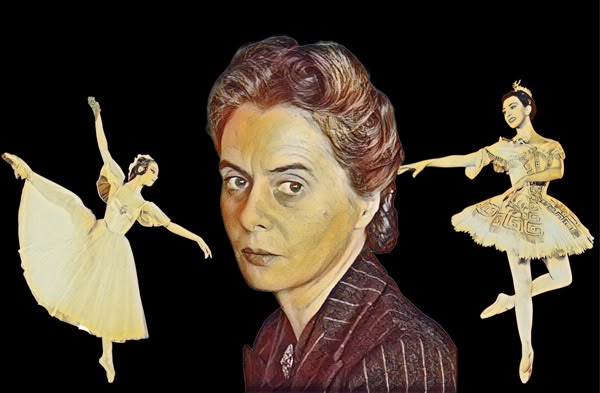
In the 1930s, following Alicia Markova’s departure, the company lost its leading star. De Valois placed her confidence in the young Fonteyn, who quickly began taking on important roles in the repertoire. It was an artistic, technical, and strategic investment.
Even the name by which she would become known worldwide was part of this transformation. Peggy Hookham began performing as Margot Fonteyn, a name derived from Fontes, a surname on her mother’s side of the family, which had Brazilian origins. The choice was encouraged by De Valois and helped create a more sophisticated and international artistic identity.
But it was not simply a beautiful name.
De Valois recognized qualities in Fonteyn that went beyond virtuosity: musicality, stage presence, elegance, and an extraordinary ability to make audiences believe in every emotion she portrayed.
Frederick Ashton, in turn, found his muse in her. His choreography explored precisely these qualities and helped transform Fonteyn into the ideal embodiment of the British style.
It is worth remembering that Fonteyn was never regarded as the most technically virtuosic ballerina of her generation. Others were capable of executing more spectacular movements. But few possessed her ability to establish such an intense emotional connection with an audience.
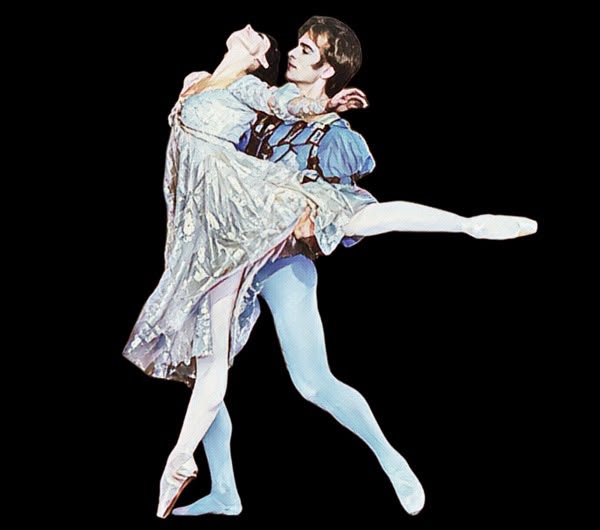
When Rudolf Nureyev arrived in the West in 1961, the history of the Royal Ballet entered a new chapter. He had not trained at the British school, but his partnership with Fonteyn transformed the company and brought ballet extraordinary international visibility.
Together, they became an artistic and popular phenomenon, proving that classical dance could move audiences far beyond its traditional followers.
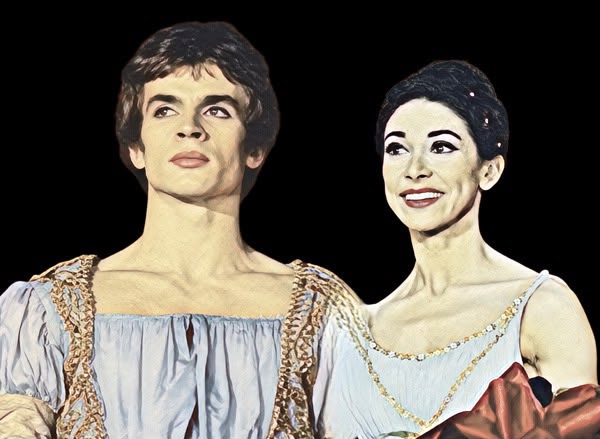
Moira Shearer: A Ballet Star Who Conquered the Cinema
Fonteyn was not the only great ballerina associated with the school during that period. Another essential figure was Moira Shearer, born in Scotland in 1926, the very year the institution was founded.
Shearer studied at the Sadler’s Wells school beginning in 1940 and would become one of the company’s leading ballerinas. Her career, however, took on an entirely different dimension when she was chosen to star in The Red Shoes, Michael Powell and Emeric Pressburger’s 1948 film.
The film became one of the greatest classics in cinema history and perhaps the most famous depiction of the conflict between absolute dedication to dance and the possibility of an independent personal life.
Interestingly, Moira Shearer did not enjoy as harmonious a relationship with Ninette de Valois as Margot Fonteyn did. Initially trained in the Russian tradition, she questioned aspects of the British style and the discipline imposed by the company.
This tension is particularly interesting because it reveals another side of De Valois’s personality. Her determination was essential to building the school, but she was also an extremely demanding, controlling director who was not particularly receptive to resistance.
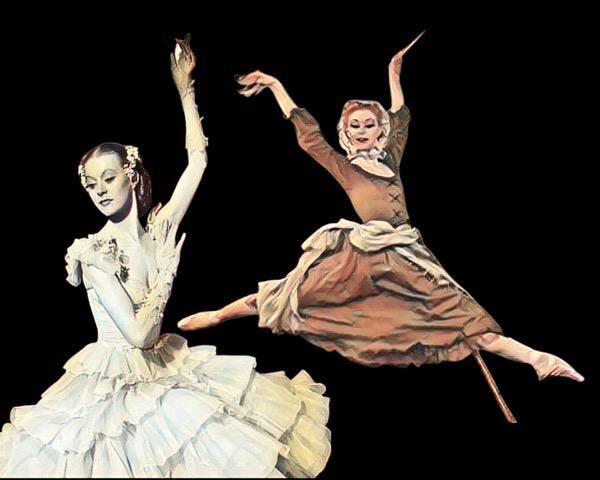
Shearer, meanwhile, possessed an artistic individuality that did not always fit comfortably into that environment. Her popularity in cinema eventually surpassed her fame as a ballerina, but that does not diminish the importance of her stage career.
She was among the original interpreters of important works in the British repertoire, including Ashton’s Symphonic Variations, and created the title role in his Cinderella in 1948, replacing Fonteyn, who was injured.
Her story also demonstrates that the Royal Ballet School was not producing dancers destined exclusively for the stage. Ballet was beginning to establish a dialogue with cinema and reach much wider audiences.
Ninette de Valois and the World of Waterloo Bridge
There is a cinematic connection that I find particularly interesting. In Waterloo Bridge, released in 1940 and one of my favorite films of all time, Vivien Leigh plays Myra Lester, a young ballerina who falls in love with a British officer, played by Robert Taylor, during the First World War.
The story is a devastating romantic melodrama, but it also offers a portrait of life within a ballet company and the discipline imposed on its dancers.
Among the characters is Madame Olga Kirowa, played by Maria Ouspenskaya, an authoritarian director who strictly controls the lives of the young performers and refuses to allow their personal commitments to interfere with the company’s discipline.
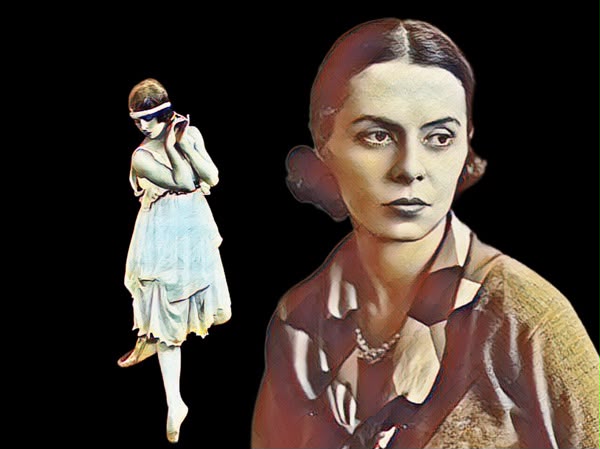
It is easy to draw a parallel between this cinematic figure and the image of the great ballet directors of the period, including Ninette de Valois. Both represent a model of artistic authority in which discipline was considered inseparable from excellence, and the personal lives of ballerinas could become subordinate to the demands of the profession.
There is, however, no documented confirmation that Madame Olga was directly inspired by De Valois. The character is better understood as a fictional reflection of a professional culture that also shaped British ballet training.
And it is fascinating to realize how cinema was already exploring questions that remain relevant today: how far should the authority of a teacher or director extend? How much of their personal lives must artists sacrifice? And does excellence justify every kind of demand?
Questions that continue to provoke discussion one hundred years after the school’s foundation.
From Márcia Haydée to Darcey Bussell: An International Tradition
The list of great dancers who attended the Royal Ballet School is impressive. Alongside Fonteyn and Shearer, names such as Lynn Seymour, Antoinette Sibley, Anthony Dowell, Alessandra Ferri, and Darcey Bussell helped build a history spanning generations and different approaches to classical ballet.
Among them is Márcia Haydée, who studied in London in the 1950s before becoming the great star of Stuttgart Ballet, where she inspired some of John Cranko’s most important works.
Her career is an interesting example of how the training received at the British school extended beyond the Royal Ballet and influenced international companies.

Lynn Seymour, meanwhile, became one of the greatest interpreters of British dramatic ballet, particularly in Kenneth MacMillan’s works. Her presence was decisive in developing a choreographic language in which movements did not need to be merely beautiful, but could express desires, conflicts, and emotions in an almost visceral way.
The following generation would preserve this tradition while introducing new technical and interpretive possibilities. Darcey Bussell, for example, became one of British ballet’s most popular figures and helped introduce classical dance to a new generation of audiences.
Because perhaps this is the greatest achievement of Ninette de Valois’s project: establishing an identity strong enough to survive changes in generations, styles, and choreographers.
Marianela Núñez, Mayara Magri, and Today’s Extraordinary Generation
And the current generation is no less impressive. In fact, the Royal Ballet today boasts an extraordinary roster of dancers from different nationalities and backgrounds, capable of moving between the classical repertoire, great dramatic works, and contemporary creations.
Argentine ballerina Marianela Núñez, who arrived at the Royal Ballet School in 1997, has become one of the greatest figures in contemporary classical ballet. Her exceptionally secure technique, musicality, and ability to interpret everything from the great classics to works by modern choreographers make her one of the company’s most admired artists.
There is also Brazilian ballerina Mayara Magri, whom I had the pleasure of interviewing. Initially trained at Petite Danse in Rio de Janeiro, she arrived at the Royal Ballet School after winning a scholarship at the Prix de Lausanne in 2011 and joined the company in 2012.
In 2021, she was promoted to principal dancer, consolidating a career that represents not only the success of a Brazilian artist abroad, but also the school’s ability to welcome talents trained in different traditions and develop their individual qualities.
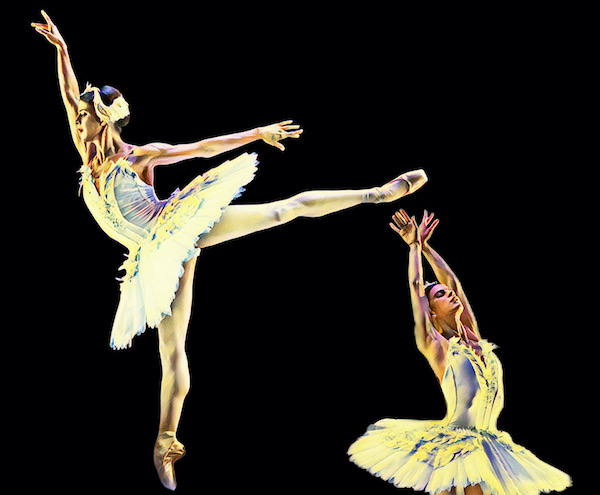
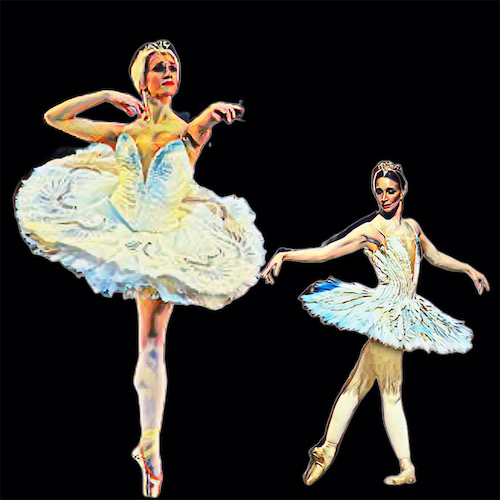
Today, Mayara performs major roles in the repertoire, including Odette/Odile in Swan Lake, Juliet in Romeo and Juliet, Aurora in The Sleeping Beauty, and characters in dramatic works such as Mayerling and Manon.
And there is a particularly beautiful coincidence in this centenary celebration: Mayara was chosen to perform the Black Queen in Checkmate, the very ballet created by Ninette de Valois in 1937 that opens the school’s commemorative program.
A Brazilian ballerina representing the institution’s history on the stage of the Royal Opera House.
The current roster also includes Francesca Hayward, Yasmine Naghdi, Fumi Kaneko, Natalia Osipova, Vadim Muntagirov, Matthew Ball, Marcelino Sambé, and William Bracewell, among other extraordinary names.
Not all of them trained at the Royal Ballet School, and it is important to make that distinction. The school trains dancers for the Royal Ballet, but the company also welcomes artists from other institutions.
Perhaps the most interesting demonstration of the strength of the tradition established by De Valois lies precisely in this coexistence between a recognizable artistic identity and the ability to incorporate talent from around the world.
The Centenary on the Royal Opera House Stage
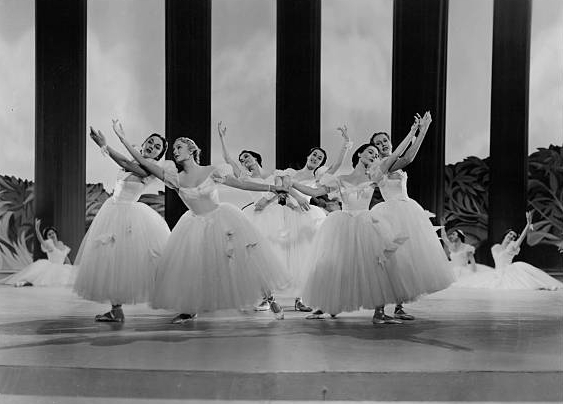
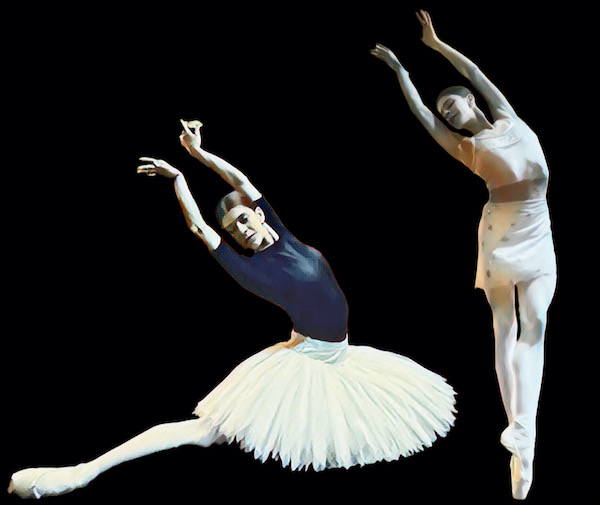
To mark its 100th anniversary, the Royal Opera House scheduled A Centenary Celebration, a production bringing together more than 300 performers from the two companies directly connected to the school’s history, the Royal Ballet and Birmingham Royal Ballet, alongside the students who represent its future.
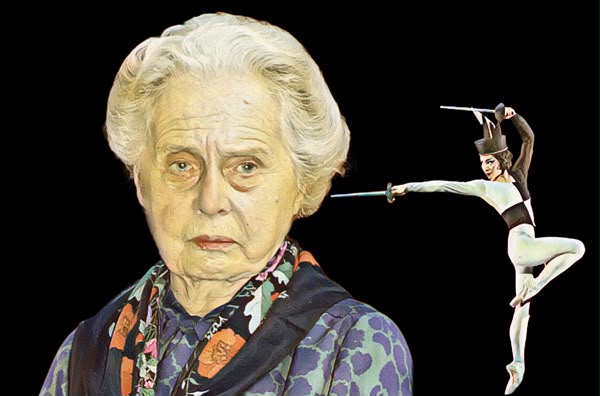
The program is practically a journey through the institution’s history. Among the selected works are Checkmate, choreographed by Ninette de Valois in 1937, and Frederick Ashton’s Birthday Offering, created in 1956.
They are two very different examples of the artistic identity that developed within this environment: on one hand, De Valois’s theatricality and dramatic symbolism; on the other, Ashton’s refinement and musicality.
The celebration also makes room for contemporary choreographers, including Christopher Wheeldon, Cathy Marston, Wayne McGregor, and Joshua Junker, while the premiere of Valentino Zucchetti’s Centenary brings together company dancers and students for the finale.
There are also moments from the classical repertoire, including the famous pas de deux from the third act of Swan Lake. The idea is to showcase not only what the institution has produced over the past century, but also how different generations continue to communicate through dance.
And ultimately, that is what a school represents. Not merely a place where one learns to dance, but somewhere knowledge, traditions, and experiences are passed from one artist to another.
One Hundred Years Later, the Challenges Are Different
Naturally, the world of ballet has also changed. Training as a dancer still requires discipline, almost absolute dedication, and a level of physical commitment that few professions demand. But today there is much greater awareness of the effects that such pressure can have on children and teenagers.
The Royal Ballet School, like other traditional institutions, has had to confront questions concerning body standards, mental health, teaching practices, and the treatment of students. It is impossible to celebrate a century of excellence without acknowledging that some ideas long considered normal in ballet training need to be reconsidered.
The school, currently under the artistic direction of Iain Mackay, has sought to embrace a more comprehensive approach to education, one that goes beyond technique or the pursuit of supposed physical perfection.
This includes greater concern for students’ physical and emotional well-being, something particularly important in a profession where the body is both the instrument of work and the means of artistic expression.
The question is how to preserve the rigor essential to classical ballet without perpetuating practices that may compromise the physical and emotional development of young artists.
A hundred years later, the answer is still being shaped.
When Ninette de Valois established her small academy in 1926, she probably could not have imagined all the stars who would pass through its studios, or that her project would become associated with some of the most important productions in dance history.
But she understood something essential: a great company cannot be built on great dancers alone. It requires a school, teachers, choreographers, a repertoire, and a tradition that allows each new generation to go beyond the previous one.
She also understood that talent needed to be identified, developed, and, very often, carefully guided. That was the case with Margot Fonteyn, and in different ways with so many other artists who passed through the institution.
The Royal Ballet School’s centenary is, therefore, much more than a celebration of stars, performances, and achievements. It is the story of an artistic vision that has endured for a century, transformed British ballet, and influenced dance around the world.
And perhaps the greatest tribute we can pay to Ninette de Valois is to recognize that her work is still alive. Not only in the great ballerinas she helped train or in the choreographies that have become part of the world’s repertoire, but in every young dancer who enters a studio, places a hand on the barre, and begins to discover everything their body is capable of expressing.
Because one hundred years later, that is where the story continues.

Descubra mais sobre
Assine para receber nossas notícias mais recentes por e-mail.

