
Even those who have never stepped into a theatre to see The Phantom of the Opera probably recognise the white mask or the opening chords of its most famous song. Few musicals have created such an instantly recognisable identity. On October 9, 2026, Andrew Lloyd Webber’s creation marked 40 years since its London premiere, still playing in the theatre where it all began. Its longevity is impressive, but something more interesting lies behind it: we remain willing to be moved by a man whose pain we understand, even though his actions are very difficult to defend.
It is a contradiction the show explores intelligently. The Phantom wants to be loved, but tries to control. He recognises Christine’s talent, but imagines this gives him rights over her. He suffers rejection and turns that suffering into a threat. The music draws us into his loneliness before we can formulate a rational response. This ability to inspire compassion without erasing the danger helps explain why we keep returning to him.
How the musical began
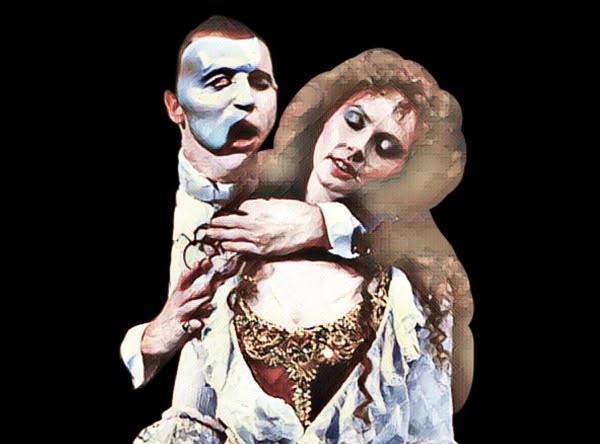
The story came from Gaston Leroux, the French journalist and writer who published Le Fantôme de l’Opéra as a book in 1910, following its serialisation. Its setting was the Paris Opera, with its backstage world, underground passages and mysteries. Long before Lloyd Webber, the character had acquired an unforgettable cinematic image through Lon Chaney in 1925.
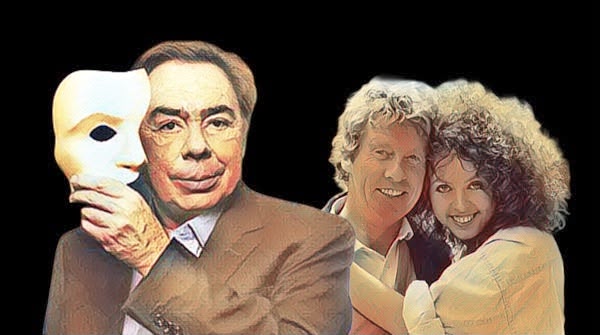
The path to the musical passed through another stage adaptation. In 1984, Lloyd Webber and Cameron Mackintosh saw Ken Hill’s version and considered collaborating with him. The project took a different direction when the composer read the novel and discovered the possibility of a more romantic story, centred on Christine and her triangle with Raoul and the masked man. The first act was presented at the Sydmonton Festival in July 1985, with Colm Wilkinson as the Phantom, Sarah Brightman as the character then named Kristin, and Clive Carter as Raoul.
Brightman, then Lloyd Webber’s wife, was fundamental to the conception of Christine. But the result also depended on an extraordinary team: Hal Prince directing, Maria Björnson designing the sets and costumes, Gillian Lynne handling choreography and musical staging, and Charles Hart writing the lyrics, with contributions from Richard Stilgoe, who shared the book credit with the composer.
That combination matters. To evoke an opera house, the show needed to bring an entire company to life: singers, dancers, managers, technicians and backstage conflicts. Ballet is part of that world and of Christine’s initial place within it. The grandeur works because life is unfolding behind the curtain.
The cast that shaped a lasting memory
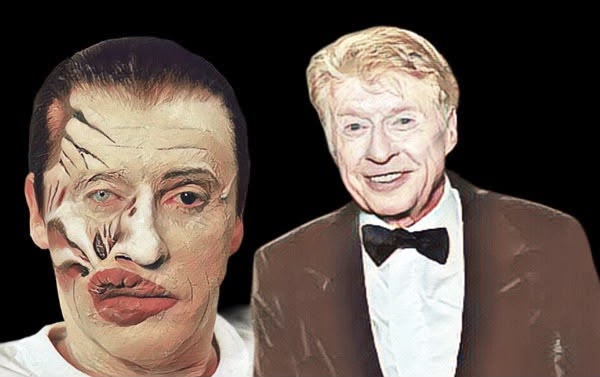
The official premiere took place on October 9, 1986, at Her Majesty’s Theatre, now His Majesty’s Theatre. Michael Crawford was the Phantom, Sarah Brightman played Christine Daaé, and Steve Barton originated Raoul. Rosemary Ashe was Carlotta, Mary Millar played Madame Giry, and Janet Devenish was Meg. John Savident and David Firth played the managers, Firmin and André, while John Aron portrayed Piangi.
Crawford’s career included comedy and musicals, making his casting less obvious than it seems today. His Phantom helped establish the coexistence of menace and vulnerability that the role demands. Brightman brought an immediately identifiable vocal signature; Barton completed the triangle with the possibility of a relationship outside that subterranean world.
The trio became the benchmark preserved on the original cast album. There are characters we first encounter through a recording and only later see embodied onstage. For many people, the Phantom still has Crawford’s voice, regardless of how many actors have worn the mask since.
London and the worldwide phenomenon
The show became one of the West End’s most sought-after attractions. The chandelier, the boat journey, the candles and the staircase in Masquerade created images that travelled alongside the songs. The sensation of entering a haunted opera house begins in the auditorium: the theatre itself participates in the illusion.
Its musical language combines romantic melodies, passages that evoke opera, and the electric energy of the title song. The Music of the Night offers seduction; All I Ask of You, a promise of shared love; Wishing You Were Somehow Here Again reveals Christine’s grief. The score distributes suffering and desire among the characters, giving the young woman much more than the function of being fought over.
Broadway welcomed the musical on January 26, 1988, at the Majestic Theatre. The production won seven Tony Awards, including Best Musical and Best Actor for Crawford. When its New York run ended in April 2023, it had given 13,981 performances over 35 years: the longest run of any show in Broadway history.
According to the production, more than 160 million people have seen the musical, which has been performed in 23 languages. Its worldwide popularity made the mask a symbol capable of crossing languages and generations. London remained its original home, although we should remember the pandemic closure and its reopening, with revisions, in July 2021. Forty years of history does not mean forty years without change.
Diana and the declaration of love revisited by The Crown
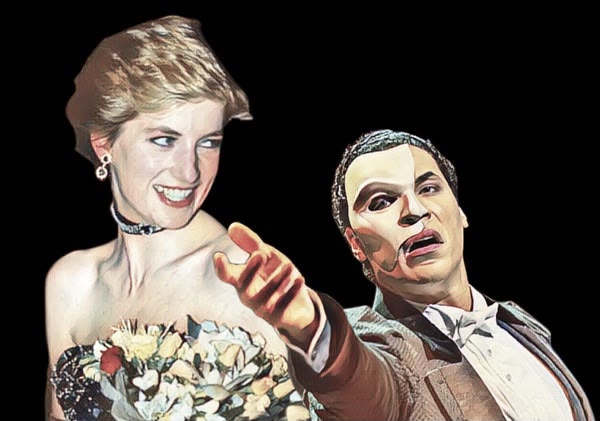
Among the musical’s most famous admirers was Princess Diana, whose passion extended beyond visits to the auditorium. According to biographer Kitty Kelley, she had already seen the show six times when she decided to record a performance at Her Majesty’s Theatre. That figure relates to that particular moment, rather than being a definitive count of every time she attended the production. All I Ask of You was among her favourite songs, and the musical’s own team confirmed in 2020 that Diana had made a private video on its stage.
The story resurfaced in the fourth season of The Crown, with Emma Corrin as Diana. In the series, she takes Christine’s place and gives Charles a recording of the song as a present for their seventh wedding anniversary in 1988. The episode has a basis that predates the drama: a column by Chuck Conconi in The Washington Post, published that year, reported the gift, the use of the London set and Gillian Lynne’s guidance. But accounts differ over its purpose: Kelley described Diana’s explanation that it was a birthday present for Charles and claimed that Diana later said the video was for her own private use.
There is also an important distinction between confirming the recording and establishing that we hear the princess’s voice. Although the 1988 report stated that Diana sang, The Crown researcher Annie Sulzberger acknowledged that she might have mimed to a recording or danced to the music. The real tape has not been made publicly available to settle the question. Nor can Charles’s reaction in the series be treated as a record of what happened between them.
Even so, the choice of song gives the scene particular power. All I Ask of You is Christine and Raoul’s duet, a promise of companionship, protection, and shared love. In The Crown’s interpretation, Diana finds in music a way to ask for what she cannot obtain in her marriage. The gesture belongs to history; the series shapes its emotional meaning. And the musical gains another layer of memory: that of a princess who also wanted to enter that fantasy, for a few minutes, in Christine’s place.
Who are the best Phantoms?
The inevitable question has no neutral answer. Some audience members look for vocal power; others for vulnerability, sensuality or a menace capable of unsettling the scene. A performer may impress in The Music of the Night without creating the same impact in the final confrontation. The role demands that voice and acting sustain that journey.
Michael Crawford holds an essential place because he defined the character in the London premiere and on Broadway. Colm Wilkinson, involved in the show’s earliest development, returned to the mask in the Toronto production, which opened in 1989. Anthony Warlow originated the Australian Phantom in 1990 and returned to the role years later. These are essential names for understanding how the interpretation expanded beyond its original benchmark.
John Owen-Jones built another relationship with the character: according to his official biography, he has given nearly two thousand performances as the Phantom, more than any other actor in the West End run. Ramin Karimloo gained particularly enduring international exposure through the 25th-anniversary celebration at the Royal Albert Hall in 2011, alongside Sierra Boggess and Hadley Fraser. The filmed performance made his interpretation accessible to viewers who had never seen the musical live.
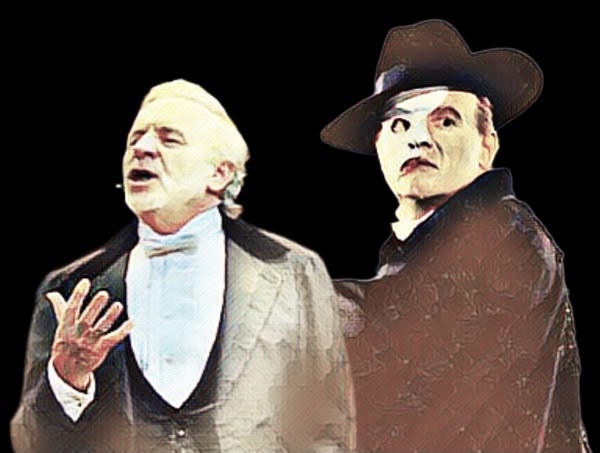
Norm Lewis also deserves a place in this conversation because of the milestone he represented: in 2014, he became the first Black actor to play the Phantom on Broadway. That distinction matters, because the character’s history in other cities includes earlier Black performers. Rather than declaring a winner, it is more rewarding to recognise how many different men can inhabit the same mask.
The film and another way of looking
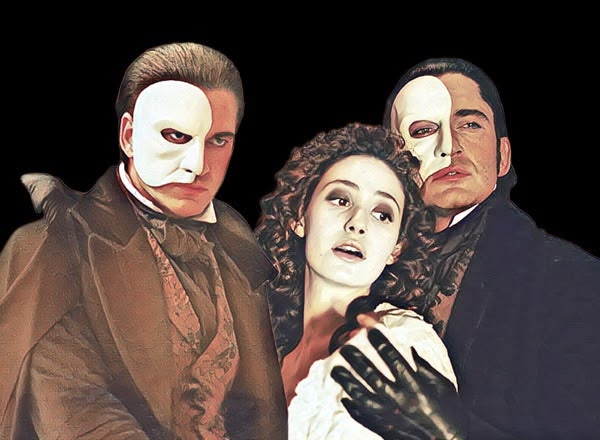
In 2004, Joel Schumacher brought the musical to cinemas with Gerard Butler, Emmy Rossum and Patrick Wilson. The adaptation expanded the spaces, brought the camera closer to the faces, and gave the relationship between the Phantom and Christine a more physical dimension. For many viewers, it was their first introduction to the story.
Casting Butler shifts the character’s emphasis towards physical presence and sensuality. This invites an interesting comparison with the stage, where the voice must establish part of the mystery before we can see the man. In cinema, the face occupies far more space; attraction becomes more explicit, and the balance between fascination and horror also changes.
The film received three Oscar nominations: Art Direction, Cinematography and Original Song, for Learn to Be Lonely. Its contribution to the musical’s reach can be recognised without expecting it to replace the theatrical experience. The Royal Albert Hall recording, meanwhile, preserves another relationship with the show: we watch the performers build the emotion before an audience.
The 40th-anniversary celebration
The gala on October 9, 2026, brought past and present together at His Majesty’s Theatre, with Michael Crawford and Sarah Brightman participating. The anniversary season features Jordan Donica as the Phantom, Beatrice Penny-Touré as Christine, and Rhys Whitfield as Raoul. Sierra Boggess returns in a different role, Carlotta, a particularly intriguing transition for those who first knew her as Christine.
The anniversary also brought a new mix of the original cast album, prepared by Lloyd Webber from the analogue tapes and including restored material. The digital edition was released on the 40th anniversary; physical formats are scheduled for November. The London production was also filmed in its original home for an international cinema release planned for 2027.
What endures
The mask, the chandelier and the organ are part of the legacy, as is the scale of production that helped consolidate the era of major international musicals. But the enduring appeal of The Phantom of the Opera also depends on something harder to reproduce: its ability to make us feel the pull of a fantasy while recognising its cost.
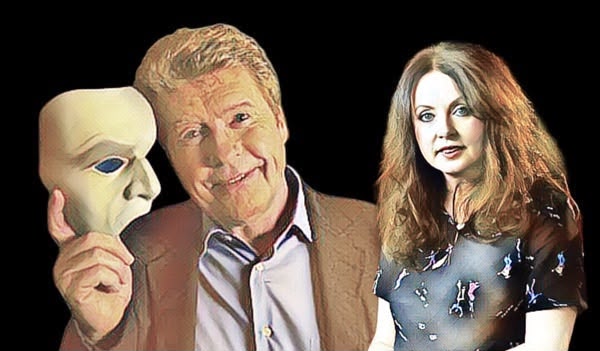
Christine can acknowledge that man’s humanity without surrendering her own life to him. That point becomes more powerful when we look beyond the dark romance. Compassion does not turn coercion into love, and an artist’s talent does not grant him ownership of those he inspires.
Forty years later, the decisive moment remains the one in which the Phantom must relinquish control. The music has seduced us throughout the night. The ending asks something more difficult of us: to accept that loving someone includes allowing that person to leave.
Descubra mais sobre
Assine para receber nossas notícias mais recentes por e-mail.

