
Television has shown us countless times that we don’t need to like characters to become invested in their stories. Some of the greatest successes of recent years have been built around arrogant, cruel, manipulative, or simply unbearable people. The problem begins when we find nothing beyond those characteristics, when conflicts seem to exist merely to generate more conflicts, and, above all, when we cannot identify what is really at stake. That was my impression after watching the first two episodes of War, the new HBO Max series that brings together an excellent cast to tell a story that, so far, doesn’t seem entirely sure where it wants to go.
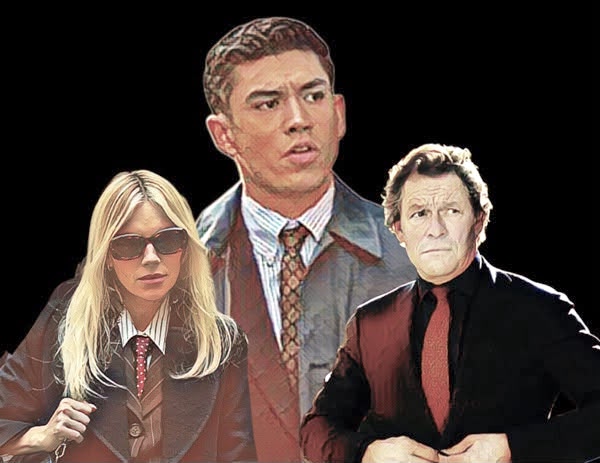
Created by George Kay, whose previous credits include Lupin and Hijack, the British production follows the multimillion-dollar divorce of Morgan Henderson (Dominic West), a technology tycoon, and Carla Duval (Sienna Miller), a Hollywood star. The two are at war, trading accusations, betrayals, and legal strategies orchestrated by rival London law firms. The premise is straightforward, but it offers an enormous range of dramatic possibilities. We could follow the deterioration of a marriage, the public exposure of private lives, the battle over their fortune, or the workings of a legal industry that transforms personal conflicts into multimillion-dollar business opportunities. War attempts to do all of this simultaneously and, at least initially, fails to develop any of these possibilities in a truly convincing way.

Morgan and Carla are equally unpleasant. He is arrogant, unfaithful, and accustomed to solving his problems with money. She doesn’t inspire much sympathy either, manipulating situations and using her celebrity status as part of the battle. There is no need to choose sides, of course, but it would be interesting to understand what once existed between these people, why they stayed together, and what they are actually losing through their separation. In the first two episodes, we don’t find a marriage falling apart before our eyes, but two people who seem to have hated each other from the very beginning. And considering their fortunes, whatever the outcome, both will probably continue to enjoy extraordinarily comfortable lives.
There is also a curious problem with the casting. Everyone is excellent, but almost all of them seem to be playing variations of characters we have already seen them portray elsewhere. Dominic West returns to the familiar territory of the powerful, unfaithful, morally compromised man, while Sienna Miller once again seems to have been called upon to play a sophisticated woman caught up in a turbulent relationship. Pip Torrens, with his imposing and threatening presence, practically tells us what kind of character we are about to meet before he even opens his mouth. Phoebe Fox also operates with an intensity and rigidity that have become familiar elements of her repertoire. This is not about questioning the quality of their performances, but rather observing how the production seems to place its talented actors in safe, familiar territory without offering any real surprises.
The result is a series in which the characters are immediately recognizable but not necessarily interesting. We know who the arrogant millionaire is, who the vengeful celebrity is, who the veteran lawyer willing to cross ethical boundaries is, and who represents the younger generation trying to make its mark. There is nothing inherently wrong with using archetypes, a perfectly legitimate dramatic device, but so far the series has not offered enough to turn them into individuals more complex than the roles they serve within the narrative.
And this brings me to my main difficulty with War: what story, exactly, are we following? The divorce of a couple or the strategies of two law firms? Because if the focus is on the marriage, we are missing emotion, intimacy, and some understanding of the bond between the protagonists. If the intention is to create a legal drama, we need to believe in the intelligence of the strategies, the importance of the disputes, and the consequences of the decisions being made. The series presents meetings, threats, negotiations, and successive revelations, but constant activity does not necessarily mean that the story is moving in any meaningful direction.
The presence of Johnny Warren (Archie Renaux) makes this issue even more apparent. A young, ambitious lawyer struggling to find a professional opportunity, he agrees to infiltrate the firm representing Carla and pass confidential information to the opposing team. The justification involves his need to secure a position, prove his worth, and meet his girlfriend’s expectations. But we are talking about someone who, in order to build a career, agrees to participate in an operation that could destroy it altogether. Espionage between law firms is not merely a morally questionable clever trick: it represents an extremely serious breach of professional duties, particularly those involving confidentiality and loyalty to clients.

Of course, people make irrational decisions, even when they believe they are acting in their own best interests. And drama does not require characters to behave sensibly at all times. The problem is that we need to understand, at least to some extent, their willingness to risk everything. Johnny’s ambition is presented as sufficient explanation for an extraordinarily dangerous choice, while the series seems to expect us to follow his actions as a game of intelligence and daring. For now, the character raises more questions about the credibility of the writing than genuine interest in his fate.
The lawyers’ strategies also raise an interesting question. Everyone seems determined to win, regardless of the consequences, but it is still unclear what makes that victory particularly important to us as viewers. Naturally, money, professional reputations, and personal interests are at stake. However, these motivations may be sufficient for the characters without necessarily being compelling for the audience. A good narrative needs to transform individual objectives into conflicts capable of awakening our curiosity, our identification, or even our indignation. In War, we have a succession of unpleasant people trying to defeat other equally unpleasant people, without the outcome seeming especially significant.
Some international critics have responded enthusiastically to the series, appreciating precisely its excesses. But others, like me, questioned the lack of depth in the central couple, although she found more interesting elements among the lawyers. These different assessments help explain how expectations can shape our responses to the series.
Perhaps War works better when it embraces its identity as a luxurious melodrama, without any great ambition to explore human nature, marriage, or power dynamics. But the presence of so many talented actors, the sophisticated setting, and the very structure of a legal drama suggest ambitions that go beyond simple entertainment. And when a series appears to promise more than it actually delivers, its excesses inevitably become less amusing and its weaknesses more apparent.
Succession demonstrated that we can follow a family of detestable millionaires for years without having to root for any of them. The difference is that behind the money and cruelty lay a family tragedy about abandonment, recognition, and the desperate need to earn a father’s love. There was a clear emotional conflict, even when the characters themselves were unable to recognize it. In War, I have yet to find anything equivalent, or even an alternative that would justify our continued investment in that world.
The season consists of eight episodes, so it would be premature to conclude that the series will not find its direction. Perhaps the lawyers’ personal conflicts will become more significant, perhaps the divorce will reveal something deeper, or perhaps War will fully embrace its inclination toward exaggerated entertainment. For now, however, the feeling is of watching an expensive, well-acted, fast-moving production that lacks a sufficiently clear dramatic purpose.
I have no problem following unpleasant characters. What bothers me is not finding a good reason to follow them. And that is the war War still needs to win.
Descubra mais sobre
Assine para receber nossas notícias mais recentes por e-mail.

