
When Vikings premiered in 2013, few could have imagined the phenomenon it would become. The History Channel production revisited a historical period that cinema and television had explored many times before, but found a different way to tell those stories, combining politics, religion, family rivalries, violence, and fascinating characters. Michael Hirst, who had already demonstrated his talent for historical drama with The Tudors, created one of the best television series of that decade. More than ten years later, he returns to the Norse world with Bloodaxe, this time alongside his son, Horatio Hirst, in a Prime Video production scheduled to premiere on January 20, 2027.
I should be excited. After all, I followed Vikings from the beginning, and I still consider its early seasons extraordinary. However, the first photographs and teaser for Bloodaxe, unveiled in October, provoked a very different reaction from what I had expected. Instead of feeling curious about a new saga, I had the unpleasant impression that I already knew these characters, these conflicts, and even these settings, despite looking at an entirely new cast.
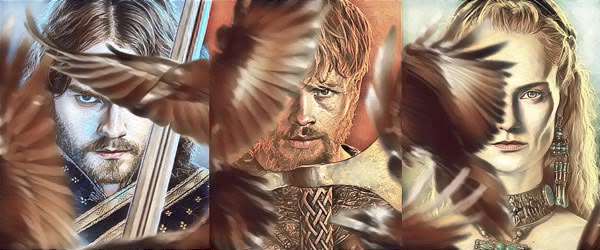
The story follows Erik Bloodaxe, played by Xavier Molyneux, one of the best-known figures in the Norse sagas, and his wife Gunnhild, the Mother of Kings, portrayed by Bridgerton actress Jessica Madsen. The struggle for the Norwegian throne involves rival brothers, shifting alliances, betrayals, wars, and interference from other Scandinavian and English kingdoms. Among the characters are Haakon the Good, Erik’s half-brother, played by Levi Miller; the English King Athelstan, portrayed by Rod Hallett; and Harald Fairhair, played by Jesper Christensen.
Does the premise sound familiar? It is almost impossible not to recognize the essential ingredients of Vikings, including one of Hirst’s favorite dramatic conflicts: brothers who love, hate, betray, and fight one another for power. We saw it with Ragnar and Rollo, later with Ragnar’s sons, particularly Bjorn and Ivar, and again in Vikings: Valhalla, with the rivalries between Harald Sigurdsson and Olaf. Of course, Scandinavian succession struggles were frequently marked by family conflicts, but historical accuracy does not necessarily erase the feeling of dramatic repetition.
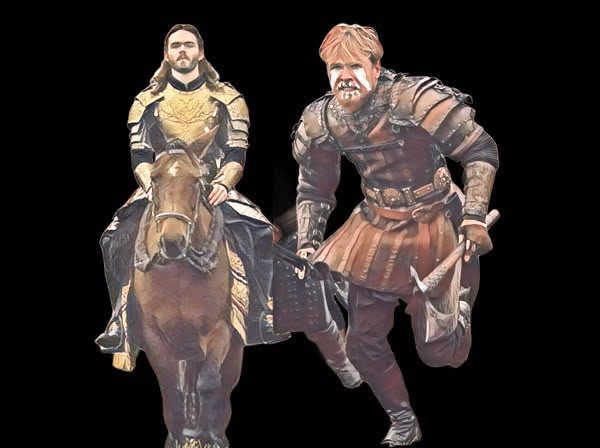
I was also bothered by the visual familiarity. The costumes, the furs, the hair, the beards, the blood-covered faces, the cold cinematography, and the warriors who seem perpetually on the verge of battle reproduce a visual language we already know extremely well. This is not necessarily a production flaw. On the contrary, considerable care has clearly gone into recreating the period, but at least in these first images, something seems to be missing that would suggest an identity of its own.
And that brings us to the most delicate issue: charisma.
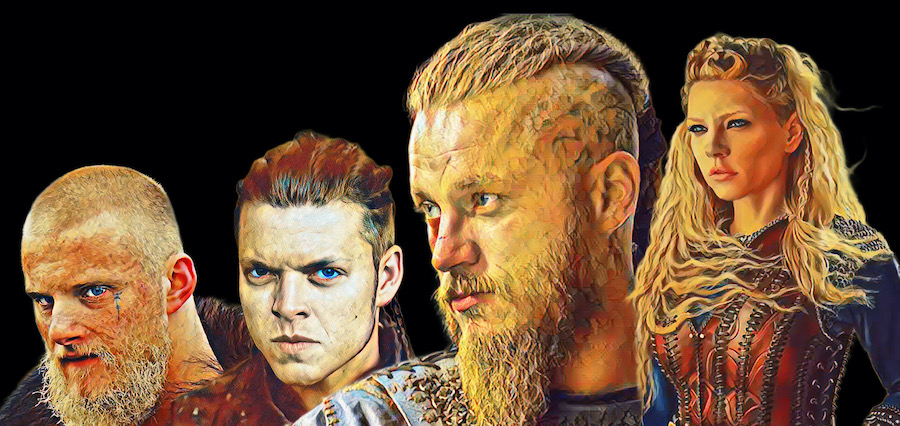
Travis Fimmel was much more than the leading actor in Vikings. His portrayal of Ragnar Lothbrok helped transform a historical drama into a cultural phenomenon. Ragnar could be brutal, manipulative, cruel, loving, curious, and profoundly contradictory, sometimes within the same scene. Fimmel possessed a presence that did not depend on grand speeches, relying instead on his eyes, unpredictable movements, and often disconcerting sense of humor. There was something about him that made it impossible to look away. Katheryn Winnick, as Lagertha, also created a character of remarkable strength, while Gustaf Skarsgård, as Floki, added a religious, emotional, and almost supernatural dimension to the story.
Later, even as the series began to lose some of its strength, Alex Høgh Andersen managed to make Ivar the Boneless equally fascinating and despicable. What sustained Vikings was never simply the battles, but its characters and, above all, the actors who made them unforgettable.
It would be unfair to expect Xavier Molyneux to become another Travis Fimmel before we have even watched a single episode. It would also be premature to conclude that Jessica Madsen cannot turn Gunnhild into a commanding character. Nevertheless, the promotional material has yet to introduce anyone who inspires the immediate curiosity generated by the original cast. And that matters when attempting to revive a formula so heavily dependent on the magnetism of its protagonists.
There is also a particularly interesting historical issue, one that Michael Hirst himself created.
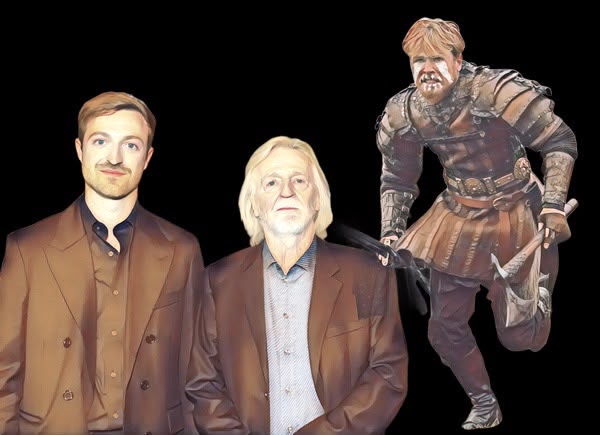
Anyone who watched Vikings will remember that Harald Finehair, played by Peter Franzén, died in the sixth and final season during the campaign against the Saxons in England. The scene even carried a certain emotional weight, with the appearance of his brother Halfdan, who had come to lead him to Valhalla. Historically, however, Harald lived until approximately 933 and fathered numerous children, including Erik Bloodaxe, who would eventually rise to power in Norway. In Bloodaxe, Harald will once again be alive, now portrayed by Jesper Christensen.
This was not a mistake Hirst made out of ignorance. He has always taken considerable liberties with historical events, timelines, and family relationships involving the real figures he portrays. The difference is that, within Vikings, these adaptations were part of a relatively self-contained dramatic universe, whose established rules the audience was willing to accept. By revisiting historical figures already featured in the previous production, however, he creates an intriguing contradiction: viewers know Harald, remember his death, and will now encounter another Harald, alive, in a story about a son we never met in the original series.
Indeed, Bloodaxe has not been announced as a direct continuation of Vikings. Even so, its promotional campaign understandably emphasizes its connection to the creator and the success that made him famous. The series wants to recover the audience’s emotional attachment to that world, but it cannot entirely preserve the continuity of the original narrative. For those who watched Vikings, this discrepancy may create an inevitable sense of disorientation.
The exhaustion of the Viking universe also deserves attention. Vikings: Valhalla, produced for Netflix and set roughly a century after the original story, attempted to recreate the combination of major historical figures, religious conflicts, wars, and romances that had captivated audiences. It ran for three seasons and found an audience, but for me, it never achieved the same dramatic power as Vikings. Rather than expanding a universe, it ultimately demonstrated how a successful formula can lose some of its appeal when reproduced with a new set of characters.
Now the challenge returns in a third commercial incarnation. Vikings originated on the History Channel, expanded its reach through streaming, and found new audiences on Netflix and Prime Video, depending on the territory. Valhalla was a Netflix original production, while Bloodaxe arrives as a new Prime Video venture. These projects share creative and thematic connections, but operate under different distribution models and, above all, promise the same kind of historical spectacle.
The question, therefore, is not simply whether there are still Viking stories worth telling. Of course there are, and plenty of them. Erik Bloodaxe’s life, his conflicts with his brothers, his relationship with Gunnhild, and his subsequent involvement in England provide enough dramatic material for several seasons. The problem is discovering what Michael Hirst has left to say about characters who seem to face the same dilemmas, against the same landscapes, through the same narrative devices.
There is also an important distinction between Vikings and the productions attempting to recapture its success. At the beginning, the original series did not depend on nostalgia. Ragnar Lothbrok was virtually unknown to mainstream audiences, and his story could surprise viewers with every episode. Bloodaxe, by contrast, arrives burdened with expectations and comparisons that have already become part of its identity before its premiere. Hirst’s involvement is an advantage, but it also raises expectations.
Prime Video has demonstrated its confidence by securing a second season before the first has even premiered. Perhaps that decision will be justified, and we will find ourselves watching a production that recaptures the quality of Vikings at its best. Photographs, after all, cannot reveal the complexity of the writing, and a teaser can hardly tell us how the characters will develop.
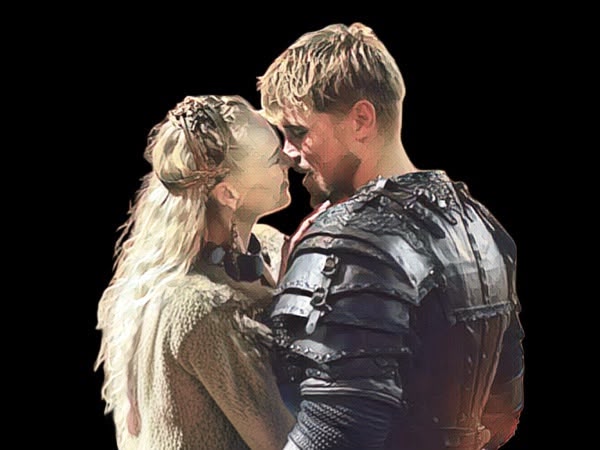
Still, I remain skeptical. I expected to feel the same curiosity that once kept me following Ragnar, Lagertha, Floki, and their children for years, even when I had already begun disagreeing with many of Michael Hirst’s creative decisions. Instead, I recognized a collection of images, situations, and conflicts that seemed to belong to stories I had already watched.
Perhaps Bloodaxe will prove that there is still new life to be found in this world. But to do so, it will need much more than swords, betrayals between brothers, and beautiful landscapes shrouded in mist. It will need to introduce us to people worth returning to that world for. Because what made Vikings extraordinary was never simply the fact that its characters were Vikings.
Descubra mais sobre
Assine para receber nossas notícias mais recentes por e-mail.

