
Spoilers for the fifth episode of season six.
Once again, Slow Horses opens with an absolutely breathtaking sequence, but a very, very violent one. We barely have time to absorb Coe’s death before we follow River as he goes after Sid, kidnapped by the Russian assassin couple. Violence takes up more and more space this season, and the opening of “Sayonara” extends the horror from the previous episode. There is no opportunity to mourn someone who has died when someone who can still be saved is being taken away.
River commandeers a car and, during the pursuit, calls Lamb to tell him what is happening. Sid, meanwhile, is also fighting to escape: she attacks Jane with the small nameplate she had hidden, causing the crash. Jim catches up with her by the lake, where he tries to drown her. River intervenes but is also overpowered; Sid recovers, strikes the assassin with a rock, and together they drown him. Jane, who appeared to be dead in the car, disappears. The sequence ends with Jim dead, but without any certainty that the threat is over.


What makes this confrontation so agonizing is the absence of any elegance. These are wounded, exhausted characters trying to keep their heads above water while stopping their attacker from coming at them again. Sid and River save each other, and their closeness now carries the weight of that shared experience. Coe’s death is still too recent for survival to feel like a comfortable victory.
After the credits, Lamb confronts Diana at work. River’s call has brought him up to speed, and he wants to understand what she owes Damien Cantor, why the businessman hired Frank Harkness, and how the Russians fit into the story. Diana finds herself in a position she has occupied frequently this season: she has to admit that Lamb’s suspicions are correct while insisting that she can manage the consequences.
She asks for trust, which, to Lamb, is practically confirmation that the situation has already spiraled out of control. The discussion about Cantor’s money is particularly revealing. Diana tries to distinguish the investment she received from selling her loyalty, but Lamb points out the problem she chose to ignore: whoever put up the money gained power over her. The way Diana describes the arrangement does not change what Cantor can demand in return.
Sid’s identity was used in the Kazan operation to protect another agent. It is important to distinguish between the two: Sid bears responsibility for an assassination she did not commit. The deletion of the records and the stolen Slough House files put the slow horses in the path of Russian retaliation. The attempt to conceal an operation compromised the very agents Diana was supposed to protect. Even her insistence that everything is under control is beginning to sound like a way of avoiding acknowledgment of the scale of the disaster.
Between one threat and the next, Sid asks River whose funeral he had attended. He tells her it was his grandfather’s. It is a small but necessary pause, because River’s grief has been practically swallowed up by the pursuit. Before losing Coe, he had already lost the person who gave his life structure and shaped his sense of belonging. The season began with a farewell and has since forced River to keep moving without being able to process it.
Lamb, meanwhile, follows Cantor’s trail to children’s ballet performances, a curious habit for someone without children. There he finds Natasha and begins investigating her. Meanwhile, the others gather at Diana’s country house, and Harkness closes in on the area in search of Reece. The hideout offers a pause, but the threat is approaching.
Sid and River’s destination also shatters any sense of safety. Picked up by MI5, they end up in a hangar. Diana intends to hand Sid over to the Russians, promising to get her back later; even after being told that the plane will fly to Bulgaria, she maintains her authorization. Sid is being turned into the solution to a problem created by her own superior.
This is where Sid’s trust in Diana takes on its most painful dimension. She spent so long insisting on speaking to her boss, convinced that the conversation could protect her, that hearing the decision also means losing the security she imagined she still had. Diana can invoke the protection of another agent and an end to the retaliation, but Sid is the one who will have to pay for those choices.
After flirting at one of the worst possible moments, even throwing in James Bond references (where to die? Paris and the pyramids, they suggest, alluding to A View to a Kill and The Spy Who Loved Me), Sid confesses that she doesn’t want to die, and River, being River, impulsively stops her from boarding, commandeering a truck and escaping with her. But midway through their escape, he tells Sid to run while he stays behind to distract their pursuers. They kiss before parting, and he ends up surrounded by MI5 agents. For him, just as for us, it was worth every second.
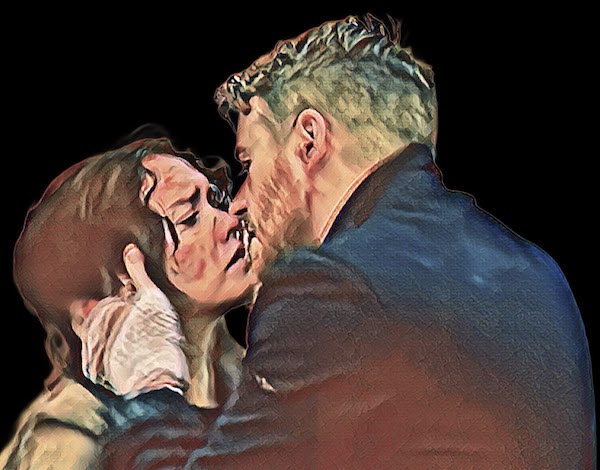
There is something consistent with River in this act of defiance, even if the ease of the escape requires some indulgence. His impulsiveness has so often landed him in disastrous situations; now, obeying the order would mean allowing Sid to be handed over. The kiss grows out of that urgency and makes their separation harder without resolving the danger surrounding them.
After so much brutality, “Sayonara” leaves its most uncomfortable dilemma in Diana’s hands. She continues to speak like someone capable of calculating losses, protecting interests, and managing what comes next. River has just seen a colleague dead and refuses to accept another person as part of that calculation. With only the finale ahead, the question is how much more the slow horses will be made to pay so that the head of MI5 can keep saying she had everything under control.
Descubra mais sobre
Assine para receber nossas notícias mais recentes por e-mail.

