
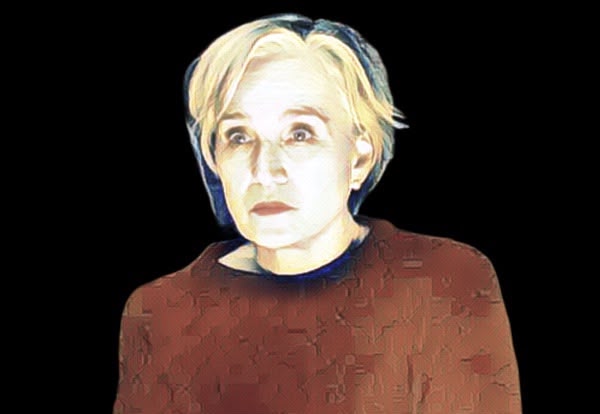
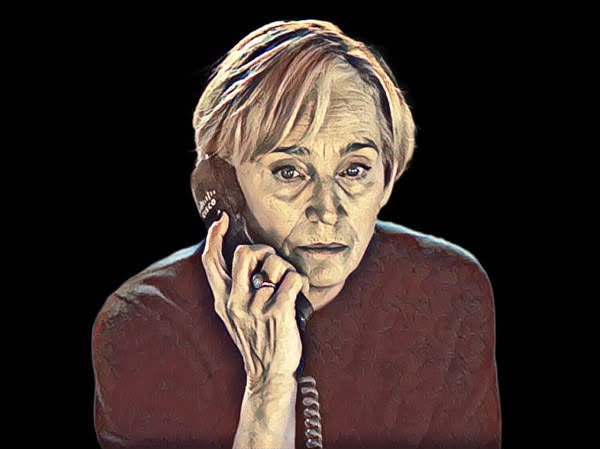
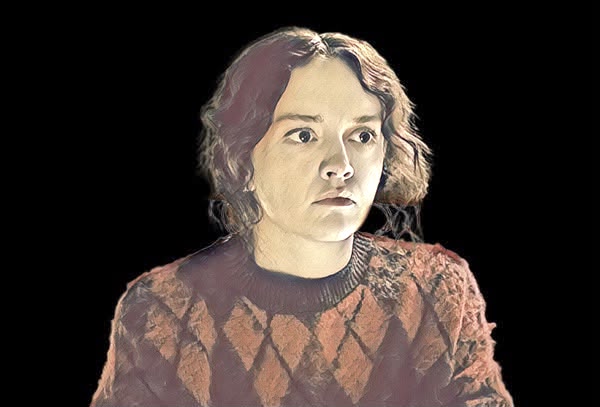
There is a question I cannot get out of my head ever since Diana Taverner (Kristin Scott Thomas) decided to hand Sid Baker (Olivia Cooke) over to the Russians in the sixth season of Slow Horses: who is the agent she is so desperate to protect? Because, surely, it must be someone extraordinarily important to justify sacrificing a woman with whom Diana appears to share a connection that goes far beyond a simple professional relationship. And the more I think about it, the more convinced I become that perhaps we are looking for the wrong person. The agent Diana wants to protect at all costs may simply be herself.
We have analyzed Diana’s personality, her ambition, her relationship with Jackson Lamb (Gary Oldman), and even the possibility that Sid might be her niece on several occasions. There is no need to revisit her ability to manipulate people or her conviction that MI5’s interests justify practically any decision. What matters now is understanding the logic behind a choice that, even for someone with her history, seems particularly cruel.
The clandestine operation in Kazan was authorized by Diana in retaliation for a Russian nerve-agent attack on British soil. The murder victim was a GRU agent involved in the earlier operation, and Diana decided to respond with the same violence, even though she had no official authorization from the British government. To finance the mission, she turned to Peter Judd, who secured the money through private investors connected to Damien Cantor. In other words, this was not a regular MI5 operation but a covert assassination carried out using funds whose origins Diana did not completely control.
The target was murdered in Kazan, but her execution had to remain disconnected from the British government. That was where Sid’s identity entered the picture. Officially dead since the events of the first season, she provided convenient cover for someone who needed to operate without leaving a trace. The problem was that the Russians managed to identify the name used in the operation and began demanding that the supposed assassin be handed over.
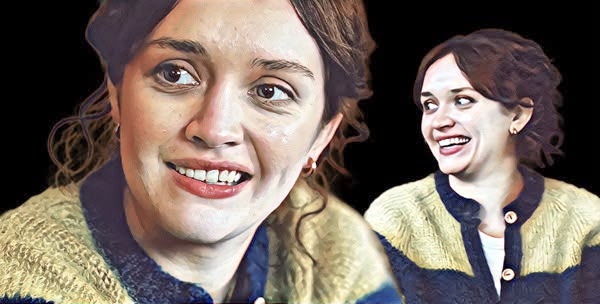
Sid had never been to Kazan. She did not kill the Russian agent, had no idea her identity had been used, and, most importantly, trusted the woman who had arranged for her survival after she was shot in the head. Even so, Diana agreed to hand her over to what would almost certainly be her death. This is where the story becomes something much more disturbing than another clandestine operation that spiraled out of control.
In the fifth episode, Diana insists that she cannot give up the real agent involved in the assassination. But who could be so indispensable? Are we talking about someone with extraordinarily sensitive information? A professional whose identity would compromise other operations? Or simply an assassin who could reveal who actually ordered the killing?
Because there is a difference between being the person who physically carries out a murder and being the person responsible for making it happen. Diana did not hold the weapon that killed the Russian agent, but she was the one who decided that woman should die, authorized the operation, and arranged the resources to carry it out. The assassin followed an order. Diana gave the order. And politically, that distinction might make very little difference.
If the real assassin were handed over to the Russians, she could reveal the entire chain of command. The investigation would no longer concern only an agent operating under a false identity but would reach the head of MI5 herself, exposing an unauthorized mission, financed with private money and carried out on foreign soil. It would not merely be a diplomatic scandal. It could mean the end of Diana’s career and an institutional crisis of unpredictable proportions.
Therefore, when she says she needs to protect the real agent, perhaps she is saying something quite different from what it appears. Diana needs to prevent the assassin from being identified because that woman is the link between the murder and the person who actually made the decision. Herself.
But Why Sacrifice Sid?
This remains the most disturbing part of the story, especially because the relationship between Diana and Sid has never been sufficiently explained.
We know Sid did not arrive at Slough House for the same reasons as the other slow horses. Diana had placed her there to observe River Cartwright (Jack Lowden), particularly because of his connection to David Cartwright (Jonathan Pryce). We also know that when Sid was shot, Diana participated in the process that allowed her to survive and disappear from official records. And then there is that intriguing reference to Diana as an aunt, which fuels the possibility of a family connection between the two women.
We have no confirmation of such a relationship, but the theory remains interesting, particularly because Sid demonstrates almost absolute trust in Diana. When she needs help, she insists on contacting her, even after River warns that turning to the Service could mean revealing her location to her enemies. Sid believes Diana will protect her because, at some point, she was given reasons to believe exactly that. And Diana knows it.
It is possible that a genuine emotional connection exists between them, even if they are not related. Perhaps Diana followed Sid’s career from the beginning, or perhaps she assumed a special responsibility for her after the attack that nearly killed her. The question is that none of this seems sufficient to prevent Diana from using Sid as a bargaining chip when her own position is threatened.
If our family-connection theory turns out to be correct, the decision becomes even more cruel. Diana would not simply be sacrificing a trusted subordinate but someone from her own family. And if the theory is wrong, the betrayal remains deeply personal, because Sid placed her trust in precisely the woman she had every reason to distrust.
The most perverse detail is that Diana did not need to invent an identity to frame Sid. She used the identity of a woman she herself had helped erase from official records. The protection she offered in the past became the very mechanism that would allow her to sacrifice Sid in the present.
What Does Mick Herron Reveal in the Books?
In Slough House, Mick Herron’s seventh novel, the story opens with the assassination of the Russian agent. The victim is approached by two people, and a woman stabs her in a carefully orchestrated ambush. Shortly afterward, Diana receives news of the killing and expresses satisfaction with the result.
The book makes her responsibility for the operation clear. The assassination was authorized by Diana without government approval and financed through funds secured with Judd’s assistance. The identity of the actual killer, however, does not become a major personal revelation that explains some secret connection to Diana. What matters to the plot is the political responsibility of the head of MI5 and the chain of interests her decision sets in motion.
The television adaptation has added a particularly dramatic element by using Sid’s identity as cover and developing her relationship with Diana. This allows the series to transform a political conflict into a personal betrayal, adding an emotional dimension that makes Diana’s choices even harder to accept.
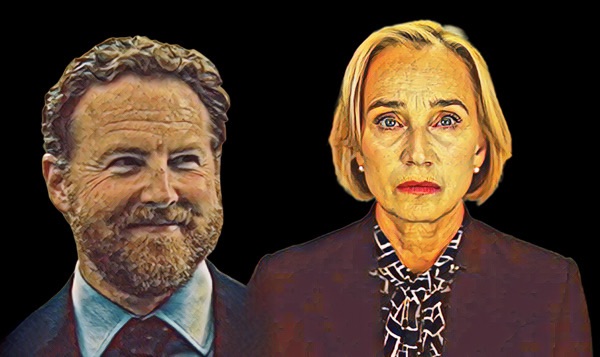
We must also remember that the conspiracy does not end with Sid’s handover. Judd and Cantor’s involvement places Diana in an increasingly vulnerable position. The money used to finance the operation ultimately gives those involved leverage over her, while information about Slough House reaches the Russians and triggers a series of assassinations.
Thus, the woman who believed she could control a clandestine operation without answering to anyone discovers that she has created a network of dependencies and blackmail capable of compromising everything she has achieved.
So, Who Is Diana Really Trying to Save?
There are at least two possible answers. The first is the one Diana herself offers: there is an agent whose identity must remain protected, either because of her operational value or because revealing it could compromise other Service activities. We cannot dismiss that explanation, especially since we still do not know every detail of the operation in the television version.
But the second answer seems far more interesting to me. Diana is protecting the person who ordered the assassination, used private funds to finance it, allowed an innocent woman’s identity to be compromised, and now needs to prevent the entire operation from being exposed. Herself.
That does not mean Diana personally murdered the Russian agent. It means that, if the truth comes out, discovering who held the weapon may be the least important part of the scandal. What really matters is who decided the woman should die and who had the authority to prevent it from happening. And that person is Diana Taverner.

The fifth episode has not yet solved the mystery, but it has made the question unavoidable: what kind of connection could Diana have with Sid that would explain such apparent closeness while still allowing her to hand the young woman over to the Russians? And what could possibly matter more than the life of someone she apparently cares about?
Perhaps the answer is simpler, and more terrible, than we expect. Diana does not need to love the real assassin to protect her. She only needs to know that, if the woman talks, everything could come crashing down. And in the world of Slow Horses, few things seem to frighten Diana Taverner more than losing the power she has spent her entire life trying to achieve.
Descubra mais sobre
Assine para receber nossas notícias mais recentes por e-mail.

