
Slow Horses has always been a series about espionage, betrayal, institutional incompetence, and disastrous decisions made by people who believe they are above the consequences. But its sixth season may be the most confusing yet. Not because information is missing, but because it arrives in such fragmented pieces that it becomes difficult to establish who is working for whom, who ordered what, and, most importantly, why so many agents are dying.
The adaptation combines elements from two Mick Herron novels, Joe Country and Slough House, developing two seemingly parallel conspiracies that eventually intersect. As so often happens in this universe, the connection leads back to a questionable decision made by Diana Taverner (Kristin Scott Thomas). What initially appears to be another clandestine operation gone wrong ultimately exposes something far more disturbing: how deeply a national intelligence service can be compromised by the personal and financial interests of the people supposed to protect it.
Admittedly, Slow Horses has never tried to make things easy for its audience. The difference this time is that the violence is increasingly explicit, characters die before we fully understand the circumstances, and the political explanations sometimes feel almost incidental. The operation in Kazan, Russia, functions as a kind of MacGuffin, the event that sets the entire story in motion, even though we know remarkably little about how it was carried out.
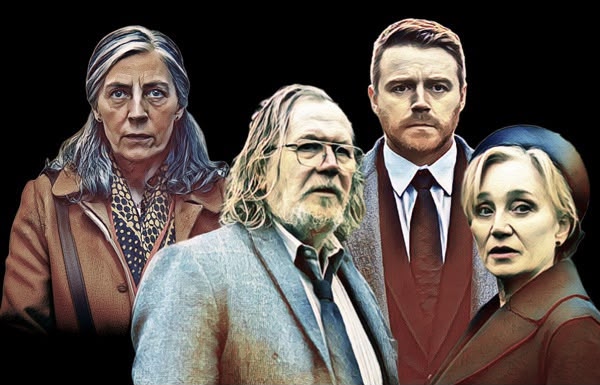
Kazan: The Secret Mission That Started Everything
It all begins with a clandestine operation authorized by Diana Taverner on Russian territory. Following a Novichok attack on British soil that killed an innocent civilian, Diana decided to retaliate by ordering the assassination of a woman connected to Russian intelligence. The problem was that the mission had neither official authorization nor institutional funding. To carry it out, Diana turned to private money, establishing a relationship of dependence that would eventually threaten her career.
We do not know exactly who carried out the assassination, how the mission unfolded, or the full extent of its consequences. The operative used the identity of Sid Baker (Olivia Cooke), who had officially been declared dead after the events of the first season. It was a convenient way to protect the real assassin, but also a mistake that would open the door to a succession of deaths.
The Russians identified Sid as the person responsible and demanded revenge. When they discovered that her records had been erased, the trail led to Slough House, where she had once worked. Her former colleagues were subsequently identified as members of a possible British assassination unit. A list of agents became a list of targets.
This is where the season demands additional effort from the viewer. The deletion of electronic records and the disappearance of physical files are separate but connected events. The first decision was intended to conceal Sid’s identity and, by extension, Diana’s operation. The second placed information about everyone who had passed through Slough House into the wrong hands.
Why would the Russians consider the execution of an entire group justified when its members had not participated in the original operation? The logic of retaliation is established, but its escalation remains poorly developed. In practical terms, the slow horses are paying for a mission they knew nothing about, authorized by a superior who shows no willingness to accept public responsibility.
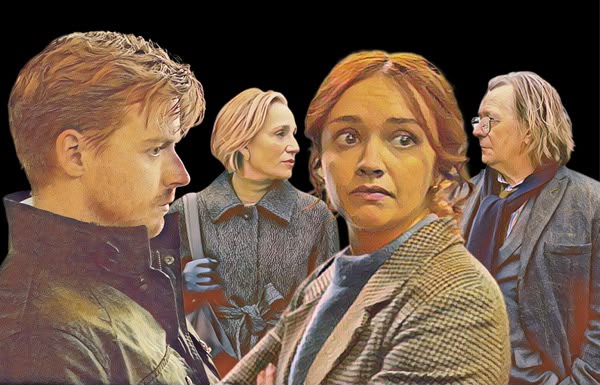
Peter Judd, Damien Cantor, and the Price of Private Money
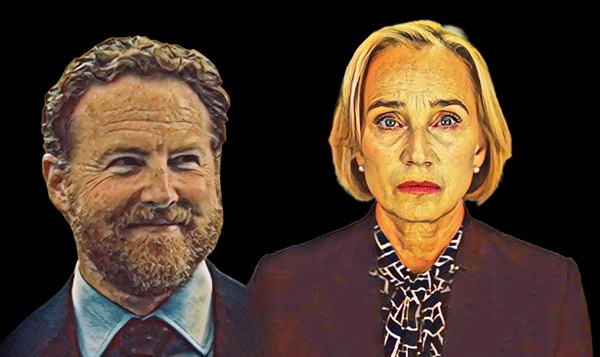
The second conspiracy begins with Peter Judd (Samuel West), an influential politician and former member of the British government. Judd helps arrange private financing for intelligence operations, acting as an intermediary between Diana and wealthy businessmen who recognize the opportunities such relationships can provide.
Through him, we encounter Damien Cantor (Harry Lloyd), a media tycoon and owner of the news channel Channel Go. Cantor is the financier behind the money used for the Kazan operation. Diana insists on treating the arrangement as a necessary investment rather than a surrender of her independence. But that distinction is remarkably convenient for someone who now finds herself answering to the man who paid the bill.
The disastrous interview Diana gives to Cantor’s channel is the first visible demonstration of this dependence. This is not simply a powerful intelligence executive being subjected to uncomfortable questions. It is a display of influence. Cantor manages to place the head of MI5 in a situation she would never have accepted had she genuinely remained in control.
And Cantor’s ambitions extend well beyond British politics. Through Natasha Carrington, he is negotiating an enormous media distribution deal in Russia. The prospect of gaining access to that market brings his commercial interests dangerously close to those seeking revenge for Diana’s clandestine operation.
What exactly was promised in exchange for the deal? How much did Cantor know about the intended use of the stolen files? And when did Diana realize that financing the mission had cost her considerably more than her independence? These are questions the season introduces without necessarily providing complete answers.
The result is an absurd situation: an operation supposedly undertaken in defense of British interests is financed by a businessman hoping to profit from his Russian connections. Money intended to protect the country helps create a network of blackmail that compromises the safety of its own intelligence officers.
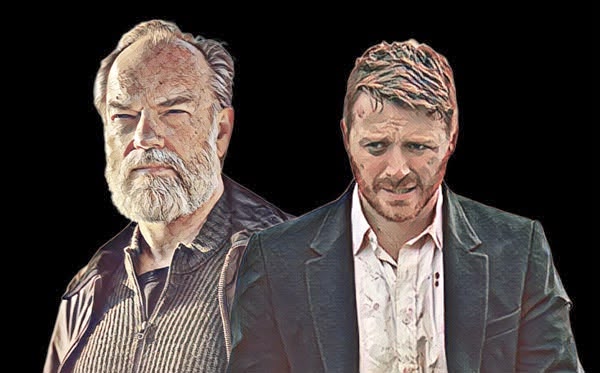
Andrew Nesmith, Reece, and the Return of Frank Harkness
This is where the second wave of killings enters the story. Andrew Nesmith, a former member of the Dogs, MI5’s internal security unit, steals the physical files identifying the agents connected to Slough House. The documents, obtained for Cantor through Frank Harkness (Hugo Weaving), eventually help fuel the pursuit of Lamb’s agents.
Nesmith, however, becomes a liability to the people who hired him. After stealing the documents, he demands more money, and Harkness is instructed to eliminate him. The murder should have ended Nesmith’s involvement in the scheme, but his son Reece witnesses the crime and manages to escape.
From that moment, Harkness pursues the boy, who possesses information capable of establishing a connection between his father’s death, the stolen files, and Cantor. Reece is no longer merely an inconvenient witness. He becomes someone who could compromise the entire operation.
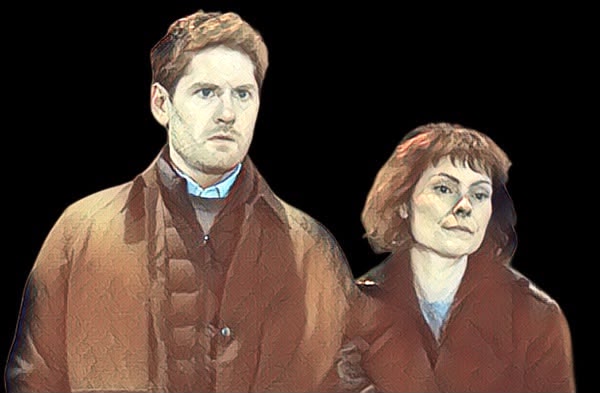
It is important to understand that Harkness is not directly responsible for the assassination campaign against Slough House. He works for Cantor, eliminating loose ends connected to the theft of the documents. Jim (Kyle Soller) and Jane (MyAnna Buring), meanwhile, are the assassins involved in the Russian retaliation. The two operations intersect because the leaked files provide the Russians with the identities of agents who once belonged to Lamb’s unit.
That distinction is fundamental, and also one of the reasons the season feels so complicated. There are different groups of killers, different employers, and different objectives, yet all of them ultimately lead to the same set of victims.
Harkness’s return adds another dimension to the story. As River Cartwright’s (Jack Lowden) biological father, he represents a personal threat that goes far beyond his work as a mercenary. His relationship with Lamb also carries unresolved events from the past, including references to Berlin and the veteran MI5 officer’s history. In this universe, no operation ever seems entirely finished. The past always finds a way back, usually carrying a weapon.
The Russians, Sid, and the Sacrifice of Innocent People
The violence against Slough House begins with deaths that appear disconnected, including former members of the unit, before developing into a systematic campaign. Moira Tregorian survives an assassination attempt, but J.K. Coe (Tom Brooke) is not so fortunate. His death at Jim’s hands is one of the season’s most brutal moments and reinforces the sense that nobody is truly safe.
Sid, meanwhile, discovers that she is being hunted for a crime she never committed. Her return should have offered an opportunity to clarify the events of the first season, but instead exposes how easily an intelligence officer can be erased, reused, and ultimately discarded by the very institution she serves.
Diana knows Sid did not carry out the Kazan operation. She also knows the real operative was protected by her own decision. When the Russians demand the assassin’s surrender, the head of MI5 chooses to offer Sid as a substitute, promising that she will eventually arrange to recover her. That promise becomes particularly difficult to believe when it is revealed that the plane will head to Bulgaria, where Sid’s safety would be entirely compromised.
Diana’s conversation with Sid in the fifth episode is revealing. She practically admits that she cannot surrender the real operative but considers sacrificing Sid acceptable. There is discomfort in her decision, perhaps even guilt, but none of it is sufficient to make her reconsider.
River, on the other hand, refuses to accept Sid’s surrender. After helping her survive the confrontation with Jim and Jane, he confronts MI5 agents to prevent her from being handed over to the Russians. Their romantic rapprochement, established in the first season and finally realized, becomes more meaningful precisely because River refuses to obey an order he considers morally indefensible.
The irony is that the British agents who should be protecting them become almost as threatening as the people who tried to kill them. River must choose between fulfilling his institutional obligations and protecting someone he loves. He chooses Sid, even at the risk of his own freedom.
Jackson Lamb and Diana Taverner: Two Very Different Ideas of Loyalty
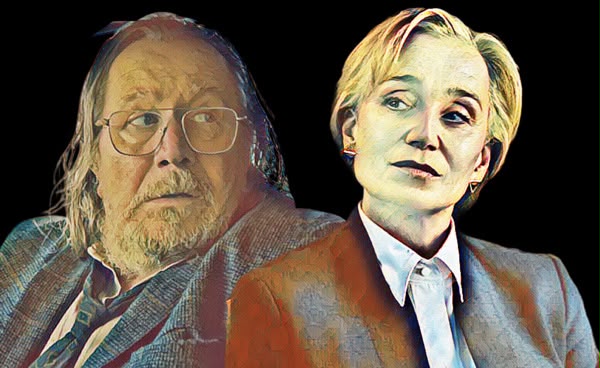
This is where the season finds its most interesting conflict. Jackson Lamb (Gary Oldman) and Diana Taverner understand the inner workings of British intelligence exceptionally well. Both know how to lie, manipulate, negotiate, and use unconventional methods. But there is a fundamental difference between them.
Diana believes, or at least claims to believe, that she is protecting the institution. Lamb knows that such justifications frequently serve to protect the interests of those occupying its highest positions.
He has personally experienced the consequences of that logic. His past in Berlin, marked by betrayal, torture, and the death of the woman he loved while she was pregnant, reveals the violence beneath his seemingly insensitive personality. Later, he was forced to execute a friend who had betrayed the service, acting on David Cartwright’s (Jonathan Pryce) orders. Lamb was not simply sacrificed by the intelligence machine. He was also forced to become one of its instruments.
That experience helps explain his cynicism and his contradictory relationship with the slow horses. He humiliates them, insults them, dismisses their abilities, and seems to consider Slough House a dumping ground for incompetents. Yet there is a boundary he refuses to cross: his agents are his responsibility.
That does not make him morally irreproachable. Lamb remains capable of manipulation, violence, and cruelty. Nor does his protectiveness necessarily amount to redemption. Perhaps it is something else entirely: an attempt to prevent his subordinates from paying the same price he once paid.
Diana represents the opposite logic. The safety of the institution and the preservation of her position seem to justify virtually any sacrifice, particularly when the victim does not belong to the circle of those exercising power. Sid can be surrendered. The slow horses can die. What matters is preventing the scandal from reaching the person who authorized the operation.
The opposition is also visual. Lamb works in a decaying building, surrounded by old furniture, dirt, and agents condemned to institutional oblivion. David Cartwright, once a powerful figure in British intelligence, has ended up in a comparatively modest home, surrounded by memories of influence that has long since disappeared. Diana, by contrast, enjoys comfort, elegance, and privilege.
There is no indication that her luxurious lifestyle is the result of illicit enrichment, but the contrast is significant. Diana enjoys the rewards of a system Lamb despises and Cartwright can no longer control. Her country house, now transformed into a refuge for the slow horses, is perhaps the clearest representation of that material distance.
And there is an almost perfect irony in the possibility that this privileged sanctuary might become the setting for another tragedy. The violence Diana has always managed from behind her desk may finally reach her own property.
Judgment Day: Why Must Lamb and Diana Join Forces?
The season finale, titled Judgment Day, premieres on October 21, and its official synopsis announces that the safe house will become unsafe as Lamb and Diana finally join forces. It is a brief description, but particularly intriguing after everything we have witnessed.
Why would Lamb agree to collaborate with a woman willing to surrender Sid to the Russians? And why would Diana need the help of an agent who has spent the season investigating the very decisions threatening to destroy her?
The most likely answer lies in necessity rather than trust.
Lamb needs to stop his agents from being murdered. Diana needs to neutralize a crisis that has moved beyond her control. Cantor’s money, Russian interests, the stolen files, and the Kazan operation have created a network of competing agendas that neither can dismantle entirely on their own.
Diana still possesses the institutional authority required to negotiate, terminate operations, and guarantee official protection. Lamb understands the people, the lies, and the methods employed by those trying to conceal their crimes. He can reach places where Diana’s formal authority is no longer effective.
In Herron’s novels, this dynamic is built through negotiations, threats, and converging interests. But the television adaptation has changed important events, and we cannot assume the ending will be identical.
There is also the possibility of another death. After David Cartwright and Coe, readers of the novels know that other tragic fates may or may not survive the adaptation, including that of Emma Flyte (Ruth Bradley), the agent demoted by Diana. And Slough House contains a particularly distressing ending involving River and Sid, which we have already discussed. None of this confirms that the series will follow the books, but it makes anticipation of the finale even more painful.
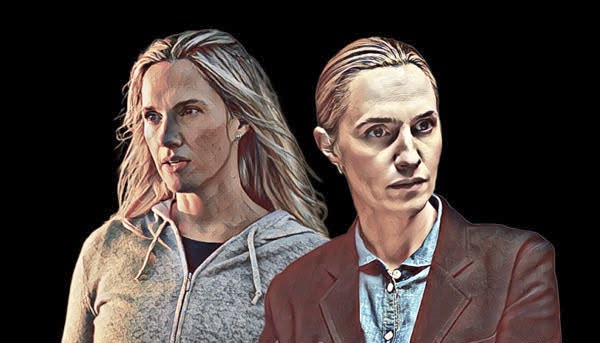
What we do know is that Jane remains a threat, Harkness is still involved in concealing Nesmith’s murder, and the relationship between Cantor and his Russian contacts remains unresolved. There are plenty of loose ends for a single episode, even one with an extended running time.
Perhaps Judgment Day will manage to organize these two conspiracies and explain what has seemed unnecessarily complicated over five weeks. Perhaps it will favor action and leave certain questions unanswered. Either way, the meeting between Lamb and Diana will be far more interesting if the series remembers what separates them.
After all, Diana is a powerful woman who has placed lives in danger to preserve her own position. Lamb is a man destroyed by the institution who still finds reasons to protect the people it considers disposable.
And one question sums up what is really at stake: who is actually defending British intelligence? The woman occupying one of its most powerful offices, or the man condemned to manage its failures?
The sixth season may have made a story unnecessarily difficult to follow. But by bringing Lamb and Diana together, it has an opportunity to recover what has always made Slow Horses much more than a good spy thriller: the idea that loyalty is not about blindly obeying an institution, but recognizing our responsibility toward the people we place in danger.
Descubra mais sobre
Assine para receber nossas notícias mais recentes por e-mail.

