
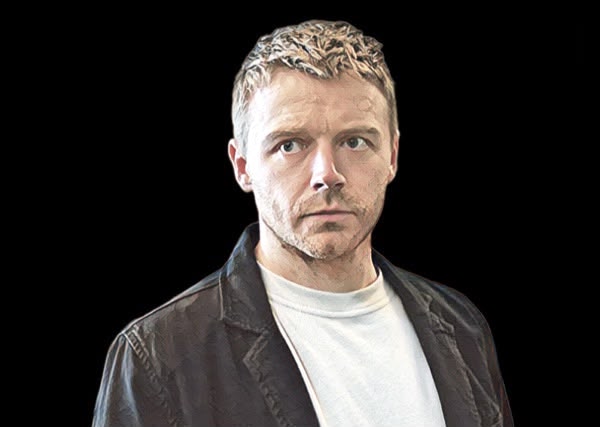
Slow Horses has never been a show about romance, although its characters are constantly trying to survive loss, betrayal, and relationships that rarely end well. In Mick Herron’s universe, finding someone you can trust is difficult enough, let alone falling in love. But ever since the first season, there has been a special connection between River Cartwright (Jack Lowden) and Sid Baker (Olivia Cooke), two agents who were clearly attracted to each other before they even had the chance to discover where that attraction might lead. The problem is that, directly or indirectly, Diana Taverner (Kristin Scott Thomas) seems determined to destroy any possibility of happiness. And in Slow Horses, whenever Diana becomes involved in someone’s life, the chances of tragedy increase considerably.
River and Sid are an unlikely couple, but not because they lack chemistry. From the beginning, they teased each other, competed with one another, and disguised their attraction behind their professional relationship. Sid was the more competent and observant of the two, while River already displayed that irresistible and infuriating combination of intelligence, courage, arrogance, and impulsiveness. He always wanted to be a great secret agent, particularly because he grew up listening to stories about his grandfather, David Cartwright (Jonathan Pryce), one of the most important figures in MI5 history. Sid, on the other hand, seemed to understand the rules of the game much better and, more importantly, the consequences of breaking them.
The first great irony is that Sid should never have been at Slough House in the first place. Diana had placed her there to monitor River and his connection to his grandfather, but the assignment ended disastrously when Sid was shot in the head. River believed she had died, although the disappearance of her official records suggested that something far more complicated was happening. In reality, Sid survived, had her identity erased by the Service, and spent years living in hiding, under the protection of a woman who, as we would eventually discover, would not hesitate to sacrifice her when it became convenient.
For River, however, Sid was dead. And perhaps we never fully appreciated how deeply that affected him, partly because Slow Horses rarely interrupts its espionage plots to explore its characters’ feelings at length. Grief exists, but it is almost always expressed through silence, sarcasm, or some particularly disastrous decision. River continued trying to rebuild his career, earn Jackson Lamb’s (Gary Oldman) respect, and prove that he deserved a place at Regent’s Park, without realizing that his greatest difficulty might not be professional but emotional.
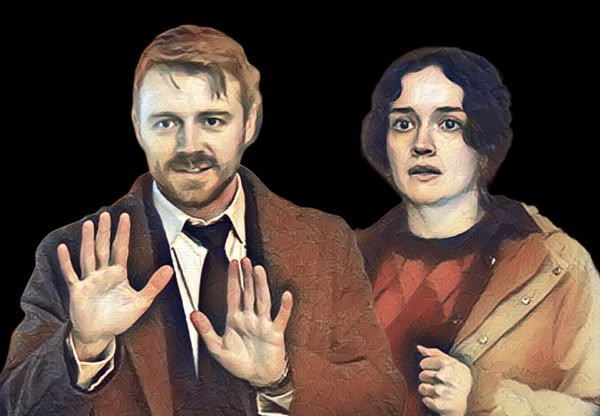
During that time, he grew closer to Louisa Guy (Rosalind Eleazar), who also knew the pain of losing someone. Louisa had been romantically involved with Min Harper (Dustin Demri-Burns), who died in the second season, and she never completely recovered from his death. Between her and River, a friendship developed based on trust, companionship, and the shared experience of working in a team that, despite all its dysfunction, had become something of a family. There were moments when a romantic relationship seemed possible, but the show was wise enough not to force that direction.
In the fifth season, when Louisa decides to leave Slough House and attempt to rebuild her life, River mistakenly interprets their farewell conversation as an invitation to romance and kisses her. The awkwardness is immediate. Louisa was not declaring her love; she was trying to explain that she needed distance, partly because River remained incapable of recognizing and processing his own losses. It is a scene that perfectly captures his character: River can confront professional assassins, but he has enormous difficulty understanding what a woman is trying to tell him.
With Sid, however, things have always been different. Perhaps because she knew him before so many tragedies, or perhaps because she never showed the slightest willingness to indulge his ego. Sid has always seen River with a clarity he has yet to develop about himself. And when she reappears in the sixth season, after years in hiding, he is precisely the person she turns to for help.
There is something touching about the fact that, after everything she has endured, Sid chooses to trust the man who probably has the least respect for MI5’s rules. She knows River is impulsive, that he frequently makes terrible decisions, and that his constant need to prove himself can put everyone in danger. But she also knows that he would never hand her over to the enemy to protect his career. Something we certainly cannot say about Diana Taverner.
Diana Taverner and the Decision to Sacrifice Sid
The sixth season reveals the full extent of the betrayal. Diana authorized a clandestine operation in Kazan, Russia, to assassinate an agent connected to a nerve-agent attack on British soil. Since the mission could never be officially acknowledged, the Service used Sid’s identity, belonging to a woman who was already dead on paper, to conceal the real assassin.
When the Russians demand that the killer be handed over, Diana decides to offer Sid. She knows perfectly well that her former protégé did not commit the murder and that surrendering her to the GRU would almost certainly mean condemning her to death. But admitting responsibility for the operation would jeopardize Diana’s position within MI5 and expose a chain of decisions involving much greater political and financial interests, including Peter Judd and Damien Cantor.
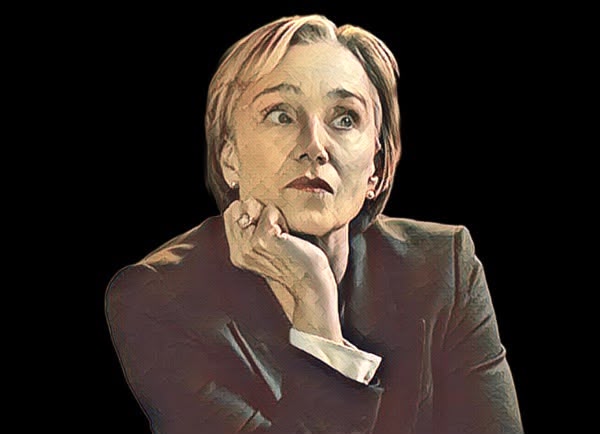
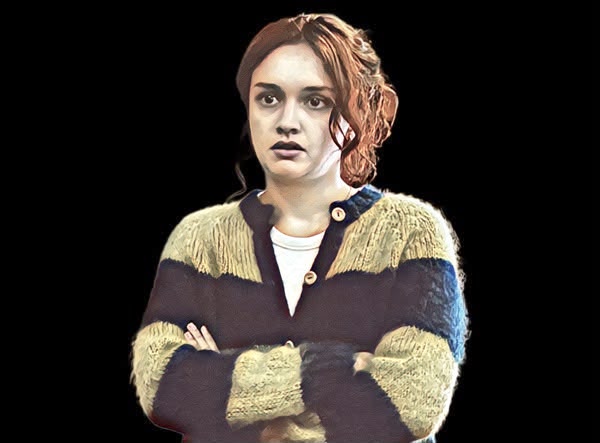
It is difficult to imagine a clearer demonstration of Diana Taverner’s logic. She is not simply choosing between protecting one agent and sacrificing another. She is preserving her own authority, even if it means destroying someone she once promised to protect. Sid had her identity erased so she could remain alive, and now she risks dying precisely because, administratively speaking, she no longer exists. For Diana, it is an almost perfect solution. For anyone remotely concerned with loyalty, it is monstrous. River, naturally, refuses to accept it.
The fifth episode of the sixth season, Sayonara, finally delivers the emotional reunion we have been waiting for since the beginning of the series. After surviving a brutal pursuit that ends with the death of the assassin Jim, River and Sid are separated once again by Diana’s determination to complete her negotiations with the Russians. The two flirt under absolutely absurd circumstances, even exchanging James Bond references, before Sid admits that she does not want to die. And River does what River always does: breaks the rules, ignores orders, and acts before considering the consequences.
He prevents the handover, commandeers a truck, and escapes with Sid, defying Diana, MI5, and the Russians. There is no brilliant plan, no carefully constructed strategy, and certainly no guarantee of success. River simply refuses to allow the woman he once believed he had lost to be sacrificed again by the very people who were supposed to protect her.
And there is something liberating about that decision. River has spent his entire life trying to prove that he deserves to be an important agent, but at that moment he seems to understand that Diana’s approval is worth absolutely nothing. The worst professional punishment he could imagine has already happened: he is at Slough House. And although disobeying the head of the Service could have far more serious consequences, saving Sid matters more than any chance of professional rehabilitation.
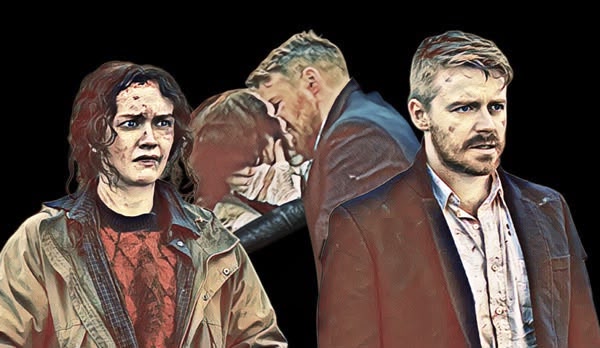
When he realizes they cannot escape together, he tells Sid to run while he stays behind to distract their pursuers. Before separating, they finally kiss. A kiss that, interestingly enough, was not even in the original script and was suggested by Olivia Cooke and Jack Lowden themselves during filming. An excellent decision, because it would have been almost cruel to make the audience wait six seasons for these two characters to acknowledge their feelings and then deny them that moment.
River ends up surrounded by MI5 agents, but Sid manages to escape. And this time, he does not seem to regret anything. For someone who has always wanted to be recognized as a hero, it may have been his most genuinely heroic act.
What Happens to River and Sid in the Books?
This is where we enter major spoiler territory, including the possible ending of the sixth season, should the adaptation follow the events of Slough House, Mick Herron’s seventh novel.
After surviving the Russian assassins, River and Sid finally seem to have a chance to be together. However, at the end of the novel, a nerve agent is placed on the door handle of David Cartwright’s house, and River becomes contaminated. Sid finds him collapsed and agonizing, desperately trying to keep him alive while calling for help. The book ends without revealing whether he survives, leaving readers facing the possibility of losing one of the saga’s most important characters.
We know the series has already changed some of the events involving the assassins Jim and Jane, so there is no guarantee that the season finale will reproduce this sequence exactly. But it would be a particularly cruel ending, especially after watching River risk everything to save Sid. He manages to prevent Diana from handing her over to the Russians, only to become the next victim of a conspiracy that continues to claim lives.
The good news is that River survives. Subsequent novels reveal that the poisoning was not fatal, although it caused serious consequences and required a long recovery. In Bad Actors, the eighth book, his involvement in the action is greatly reduced. In Clown Town, the ninth novel, he is still dealing with the physical and professional consequences of the attack, trying to prove that he has recovered and deserves to return to the Service.
River remains connected to the world of Slough House, but he has not simply returned to his old routine. His medical condition and professional status become part of the story, while he remains unable to abandon his desire to work as an agent again. Even while sidelined, he ends up investigating the disappearance of a book from his grandfather’s library, an apparently insignificant discovery that connects to much larger events.
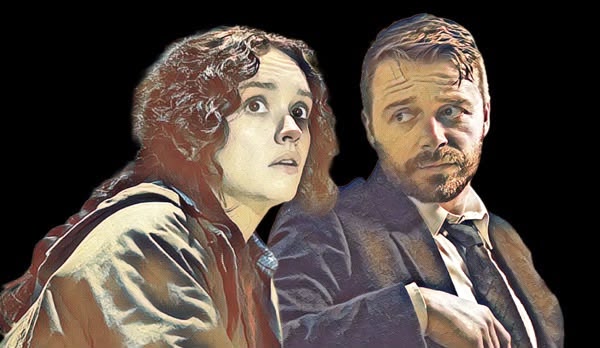
And Sid? Not only does she survive, but she finally becomes River’s partner. In Clown Town, the two are living together, although she has decided to leave the Service and build a life away from MI5. It is a perfectly understandable choice for someone who was shot, had her identity erased, spent years in hiding, and was nearly handed over to the Russians to answer for a murder she did not commit.
The contrast between them is fascinating. Sid knows the horrors of MI5 and wants nothing more to do with it. River knows those horrors too, yet he still wants to belong. She has understood that survival may be more important than being recognized as a good agent. He still believes he needs to prove his professional worth to justify his own existence.
Diana, inevitably, continues interfering. In Clown Town, she uses River’s professional situation to pressure Sid into participating in a new operation involving former agents and compromising Service secrets. The mission once again places Sid in danger, demonstrating that leaving MI5 does not necessarily mean escaping its influence.
It is almost a love triangle, although of a very different kind. River wants Sid, Sid wants River, but both remain, in some way, trapped by Diana Taverner. The woman who separated them in the past is still capable of manipulating their present and threatening their future.
Will Jack Lowden Appear Less? And What About Olivia Cooke?
If the seventh season follows Bad Actors, it is entirely possible that Jack Lowden will have fewer scenes than we are used to. After all, River spends much of the novel away from the action, which could even allow the actor to dedicate himself to other film and television projects without leaving Slow Horses.
But a reduced role does not mean leaving the series. We are talking about an ensemble drama in which characters continue to exist even when they are not directly involved in a mission. River’s recovery, his relationship with Sid, and his frustration at being unable to work provide more than enough dramatic material to keep him present, even if he receives less attention.
The prospects for Olivia Cooke are equally interesting. Her return in the sixth season has already demonstrated that Sid remains important to the story, and the subsequent novels offer concrete reasons for the character to stay. After all, she not only becomes River’s partner but also gets involved once again in Diana’s conspiracies.
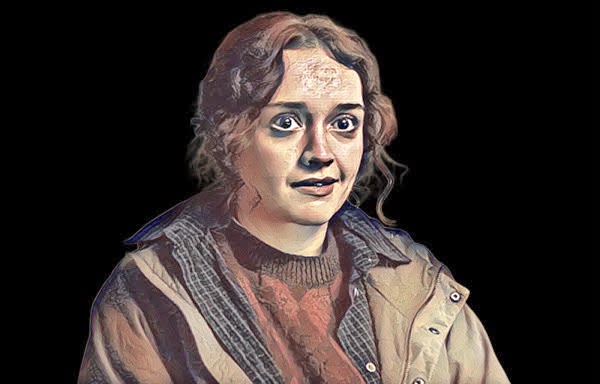
There is also a practical consideration. Olivia managed to film her scenes for the sixth season of Slow Horses while she was still involved with House of the Dragon, in which she plays Alicent Hightower. With the HBO series heading toward its fourth and final season, her schedule may become more flexible, potentially allowing her to take on a larger role in Apple’s production.
None of this confirms that we will see Sid more frequently, but it certainly seems like a reasonable bet. If Cooke has already managed to balance both productions, there is no obvious reason to imagine that the conclusion of House of the Dragon would make her return more difficult. On the contrary, the character’s development in the novels and her relationship with River make the possibility particularly appealing.
It would also be interesting to see a more mature Sid, who is no longer trying to establish herself within MI5, contrasted with a River who remains trapped by the expectations he developed in childhood. Olivia Cooke and Jack Lowden have undeniable chemistry, and it would be a waste not to make better use of a relationship that has taken so long to happen.
The Game of Thrones Fear: Is Slow Horses Catching Up With the Books?
But the future of River and Sid is not the only issue we will need to watch. There is another concern, perhaps an even greater one, for anyone who admires the narrative consistency of Slow Horses: the series is rapidly catching up with Mick Herron’s novels.
The sixth season adapts Joe Country (2019) and Slough House (2021). The seventh will be based on Bad Actors (2022), while the eighth, officially confirmed by Apple in September 2026, will adapt Clown Town (2025), the ninth book in the main series. In other words, by the time the eighth season arrives, television will have caught up with the latest novel published so far. It is impossible not to think of Game of Thrones.
The HBO series began as one of television’s most impressive adaptations, benefiting from the complex characters, conflicts, and political relationships developed by George R. R. Martin in his novels. However, once the production moved beyond the published books, it increasingly had to rely on its own narrative solutions, and the final result remains the subject of heated debate among fans. The acceleration of events, changes in characterization, and some unconvincing decisions created the impression that the television series had lost part of the complexity that originally made the story so extraordinary.
Naturally, Slow Horses is a different situation. Herron writes relatively self-contained espionage novels, with conspiracies that reach their conclusions while the characters continue to evolve. There is no gigantic mythology waiting for a single resolution, as was the case in Westeros. Furthermore, Apple’s adaptation has already demonstrated that it can change characters, rearrange events, and even alter deaths without necessarily compromising the essence of the story.
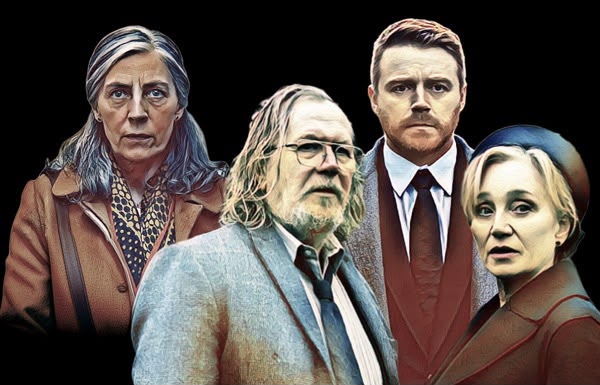
But that does not mean the risk is nonexistent. Part of the brilliance of Slow Horses lies in the way Herron balances humor, violence, politics, and the emotional development of characters who frequently behave in absolutely unbearable ways. Jackson Lamb is the perfect example: grotesque, cruel, brilliant, and, paradoxically, perhaps the only boss genuinely concerned with the survival of his subordinates. Diana Taverner is his institutional counterpart, equally intelligent but capable of sacrificing anyone to preserve the system to which she belongs.
If the series continues beyond the available novels, it will need to maintain that sophistication without relying entirely on Herron. It could also wait for new books, explore other stories by the author, or develop original plots, but any of those choices will require care. After all, assembling Gary Oldman, Kristin Scott Thomas, Jack Lowden, and an extraordinary supporting cast is not enough if the story stops offering conflicts worthy of its characters.
And perhaps River and Sid represent one of the most interesting possibilities for the future. Because Slow Horses has always shown us how the Service destroys the lives of those who work for it, but has rarely explored what it means to try to build some happiness after surviving that world.
Sid has already understood that she needs to leave. River has not. She wants to live; he is still trying to prove that he deserves to be a spy. And between them remains Diana’s influence, determined to exploit every vulnerability for her own benefit.
After so many deaths, farewells, and betrayals, allowing a couple in Slow Horses to have a happy ending would be almost revolutionary. But this is not a romantic comedy, and Mick Herron has never shown any hesitation about killing off beloved characters.
For now, however, we can celebrate a small victory. After spending years believing Sid was dead, River finally had the chance to save her and, for the first time, seems to have made a decision without worrying about MI5’s approval.
He has spent his entire life trying to become the agent he imagined his grandfather wanted him to be, but perhaps he only managed to show who he really is when he decided to ignore every rule.
And for Sid, who has been sacrificed so many times by the Service, finding someone willing to risk everything rather than lose her again may be the best definition of love the world of Slow Horses is capable of offering.
Descubra mais sobre
Assine para receber nossas notícias mais recentes por e-mail.

