
There is a kind of marital loneliness that does not depend on an absence of love. It emerges when you know the person you married intimately, understand their fears, absorb their frustrations, but realize that someone else makes their eyes light up. In The Diplomat, Todd Penn finds that other man in Hal Wyler. What makes the situation interesting is that the intimacy threatening him develops through meetings, decisions, and political disputes.
Bradley Whitford turns that discomfort into one of the show’s best recent additions. His Todd wants to participate, to be useful, to earn the admiration of Grace, the woman who now occupies the US presidency. He has a history with her and knows her intimately, but watches Hal claim a place that marriage cannot guarantee him. His crisis is existential and, quite literally, a crisis of role: what do you do when your main function becomes accompanying someone else?

Created by Debora Cahn, The Diplomat places a man in a position women have known for a very long time. The person who accompanies, supports, accepts the schedule dictated by a spouse’s career, and must find an occupation compatible with the importance of standing beside them. A position surrounded by privilege that can produce a profound sense of uselessness. Todd has access to the center of power and very little control over what happens there.
We should distinguish this experience from the idea that first ladies have no purpose or influence. Many have built substantial roles of their own. The issue lies in the expectation that their public existence should be organized around their husband’s trajectory. Todd experiences this loss of autonomy and does not handle it particularly well. He recognizes the absurdity of the situation, even with humor, but still wants someone to offer him a role worthy of his proximity to the president.
When he appears in Season 3, he already carries the cost of that position: he has accepted a story about misusing research funding to protect Grace. Later, while others discuss how to address a crisis, he swims endless laps in the pool. There is affection, too: the couple can end a difficult day holding hands in bed. Their marriage contains real intimacy and sacrifice.
That is why reducing Todd to a jealous husband diminishes the character. As I see it, he wants to preserve something that existed between them, but also achieve a form of recognition he may never have received in quite the way he wants. Being the man Grace trusts is not the same as being the person whose intelligence she seeks out to develop a solution.
Hal offers her that partnership. They share a professional energy that makes Todd uncomfortable. Cahn herself has described his pain as he watches his wife become excited by the possibility of changing the world alongside someone else. Grace and Hal’s relationship is political, but its effect on Todd is marital.
And politics here is intoxicating. Anyone who has witnessed a discussion in which nobody can let the subject go will recognize that excitement: the hypothesis, the argument, the imagined victory, the pleasure of realizing before everyone else how the pieces might fit together. For certain characters in The Diplomat, solving a crisis is an experience of connection and seduction.
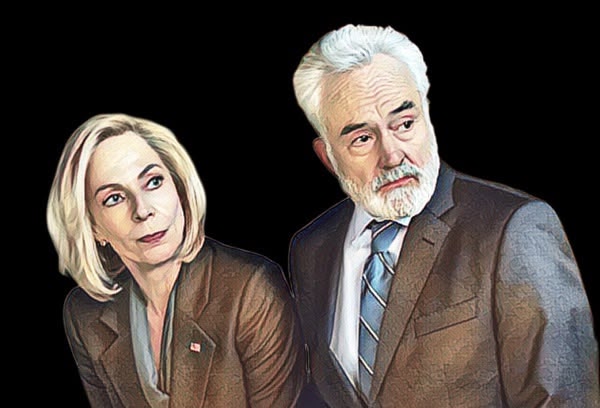
Kate and Hal have lived this way from the beginning. They argue, compete, interfere, and find their way back to each other through the exercise of their abilities. Politics is part of their intimacy and often seems to fuel their sexual desire as well. I have already discussed the Wylers’ toxic marriage, but this aspect helps us understand Todd: he observes a chemistry he wants to share. He sees Hal speak this language with Kate and then with Grace. He wants to inspire that same enthusiasm in his own wife.
His growing connection with Kate is shaped by that exclusion. Yet she has her own career, an understanding of the work, and ways to intervene. Todd is trying to find a position he does not yet know how to occupy. His desire to participate may be understandable; that does not make his interventions appropriate.
This is where Grace also needs to enter the analysis. She understands her husband’s need and begins to take advantage of his informal access. My reading is that Todd sometimes functions as a domestic extension of her interests: he observes, asks questions, brings back impressions, and gets close to people. What looks like a conversation between spouses can serve political surveillance. What arrives as information may have started as gossip.
The speculation about Kate possibly being pregnant neatly exposes this mixture. Todd’s interpretation of the ambassador’s body reaches the president and enters her conversation with Hal. Kate has to deny the possibility and explain her symptoms. Personal curiosity crosses into the workplace, carrying the authority of the person asking.
Marital trust thus takes on an uncomfortable dimension. Grace can trust Todd while still selecting what he should know. She can want his protection and reject his interference. He can believe he is caring for his wife while participating in decisions whose implications he does not understand. There is feeling in this dynamic, but also control, dependence, and convenience.
After the assassination attempt, Todd’s intimate knowledge of Grace could make him an especially important voice. He notices changes and expresses concern. She reacts against the possibility of being questioned. When she sends him as a special envoy, the appointment also serves to remove the husband who keeps raising concerns about her condition. The role he wanted arrives in service of her need to get rid of an irritation.
The result is one of the season’s most revealing situations: Todd takes charge of a diplomatic conversation for which he is unprepared and ends up suggesting the possibility of American violence against the British. Kate has to interrupt the meeting. Grace has given her husband a real responsibility; his desire to prove his worth has helped make the situation even more dangerous.
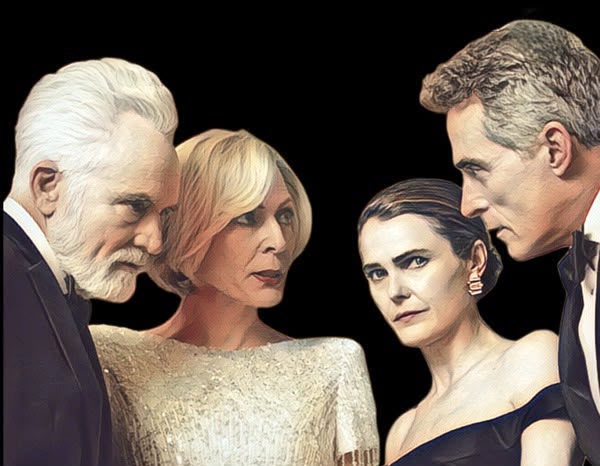
Both display a lack of professionalism. She uses an appointment to manage a marital issue; he accepts the opportunity without recognizing his own limitations. Their marriage starts determining who speaks on behalf of the country. And the maturity one might expect from a long relationship does not prevent the childishness of craving attention, pushing away anyone inconvenient, or confusing obedience with competence.
With Kate and Hal, their age difference can enter the discussion as another element of their unequal experience, although it does not excuse her mistakes. Grace and Todd remove even that possible interpretive shortcut. They are mature people with a long history, demonstrating how the need for approval survives age—and how power provides extraordinary resources for handling it very badly.
Whitford is wonderful because he preserves all of this at once. Todd can be funny, needy, perceptive, intrusive, and affectionate. His charisma allows us to understand the character’s pain without turning every intrusion into a justifiable act. His casting marked a major turning point for the series: the Penns’ marriage gained enough substance to compete with the Wylers for our attention.
It is impossible to escape House of Cards entirely, another series that made marital intimacy a space for negotiating power. But Todd adds a difficulty of his own: he wants to enter a game whose language he has yet to master. Frank and Claire help us think about political marriage; Grace and Todd allow us to observe the inequality between the person exercising power and the person trying to find meaning beside them.
Veep also placed a woman in the presidency and explored the coexistence of vanity, incompetence, and authority through comedy. The West Wing, meanwhile, offers a particularly curious connection behind the scenes: Cahn, Janney, and Whitford all worked on the series. The familiarity between the actors contributes to the impression of a shared life that predates what we see on screen.

I confess that I hope The Diplomat keeps Grace in the presidency. Allison Janney has given the series a force that goes beyond creating another obstacle for Kate. A chaotic ambassador having to answer to an equally chaotic president is a very productive dramatic convenience. Todd’s presence adds the intimate cost of that authority.
The finale leaves the future open. Hal appears among those who leave the meeting after Kate breaks with the administration, but we do not hear his statement. His eventual rise to the presidency remains hypothetical and would profoundly change Kate’s position, particularly after her resignation. As of October 16, a fifth season had not been officially announced.
The series already operates close to the limits of excess, and its need to keep raising the stakes deserves a discussion of its own—another in which House of Cards would inevitably come up. But Grace and Todd show that there is still plenty to explore on a smaller scale than another international crisis.
He wants to participate in what excites her. She finds ways to use that desire without necessarily offering the recognition he seeks. And the harder Todd tries to prove he deserves to be in the room, the harder it becomes to tell when Grace is making space for her husband and when she is simply finding another use for him.
Descubra mais sobre
Assine para receber nossas notícias mais recentes por e-mail.

