
Rudolf Nureyev had to leave the Soviet Union to decide how he wanted to live and dance. Decades after his death, a ballet about his life also had to find another country to continue existing onstage. The irony would be almost perfect if it did not reveal something so persistent: there are still those who want to celebrate the artist while trying to control what we can know about the man.
It is in this context that Nureyev, created by choreographer Yuri Possokhov, director Kirill Serebrennikov, and composer Ilya Demutsky, enters a new phase of circulation. Myriam Hoyer’s filmed recording of the Staatsballett Berlin production opens the San Francisco Dance Film Festival on October 23. The work that originated at Moscow’s Bolshoi and was removed from its repertoire reappears before another audience, now preserved through cinema as well.
For Brazilian audiences, there is another particularly important connection: this production’s Nureyev is Brazilian dancer David Soares. We are not talking about a conventional biopic, with an actor reproducing steps or alternating dramatic scenes with footage of a dance double. This is a dancer portraying another dancer through the very language that made that man a historical figure. And that requires much more than the ability to jump high or reproduce a recognizable silhouette.
Nureyev was an artist whose presence exceeded his technique, extraordinary though it was. There was an urgency in the way he occupied the stage, a sensuality that did not depend solely on beauty, and a desire to participate in everything dance could offer. His partnership with Margot Fonteyn transformed the history of the Royal Ballet; his curiosity led him toward different choreographers and artistic languages. To portray this man, a performer needs to find the impulse that made him dance without turning his personality into a collection of famous gestures.
A Life Put Up for Auction
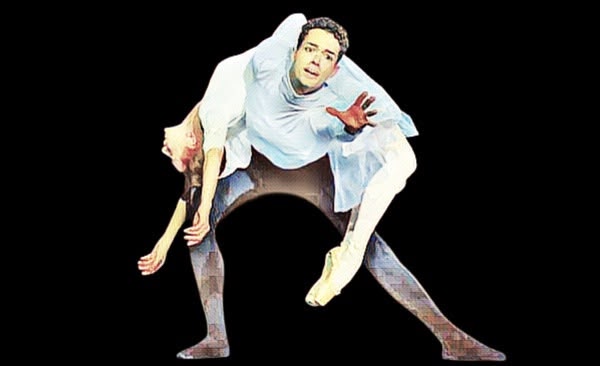
Nureyev is structured around a particularly suggestive idea: an auction of his personal belongings after his death. The items offered for sale lead into episodes from his life, bringing together his Soviet career, his defection to the West, his relationships, and the construction of his celebrity. The production combines dance, singing, and spoken text, rejecting the idea that such an excessive life should fit exclusively within the vocabulary of a traditional narrative ballet.
The auction invites a reading that goes beyond its function as a dramatic device. Once the body disappears, what remains of a dancer? Photographs, costumes, letters, objects, recordings, and memories come to represent something none of them can entirely recover. We can buy something that belonged to Nureyev, but not the presence that made it seem part of his personality.
There is also a tension between possessing and knowing. Nureyev became an image desired by audiences, photographers, and institutions. A biography told through dance needs to move through that surface to find someone who also felt fear, needed affection, and paid for the decisions he made. Showing the man does not diminish the legend; it prevents the legend from becoming an elegant way of erasing him.
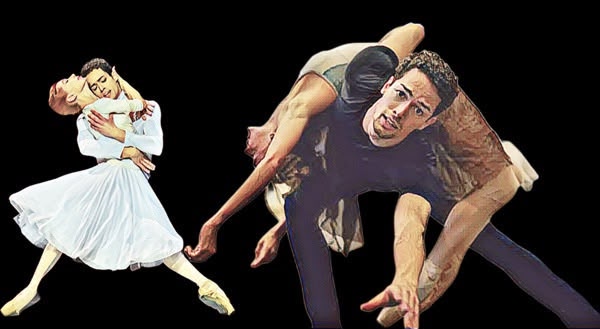
Two fundamental relationships emerge along that journey, different from each other and equally impossible to remove from the story. Margot Fonteyn represents an artistic partnership that helped redefine both their places in ballet. Erik Bruhn, the great Danish dancer, brings together love, admiration, and a creative rivalry that also nourished Nureyev. In the Berlin recording, Iana Salenko plays Margot, while Martin ten Kortenaar portrays Erik. Polina Semionova appears as the Diva, Marina Duarte as the Ballerina, and Anthony Tette as the Student.
Fonteyn and Bruhn should not be placed in competition for importance. The problem begins precisely when celebrating one relationship is acceptable while the other is considered inconvenient. A partnership with a ballerina can fit comfortably into the official history of a genius; love for another man becomes supposedly dispensable information. In Nureyev, that separation does not work because his emotional life belongs to the story being danced.
A Production Born Under Suspicion
The production’s history is almost a second narrative about artistic freedom. Its premiere was scheduled for July 2017 but was suspended just days beforehand. The Bolshoi’s official explanation was that the work was not yet ready. Suspicions circulated about political interference and discomfort with the portrayal of Nureyev’s homosexuality, but it is important to distinguish those interpretations from the explanation the theatre gave at the time.
The ballet finally premiered in December 2017. Serebrennikov, however, could not attend: he was under house arrest in a case involving accusations of misappropriating public funds, which his supporters considered politically motivated. His work reached the stage while its director remained forbidden from being there.
Its permanent removal would be publicly announced in April 2023. Vladimir Urin, then the Bolshoi’s general director, linked the decision to the expansion of Russian legislation against so-called “propaganda of non-traditional sexual relations,” approved in December 2022. According to him, the production had been withdrawn as soon as the legal change took effect. There are therefore two dates in this history: the tightening of the law in 2022 and the public confirmation of the work’s exclusion from the repertoire in 2023.
At that point, it was no longer merely a question of interpreting the reasons for a postponement. The connection between the work’s content and the legislation had been declared by the theatre’s own management. One of dance’s greatest names could remain part of cultural memory, but a production openly depicting his homosexuality had become incompatible with the rules governing how he could be represented.
It is an especially painful contradiction in an art form so dependent on passing down its history. Preserving a heritage means more than safeguarding steps and scores. It also requires recognizing who the people who transformed them actually were. When celebration depends on amputating a biography, what is being preserved has already begun to become something else.
A Brazilian Dancer Gives the Story a Body Again
The Staatsballett Berlin production premiered on March 21, 2026, at the Deutsche Oper Berlin, marking the work’s first performance outside Russia. David Soares brings a concrete connection to its origins: trained in Moscow, he participated in the original Bolshoi production and joined the Berlin company in 2022.
German reception highlighted his ability to build an interpretation without limiting himself to imitation. Public broadcaster RBB’s review emphasized both the encounters with Fonteyn and Bruhn and the passage from exuberance to the artist’s physical frailty. That assessment concerns the stage production and helps situate his work without being confused with an analysis of the film’s direction.
The challenge makes sense. Portraying Nureyev requires understanding that bravura and vulnerability did not belong to different people. The same man who seemed to command every space also carried the loss of family contact and the cost of exile. Freedom did not eliminate those wounds, just as fame did not resolve his need to be loved.
For Soares, the role’s interest also lies in the opportunity to move through an entire life. The dancer does not need to convince the audience that Nureyev has returned. He needs to construct a presence that makes his contradictions understandable, including to those who have never seen a recording of him dancing.
Cinema as Another Stage
Myriam Hoyer’s recording was made in March, produced by Bel Air Media with the participation of international broadcasters and support from the Rudolf Nureyev Foundation. It extends the life of a production once considered too inconvenient to remain in the theatre where it originated.
Filming ballet is never simply a matter of placing a camera in front of a stage. Framing determines what we see, editing redirects our attention, and proximity can reveal an expression that would disappear for someone sitting far away. At the same time, moving too close risks losing the relationship between bodies and space. Without watching the recording, it would be inappropriate to attribute specific choices to Hoyer; what we can already recognize is the importance of having a record that allows the work to travel beyond its geography.
The October 23 screening at San Francisco’s Lucasfilm Premier Theater creates a new opportunity for that encounter. No Brazilian screening has yet been confirmed. The production was broadcast by ARTE, but the French page consulted states that the full programme is no longer available; the film’s international circulation should not be confused with unrestricted online access.
What is most interesting is that the production’s history has acquired an unexpected relationship with its protagonist’s own story. Outside the Soviet Union, Nureyev found the possibility of expanding his artistic life. In Berlin, the ballet bearing his name found a way to continue being performed with the very elements that had made it unwelcome in Moscow.
We do not need to turn that coincidence into a perfect metaphor to recognize its significance. An artist does not belong entirely to the country where he was born, the theatre where he danced, or the institution preserving his belongings. And his memory should not depend on permission to show whom he loved. Nureyev spent his life rejecting limits imposed on his body. For a ballet about him to keep crossing borders seems a remarkably fitting way to keep him moving.
Descubra mais sobre
Assine para receber nossas notícias mais recentes por e-mail.

