
Jackson Lamb and Diana Taverner have spent six seasons of Slow Horses insulting each other, exchanging threats, concealing information, and demonstrating that they understand the dirty business of British intelligence better than practically anyone else. They know each other’s weaknesses and recognize each other’s abilities, but trust has never been part of their relationship. Now, with the sixth season approaching its conclusion, the synopsis for Judgment Day promises something unexpected: the two will finally join forces. The question is not simply why. It is what kind of alliance can exist between two people who represent such profoundly different ideas of loyalty.
At first glance, Lamb (Gary Oldman) and Diana (Kristin Scott Thomas) are more alike than either would care to admit. Both are intelligent, cynical, manipulative, and perfectly willing to operate outside the rules when necessary. Neither believes intelligence work is particularly noble, and both understand that governments depend on actions they would never publicly acknowledge. The distinction is that Diana has dedicated herself to climbing the institutional hierarchy, while Lamb has effectively withdrawn from it. She enjoys the privileges of power. He seems almost determined to reject them.
But their differences run much deeper than ambition or personal hygiene.
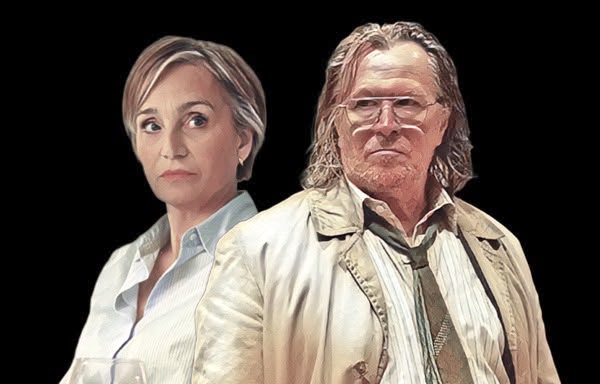
Jackson Lamb: The Man Who Knows the Price of Obedience
To understand Lamb, it is necessary to return to Berlin and the trauma that shaped his life. Long before becoming the disheveled, perpetually offensive chief of Slough House, he was an intelligence officer who experienced betrayal in its most brutal form. He was tortured, forced to witness the suffering of the woman he loved, who was pregnant, and left powerless to prevent her death.
The experience did not simply destroy his personal life. It exposed the cruelty of an institution in which people can become expendable whenever their survival conflicts with a greater strategic objective. And Lamb knows something even more disturbing: he was not always on the receiving end.
Under orders from David Cartwright (Jonathan Pryce), he killed a friend who had betrayed the service. It was an act of obedience that made him an instrument of precisely the system that had already inflicted so much damage on him. The distinction between victim and executioner, so often blurred in espionage fiction, became an essential part of his own history.
That past helps explain his relationship with the agents of Slough House. Lamb insults them, belittles them, mocks their failures, and seems physically incapable of expressing affection. Yet whenever one of them is threatened, his apparent indifference disappears. He may call them useless, but he will not casually hand them over to be sacrificed.
This is especially revealing in a season that has already claimed the lives of David Cartwright and J.K. Coe, while placing Sid Baker, River Cartwright, and practically everyone associated with Slough House in mortal danger.
Lamb’s behavior does not make him a conventional hero. He lies, manipulates, threatens, and can be exceptionally cruel. But there is something profoundly personal about his refusal to abandon his agents. Perhaps protecting them is the closest he can come to confronting the choices he once made, and the choices that were made for him.
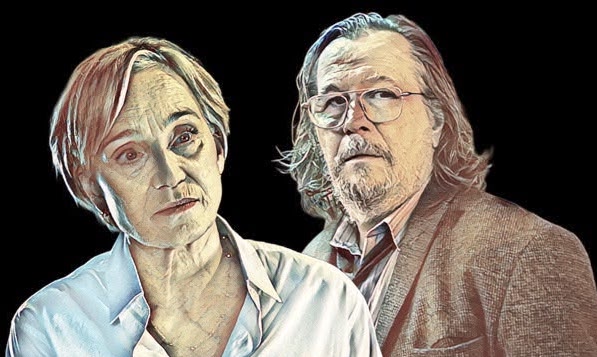
Diana Taverner: Protecting the Institution or Protecting Herself?
Diana presents a more disturbing contradiction. She constantly invokes the interests of national security, but the sixth season has exposed how easily those interests become entangled with her career, her reputation, and her personal survival.
The operation in Kazan is the clearest example. Diana authorized a clandestine assassination in Russia, using private financing arranged through political connections. When the mission triggered retaliation, she found herself trapped between Russian demands and the businessman whose money had helped make the operation possible.
And when the Russians demanded the person responsible, Diana was prepared to surrender Sid Baker, even though she knew Sid had not carried out the assassination. Her discomfort is visible. She does not appear to enjoy the decision. But she makes it anyway.
This distinction matters because Slow Horses rarely presents its senior intelligence officers as openly sadistic villains. Diana is capable of loyalty, affection, and even guilt. Her problem is that those feelings become secondary whenever her position within the institution is threatened.
She can recognize that sacrificing Sid is wrong while simultaneously convincing herself that it is necessary. And necessary for whom? That is the question she never seems particularly eager to answer.
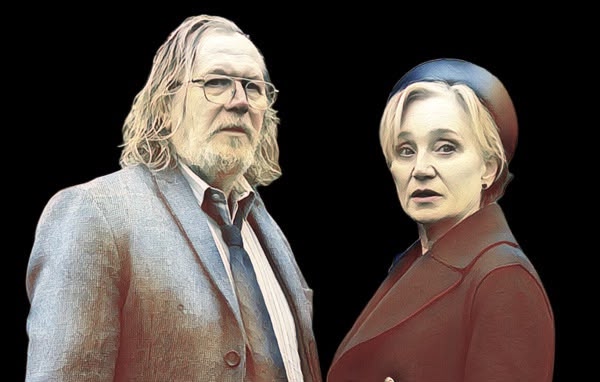
The Luxury of Power
There is another difference between Lamb and Diana that deserves attention: the way they live.
Slow Horses is unusually precise in its visual representation of hierarchy. Slough House is a decaying building filled with neglected furniture, dirty rooms, and people the intelligence establishment would prefer to forget. Lamb himself appears to have abandoned any conventional concern with comfort, presentation, or status.
David Cartwright, despite his considerable importance in the history of British intelligence, has spent his final years in a comparatively modest house, surrounded by the remnants of a career that no longer guarantees influence. His declining health further emphasizes the fragility of institutional prestige.
Diana inhabits a different world. Her impeccable clothes, sophisticated surroundings, comfortable lifestyle, and luxurious country property create a striking contrast with the lives of the people whose fates she can decide.
This does not mean that her wealth is illicit. The series has not established that. But visually and symbolically, the distinction matters. Diana has remained close enough to power to enjoy its rewards. Lamb has been pushed to its margins, and Cartwright has become a fading reminder of its former authority.
What makes this season particularly ironic is that Diana’s country house, a symbol of privilege and security, has become a refuge for the very agents she considers expendable. The official description of Judgment Day announces that the safe house will become unsafe. It is tempting to read this as more than another action sequence. The consequences of Diana’s decisions, which she has generally managed from a comfortable distance, are finally threatening to invade her own protected environment.
For once, the distinction between those who make the decisions and those who pay for them may become impossible to maintain.
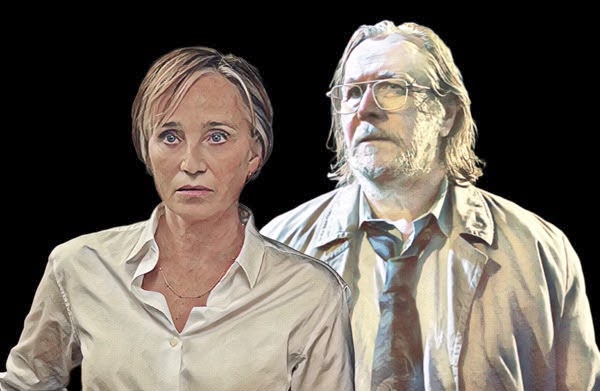
Money, Politics, and the Privatization of Intelligence
The sixth season also introduces a particularly troubling idea: an intelligence service whose clandestine operations depend on private financing.
Peter Judd (Samuel West), the politically connected intermediary, and Damien Cantor (Harry Lloyd), the media tycoon financing the Kazan mission, represent a world in which national security becomes entangled with access, favors, and commercial opportunity.
Cantor is not interested in protecting Britain out of patriotic conviction. His ambitions involve influence, business, and access to the Russian media market. The arrangement allows a wealthy businessman to acquire leverage over one of the country’s most powerful intelligence officials.
Diana may believe she can manage the relationship, but the humiliating interview she grants Cantor’s news channel demonstrates otherwise. The woman accustomed to controlling secrets finds herself controlled by someone who knows too many of hers. And this is where the season’s complicated plot becomes thematically coherent. The mission in Kazan, the use of Sid’s identity, the stolen Slough House files, the Russian retaliation, and Frank Harkness’s involvement are not merely overlapping spy-thriller devices. Together, they expose what happens when private interests gain influence over state power.
The people making the decisions continue negotiating. The people carrying out their orders become targets.
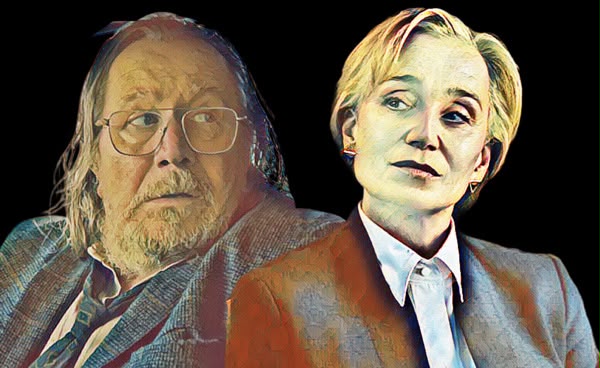
Why Would Lamb Agree to Help Diana?
That brings us to the promised alliance.
Lamb knows exactly what Diana is capable of doing to protect herself. He also knows that challenging her directly has limits. She possesses institutional authority, access to classified information, and the ability to negotiate with people who would never speak to the disgraced head of Slough House. But Diana needs something Lamb possesses, and she cannot easily command: loyalty that is personal rather than institutional.
The agents of Slough House follow Lamb not because he inspires conventional admiration, but because they have learned that his cruelty comes with a peculiar guarantee. When their lives are threatened, he will do everything he can to bring them home. Diana cannot offer the same guarantee. Sid knows that better than anyone.
The most plausible explanation for the partnership announced in Judgment Day is therefore a convergence of necessity. Lamb needs Diana’s authority to stop the campaign against his agents. Diana needs Lamb’s knowledge, instincts, and willingness to operate outside institutional conventions to dismantle a conspiracy that has escaped her control.
Neither needs to forgive the other. Neither needs to become a better person. They simply need each other. And perhaps that is what makes the prospect so compelling. Slow Horses has never been particularly interested in the reassuring idea that intelligence agencies are ultimately run by honorable people. Its world is populated by ambitious officials, compromised politicians, mercenaries, traitors, and exhausted professionals trying to survive the consequences of decisions made above their pay grade.
Yet Jackson Lamb, possibly the least respectable man in the entire institution, repeatedly emerges as the person most unwilling to sacrifice his own people.
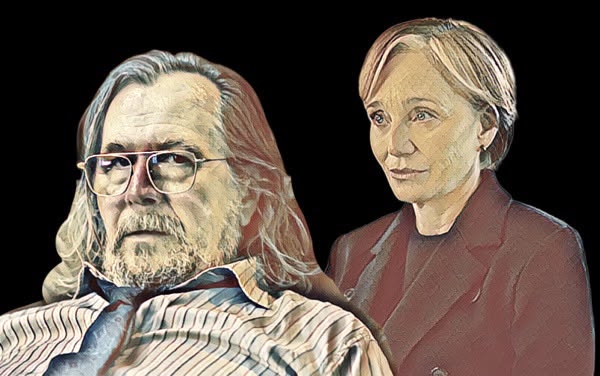
The Real Meaning of Loyalty
There is a psychological dimension to Lamb’s behavior that makes the contrast with Diana even more revealing.
He has already experienced what happens when powerful people invoke the interests of the institution to justify the destruction of individual lives. He has been tortured, betrayed, bereaved, and ordered to kill. His contempt for the intelligence establishment is therefore not simply ideological or professional. It is rooted in experience.
But Lamb has never entirely escaped the system. He continues working for it, using its methods, concealing its secrets, and participating in its violence. His rebellion is selective. He does not necessarily want to destroy the institution. He wants to prevent it from doing to his agents what it once did to him.
Diana, meanwhile, remains committed to surviving inside that institution, even when survival requires moral compromises that threaten the people she is supposed to protect. That is why their eventual collaboration could become one of the most revealing moments of the series. Not because two adversaries have suddenly discovered a common purpose, but because their shared objective may expose how differently they understand responsibility.
For Diana, protecting the service often means preserving its authority, its secrets, and the careers of those who control it. For Lamb, protecting the service may mean something far less grand and far more difficult: ensuring that the people under his command are not casually abandoned. One believes in the institution, or at least in the power it gives her. The other knows exactly what the institution is capable of taking away.

There is no guarantee that Judgment Day will resolve every unanswered question, particularly in a season that has brought together two complex novels and an unusually large number of conspiracies. Nor do we know what price Lamb and Diana will pay for their temporary alliance. But the real question is no longer simply whether they can work together.
It is whether Diana Taverner, who has spent her career sacrificing individuals in the name of the institution, can finally understand a man who has devoted his remaining loyalty to the people that institution considers disposable. And perhaps the greatest irony of Slow Horses is that the man who appears to care least about the dignity of British intelligence may be the only one who still understands what loyalty actually means.
Descubra mais sobre
Assine para receber nossas notícias mais recentes por e-mail.

