
I confess that following Prince Harry has become an exercise in patience. Not because his story isn’t interesting. Quite the opposite. What exhausts me is the repetition. For six years, since he and Meghan Markle broke away from the British royal family’s structure, we have essentially been watching the same conflict unfold through different formats: interviews, documentaries, books, public statements, and versions of events that seem to change according to the needs of the moment. The narrative may have evolved, but the central issue remains exactly where it was in 2020: Harry and Meghan never accepted that they could not remain part of the monarchy entirely on their own terms.
Now, as he reestablishes his presence in the United Kingdom, Harry has given an interview to GQ in which he once again discusses his family relationships and the need for reconciliation. The subject is hardly new, nor is his difficulty in acknowledging that the decisions he made, and has consistently defended in public, came with consequences. The difference is that Harry now appears determined to establish a new position within British society, independent of the monarchy but inevitably associated with it. My impression is that he is not simply trying to come home. He is building something resembling a Sussex court, parallel to his father’s and, above all, to the one that will eventually be led by his brother, William. To understand this move, however, we need to return to the problem that was never truly resolved.
The Break That Was Never Accepted
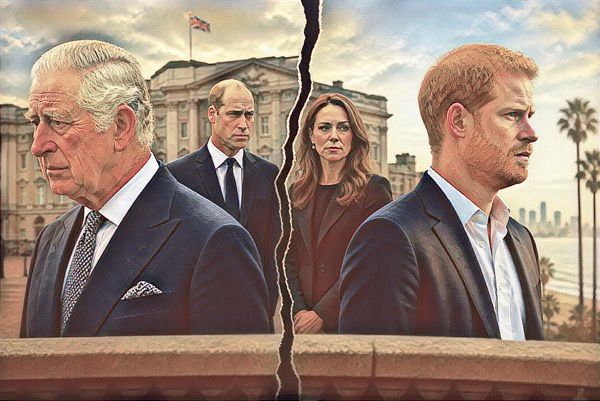
In January 2020, Harry and Meghan announced that they wanted to step back as working members of the royal family, achieve financial independence, and establish a new relationship with the institution. They wanted to remain connected to the monarchy while enjoying the freedom to develop personal, professional, and commercial activities. Their proposal became known as a half-in, half-out arrangement, under which the couple would retain certain royal functions and privileges while operating independently. Queen Elizabeth II rejected it, and the Sussexes interpreted what followed as an unfair imposition, an expulsion from an institution unwilling to modernize.
For me, the problem has always been precisely there. The British monarchy is not simply a family. It is also an institution, with rules, hierarchies, functions, and obligations. We can debate whether those rules are outdated, unfair, or absurd, question Meghan’s treatment, the internal disputes, the royals’ relationship with the press, and even the very existence of a monarchy in the twenty-first century. None of that changes a fairly simple principle: you cannot belong to an institution and unilaterally decide which of its rules you will follow. It is like joining a company and announcing that you intend to continue using its name, structure, and reputation while working exclusively according to your own interests. No organization works that way. If you want absolute freedom, you can leave and build an independent career.
Harry and Meghan did exactly that. Or almost. Because six years later, the contradiction remains: they stopped officially representing the Crown, achieved financial independence through contracts, business ventures, and commercial projects, yet still rely on their connection to the monarchy to sustain a significant part of their public value. That does not mean they have no achievements of their own. Harry has done meaningful work with the Invictus Games and causes supporting military veterans, while Meghan has developed businesses, entertainment projects, and philanthropic initiatives. Both enjoy international recognition, but it is impossible to ignore that neither would occupy the same media space without the titles, the history, and the connection to the institution they chose to leave.
That is the central irony of the Sussexes’ entire trajectory: they reject the monarchy’s structure while continuing to depend on what it represents. Until recently, this contradiction played out thousands of miles away in California, where it was relatively easy to build an identity as international celebrities who had left the royal family. Now, with a more significant presence in the United Kingdom, the issue becomes more delicate because their independence is being exercised in the same country where the monarchy has an institutional role, an official calendar, and its own public representation.
The Creation of a Sussex Court
Harry’s return to the United Kingdom can be explained by perfectly understandable reasons. He was born and raised there, has friends and relatives in the country, and possesses a personal history that did not disappear when he decided to live in the United States. His children, Archie and Lilibet, also have every right to know their roots, and there is nothing extraordinary about Harry wanting to introduce them to British culture. But there is another dimension to this move that I find impossible to ignore: the construction of a kind of parallel court, not in a constitutional sense, obviously, but as a public structure of influence, prestige, and visibility independent of Buckingham Palace.
Harry and Meghan’s recent appearance in Nottingham, visiting community projects and charitable organizations, helps illustrate this dynamic. The visit included all the elements we usually associate with official royal engagements: contact with the public, support for social initiatives, photographs, media coverage, and a message of accessibility. The difference is that the Sussexes were not officially representing the Crown. They chose their own schedule, activities, and presentation without needing the Palace’s authorization. In a sense, they achieved what they wanted in 2020: the ability to operate publicly as figures associated with royalty without submitting to the institutional functioning of the monarchy. But that does not mean the royal family has agreed to the arrangement.
That is precisely what makes this contradiction so interesting. Harry can build a British public identity, develop a philanthropic agenda, and establish a network of institutional and commercial relationships, but he cannot demand that Buckingham Palace recognize his work as an official extension of the Crown. And although the half-in, half-out model may still seem like a viable alternative within the narrative he has constructed, Queen Elizabeth II rejected that proposal, just as the Sussexes refused to remain in the position they occupied: subordinate to the King and Queen and, worse for them, to William and Catherine.
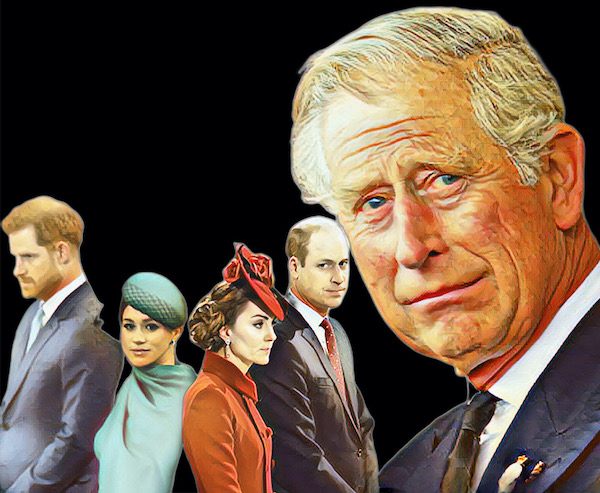
In medieval times, a prince dissatisfied with his place in the line of succession might have gathered allies and challenged the throne. In 2026, such a war no longer requires armies, because power can be conquered in other ways, especially through communication and audience engagement. Harry is not challenging William’s constitutional claim to the throne, but something far more fluid and immensely valuable in contemporary society: the crown of media relevance. In this battle, attention is currency, and the Sussexes understand its workings extremely well. Depending on which source you consult, they are either winning or losing. The problem is that, in the attention economy, it is not always easy to tell the difference.
There is another important factor: timing. Charles III remains king, but his health issues inevitably place the succession into perspective. William, meanwhile, will be the next monarch and will occupy an institutional position very different from his current role as Prince of Wales. Harry understands this structure better than almost anyone and certainly knows that, while his father remains on the throne, some possibility of family rapprochement and understanding still exists. When William becomes king, he may face a far more difficult situation, as reports about the brothers’ relationship continue to indicate a profound estrangement, with no concrete signs of reconciliation.
For that reason, I consider it plausible to interpret this new phase as Harry’s attempt to establish his own presence in the United Kingdom before the next reign begins. He needs to stop being seen exclusively as the prince who abandoned the monarchy and present himself instead as someone with an independent public role within British society. If he consolidates that image now, he may continue to exist symbolically as an alternative to the traditional model of royalty, even without institutional recognition. That does not mean he has declared this intention, but it is one possible reading of the emerging dynamic, particularly because there is a fundamental difference between confronting a father, with whom there is still an emotional bond and some possibility of dialogue, and confronting a brother who will be responsible for the very institution Harry so frequently criticizes.
The Andrew Precedent and the Risk to the Titles
For a long time, it seemed highly unlikely that Harry could lose his title of prince. After all, this is not merely an honorary distinction granted for services to the Crown, but a status acquired by birth, as the son of a future king and grandson of a monarch. However, the precedent set by Andrew Mountbatten-Windsor changed that perception. In 2025, following the worsening crisis surrounding Andrew and his association with Jeffrey Epstein, Charles III removed his brother’s right to use his royal titles and styles, including that of prince, demonstrating that even distinctions acquired at birth can be formally withdrawn.
It is essential not to confuse the circumstances. Andrew’s case involves serious allegations and circumstances entirely different from Harry and Meghan’s institutional disagreements, and there is no justification for drawing a moral equivalence between the two. But the precedent means that the legal possibility of removing princely titles can no longer be dismissed as fantasy. Harry remains a prince and Duke of Sussex, Meghan is Duchess of Sussex, and their children hold titles derived from their family position, each governed by specific rules. It is also important to remember that losing a title does not automatically mean being removed from the line of succession, which is governed by separate legal provisions. Harry remains relatively close to the throne, behind William and his three children, although his position will naturally become more distant as future generations arrive.
The interesting question, however, is whether Harry is creating the conditions under which a possible loss of titles would have less impact on his public identity. If he manages to establish an independent reputation as a humanitarian figure and international personality, he will retain relevance even without an official role or, in an extreme scenario, certain titles. His surname, personal history, and biographical connection to the monarchy cannot simply be erased by an administrative decision. A prince who stops officially representing the Crown can still be a global celebrity, particularly when he understands the commercial value of his own story. This does not mean there is a confirmed plan to remove the Sussexes’ titles, but it helps explain why developing an independent identity may be so important at this moment.

Harry Never Stopped Being the Spare
The most interesting issue for me, however, is neither political nor commercial. It is psychological. In 2023, Harry published an autobiography titled Spare, a reference to his position as the younger son, the one who exists as an alternative to the heir. The expression summarizes a traditional monarchical dynamic in which one child is raised to become king while the other must discover what his place will be. Harry spent his life comparing himself, or being compared, to his brother. William was born with a defined role, while Harry grew up knowing that his position depended largely on the place occupied by the firstborn. Diana’s death, the public exposure of the two boys, and the differences in how they were treated within the institution certainly made that experience even more complicated.
Harry believes he has found his own identity since the break. He talks about freedom, maturity, therapy, family, humanitarian work, and the importance of taking control of his own narrative. I do not doubt that there is sincerity in that effort, but finding a rational explanation for suffering does not necessarily mean emotionally processing what caused it. It is possible to understand intellectually why we occupy a certain position while continuing to resent that very position emotionally. And in that sense, my impression is that Harry has resolved some of the practical circumstances of his life without necessarily resolving the emotional conflict associated with the role he always occupied.
He stopped being a working member of the monarchy, moved to another country, built a family, published his version of events, achieved financial independence, and developed new projects. In theory, he accomplished everything he said he wanted. Yet he still feels compelled to speak about William and the institution from which he claims to have freed himself, as though his independent identity still depended on recognition from those who remained within the system. Perhaps Harry stopped being the institutional spare without ever ceasing to feel like the spare emotionally. The distinction is enormous, because abandoning a secondary position does not necessarily mean abandoning the need to be recognized as equally important.
That is one reason I find the way the Sussexes continue to relate publicly to William and Catherine so revealing. Since the first conflicts between the couples, there have been accounts of disputes, resentment, unequal treatment, and even accusations of jealousy or competition. It is impossible to know exactly what happened in private, because we have public statements, press reports, Harry’s autobiography, and, on the other side, an institutional silence that makes any equivalent comparison of accounts practically impossible. But the fact that someone presents an accurate version of a particular event does not mean their emotional interpretation of another person’s behavior is necessarily correct.
In psychoanalysis, projection is a mechanism through which feelings or impulses that are difficult to recognize in oneself may be attributed to other people. It would not be accurate to suggest that every accusation of envy automatically means the accuser is the one who feels envious, but it is legitimate to ask why certain characteristics of another person become so important in the accuser’s narrative. When someone repeatedly insists that another person is competing, imitating, envying, or resenting their happiness, they may also be revealing something about their own emotional investment in that relationship. This is not about mechanically reversing every accusation, but about considering the possibility that some of them express internal conflicts that remain unresolved.
From this perspective, I find the dynamic between the two couples especially interesting. Harry and Meghan have constructed a narrative in which their newfound freedom should represent a victory over the past, while William and Catherine remained within the institution and gradually assumed greater responsibilities. These are radically different paths that, in principle, would not need to compete with one another. Yet comparisons continue, fueled by public statements, media interpretations, and narratives promoted by supporters on both sides. We cannot claim that Meghan envies Catherine, just as we cannot guarantee that Catherine harbors no resentment. But we can observe that Kate’s image occupies an important place in the public narrative surrounding Meghan’s experience within the royal family, just as William remains an essential reference in the way Harry tells his own story.

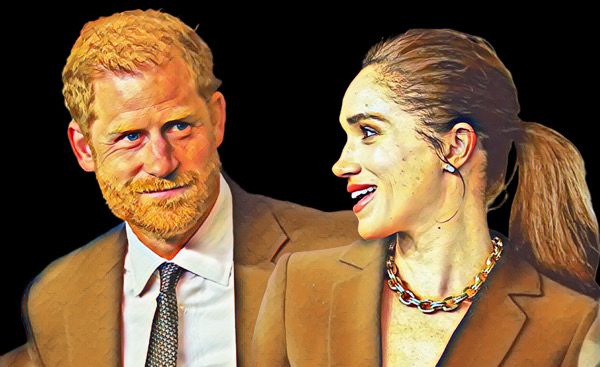
Freud used the expression wild analysis to describe psychological interpretations made outside the proper analytical context, without the necessary work of understanding a person’s history, associations, and conflicts. It is an important warning, because we are not diagnosing the Windsors or the Sussexes. We are observing how a public rivalry can reproduce very human mechanisms of comparison, recognition, and resentment. Perhaps that is the saddest aspect of the story: Harry may have won the freedom to choose his own life, but he still seems to want his brother to acknowledge the value of that choice. As long as such recognition remains indispensable, his freedom will continue to depend on William’s gaze.
What Exactly Does Harry Mean by Reconciliation?
In his interview with GQ, Harry once again defended the need to resolve family conflicts and move beyond the past, observing that not everyone is willing to do so. His statement was immediately interpreted as an indirect criticism of William, an interpretation his representatives sought to deny by clarifying that he was speaking in general terms. It is entirely possible that this was his conscious intention, but it is also difficult to believe Harry did not understand how his words would be received. When someone who is famously estranged from his brother publicly says that certain people do not want reconciliation, the association is almost inevitable. Communication is not limited to the speaker’s intentions; it also involves the context in which a message is received.
There is also another question I consider central: what would constitute a satisfactory reconciliation for Harry? For a long time, his statements suggested that he expected the institution to acknowledge its failures and apologize for the treatment he and Meghan received. That expectation is understandable from the perspective of someone who believes he has suffered injustices, but reconciliation also requires acknowledging that one’s own decisions have consequences. Harry and Meghan gave interviews in which they made serious accusations, exposed private conversations, and revealed family conflicts that had previously remained out of public view. Harry published accounts involving his brother, father, and stepmother in his book. They considered those decisions necessary to tell their side of the story, and they had every right to do so, just as they had the right to leave an institution they regarded as harmful.
The problem is that William and the other members of the family also have the right to decide that they do not wish to restore intimacy with people who made private events public. This is not a situation in which one side must necessarily agree with the other’s interpretation. Harry may have been deeply hurt, and William may have been hurt as well, because both experiences can coexist even when the accounts of what happened are incompatible. What cannot be demanded is that someone forgive according to a timetable unilaterally established by the person seeking reconciliation, particularly when rebuilding trust involves people who feel exposed or betrayed.
For Harry, reconciliation may mean being able to move forward without abandoning his conviction that he was right. He might magnanimously accept that his family has limitations and may never fully acknowledge the mistakes he believes were made. But for William, reconciliation might require assurances that family intimacy will not once again become public material. These are very different expectations, and the paradox is difficult to ignore: Harry talks about leaving the past behind while constantly bringing that same past into the present. Perhaps his idea of reconciliation is less an agreement between two parties than the expectation that others will finally accept the version he presents. If that is the case, we are not really talking about reconciliation, but recognition, and the two are not synonymous.

The Gallagher Brothers and the Problem of an Impossible Reconciliation
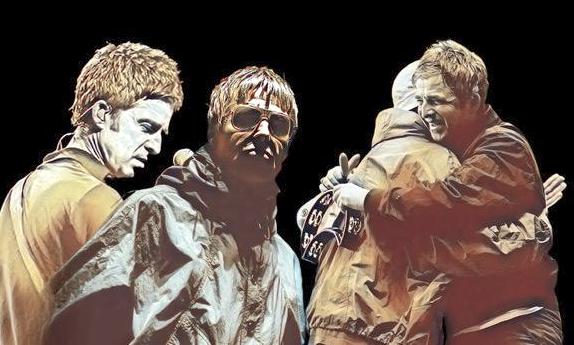
There is a recent parallel that I find particularly interesting: the reconciliation between Liam and Noel Gallagher. The Oasis brothers spent roughly fifteen years involved in one of the most public and aggressive family rivalries in British music. Since the band’s breakup in 2009, they exchanged accusations, insults, and provocations, repeatedly declared that they would never work together again, and turned personal differences into a spectacle followed by thousands of fans. Until the unexpected happened: they announced Oasis’s reunion and embarked on an extraordinarily successful tour in 2025, returning the band to the center of popular culture and generating millions in revenue.
The documentary Oasis: Don’t Look Back in Anger offered a glimpse behind the scenes of that reunion and revealed something that could not be explained by money alone. Liam and Noel seemed genuinely happy to be together again, recovering a sense of complicity that had appeared lost for years. There was no grand public declaration of regret or exhaustive reconstruction of every argument. Their understanding seems to have emerged in a far more practical, almost quintessentially British way, with two brothers who had spent more than a decade publicly insulting each other returning to music and discovering that they still enjoyed working together. The reconciliation was also commercially advantageous, of course, and there is no reason to pretend otherwise. The difference is that emotional and professional interests could finally move in the same direction.
But there is an important detail in this story that does not occupy the center of the documentary and helps us understand how family conflicts become more complex when other people are involved. For years, the relationship between Liam Gallagher and Sara MacDonald, Noel’s then-wife, was marked by intense public hostility. Their disagreements involved provocations, insults, and disputes that deepened the brothers’ estrangement. Noel and Sara’s marriage ended, and their divorce was finalized in 2023, after which reports emerged suggesting that the change in family circumstances may have helped open the door to a rapprochement between the Gallaghers.
It would be simplistic to attribute the entire reconciliation to the end of the marriage, since Liam and Noel had numerous conflicts predating that rupture, as well as emotional, artistic, and financial reasons to resume their partnership. But it is reasonable to observe that one of the people involved in those disagreements no longer occupied the same position within that family dynamic, potentially changing the relationship between the brothers. This does not mean Sara was responsible for Oasis’s breakup, only that certain changes in family relationships can create possibilities that previously seemed blocked.
This is where the comparison with Harry and William becomes especially complicated, because in the Windsors’ story, Meghan is not a peripheral character. She is at the heart of the rupture, although that does not mean she is solely responsible for it. Harry has his own history of rivalry, resentment, loss, and difficulty with his family, and his decisions were made, defended, and publicly narrated by him. Reducing him to a man manipulated by his wife would strip him of responsibility for his own choices, but it would also be naive to ignore that Meghan’s arrival transformed an already complicated family dynamic.
Their marriage, the treatment received by the American actress, cultural differences, the relationship with the British press, and allegations of racism and prejudice became fundamental elements of the crisis. Harry built part of his public identity around being the husband who decided to protect his wife from a structure he regarded as hostile, while Meghan described her experience within the royal family as a period of suffering and restrictions she was no longer willing to accept. Their break therefore also became an affirmation of their marriage, making any attempt at reconciliation even more delicate.
If Harry believes his family failed Meghan, a rapprochement that simply ignores what happened to her is unlikely to satisfy him. On the other hand, William and Catherine may believe they were profoundly hurt by the accusations and public exposure initiated by the couple. A reconciliation between the brothers would not automatically resolve the relationship between their wives, and a complete rapprochement among all four would require trust, a willingness to hear different versions of events, and the ability to accept that none of them alone controls the narrative. It is not impossible, but judging by what we know today, it appears distant.
The Gallagher comparison reveals this difficulty precisely. In Oasis’s story, a significant change in the family dynamic coincided with an opening for reconciliation. In the Windsors’ story, Meghan remains married to Harry, is the mother of his children, and plays a central role in the life he has built outside the monarchy. There is no reason to wish for that marriage to end so that two brothers can speak again, as some of the more cynical critics suggest, because it would be a tremendous contradiction to advocate one family’s reconciliation at the expense of another family’s collapse. Harry chose Meghan, built a life with her, and does not need to apologize for loving her. But perhaps he needs to accept that his family of origin is under no obligation to participate in this new project, just as Meghan needs to accept that marrying a prince does not guarantee institutional recognition for every decision the couple makes.

The Battle for the Digital Crown
There is a common mistake when analyzing Harry: confusing institutional popularity with media relevance. In the United Kingdom, he and Meghan face resistance from a significant portion of public opinion and are criticized for their contradictions, excessive exposure of family conflicts, and continued commercial use of an identity connected to the monarchy. That, however, does not make them irrelevant. Quite the opposite. Harry and Meghan have understood something fundamental about the digital age: attention does not necessarily depend on approval. Someone can inspire admiration, irritation, resentment, solidarity, or simple curiosity and still remain a subject of conversation. And being a subject of conversation today can represent power.
The attention economy operates very differently from traditional structures of prestige. An institution depends on credibility, continuity, and recognition of its authority, while a celebrity can thrive through controversy, emotional identification, and constant exposure. Harry and Meghan exist within this second logic, even though their titles originate in the first, and that combination makes them particularly interesting. The traditional monarchy seeks to convey stability, while the Sussexes can build their relevance around transformation, rupture, and the idea of modernization. William and Catherine represent continuity; Harry and Meghan present themselves as an alternative, and there is an audience for both models.
This does not mean that all negative publicity is commercially beneficial. Exposure can generate an audience while also damaging the confidence of companies, sponsors, and partners, and digital popularity does not always translate into consistent financial results. Nevertheless, it would be a mistake to ridicule Harry or dismiss his initiatives as irrelevant, because he is one of the most recognizable people on the planet, has an extraordinarily well-known personal history, and possesses platforms through which he can communicate directly with international audiences. Harry does not need to defeat William in popularity polls to continue occupying media space. He simply needs to remain interesting, and so far, he has managed to do exactly that.
For this reason, I believe his renewed presence in the United Kingdom marks a potentially more delicate phase in the relationship between the Sussexes and the royal family. For six years, geographical separation also created a symbolic distinction, with the Crown established in Britain and the Sussexes building an independent life in California. Now, the two models are becoming increasingly visible within the same territory, and comparisons will be inevitable. The British calendar offers numerous opportunities for this rivalry to emerge, even when it is not explicitly sought, particularly during occasions traditionally associated with the monarchy’s public representation.
November will be especially interesting in that regard, since it is an important month in the British calendar, particularly because of Remembrance Day and Remembrance Sunday ceremonies honoring those who died in wars and conflicts. Harry is a military veteran and has built much of his public work around wounded service members and the Invictus Games, an involvement that predates both his marriage to Meghan and his departure from royal duties. It would be absurd to suggest that he lost the right to honor veterans because he stopped officially representing the Crown, but there is a delicate question of image. If he participates in public commemorations during the same period as the official ceremonies, comparisons involving prominence, representation, and legitimacy will inevitably emerge, because in the monarchy, protocol is not merely a detail. It is a language of power and position that Harry understands intimately.

The discussion surrounding Christmas reveals the same dynamic. Harry has already indicated that he is not expected to attend the royal family’s traditional celebrations, which, in principle, should settle the matter. He has his own family, William has his, and Charles has institutional responsibilities and personal concerns that do not need to be turned into a spectacle. No family is obliged to celebrate Christmas together when there are unresolved conflicts. Yet in the Windsors’ story, even absence can become news, demonstrating how Harry continues to influence the public narrative without directly participating in events. He does not need a place at his father’s table to remain part of the story about that table.
Consequences: The Word That Seems to Be Missing
After following this story for six years, my greatest difficulty with Harry and Meghan is not that they broke away from the monarchy. The decision was theirs, and they had every right to make it. Nor do I believe they should regret telling their stories, because if they believed they had suffered injustices, they had the right to present their version and pursue a different life. My difficulty lies in their apparent resistance to accepting that choices produce consequences. You can decide to leave an institution, but you cannot demand that it continue offering precisely the same recognition. You can make family conflicts public, but you cannot determine that those exposed must accept that decision without changing their level of trust. You can criticize a brother, but you cannot demand that he remain available for reconciliation on the terms established by the person who criticized him.
Harry and Meghan appear to have achieved much of the independence they sought in 2020. They have built a family, developed projects, earned money, and gained autonomy over their public lives. The question, therefore, is why that still does not seem sufficient. Perhaps because the issue was never exclusively about the freedom to leave, but also about wanting to leave while continuing to be recognized as indispensable. That is a much harder expectation to satisfy, particularly because a monarchy, by definition, does not operate as an organization in which everyone has the same role. William will be king, Harry will not, and that is not a judgment of merit, ability, intelligence, or popularity, but simply the rule of succession within a hereditary institution. Harry may regard that structure as outdated, reject it, criticize it, or choose to live outside it, but he cannot change it simply because he considers it emotionally unfair.
This is where rationalization may reach its limits. Understanding intellectually why we occupy a certain place does not necessarily mean accepting that place emotionally, and external recognition rarely resolves, on its own, a conflict that is also internal. Harry may understand the rules of succession perfectly well and still resent the difference between his position and his brother’s, just as he may rationally defend his decisions while continuing to wish that his family would acknowledge that he was right. That need may not necessarily be conscious, but it helps explain why the conflict seems to survive every attempt to bring it to an end.
There is a particularly significant irony in the GQ interview. Harry talks about the need to leave the past behind, accept one’s scars, and move forward, a message that could represent the maturity of someone who has endured profoundly painful experiences. Yet his public trajectory continues to revolve around that same past, because the institution he left remains a reference point, the brother from whom he is estranged remains a presence, and the reconciliation he seeks continues to depend on other people. Perhaps that is precisely what Harry still needs to understand: finding peace is not the same as receiving an apology, and reconciliation depends on two or more people, while the decision not to organize one’s life around resentment can begin individually.
Harry does not need to become close to William again to build a satisfying life, just as he does not need Catherine to approve of Meghan or Buckingham Palace to recognize his schedule of engagements as equivalent to those of working royals. Nor does he need to give up his love for his wife, his bond with his children, or his professional projects. Perhaps he simply needs to accept that his story will not necessarily have the ending he imagined. That does not mean absolving the institution of everything he has described, or claiming that his accusations were unfounded. It means recognizing that telling your own story does not give you the right to determine how the other characters must react.

Who Is Winning This Battle?
The battle for media relevance between the Sussexes and the traditional monarchy has no obvious winner. William possesses something Harry will never have: the institutional legitimacy of the future king. Harry, on the other hand, possesses something William cannot exploit in the same way: the freedom to build a public identity detached from the obligations and limitations of the Crown. The monarchy must preserve its continuity, while the Sussexes must sustain their relevance, and these are different objectives that may sometimes come into conflict.
It is possible that Harry is intensifying his presence in the United Kingdom precisely because he realizes he can combine these two dimensions: the freedom he gained outside the institution and the symbolic strength of his presence within the country. If that is his project, it is a far more sophisticated strategy than simply provoking William. The question will be whether he can establish a public identity strong enough to exist without constantly depending on family conflict, because a parallel court can survive without a throne, but it cannot depend indefinitely on the existence of an enemy to justify its own importance.
In the twenty-first century, battles for power do not take place only inside palaces. They unfold on digital platforms, in interviews, documentaries, and through the ability to control narratives. Harry has understood this transformation, but perhaps he has not yet understood that controlling his own narrative does not mean controlling everyone else’s. As long as his idea of reconciliation depends on William recognizing the legitimacy of all his decisions, the impasse will continue, and it is unlikely to be resolved by yet another interview.
Personally, I wish Harry would abandon this battle. Not necessarily his titles or his projects, but the need to prove something to his brother. I wish he would enjoy his marriage, raise his children, continue working for the causes he considers important, and accept that the life he chose also involves losses. Because the peace he seeks may not be found in another interview, an apology, or a photograph with William, but precisely in no longer needing any of those things.
Harry is back in the United Kingdom and, by all indications, intends to continue occupying his own space, with or without Buckingham Palace’s approval. The battle for the media crown is far from over, and it would be naive to underestimate the power he and Meghan possess in a society driven by attention. But there is one question that no communication strategy can answer: if Harry achieves all the relevance he desires, builds his parallel court, and proves that he can exist without the institution he left, will he finally be satisfied? Or will he still need to look at William to discover how much his own victory is worth?
Descubra mais sobre
Assine para receber nossas notícias mais recentes por e-mail.

