
Slow Horses has never promised to protect its characters, but the sixth season was particularly cruel to those we had come to admire. After J.K. Coe, it was Emma Flyte’s turn. Brilliantly portrayed by Ruth Bradley, Emma died in one of the series’ most emotional sequences. And in her case, the irony was even greater: the woman who had been genuinely horrified by the misfits of Slough House died as one of them, protecting the colleagues she once considered beneath her. A brutal farewell, but one that did justice to a character who, in just three seasons, earned her place among the most interesting figures in Mick Herron’s universe. And who, in the words of the unlikely Roddy Ho, was simply legendary.
Emma arrived in the fourth season, replacing Nick Duffy as head of the Dogs, MI5’s feared security unit. Duffy had ended the third season in a coma following his confrontation with the Slough House agents, making way for an important change. Instead of another brutal, corrupt man accustomed to solving problems through violence, we met a disciplined, intelligent woman absolutely convinced that rules existed to be followed. Emma came from London’s Metropolitan Police, where she had worked in anti-corruption, and her promotion represented a major personal achievement. She was the first woman to lead the Dogs, a traditionally male-dominated unit, and believed she had finally earned the recognition she deserved.
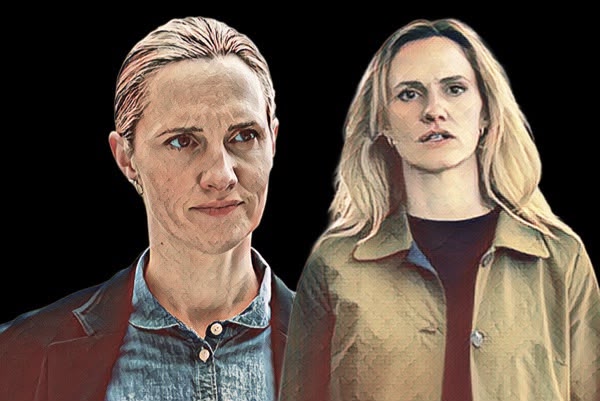
Her introduction came during the investigation into River Cartwright’s supposed death, after David Cartwright shot a man he believed was his grandson. It was during that investigation that Emma began discovering just how different MI5 was from the institution she had imagined joining. Jackson Lamb, naturally, wasted no time identifying her weaknesses. While Flyte tried to conduct an investigation according to procedure, Lamb lied, concealed information, and manipulated her movements to protect River and David. Emma even attempted to arrest him, only to find herself following his misleading information, including when he sent her looking for David at Catherine Standish’s apartment. The man she considered an embarrassment to British intelligence demonstrated that he understood the institution’s inner workings far better than she did.
It was one of Flyte’s first defeats, although it certainly did not mean she was incompetent. Emma was an excellent investigator, capable of spotting inconsistencies and quickly understanding dangerous situations. Her problem was believing that the people around her followed the same rules she did. And, above all, believing that Diana Taverner was on her side.
Her relationship with Diana was fundamental to understanding the character. Emma admired the powerful MI5 executive and imagined that working under her protection would lead to an increasingly successful career. Ruth Bradley explained to The Hollywood Reporter that she approached their dynamic almost as a mother-daughter relationship. Emma wanted Taverner’s approval, believed she had been personally chosen by her, and saw her superior as a model of a successful woman in a male-dominated institution. The problem was that Diana never demonstrated the same emotional investment. To her, Emma was a competent employee, but one who could be discarded whenever necessary.
In the fifth season, we began to notice a change. Emma remained demanding and proud of her position, but she no longer seemed quite so convinced that she understood everything happening around her. After the traumatic events of the fourth season, she tried to regain Diana’s confidence and prove she deserved her job. Her police experience came into play again during the investigation into the Abbotsfield shopping mall attack, when she quickly realized the gunman had not committed suicide but had been killed by someone else. Her competence remained intact, while her faith in the institution began to show cracks.
And Lamb continued to be a problem. Emma could never treat him as an ordinary adversary because he refused to play by the rules she understood. He stayed several steps ahead through information, lies, and his extraordinary ability to manipulate situations. Gradually, however, it became clear that his superiority did not depend exclusively on cleverness. Lamb understood people, including their weaknesses, and knew the mechanisms of an institution Emma continued to idealize.
What we also began discovering was that Emma’s arrogance concealed a deeply empathetic woman. Unlike Duffy, who used authority as a tool of intimidation, she believed in the responsibility to protect people. She could be authoritarian, impatient, and even unpleasant, but she was not cruel. And that distinction became decisive in the sixth season. Her humanity did not suddenly emerge when she lost her position or was forced to associate with the Slow Horses. It had always been there, even when Emma did her best to conceal it behind her professional demeanor.
With Diana Taverner now running MI5, their relationship finally reached breaking point. Emma realized that her superior was becoming involved in increasingly questionable decisions and initially tried to help her, before understanding that her own career could be sacrificed to protect Diana. Taverner’s response was to transfer her to Slough House, the very place Emma considered the ultimate symbol of professional failure. For a woman who had worked so hard to earn her position among the Dogs, the transfer was worse than being fired.
Their confrontation was one of the season’s most interesting moments. Emma finally lost her patience, abandoned her deference, and said exactly what she thought. She was not merely reacting to a professional injustice but discovering that the woman whose approval she had sought for so long had never shown her the same respect. The almost maternal relationship, as Ruth Bradley described it, ended in a particularly painful rupture.
But there is an important detail: when the Slow Horses arrived at her home asking for help, Emma already knew she had been transferred to Slough House. Lamb, on the other hand, had not even had time to discover that a new agent had been assigned to his team. Technically, Emma Flyte was already a Slow Horse, although she was still trying to understand how her career had come to this.
And it was precisely then that we discovered her best self. Without her position, prestige, or any obligation to continue risking her life, Emma decided to help the very people she had once despised. More than that, it was thanks to the information she provided that Lamb managed to identify the connection between Damien Cantor and Frank Harkness, a crucial piece of the puzzle that allowed him to understand the conspiracy and find a way out of the crisis. Emma’s contribution was decisive, demonstrating that she remained an excellent agent regardless of the position she held.
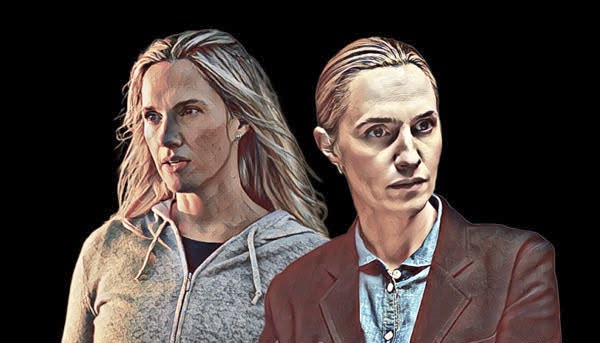
Her transformation was completed in the season finale, Judgment Day, during the confrontation at Diana Taverner’s seaside house. As the assassins closed in on the Slow Horses, Emma realized that Shirley, Roddy, and Reece were in danger and ran across the beach to save them. There was no hesitation, political calculation, or concern about the consequences. She simply did what she believed was her duty.
Emma managed to shoot one of the armed men and protect her colleagues, but then found herself facing Frank Harkness, played by Hugo Weaving. And it was at this point that the series decided to significantly alter her death from Mick Herron’s novel Joe Country.
There is another particularly cruel irony in Emma Flyte’s journey: she entered Slow Horses because of Frank Harkness. In season four, it was the operation orchestrated by the mercenary, who sent his own sons to eliminate David Cartwright and Sam Chapman, that triggered the investigation bringing Emma into Jackson Lamb’s orbit. The man who indirectly set her story in motion was the same man who personally executed her two seasons later. And there is something particularly disturbing about this circularity. Frank remained exactly the same man, indifferent to the lives he destroyed, while Emma underwent a profound transformation. She lost her arrogance, her blind faith in the institution, and her admiration for Diana Taverner, but preserved the humanity that had always existed beneath her rigid exterior. He never changed. She changed completely. And she was the one who died.
In the book, Emma leaves MI5 after refusing to accept the demotion imposed by Diana. She ends up helping Louisa Guy search for Lucas, Min Harper’s son, and the two women exchange coats, a seemingly insignificant detail that contributes to the tragedy. Emma is found by one of Harkness’s men, who tries to extract information about the boy before killing her. It is a cruel death, a direct consequence of her decision to protect other people, but without the dramatic confrontation the television adaptation chose to give her.
On television, Emma was given one final battle. And what a battle it was.
Shot in the back by Harkness, she still managed to fight back. She did not give up when she realized how serious her injuries were, or when her chances of survival had virtually disappeared. She kept fighting, even managing to wound her attacker, and when she ran out of ammunition, she threw her gun at him. It was not enough. Harkness remained standing in front of her, ready to execute her.
It is the most heartbreaking moment of the sequence. Emma understands that there is no way out. She has done everything she could, resisted until the very last second, and knows she is going to die. Then, finally, she stops fighting and waits. There are no pleas, negotiations, or promises. Only the awareness that her fate has been decided. A woman who spent her life trying to control situations finally encounters something she can no longer control.
Ruth Bradley revealed that this was the first time in her career she had portrayed the actual moment of a character’s death. The actress and director Adam Randall chose not to over-rehearse the scene, preserving the spontaneity of a reaction that nobody could truly anticipate. Bradley explained that the script contained one particularly simple and powerful direction: Emma realizes that this is her final moment. Everything else was developed during filming, including the decision to throw the gun at Harkness. And the result is devastating. Emma does not die as an invulnerable heroine, but as a woman who understands her situation and still preserves her dignity.
The change from the book did justice to the character. Not because her original death was less meaningful, but because the series allowed Emma to demonstrate, until her final moments, everything we had discovered about her. Her courage, her competence, her willingness to protect others, and, above all, her humanity. By making Harkness her killer, the writers also eliminated any possibility of romanticizing him. He may have a complicated relationship with River, but he remains a man capable of coldly executing an agent who has just saved other people’s lives.
Writer and producer Gaby Chiappe explained that the change emerged from the need to bring together the plots of Joe Country and Slough House, the two novels adapted in the sixth season. The essence of Emma’s death was preserved, but the decision to make her a direct victim of Harkness added dramatic weight to the story. Especially because the assassin ends the season alive, while Emma pays with her life for choosing to protect others.
And her death did not merely bring her own journey to an end. It also triggered an unlikely transformation in another character: Roddy Ho.

For six seasons, Roddy has been the most irritating member of Slough House, which is saying something for a team led by Jackson Lamb. Arrogant, narcissistic, obnoxious, and absolutely convinced of his own genius, he has always demonstrated an extraordinary ability to consider himself superior to everyone else. Violence, to Roddy, often seemed like a game. The hacker who enjoyed requesting photographs of dead bodies and commenting on death with almost morbid curiosity had never shown much ability to understand other people’s suffering.
Until he found Emma dead on the beach.
Christopher Chung, who plays Roddy, explained to TV Insider that he considered this scene a crucial turning point for the character. Despite his fascination with violent images, Roddy had never encountered the body of someone he knew in quite this way. Death stopped being a distant, almost virtual image and became a reality he could no longer ignore.
And it is precisely at this moment that Roddy does something we would never have expected from him. After initially fleeing the confrontation, thinking only about saving his own skin, he decides to return to help Shirley and Reece. He does not suddenly become a competent agent, much less an action hero. He is still Roddy, shooting terribly and failing to hit his targets. But for the first time, he demonstrates courage for someone else. He understands that there are situations in which his own survival cannot be the only priority.
It is a small transformation, but an enormous one for someone like him. And Emma was the one who brought it about. The woman who had to die for Roddy to discover the reality of violence and the responsibility of protecting his colleagues. When he describes her as “legendary,” he may be offering the most accurate definition of her journey. Emma was a legend not because she never made mistakes or because she was invincible, but because she did something Roddy had never truly understood: she placed other people’s lives above her own.
This transformation also reveals one of Slow Horses’ greatest qualities. Characters do not need to become completely different people to demonstrate that they have changed. Roddy remains irritating, egocentric, and incapable of recognizing his own lack of ability. But after Emma, he can no longer pretend that death is simply another image on a screen. There is an unexpected humanity in his reaction, just as there was a humanity Emma concealed behind her arrogance.
Ruth Bradley explained that she had known Emma’s fate since before filming her first scene in the fourth season. She had read Mick Herron’s novels and deliberately decided to build a woman convinced of her own superiority, precisely because she knew how far the character still had to fall. In the fourth season, Emma was arrogant and considered herself above the Slow Horses. In the fifth, she began revealing her vulnerabilities and lost some of the confidence that sustained her identity. In the sixth, she finally became her authentic self.
The actress also revealed that she gradually fell in love with Emma, a character she initially approached with a certain distance, exploring her arrogance, but ultimately came to understand deeply. It was a journey Bradley compared to the process of human maturation itself: people change, discover their vulnerabilities, and learn to recognize aspects of themselves they had previously overlooked.
There was another lovely detail in her interview. Bradley said Gary Oldman was one of the reasons she decided to become an actress, and working with him only confirmed her admiration. Beyond praising his talent and preparation, she highlighted his generosity toward his fellow actors and the crew, observing that someone can be one of the greatest living actors and still treat everyone with kindness. An observation that, interestingly, also resonates with Emma’s journey: competence and greatness do not have to come with arrogance.
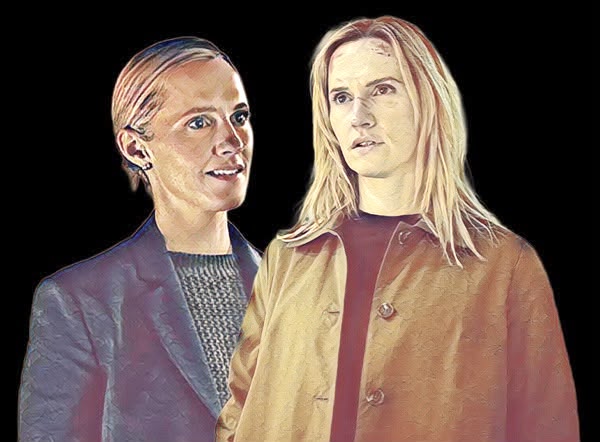
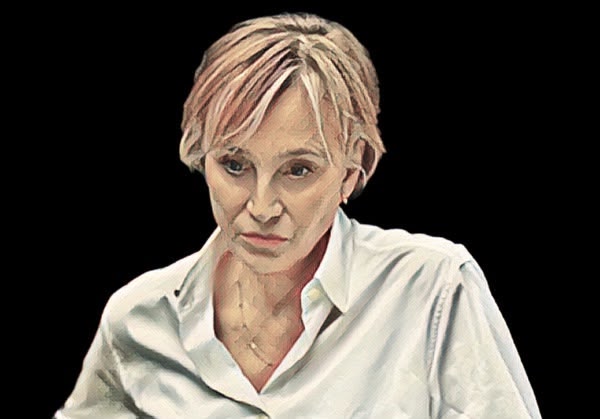
And it is interesting to consider the contrast between Emma and Diana. Both were ambitious, intelligent women determined to establish themselves in a male-dominated institution. But while Diana learned to survive by sacrificing other people, Emma discovered that competence meant nothing without responsibility. Diana ended the season preserving her power thanks to Jackson Lamb’s intervention. Emma died protecting the agents her former boss considered expendable.
Will Taverner feel any guilt? Ruth Bradley is not particularly optimistic. In her interview with The Hollywood Reporter, she questioned whether Diana was capable of genuine remorse, considering everything she had already done to other agents, including Sid Baker. And perhaps she is right. The great irony of Slow Horses is that those occupying the most powerful positions frequently survive their own mistakes, while those who still believe in some kind of principle end up paying the price.
It is also significant that Emma’s death came so shortly after Coe’s. The two represented completely different journeys. Coe was a man marked by profound trauma who found a kind of family among the Slow Horses, although he could never entirely free himself from his suffering. Emma, by contrast, built her professional identity around discipline and superiority, only to discover that those supposedly failed agents demonstrated a loyalty she had never found within MI5.
Emma Flyte was not perfect. She was arrogant, authoritarian, and frequently unbearable. But she never lost her capacity to care about other people. And that was her greatest difference. While so many characters in Slow Horses learn to survive by becoming increasingly cynical, Emma discovered that she did not have to abandon her humanity to be a good agent.
She died as a Slow Horse, although Lamb did not even know he had gained a new team member. She died defending her colleagues, after helping uncover the conspiracy that threatened them all. She died fighting for as long as she could and accepting her fate when she realized there was nothing left to do. And even after her death, she managed something that had seemed impossible: awakening in Roddy Ho a genuine sense of responsibility toward others.

Ruth Bradley leaves Slow Horses after transforming Emma into one of the series’ most interesting characters. Her death represents a significant loss, but it also brings to a close a journey that transformed an initially unlikable figure into someone whose absence will be deeply felt.
Emma Flyte entered Slow Horses convinced she was better than the Slow Horses. She left having proved she was one of them. And she died as Roddy Ho could never have imagined anyone dying: a legend.
Descubra mais sobre
Assine para receber nossas notícias mais recentes por e-mail.

