
Warning: Spoilers for Episode 3 of VisionQuest.
After an interesting but excessively didactic premiere, VisionQuest is finally beginning to pick up the pace. Not that it has abandoned its obsession with explaining absolutely everything, especially the feelings of a character who, theoretically, should not be able to understand them so easily. But Episodes 3 and 4, Reboot and Malware, manage to strike a better balance between action, humor, and the existential investigation driving the series. And, as has been clear from the beginning, James Spader remains its greatest strength.
The third episode opens with a new threat. An assassin known as Butcherbird is eliminating technology executives and leaving wing-shaped marks near their bodies. The hooded figure, with glowing red eyes and powers similar to Vision’s, suggests that our protagonist is not the only synthetic being with a score to settle with humanity.
Meanwhile, Vision and Thomas are trying to escape Paladin following their previous confrontation. The problem is that Vision has been severely damaged. His systems begin to fail, his energy is running low, and despite his extraordinary abilities, he is facing something he cannot control: the possibility of his own death.
Curiously, a series so interested in discussing the meaning of artificial life constantly needs extreme situations to generate emotion. Vision nearly dies, finds a solution, starts failing again, and needs to be rescued once more. At times, the exaggeration comes dangerously close to unintentional comedy. At others, it works.
Especially when Thomas is forced to take responsibility for saving the man who, even without being able to fully recognize him, is his father.
Their relationship remains the emotional heart of the story. Thomas carries Tommy Maximoff’s memories, but also the traumatic experience of having drowned. His powers emerged during the accident, injuring other people and making him responsible, in the eyes of those around him, for something he could not even understand.
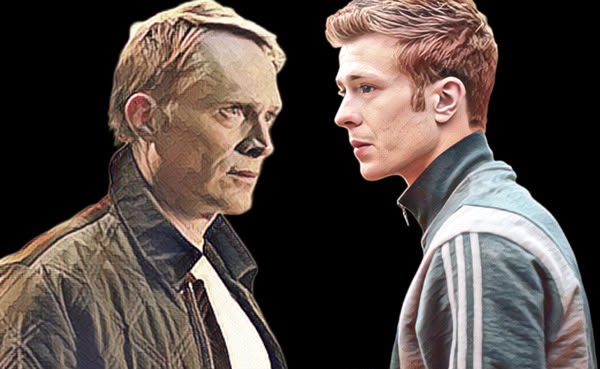
Vision, meanwhile, has no idea how to talk to his son. It is a fascinating irony: he can calculate millions of possibilities, predict reactions, and simulate conversations, yet he is incapable of simply listening to what Thomas has to say. In trying to prevent suffering, he eliminates all spontaneity.
There is something profoundly human about that contradiction. Vision is so afraid of making mistakes that he would rather rehearse his feelings than actually experience them.
And perhaps that is precisely the central problem with VisionQuest: the series understands its themes perfectly, but does not always trust its audience to understand them without additional explanations.
When Vision finally faces the genuine possibility of dying, he must abandon his simulations and trust Thomas. The boy manages to use his powers to reboot his systems. It is an important sequence because it establishes that Tommy Maximoff and Thomas Shepherd do not have to cancel each other out. Both belong to the same existence.
Naturally, Ultron plays a part in everything.
Inside Vision’s mind, the artificial intelligences continue debating memory, death, identity, and emotions. There is even a funeral for J.A.R.V.I.S., while F.R.I.D.A.Y. and E.D.I.T.H. reveal that the personalities of Tony Stark’s programs were inspired by real people.
It is an important detail. If these intelligences carry human characteristics that existed before their creation, to what extent are they merely reproductions? And how much of their personalities truly belongs to them?
Ultron seems particularly interested in the discussion, although he continues using sarcasm to conceal any possibility of vulnerability.
What is most interesting, however, is that he helps Vision survive. By recovering images of Wanda and the boys, he tries to awaken something that logic cannot provide: a reason to keep existing.
The question, naturally, is whether we are witnessing a genuine transformation or a remarkably calculated manipulation.
James Spader makes that uncertainty especially entertaining.
Meanwhile, Paladin discovers that the mysterious figure being pursued by the police possesses extraordinary powers. When he confronts Butcherbird, he is defeated, and his past is exposed. We learn that his father was abusive and was killed by a previous Paladin, who subsequently raised the boy as his successor.
His identity, therefore, was also constructed from someone else’s story. Just like Vision, he is trying to discover what it means to be someone when your existence seems determined by an inheritance you never chose.
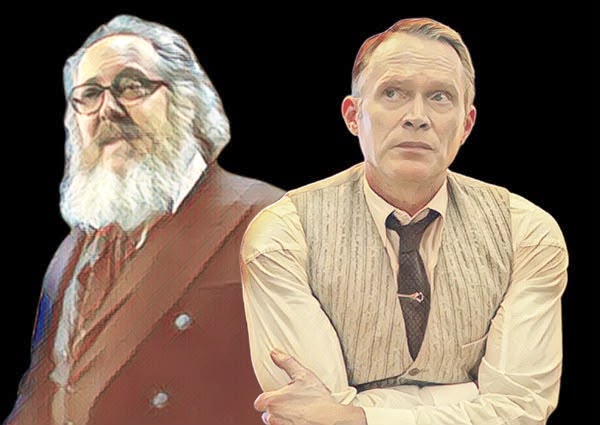
The thematic connection is interesting, although the series has some difficulty deciding what to do with so many traumatized characters.
The episode ends with an invasion of Vision’s mind by the mysterious assassin, who transforms his inner universe into something resembling a nightmare. The threat is no longer merely physical. She can reach the very place where he believed himself to be protected.
Descubra mais sobre
Assine para receber nossas notícias mais recentes por e-mail.

