
Josh O’Connor, Callum Turner or Jack Lowden? The search for the next James Bond appears to have reached its decisive stage. According to industry reports, the final screen tests could begin this Friday, October 23, and continue into next week. The three are among the candidates mentioned, but there is reportedly at least one other actor whose identity has not been revealed. For now, there is no official announcement.
I confess: I still don’t see any of the three as James Bond. I admire the actors, follow their work and recognize qualities that could suit the character. But that immediate association between the face and the number 007 hasn’t happened for me yet. I may change my mind, of course. Daniel Craig taught plenty of people that it’s wise to wait until an actor steps into the role before declaring him unsuitable.
While we wait, the competition offers an irresistible opportunity to revisit one of my favorite films in the franchise. I love From Russia with Love. I love the espionage plot, Sean Connery, Robert Shaw’s menace and the confrontation on the train. And there is a memory that extends beyond the screen: those men’s briefcases known in Brazil as “007 cases,” with combination locks, which turned even carrying documents into a little secret-agent fantasy.
The film helped establish an imaginary world that endured for decades. And one of its scenes became a benchmark for discovering who could step into Connery’s shoes.
The Bedroom Awaiting Bond Hopefuls
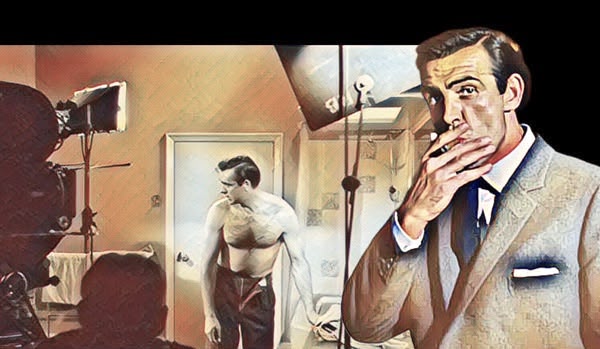
During an event at the British Film Institute in 2022, Michael G. Wilson revealed that the production team returned to the same scene to test aspiring Bonds. It is Bond’s encounter with Tatiana Romanova in his hotel room in From Russia with Love.
In the producer’s description, Bond returns to his room, starts taking off his shirt and prepares to bathe. Hearing a noise, he picks up his gun and investigates. He finds a woman waiting in his bed. For Wilson, anyone who could make that scene work had the potential to play Bond. It sounds simple, but he made a point of stressing its difficulty.
Within a few movements, the actor must convey intimacy, vigilance, authority and desire. He is relaxing, identifies a potential threat and moves into seduction without entirely losing his suspicion. There is humor, physical presence and a conversation that needs to sound spontaneous.
Martin Campbell, who directed Pierce Brosnan’s and Daniel Craig’s debuts as the character, summed up the requirement with the idea of an “effortless” performance. The work is there, but audiences shouldn’t notice the actor trying to look like James Bond.
Connery had that quality. The confidence preceded the dialogue. He could smile without ceasing to look dangerous, approach someone without revealing what he was thinking. Reproducing his gestures would be relatively simple; finding an individual version of that combination is another matter.
Craig also performed the test and said, in an interview published in 2006, that he hated the footage. He even hoped Barbara Broccoli would destroy it. The future star of Casino Royale, then, did not leave that experience believing he had figured the character out.
One distinction matters: Wilson was describing the tradition of the team that had overseen the franchise for decades. With Amazon MGM holding creative control and Denis Villeneuve directing the next film, there is still no public confirmation that today’s candidates will perform that same scene. But it remains an excellent way to understand what a Bond audition is looking for.
First, Robert Shaw Kills James Bond
One of the things I love most about From Russia with Love is how it begins. A man stalks Bond at night and strangles him with a wire concealed in his watch. The killer is Red Grant, played by Robert Shaw. Before the opening credits, it seems we have already lost our protagonist.
Then a mask is removed from the victim’s face. That man wasn’t Bond: it was a SPECTRE training exercise. Grant was demonstrating his ability to execute the agent.
It is an excellent opening because it delivers the shock of apparently watching Connery die while establishing the adversary’s competence. When Grant later approaches the real Bond, we already know what he can do.
The mask also introduces an idea that runs throughout the film: appearances are tools of the trade. People assume identities, conceal loyalties and offer carefully prepared information. The audience is deceived before understanding the rules of the game. Long before masks became a signature of other espionage franchises, Bond was already exploiting the pleasure of making us believe in the wrong face.
Shaw is extraordinary in the role. His silence unsettles; his watchfulness threatens. Grant doesn’t need to dominate every scene with speeches because the possibility of violence has been established from his first encounter with the audience.
The Connection to Dr. No Is in the Details
Released in 1963, From Russia with Love is the second film in the official series, following 1962’s Dr. No and preceding 1964’s Goldfinger. Terence Young returned to direct, continuing the cinematic construction of Connery as Ian Fleming’s secret agent.
That continuity appears delightfully when we find Bond with Sylvia Trench again, played by Eunice Gayson. She is the woman he meets at the casino in the first film, in the very sequence that introduces him as “Bond, James Bond.”
In From Russia with Love, the two are enjoying a riverside rendezvous when work interferes once again. I like this detail because it gives the character a life that seems to continue between missions. Sylvia didn’t simply disappear because the credits rolled on Dr. No.
The main connection, however, lies in the plot itself: SPECTRE wants revenge for Dr. No’s death. The previous mission had consequences, and the organization intends to make Bond pay for them.
A Trap in the Middle of the Cold War
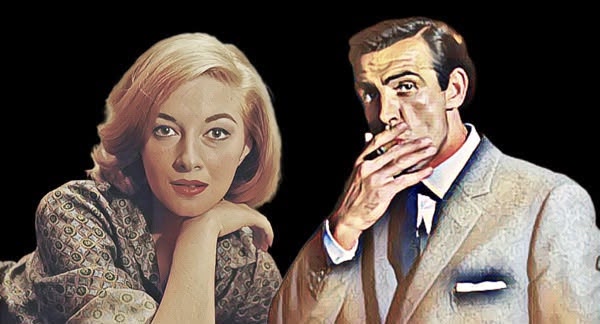
The scheme involves a Soviet decoding machine, the Lektor, coveted by British intelligence. Tatiana Romanova, an employee at the Soviet consulate in Istanbul, offers a way to obtain it and claims to have fallen in love with Bond after seeing his photograph.
It is a suspicious story, and the British know it. The machine’s value nevertheless justifies investigating the offer. Bond travels to Turkey, where he receives help from Kerim Bey, played by Pedro Armendáriz, whose rapport with the agent gives the film some of its human warmth.
Tatiana, played by Daniela Bianchi, is also being manipulated. She believes she is carrying out a mission for her country by obeying Rosa Klebb, unaware of the full SPECTRE operation. The plan is to use the British to obtain the Lektor and destroy Bond under compromising circumstances.
It is this uneven distribution of information that makes the film so engrossing. Bond knows there is a trap, but he doesn’t understand all its mechanisms. Tatiana knows her assignment, but not who truly benefits from it. And we watch Grant approach with an anxiety the characters cannot yet share.
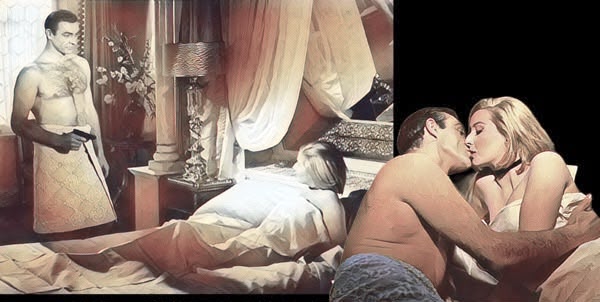
Even the bedroom encounter contains that duplicity. The seduction is part of an operation: the two are secretly filmed so that their intimacy can be used against the agent. The scene that would become a test for Bond candidates also reveals the danger of his believing too much in his own powers of attraction.
Robert Shaw and the Orient Express Fight
Lotte Lenya makes Rosa Klebb a memorable villain, with an unpleasant authority and that poisoned-blade shoe that became part of the series’ history. But Shaw provides Connery with a physical opponent worthy of him.
Grant functions as a kind of dark double of Bond: trained, watchful and capable of playing a role when necessary. By assuming the identity of a British contact, he transforms supposed protection into a threat.
The encounter on the Orient Express is the great payoff to everything the opening promised. The fight takes place in a cramped compartment where there is no room to preserve elegance. Bodies crash into walls, movement is restricted, and survival depends on seizing the smallest opportunity.
The sequence took five days to shoot, with Connery, Shaw and their stunt doubles participating. It remains impressive for its brutality and clarity: we understand the space, the danger and the effort of both men.
It is one of the best demonstrations of why Connery worked so well. The character’s confidence did not make him immune. When he had to fight for his life, he was convincing in desperation, too.
The 007 Briefcase and a Success Beyond the Screen
It is during this confrontation that the briefcase introduced by Q Branch finds its decisive purpose. The equipment conceals weapons, gold coins, and a tear-gas mechanism triggered when the case is opened incorrectly. The initial explanation sets up a solution the film uses at its most dangerous moment.
This also marks Desmond Llewelyn’s debut as the equipment expert, a role that would make him one of the franchise’s most beloved and enduring presences.
For me, the case also brings back memories of those “007 briefcases,” with their secret combinations, which became part of men’s everyday lives. There was something irresistible about the promise: on the outside, a work briefcase; in the imagination, a piece of spy equipment.
The commercial connection proved lasting. The film’s briefcase even inspired a toy released in 1965, later revived in collectors’ editions. Bond was already selling the fantasy of participating in his world through an object.
Its box-office success was equally substantial. With a budget of around $2 million, From Russia with Love accumulated approximately $78.9 million worldwide, in nominal figures and including rereleases. The adventure cemented Connery’s position and expanded the phenomenon that had begun with Dr. No.
Goldfinger would take that popularity to another level. But the second film had already demonstrated that audiences wanted to return to this man—and that there was a cinematic identity capable of sustaining further adventures.
Matt Monro Doesn’t Sing Over the Opening Yet
Another delightful detail: From Russia with Love has a theme song, but it doesn’t open with Matt Monro singing it. During the opening credits, we hear an instrumental arrangement incorporating Lionel Bart’s composition and the recognizable James Bond theme.
Monro’s voice is heard on the radio during Bond’s rendezvous with Sylvia and returns at the end. It was only in the following film, with Shirley Bassey and Goldfinger, that the ritual now seemingly inseparable from the franchise became established: a great voice performing the theme song over the opening credits.
There is a small distinction to make here: Dr. No already included singing in its opening, with “Kingston Calypso,” an adaptation of “Three Blind Mice.” What Bassey helped define was the model of a major original song serving as the film’s musical introduction.
Even that signature took a few films to find its form. And when we consider who might sing the next theme, we are discussing a tradition that From Russia with Love helped build but had not yet fully established.
Lowden, O’Connor or Turner?
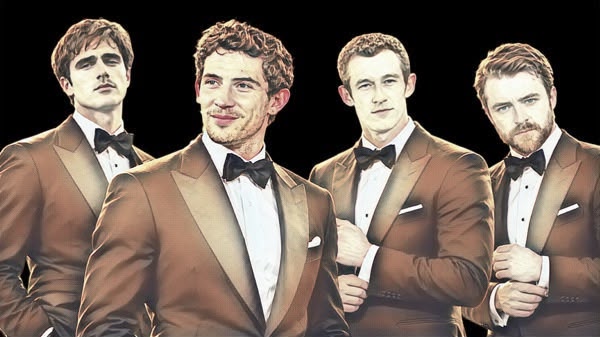
Which brings us back to the candidates. If the intention is to preserve an image more immediately associated with Bond’s elegance and charm, I understand Callum Turner’s appeal. Jack Lowden offers intensity, intelligence and an already familiar relationship with the world of espionage, although River Cartwright in Slow Horses is far removed from 007’s confidence. Josh O’Connor strikes me as the most unpredictable possibility: an actor capable of making a character seductive and unsettling almost simultaneously.
These are possible approaches to the performance, not inside information about what the producers want. The three reported names also do not constitute an official, closed shortlist: another candidate may still be involved at this stage.
My difficulty may lie precisely in already seeing very distinct personalities in all three. To see them as Bond, I need to watch the transformation. Discover how they enter a room, how they speak and how they react when charm stops working.
That is where the old From Russia with Love scene remains so interesting. It allows us to observe what a photograph in a tuxedo can never reveal. The candidate must hold the audience’s attention during a conversation and make the transition between danger, humor and desire feel natural.
I still don’t have a favorite. What I do have is an enormous desire to revisit Connery, Shaw, Tatiana and that briefcase. While we wait to discover who the next Bond will be, From Russia with Love continues to remind us of the scale of the challenge. Connery made it all look far too easy.
Descubra mais sobre
Assine para receber nossas notícias mais recentes por e-mail.

