
Reality decided to pay an involuntary tribute to Lupin when, in October 2025, thieves broke into the Louvre Museum in broad daylight, stole historic jewels, and escaped on motorcycles. The operation was so audacious that it could have been a sequence written for Assane Diop, the irresistible thief played by Omar Sy in Netflix’s French series. One year later, with the premiere of Season 4, it is difficult not to think that reality can sometimes be more surprising than fiction. And that says quite a lot about Lupin‘s main problem: after so many spectacular heists, we already know that anything is possible and, consequently, almost nothing can genuinely surprise us anymore.
This is not a question of production quality. Quite the opposite. The series remains visually stunning, Paris continues to be practically a character in its own right, and Omar Sy possesses enough charisma to sustain situations we would hardly accept in any other story. The problem is that the formula has become so firmly established that, to fully enjoy these eight new episodes, we must accept in advance that everything we are watching could be an illusion, a performance, or merely one piece of a much larger plan that will be explained retrospectively. It is entertaining, certainly, but it can also become exhausting. And this is not the first time I have felt this way about the series.
Season 4 begins four years after Assane voluntarily surrendered to the authorities, having decided to turn himself in to protect his family. He is about to regain his freedom and promises his son, Raoul, a trip to Senegal, as though it might finally be possible to leave the heists behind and make up for lost time. Naturally, nothing goes according to plan. Someone begins announcing simultaneous robberies at French museums using Lupin’s name, and security footage appears to show Assane committing crimes while he remains behind bars. During one of these operations, police officer Sofia Belkacem suffers a serious fall, turning the supposed impostor into an even more dangerous criminal.
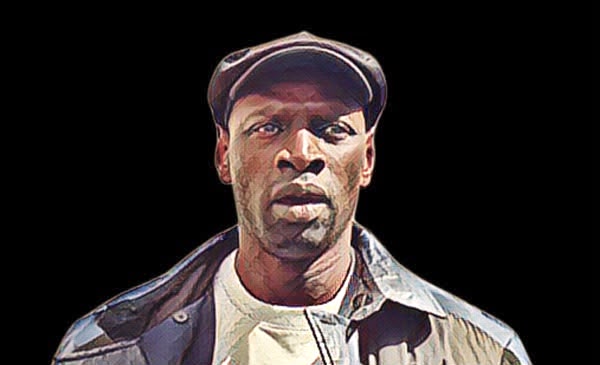
Assane needs to prove that he is not responsible for the robberies, but to do so, he chooses the one solution he knows best: escaping from prison and returning to a life of disguises, manipulation, and impossible schemes. Here we have the first irony of a season that repeatedly insists on the impossibility of escaping one’s own identity. The man who promised to abandon crime must commit new crimes to prove his innocence, while the son who has waited four years for their reunion discovers, once again, that his father’s promises can always be postponed indefinitely.
The identity of the fake Lupin is revealed relatively early. Adèle Kapoor, played by Laïka Blanc-Francard, is a skilled hacker who uses deepfakes, drones, holograms, and other technological resources to reproduce Assane’s tricks. There is something interesting about this modernization of the character: while the original thief relies on his ability to observe human behavior, construct disguises, and manipulate people, his imitator uses technology capable of manufacturing identities without even needing to be physically present. She is a kind of Lupin for the digital age, less interested in the art of disappearing than in the possibility of making anyone appear somewhere they have never been.
But Adèle is not simply an admirer trying to surpass the master. She is Assane’s daughter with Juliette Pellegrini, the result of a relationship in their youth that was brutally interrupted by Hubert Pellegrini’s intervention. The millionaire separated the child from her parents and sent her to England for adoption, keeping her existence a secret. After discovering her origins, Adèle seeks out her mother and devises an extraordinarily elaborate way to attract her father’s attention. In other words, the young woman has inherited not only Assane’s talent for elaborate schemes but also his inability to resolve a family problem without organizing a criminal operation of cinematic proportions.
The discovery brings Assane closer to Juliette and sets the three of them on a quest for a treasure connected to the French Crown Jewels, protected by wealthy and influential families who consider themselves guardians of this heritage. Among them is the Pellegrini family, allowing the series to bring back its main antagonist while expanding the scale of its heists. What began as a personal revenge story against an injustice committed against Assane’s father now involves historical conspiracies, precious objects, privileged societies, and increasingly improbable operations.
Visually, everything works. The chases, the operation at the Eiffel Tower, the search for the jewels, and the elaborate planning demonstrate an ambition that turns the season into an action spectacle. Omar Sy, who has also taken on creative leadership responsibilities in this new chapter, seems perfectly comfortable in a universe where Assane has evolved from an extraordinarily clever thief into something approaching an indestructible hero. The question is that the more spectacular the heists become, the less room remains for the apparently effortless intelligence that made the early episodes so fascinating.
The Real Betrayal Comes From Within the Family
Curiously, the most promising dramatic elements of Season 4 are not the robberies but Assane’s personal relationships. When he finally leaves prison, he discovers that the world has continued without him and that the people he loves have not remained frozen in time, waiting for his return. Claire, his former partner, has fallen in love with Benjamin, Assane’s closest friend and accomplice in so many crimes. They have built a life together during his absence, and Assane must accept that surrendering his freedom also meant surrendering control over his own story.
This revelation works because, for once, the master manipulator has no plan capable of solving the problem. Benjamin confesses that he has always loved Claire, and Assane’s reaction reveals a vulnerability that no robbery could ever produce. He can fool police officers, falsify appearances, and anticipate his enemies’ movements, but he cannot demand that people remain emotionally available while he decides when to participate in their lives.
The situation becomes even more complicated with Raoul, now a young adult who has grown up surrounded by his father’s absences, dangerous adventures, and broken promises. Adèle’s arrival represents an emotional threat that Assane is slow to understand. Fascinated by the discovery of a daughter who shares his talent and passion for heists, he establishes an immediate bond with her, precisely the kind of closeness Raoul has always wanted and rarely experienced. The difference is that Adèle appears to understand and admire her father’s world, while Raoul knows, above all, the consequences of his choices.
The revelation that Raoul was the one who pushed Belkacem during the museum robbery adds another layer to this conflict. He believed he was protecting his father when he attacked the police officer, unaware that the person being pursued was an impostor. The young man ends up reproducing Assane’s impulsive behavior without possessing his experience or his ability to control the consequences. Here, the series finds an interesting theme that could have been explored in greater depth: what happens when the son of a man who has spent his life defying rules must build his own relationship with responsibility?
A Finale of Betrayals and a Father Who Finally Loses Control
In the final episode, after managing to assemble the jewels and making progress in the search for the treasure, Assane learns that both of his children have been kidnapped. Those responsible demand that he hand over the fortune, and he organizes a rescue operation without realizing that, this time, he is not facing just another adversary interested in money. The trap has been arranged by Raoul himself, who has allied with Hubert Pellegrini, the man responsible for destroying his grandfather’s life and turning Assane into the thief we know.
The revelation is deliberately cruel. Raoul helped Pellegrini escape from prison in Malaysia and staged his own kidnapping to force his father to confront everything he has always avoided. His anger does not arise simply from jealousy of his half-sister but from years of emotional abandonment, culminating in the realization that Assane can offer Adèle the closeness he never knew how to give his first child. Pellegrini exploits this resentment and turns the young man into an instrument of revenge against his own father.

Raoul’s decision is difficult to accept, particularly considering everything Pellegrini has done to the Diop family, but its emotional violence serves an obvious purpose in the script. For the first time, Assane faces an adversary he cannot simply outwit, because the problem is not discovering where the jewels are hidden or figuring out how to escape the police. The problem is that his son no longer trusts him. And no ingenious explanation can instantly repair a relationship built on so many absences.
The confrontation reaches its breaking point when Raoul forces his father to choose between following him or attempting to save Adèle, who appears to be threatened by a bomb. Assane rushes to protect his daughter, a gesture the young man interprets as yet another confirmation that he has never been his father’s priority. Raoul leaves with Pellegrini in a helicopter, while the police approach to prevent their escape. When Belkacem fires at the young man, Assane throws himself into the path of the bullet and is hit. The season ends with the protagonist lying on the ground, surrounded by Claire, Benjamin, Juliette, and Adèle, without revealing whether he will survive.
It is a dramatic ending, although not necessarily a surprising one. After four seasons in which Assane has escaped so many impossible situations, it is difficult to believe that the series is genuinely prepared to kill him off. The suspense surrounding his survival feels more like a promise of continuation than a genuine uncertainty. What really matters is the rupture with Raoul and the possibility that the thief’s greatest challenge may finally be learning how to be a father.
Perhaps this is the greatest irony of Season 4. Lupin remains capable of orchestrating brilliant heists and deceiving practically every character, but it can no longer fool its audience quite so easily. We know there will always be a hidden card, a false identity, an unexpected alliance, and an explanation capable of rearranging everything we have watched. The formula remains effective, particularly thanks to Omar Sy’s inexhaustible charisma, but effectiveness is not necessarily the same as surprise.
The series has enough quality, humor, pace, and beauty to justify our attention. It simply requires us to accept its particular logic, in which any impossibility can be resolved by a later revelation. For those who still find pleasure in this game, Season 4 offers a generous binge-watching experience. For those who, like me, have begun to feel the weight of repetition, the impression remains that Lupin has become a prisoner of its own talent.
And perhaps the cleverest trick Assane could pull off now would be the one he has never managed to accomplish: abandoning the character he created and discovering who he is when he no longer needs to deceive anyone.
Descubra mais sobre
Assine para receber nossas notícias mais recentes por e-mail.

