
The kind-hearted servant who marries the prince and lives happily ever after could describe Enid Turner-Winterton in The Gilded Age, but with a twist. Or rather, she is a Cinderella who has decided to write her own fairy tale and, unlike the original heroine, has no intention of waiting for Prince Charming, a fairy godmother, or anyone else willing to change her destiny. She has already learned that the world does not reward kindness as generously as it rewards money, connections, and ambition. Just look at her extraordinary journey throughout the series.
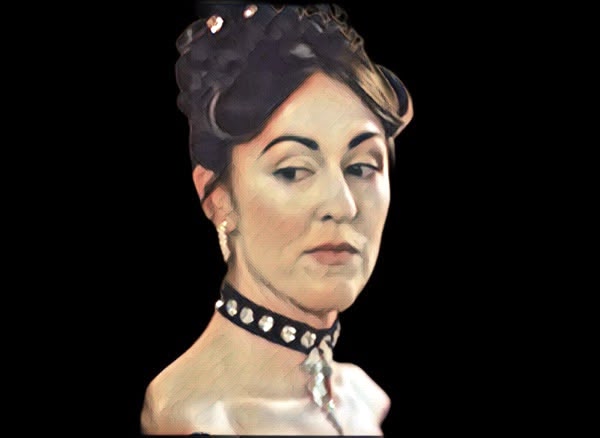
As Turner, she begins as Bertha Russell’s lady’s maid, a position that gives her privileged access to the secrets and weaknesses of the wealthy. She realizes, even before George himself, that Bertha’s ambitions could eventually create a rift between husband and wife. Believing she has found an opportunity, she attempts to seduce George, only to end up humiliated. To make matters worse, a misunderstanding leads to her dismissal. When she accepts an extra job helping Oscar van Rhijn, Agnes becomes suspicious that the two might be romantically involved, something she considers unthinkable because of their different social backgrounds. Outraged, Agnes demands that Bertha dismiss the maid, while Bertha herself believes Turner is interested in Larry. Unaware of the real reasons behind her dismissal, Turner concludes that she is being punished for attempting to seduce George. Whatever the case, for another character, this might have been the end of the story. For Turner, it was only the beginning.
As Winterton, she marries an older millionaire and acquires the wealth and social standing she could never have achieved as a servant. She meets British royalty and, for a brief moment, even secures an opera box that Bertha Russell does not have. Yet her social ascent does nothing to diminish her resentment, jealousy, or desire to take revenge on her former employer. Having everything she once dreamed of is still not enough, because Enid does not simply want to belong to the world that rejected her. She wants to prove she can conquer it. And she gets remarkably far, attending the most prestigious parties and mingling with New York’s most influential families, until “someone” reveals her past as a servant to Mrs. Astor. Suddenly, money is no longer enough. Enid loses her place at the Opera House and, after becoming a widow, finds herself increasingly excluded from the very social gatherings she fought so hard to attend.
It is at this point that Oscar van Rhijn crosses her path again. He, too, is unaware of the role his own mother played in Turner’s dismissal and now sees in her a possible solution to his problems. What would once have been considered an unthinkable relationship between an aristocrat and a servant becomes a marriage opportunity for two people who have much to offer each other.
As the potential Mrs. van Rhijn, Enid agrees to consider a marriage of convenience with Oscar, a lavender marriage in which both could preserve their personal freedom while securing what they need. Oscar requires financial security and a socially acceptable façade that allows him to conceal his homosexuality. Enid already has money, but she wants something that even the Winterton fortune cannot easily buy: the legitimacy of a surname belonging to New York’s old aristocracy. In the original fairy tale, Cinderella is rewarded for her kindness and finds love. Enid expects no reward, seeks no love, and certainly has no intention of being generous to those who once looked down on her. Like Bertha Russell, she wants to lead.
Agnes van Rhijn: The Mother-in-Law From Hell Meets Her Match
And here lies one of the greatest ironies of the series. Agnes, who helped drive Turner out of the Russell household because she suspected that the maid was involved with Oscar, may end up welcoming that very woman as her daughter-in-law.
I have always expected Julian Fellowes to develop the rivalry between Agnes and Bertha more fully, a confrontation promised since the first season that has never quite materialized in the way I imagined. Now, however, we may be getting an even more delicious rivalry between two Mrs. van Rhijn. I have been talking about this possibility for years.
Agnes has spent her life believing that a respectable surname, impeccable manners, and the right family connections are practically moral virtues. Turner represents almost everything she despises: a woman of humble origins who climbed the social ladder through marriage, money, and an extraordinary ability to reinvent herself.
But circumstances have changed. Agnes is no longer the wealthy, unquestioned mistress of her own household. Her financial dependence on Ada has forced her to surrender part of the authority she always considered her birthright. If Oscar actually marries Enid, the family’s financial circumstances could become tied to the fortune of the very woman Agnes once considered socially inferior.
And there is nothing Enid enjoys more than having the upper hand.
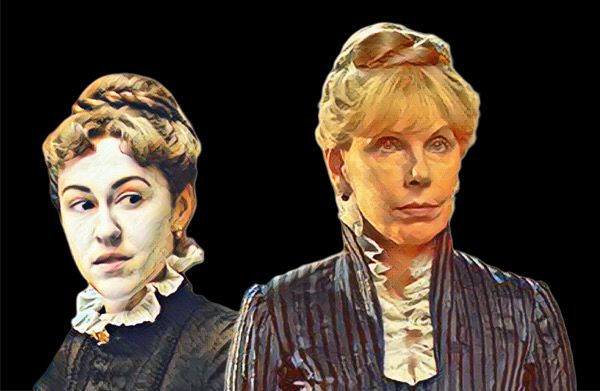
In the new behind-the-scenes video, Enid tells Agnes that she would be surprised to discover all the wonderful things she and Oscar can accomplish together. It sounds perfectly cordial, almost reassuring, but coming from Turner, I cannot help hearing a challenge hidden beneath the politeness.
The footage also shows Agnes and Enid attending social occasions together, suggesting that the two women will have plenty of opportunities to test each other’s patience. I suspect Agnes may discover that dealing with Bertha Russell was relatively easy compared with having Turner as part of her own family.
But Agnes is also pragmatic. She understands the importance of preserving appearances, protecting Oscar, and maintaining the family’s position. Perhaps she will conclude that the marriage serves everyone’s interests, even if the bride is very far from being the daughter-in-law she would have chosen.
Which leaves us with a fascinating possibility: Agnes may despise Enid while recognizing that she needs her.
Oscar and Enid: A Marriage Without Romantic Illusions
The alliance between Oscar and Enid may be one of the most interesting developments Julian Fellowes has prepared for the fourth season. They are two people who understand the restrictions imposed by society and have decided to find a way around them rather than openly confront them.
Oscar needs to conceal his homosexuality. His relationship with John Adams, particularly after his lover’s tragic death, revealed just how painful and dangerous those restrictions can be. He has spent years looking for a marriage that would provide financial security without demanding emotional commitments he could not honestly offer.
Enid, meanwhile, has already experienced marriage as a means of social advancement. She does not need another husband who is hopelessly in love with her, much less someone interested in controlling how she spends her money, manages her household, or conducts her social life.
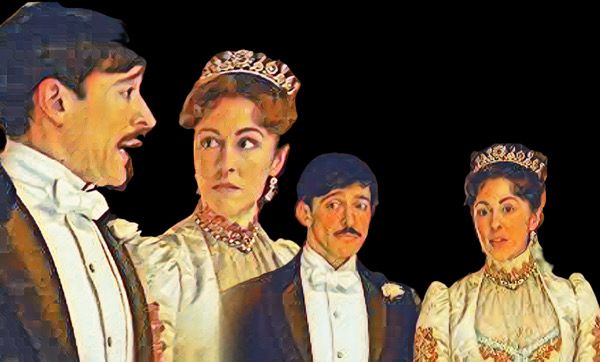
Oscar can offer a respected surname and access to the old aristocracy. She can provide financial security, social protection, and perhaps the possibility of a private life that neither could easily enjoy otherwise.
There is something almost refreshing about a partnership so openly based on mutual interests. In a society where so many marriages are shaped by financial negotiations, family expectations, and social ambitions, Oscar and Enid may end up building one of the most honest relationships in The Gilded Age. They know exactly what they are offering and what they expect in return. At least between themselves, they do not need to pretend they have found the great loves of their lives.
The official photographs from the first episode show the two looking quite close. In one, Oscar holds Enid’s hand beside a staircase. In another, they appear together at a party, accompanied by Marian, with drinks in their hands. The behind-the-scenes video also shows Kelley Curran and Blake Ritson dancing cheerfully, reflecting a sense of complicity that comes through in the actors’ interviews.
It is difficult to imagine two characters better suited to a partnership built on shared interests.
They Don’t Just Want to Join Society. They Want to Rule It.
What struck me most about the new interviews was discovering just how far Enid and Oscar’s ambitions extend. Kelley Curran suggests that the characters recognize their potential to become influential figures in shaping society’s cultural direction. Blake Ritson goes even further, explaining that the two want to become the ultimate arbiters of taste, the people who establish trends and determine who deserves social recognition.
That changes everything.
Bertha Russell spent years fighting for Mrs. Astor’s approval. Enid does not seem interested in following the same path. She wants to compete for the very power to grant that approval, which represents an entirely different level of ambition.
In the trailer, Enid and Oscar question why Mrs. Astor and Bertha should continue controlling society. The actors explain that the new season will show the couple’s first attempt to discover just how much influence they can exercise. Apparently, they are very good at it. Did anyone ever doubt that?

Oscar grew up among the traditional families and knows their social codes perfectly. Enid spent years observing the wealthy while working for them, learning their secrets, hypocrisies, and weaknesses. He knows the rules because he was born into that world, while she had to study them to survive. Together, they could become a formidable pair.
The first party featured in the promotional images already offers a fascinating clue. Marian, Larry, Oscar, and Enid attend a celebration decorated with Oriental-inspired elements, peacocks, lanterns, music, drinks, and dancing far more energetic than the traditional balls.
Could this be one of Oscar and Enid’s first attempts to establish themselves as cultural tastemakers? It is only a possibility, but it fits their ambitions perfectly.
Marian’s presence is particularly intriguing. We know that she will become more daring this season and make a decision supported by Agnes but opposed by Ada. What if part of that transformation involves supporting her cousin and his future wife’s extravagances?
Ada is more prudish than Agnes in certain matters, while Agnes, despite her conservatism, may recognize the practical advantages of a marriage capable of restoring money and influence to the van Rhijn family. It would be another delicious reversal: Agnes, the conservative, defending Marian, while Ada, traditionally the more understanding one, finds her behavior unacceptable.
It is still only a theory, of course, but one worth watching.
From Bertha’s Dressing Room to the President’s Dinner Table
The behind-the-scenes video offers another fascinating glimpse of Enid’s social ascent. She appears visibly upset after reading something in a newspaper, but we also see her receiving public applause, speaking with President Grover Cleveland, and sitting beside him during a formal dinner.
We do not know what she has done to receive such recognition or what news might threaten her plans. Still, the images suggest that Enid is already moving within the highest circles of political and social influence.
Just consider the transformation. The woman who once helped Bertha Russell dress for important occasions now appears beside the President of the United States.
Of course, knowing a president is not the same as exercising political power, but in the world of The Gilded Age, proximity matters. Being seen alongside influential people can be almost as valuable as wielding influence yourself. And Enid understands the importance of appearances better than most.
There is also her enduring rivalry with Bertha. The trailer shows Enid taunting her former employer about the façade of happiness surrounding the Russell family, a particularly cruel attack now that George and Bertha’s marriage is in crisis.
Interestingly, this comes after Enid suggested, at the end of the third season, that perhaps the two women could become friends. Friends? I doubt either of them has forgotten enough to make that possible.

Turner knows Bertha’s vulnerabilities because she once worked in her most intimate surroundings. She witnessed her moments of insecurity, followed her strategies, and knows just how hard she had to fight for acceptance. Bertha, for her part, has never managed to forget that Enid was once her servant, much less forgive her attempt to seduce George.
But the balance of power is changing. Bertha may be fighting to save her marriage just as her former servant prepares to consolidate a new partnership of interests. While one woman tries to preserve the appearance of a happy family, the other may be building a marriage without romantic illusions but with perfectly defined objectives. The irony is almost cruel.
And perhaps Enid understands something that Bertha took a long time to accept: acquiring power is only the first step. The real challenge is keeping it when the people around you stop cooperating with your plans.
Cinderella Doesn’t Have to Be Nice
What makes Enid especially fascinating is that her story is not a conventional celebration of social mobility. She is intelligent, resourceful, courageous, and determined, but also manipulative, resentful, and capable of considerable cruelty. We can admire what she has accomplished without approving of how she got there.
And perhaps that is the fundamental difference between Enid and Cinderella. The fairy-tale heroine is rewarded because she remains kind despite the cruelty she suffers. Enid has learned from that cruelty and seems perfectly willing to reproduce it once she gains power.
There is a very real possibility that the woman who spent so many years being humiliated will eventually use her newly acquired position to humiliate others. Social mobility does not automatically produce generosity, just as suffering injustice does not necessarily make someone a fair person.
Julian Fellowes has always been interested in tensions between social classes, but The Gilded Age provides a particularly fertile setting for exploring those contradictions. In the late nineteenth century, the United States was experiencing a period in which industrial fortunes, new wealth, and social mobility challenged the authority of families who believed their place in the world was guaranteed.
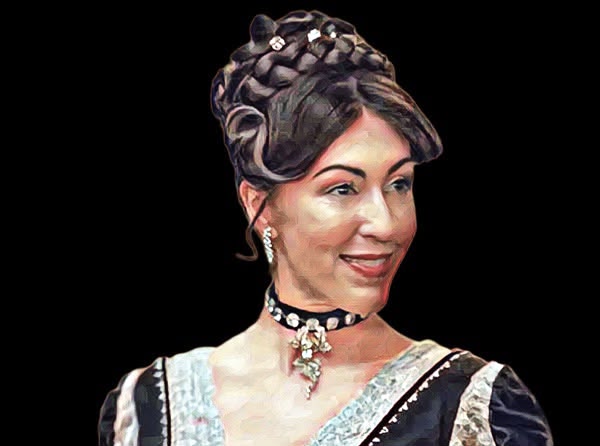
Enid embodies that transformation almost perfectly. She was not born rich, did not inherit prestige, and was not raised to believe that society existed to serve her. She had to construct her own identity, first as Turner, then as Winterton, and perhaps soon as van Rhijn.
Each surname represents a different stage of her transformation, but none has changed her fundamental ambition. Enid has never been content merely to survive. She wants recognition, influence, and the satisfaction of knowing that the people who once looked down on her must now acknowledge her importance.
Bertha bought her seat at the table. Agnes inherited hers. Enid is learning to manipulate both systems and may have understood the rules better than either of them.
In the original fairy tale, Cinderella loses her glass slipper at midnight and needs the prince to find her. Enid does not need anyone to come looking for her, nor does she intend to leave the ball when the clock strikes midnight.
She has already found her prince, negotiated the terms, and decided exactly what she expects from the arrangement. And if everything goes according to plan, she will not simply become another respectable lady in New York society.
She wants to keep the palace. I confess I am particularly eager to discover just how far Enid will go!
Descubra mais sobre
Assine para receber nossas notícias mais recentes por e-mail.

