
It is a truth universally acknowledged that no generation can resist a new adaptation of Pride and Prejudice. Jane Austen published her novel in 1813, and more than two centuries later, Elizabeth Bennet and Mr. Darcy continue to inspire the same curiosity, the same romantic fascination, and the inevitable comparisons with those who have already portrayed one of literature’s most beloved couples. Netflix knows this perfectly well and has decided to tease Austen fans: on Tuesday, October 27, it released a new poster featuring Emma Corrin and Jack Lowden, announcing that the full trailer will arrive tomorrow, October 28.
The tease was perfect: Ardently waiting?, a reference to Darcy’s famous declaration of love. The new adaptation premieres on December 3, will consist of six episodes, and is written by Dolly Alderton and directed by Euros Lyn, of Heartstopper. The promise is a faithful adaptation of the original novel, but what strikes me most, on the eve of the trailer’s release, isn’t exactly the anticipation surrounding Mr. Darcy. It’s the relative ease with which everyone seems to have accepted Emma Corrin as Elizabeth Bennet.
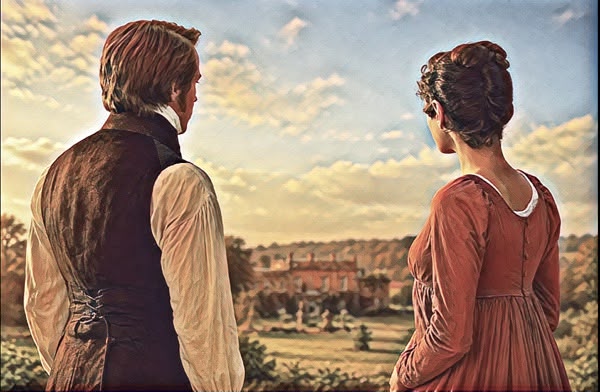
And, come to think of it, perhaps there’s a very good reason for that. Emma Corrin is an extraordinary talent, an actor who, in just a few years, has demonstrated remarkable versatility and who, to me, is becoming something of the Jodie Foster of their generation. And I mean that with all the praise such a comparison deserves. There’s an intelligence in Corrin’s choices and in the way they construct characters that goes far beyond physical appearance or the ability to recreate a particular period.
Just remember their breakthrough performance as the young Princess Diana in The Crown. Corrin took on a character the entire world believed it already knew and managed to portray a vulnerable, charismatic, deeply human Diana, winning a Golden Globe for the performance. From there, Corrin moved on to Lady Chatterley’s Lover, an adaptation of D. H. Lawrence’s novel, playing a woman discovering her sexuality and challenging social conventions. They also appeared opposite Harry Styles in My Policeman, another literary drama about desire and repression, and starred in the mystery A Murder at the End of the World, before becoming the menacing Cassandra Nova in Deadpool & Wolverine.
It’s a career that demonstrates how effortlessly Corrin can move from vulnerability to cruelty, from desire to restraint, from tenderness to menace, without sacrificing the complexity of the characters. And let’s face it, after Lady Chatterley, Elizabeth Bennet represents almost the opposite extreme when it comes to sexuality. Lizzie is witty, independent, and emotionally intense, but she inhabits a world in which practically everything must be suggested, suppressed, or interpreted through glances and conversations. Sensuality, when it exists, lies far more in what remains unsaid than in what anyone is allowed to express.
I have no doubt that Emma Corrin can explore all those layers. And if Dolly Alderton decides to modernize Elizabeth a little, I believe Corrin has enough intelligence as a performer to preserve the character’s essence, even if the screenplay makes some questionable choices.
Because that is precisely where my greatest concern about this adaptation begins.

How Faithful Can an Adaptation of Jane Austen Really Be?
Netflix promises a faithful version of the original novel while also allowing for certain creative liberties. It’s a combination worth examining, especially after what the streaming platform did with Persuasion in 2022.
Anne Elliot has always been my favorite Jane Austen character, even ahead of Elizabeth Bennet. Perhaps that’s why I found it particularly difficult to watch the adaptation starring Dakota Johnson, which altered Anne’s personality so radically that, at times, it seemed to be telling the story of an entirely different woman. The introspection, melancholy, and emotional maturity that make Anne such an extraordinary character were replaced by a protagonist who was excessively modern, ironic, and outgoing. This wasn’t simply a matter of updating the dialogue or changing a few situations. It meant transforming essential aspects of the character.
Of course, every adaptation must engage with the cultural moment in which it is produced. No production made in 2026 can reproduce exactly how readers in 1813 understood marriage, social position, money, and the limitations imposed on women. But there is an important difference between offering a fresh perspective and altering the fundamental nature of a work.
Recently, I was pleasantly surprised by East of Eden, Zoe Kazan’s adaptation of John Steinbeck’s novel. I must admit I was deeply skeptical about the decision to place Cathy Ames at the center of the narrative, especially since we’re talking about one of the most wicked characters in American literature. The series reframes certain aspects of Cathy and attempts to offer a perspective that, at times, almost justifies her behavior. Even so, Kazan managed to preserve essential elements of the story and deliver a reinterpretation that works dramatically, even if purists have legitimate reasons to question some of her choices.

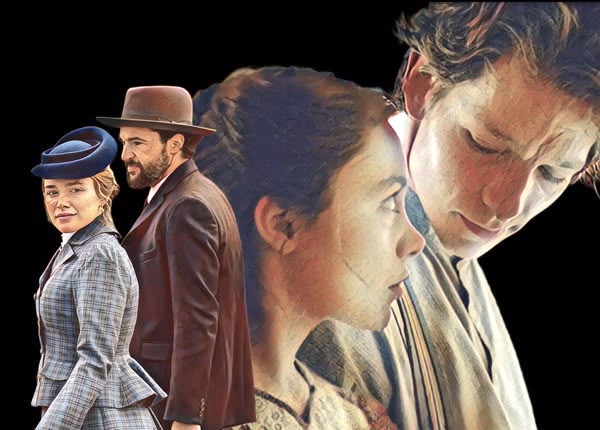
That’s the kind of balance I hope to find in Pride and Prejudice. Modernizing a story doesn’t have to mean stripping it of its identity, just as respecting the original novel doesn’t require reproducing every line of dialogue or every event. What matters is understanding why the characters are the way they are, and what gets lost when their contradictions are simplified to suit contemporary sensibilities.
Elizabeth Bennet, after all, was already an extraordinarily modern character in 1813. We don’t need to turn her into a 21st-century woman to appreciate her independence, intelligence, or refusal to accept a marriage she considers unsuitable. What makes Lizzie fascinating is precisely the way she challenges the conventions of her time without being entirely free of them.
And there’s another essential point: Elizabeth makes mistakes, too. She’s intelligent but proud, witty but perfectly capable of judging others unfairly. Her transformation is just as important as Darcy’s, and any adaptation that turns Lizzie into a flawless heroine loses one of the novel’s greatest qualities.
A Cast That Could Become the Series’ Greatest Attraction
If there are still doubts about how Dolly Alderton will approach the story, the cast is an extraordinary reason to be excited about the production. And starting with the Bennet family, Netflix seems to have made some inspired choices.
Olivia Colman as Mrs. Bennet is absolutely delicious casting. The character can easily become a caricature, with her obsession with marrying off her daughters, her indiscretions, and her endless nervous complaints. But Colman has precisely the ability to combine comedy and vulnerability without losing a character’s humanity. I can already imagine how entertaining her Mrs. Bennet will be, especially in scenes where she attempts to manage the romantic prospects of her five daughters.
And casting Rufus Sewell as Mr. Bennet opposite her practically guarantees some wonderful moments. Sewell, who is magnificent as Hal Wyler in The Diplomat, possesses a natural irony and screen presence perfectly suited to Elizabeth’s father, a man who prefers observing the absurdities of his own family to doing much about them. The combination of Sewell’s dry humor and Colman’s energy promises to make Longbourn one of the most entertaining settings in the series.
But the Bennet family isn’t the only reason to look forward to the cast. Fiona Shaw will play Lady Catherine de Bourgh, Darcy’s aristocratic aunt, an authoritarian, snobbish woman utterly convinced of her own social superiority. I am an unconditional admirer of Fiona Shaw, who, as far as I’m concerned, was frequently the best thing about Killing Eve and was spectacular in Andor. She possesses that rare ability to dominate a scene with a glance or a subtle shift in her voice, and I can hardly imagine anyone better suited to embody Lady Catherine’s arrogance.
Another particularly interesting choice is Louis Partridge as George Wickham, the young officer who wins Elizabeth’s affection and contributes to her initial dislike of Darcy. Wickham needs to be handsome, charming, and convincing enough for both Lizzie and the audience to have trouble recognizing his opportunism. Partridge has already demonstrated an ability to portray seductive and ambiguous characters, and his almost angelic appearance could work beautifully for a man whose greatest weapon is appearing far more trustworthy than he actually is.
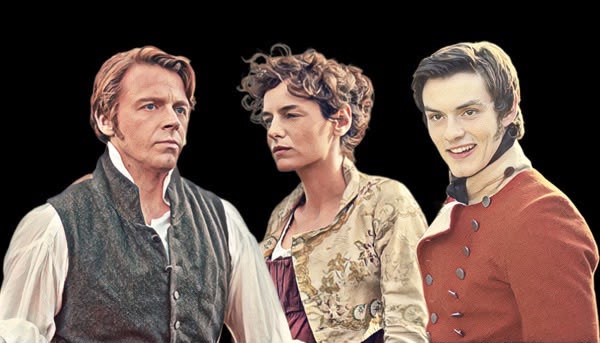
We’re not talking about a conventional villain, although Wickham commits some very serious acts. He represents how easily charm can be mistaken for character, and his relationship with Elizabeth is essential to the development of the novel. For part of the story, he serves as a romantic alternative to Darcy, before his true intentions are exposed and his elopement with Lydia causes a family scandal.
And then there’s Jamie Demetriou as Mr. Collins, the Bennets’ cousin and clergyman who manages to be simultaneously pompous, inappropriate, and completely unaware of how ridiculous he is. It’s a wonderful role for a comedian, but one that also requires considerable care to avoid turning Collins into a tiresome caricature. I particularly remember Matt Smith playing the character in Pride and Prejudice and Zombies, a version that knew exactly how to exploit the absurdity of his personality. Demetriou has more than enough comedy experience to find his own approach, and I’m especially curious to see him sharing scenes with Olivia Colman.
The rest of the cast is equally promising, with Freya Mavor as Jane Bennet, Daryl McCormack as Mr. Bingley, Rhea Norwood as Lydia, and Siena Kelly as Caroline Bingley. These characters may appear secondary beside the central couple, but they are essential to Austen’s social criticism, particularly when we consider the different ways women attempt to secure their futures in a society that offers them so few alternatives.
And What About the New Mr. Darcy?
Of course, Jack Lowden remains one of the series’ biggest attractions. But I’ve already written that his greatest challenge may not be playing James Bond, a role for which his name is frequently mentioned, but taking on Mr. Darcy after Colin Firth and Matthew Macfadyen. I’m not going to repeat a discussion that will inevitably return once we have more footage from the adaptation.
What interests me now is precisely the difference in expectations surrounding the two protagonists. While much of the conversation focuses on whether Lowden can convince audiences as Darcy, Emma Corrin seems to have received an advance vote of confidence. Perhaps because Corrin’s career has already demonstrated a remarkable ability to interpret literary and historical characters, or because Elizabeth Bennet is a character rich enough to accommodate different interpretations without losing her strength.
Jennifer Ehle and Keira Knightley gave us two very different, equally memorable Lizzies. Ehle emphasized the intelligence, irony, and confidence of a young woman who understood society’s rules perfectly well, even when she chose to challenge them. Knightley brought a more romantic, impulsive restlessness, in keeping with the cinematic tone chosen by Joe Wright. Neither needed to transform Elizabeth into someone unrecognizable to create a distinctive interpretation.
That’s exactly what I hope to see from Emma Corrin.

Perhaps Dolly Alderton and Euros Lyn’s greatest challenge won’t be convincing audiences that Jack Lowden can become a new Darcy, but demonstrating that there’s still something meaningful to discover in a story that has been adapted so many times. And if they can preserve Jane Austen’s humor, intelligence, and contradictions, they will already have accomplished much of that task.
Tomorrow’s trailer may offer the first clues about the production’s tone and the chemistry between its protagonists. But this time, while everyone else is trying to determine whether the new Darcy will be irresistible, I’d rather pay attention to Elizabeth Bennet, the extraordinary family surrounding her, and the choices that will define this new interpretation.
Because however much Mr. Darcy has become one of literature’s greatest romantic icons, Jane Austen wrote Elizabeth Bennet’s story. And Netflix would do well not to forget it.
Descubra mais sobre
Assine para receber nossas notícias mais recentes por e-mail.

