
The concert celebrating the 30th anniversary of Rent, held at Broadway’s Richard Rodgers Theatre on October 26, carries special meaning for those who followed the musical from the beginning. Featuring original cast members and guests, the performance was organized as a benefit for Broadway Cares/Equity Fights AIDS, a choice inseparable from the story Jonathan Larson brought to the stage. For me, the reunion also brings back a treasured memory: I saw that cast when the show arrived on Broadway, before it won the Tony. It was an incredible experience.
There was something of Hair in that energy, in the young people taking over the stage, in the sexual freedom and the way a group of people recognized themselves as a community. At the same time, Rent had the romantic structure of Giacomo Puccini’s La bohème, transplanted to a New York where AIDS made the future uncertain. And, above all, it had beautiful songs and lyrics. The show’s power lay in that combination, which allowed it to address illness, poverty, desire and death without losing its humor or the pleasure of being alive.
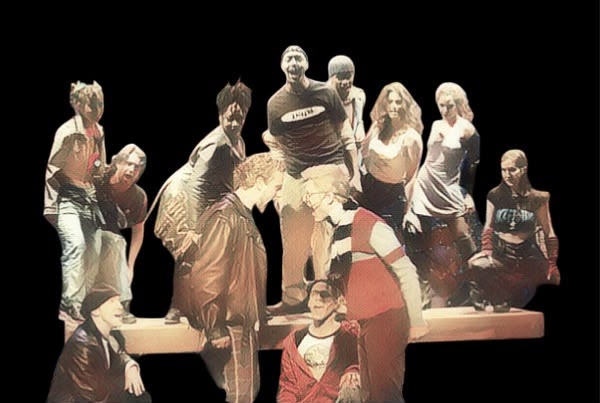
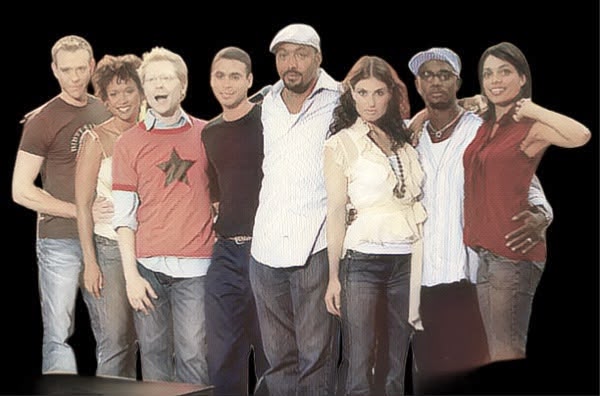
The official Broadway opening took place on April 29, 1996, at the Nederlander Theatre. Today, with the musical firmly established in theater history, it is difficult to recapture the feeling of discovering it before all that recognition. But I had that privilege. Anthony Rapp, Adam Pascal, Daphne Rubin-Vega, Idina Menzel, Jesse L. Martin, Wilson Jermaine Heredia, Fredi Walker and Taye Diggs were there together, in a production that would go on to win awards and endure for decades.
The connection to La bohème is essential to understanding why Rent was so moving, even with a language that seemed to break with traditional musical theater. In Puccini’s opera, Larson found a story that could speak directly to his own time: young artists trying to survive, create and love in a city that offers possibilities but makes them pay dearly for them. Nineteenth-century Paris becomes New York’s East Village, while tuberculosis gives way to HIV and AIDS. The fear of losing someone continues to run through everyday life.
The parallels extend beyond the setting. Puccini’s Mimì reappears in Rent, as does the encounter prompted by an extinguished candle, transformed into “Light My Candle.” The poet Rodolfo becomes the musician Roger, while Marcello and Musetta’s relationship finds echoes in Maureen and Joanne’s arguments and reconciliations. Larson preserves recognizable situations but changes the characters, their relationships and the issues surrounding them. Bohemian life expands to include other sexualities, other ways of forming a family and an epidemic also marked by prejudice.
It is a reinterpretation that understands what was contemporary in the opera itself. Behind the romanticism of La bohème lie rent, cold, hunger and the difficulty of caring for someone when you can barely survive yourself. Rent brings that material reality back into focus, beginning with its title. Its characters may discuss art and freedom, but they need somewhere to live. The city that nurtures creativity also threatens to drive out the people who make it interesting.
For me, the association with Hair comes from the collective force. There is an energy of defiance expressed through bodies, voices and the right to occupy that space. But in Rent, the threat also enters the bedroom, the romantic relationship, the test result. Making plans means living with the possibility of never being able to carry them out, and that gives the songs a particular urgency.
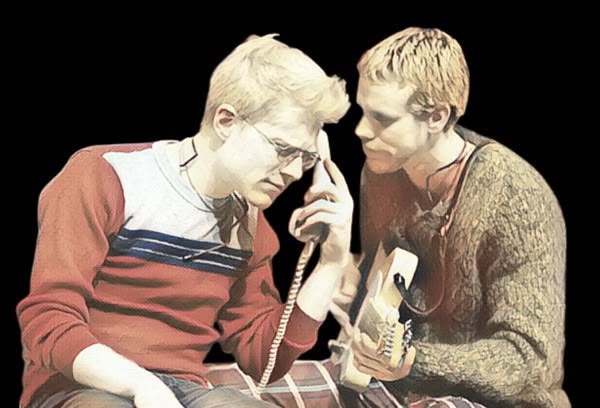
“One Song Glory” is one of the most beautiful examples. Roger wants to write a song that will outlive him, a desire for accomplishment intertwined with the fear of running out of time. “Without You” finds in absence a way of speaking about life continuing, while “I’ll Cover You,” reprised in another context, turns a promise of love into a painful experience of grief. The music follows what happens to these people and changes meaning along with them.
“Seasons of Love,” meanwhile, has taken on a life of its own, familiar even to people who have never seen the show. Its question about how to measure a year acquires another dimension within the story. For characters living so close to death, counting time in minutes seems insufficient. Love emerges as a possible measure of what they have lived, with all the fragility that implies.
It is impossible to hear that question without thinking of Jonathan Larson. The writer died at 35 in January 1996, before the first off-Broadway preview. He never witnessed the show’s arrival on Broadway or the acclaim that followed. Knowing this makes Roger’s wish to leave behind a song especially moving, although Larson’s work possesses a vitality that extends far beyond the tragedy of his death.
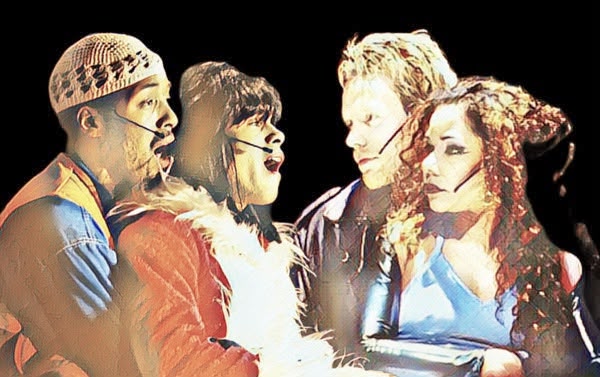
Thirty years also allow us to see Rent’s contradictions, including its romanticization of bohemian life and the selfishness that sometimes hides beneath its characters’ rhetoric of freedom. That does not diminish my memory. Perhaps it even makes it more interesting, because those people could be difficult, unfair and immature without losing their right to be loved.
When I think of that original cast, before the Tony, I remember the combination that won me over: the spirit of Hair, the emotion of La bohème and music that seemed to belong entirely to that moment. Thirty years later, I still return to the songs. They hold so much of what I felt sitting in that audience, and they keep finding new things to say to me.
Descubra mais sobre
Assine para receber nossas notícias mais recentes por e-mail.

