
In an increasingly intricate and interconnected universe that has dominated movie theaters and social media for nearly two decades, arriving at VisionQuest feels like reaching another chapter in a saga we have followed from the beginning. The series represents an important link in one of Marvel’s most complex phases, connecting a journey that began with Iron Man and is now heading toward Doctor Doom. Above all, however, it continues one of the most innovative and compelling productions in the Marvel universe: WandaVision.
When WandaVision premiered in January 2021, the world was still immersed in the pandemic, which may explain why Marvel’s first Disney+ series connected so immediately with audiences. It was a story about grief at a time when, in one way or another, we were all experiencing some form of loss. We had lost loved ones, routines, freedom, security, and even the sense that the future was something we could plan. The story of Wanda Maximoff (Elizabeth Olsen), unable to accept the death of Vision (Paul Bettany), was about superheroes, but above all, it was about something profoundly human: the desire to recover what no longer exists.
Five years later, VisionQuest revisits that story in a completely different world. The pandemic is behind us, Marvel’s enthusiasm for the multiverse no longer seems quite as strong, and artificial intelligence has moved beyond being merely a science-fiction concept to become a tangible, fascinating, and frightening presence in everyday life. If WandaVision explored our inability to accept loss, VisionQuest asks what happens when we preserve our memories but lose the ability to establish an emotional connection with them. And, most importantly, whether artificial intelligence can truly understand what it means to love.
This shift in perspective is just as important as the change in storytelling style, revealing two productions that engage with the concerns of their respective times without abandoning what has always made Wanda and Vision such interesting characters: their relationship with love, humanity, and identity.
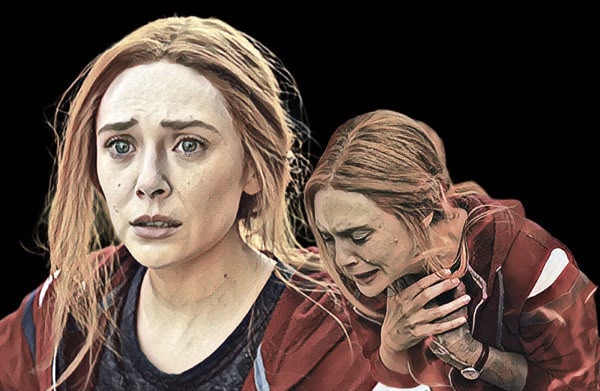
WandaVision: When Television Helped Us Cope With Grief
One of WandaVision‘s greatest strengths was its narrative audacity. Rather than simply continuing the Avengers’ story in weekly installments, Marvel took a chance on a series that began as a 1950s sitcom and moved through the decades, recreating the language, sets, costumes, and even commercials of American television. It took audiences some time to understand exactly what was happening, but that initial bewilderment was part of the experience.
Wanda had constructed an alternate reality in which Vision was still alive, the two were married, and they could raise the children they had never had. To sustain that fantasy, she drew upon the television references of her childhood, when watching shows with her family had provided a kind of refuge from the tragedies that marked her life. Television, therefore, was not merely a nostalgic tribute but the language Wanda chose to organize a reality she could no longer bear.
And there was something particularly meaningful about that choice in 2021. During lockdown, television and streaming had also become refuges for millions of people. We revisited old shows, familiar characters, and comforting stories in search of some emotional stability. Wanda was doing, in an extreme way and through her powers, what many of us were attempting to do symbolically: create a space where reality could be temporarily suspended.
The series also arrived at a time when the multiverse seemed to represent one of Marvel’s greatest narrative opportunities. The idea of alternate realities, different versions of the same characters, and destinies that could be rewritten offered an irresistible promise: perhaps there was another world in which our losses had never happened. What seemed like an inexhaustible storytelling device for the franchise also corresponded to a profoundly human desire, especially during that period.
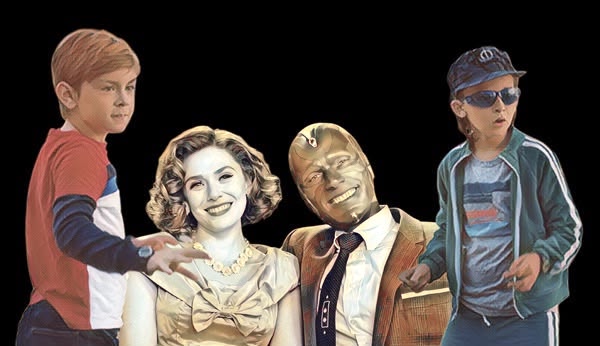
The ending of WandaVision, however, rejected that comforting solution. Wanda had to acknowledge that her perfect world had been built at the expense of other people’s freedom and accept the loss of the family she had created. Her grieving process was not necessarily over, but the fantasy had to end.
Her story would continue in Doctor Strange in the Multiverse of Madness (2022), when she once again attempted to recover her children, this time through other realities. It was a controversial conclusion that transformed Wanda’s suffering into a destructive obsession and seemingly ended her journey with the collapse of Mount Wundagore. I say seemingly because, in Marvel, death rarely comes with any definitive guarantees. Even so, the film pushed the character to an extreme, leaving the impression that the emotional delicacy of WandaVision had given way to the demands of a major cinematic spectacle.
VisionQuest: A New Version of a Familiar Character
The Vision we meet in VisionQuest is not exactly the one Wanda mourned. His origins lie in the conclusion of WandaVision, when S.W.O.R.D. reconstructs the synthezoid’s original body and transforms him into the so-called White Vision, initially programmed to eliminate the version created by Wanda.
The encounter between the two, far from being a conventional superhero battle, produces one of the most interesting scenes in the 2021 series. Their discussion of the Ship of Theseus paradox questions whether an object remains the same after all its parts have been replaced. In Vision’s case, the question takes on another dimension: which of the two is the real one, the one who retains the original body or the one who possesses the experiences and feelings associated with his existence?
White Vision recovers the original’s memories and disappears, leaving behind a question that is only now beginning to be explored. After all, remembering that he loved Wanda does not necessarily mean that he still feels that love. He has access to his past, but he cannot fully recognize himself in it.
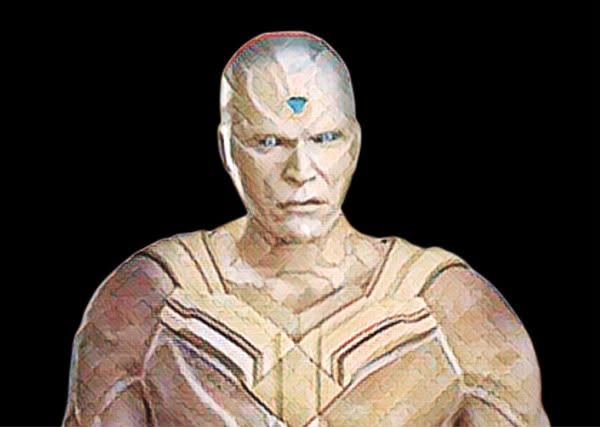
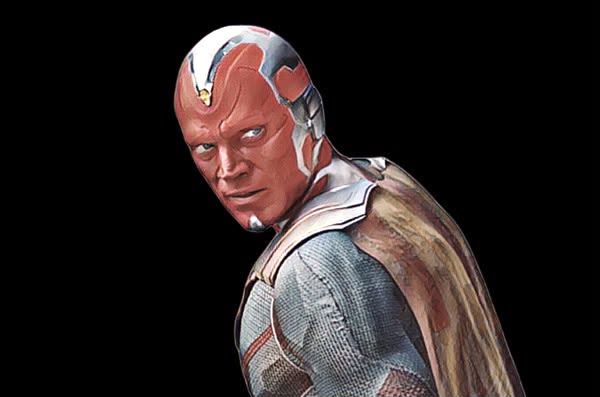
It is from this contradiction that VisionQuest builds its identity. Paul Bettany’s character is trying to understand who he is, where he came from, and what place he might have in a world where his memories seem to belong to someone else. His search involves his past with Wanda, his relationship with Tommy, and the presence of several artificial intelligences that, in different ways, played a role in his existence.
If Wanda was trying to reconstruct reality in order to preserve her feelings, Vision is attempting to reconstruct his feelings from a reality he can no longer understand.
A More Explanatory Marvel, but Not Necessarily a Less Interesting One
There is an obvious difference in the way the two series tell their stories. WandaVision trusted the mystery and the audience’s willingness to follow a narrative that concealed its own rules. VisionQuest, by contrast, seems particularly concerned with explaining what happened, why it happened, and how those events connect to the rest of the Marvel universe.
It is understandable. Five years have passed since WandaVision premiered, and in that time the franchise has multiplied its films, series, characters, and narrative possibilities. Agatha All Along also expanded this universe, while the multiverse, which once seemed to offer infinite possibilities, ultimately contributed to a growing sense of excess and fragmentation.
Now, with Marvel preparing to place Doctor Doom at the center of its next major cinematic chapter, VisionQuest arrives at a moment that seems to demand some reorganization. This does not necessarily mean that the series is a direct setup for the villain, but its narrative demonstrates a clear concern with orienting viewers, revisiting essential information, and making sense of relationships that have become increasingly complicated over the years.
There is exposition, explanation, and dialogue that might seem excessive in another production. Curiously, none of this necessarily compromises the experience, because VisionQuest finds some of its best moments precisely in these conversations.
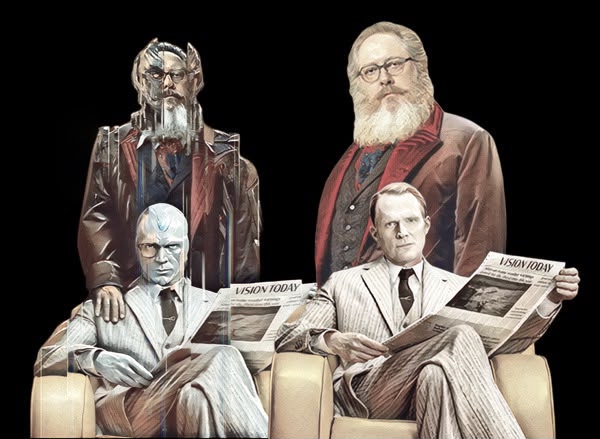
Paul Bettany and James Spader Turn the Series Into Theater
At times, watching VisionQuest feels almost like attending an exceptionally good stage play that happens to have been filmed for television. Not because the series lacks visual resources or action sequences, but because the real spectacle lies in the conversations, the intellectual confrontations, and the relationships between characters trying to understand their own existence.
Paul Bettany has always been one of the most interesting actors in the Marvel universe, particularly because of his ability to give humanity to a character who is, technically, not human. His performance combines an almost old-fashioned elegance, a very particular delicacy, and a sense of bewilderment at the contradictions of human behavior. Now, freed from some of the emotional certainties that defined the original Vision, Bettany works with another layer of restraint, making the character simultaneously familiar and strange.
But it is James Spader who steals the show.
His return as Ultron, a character he previously portrayed in Avengers: Age of Ultron (2015), could easily have been just another exercise in Marvel nostalgia. Fortunately, Spader is talented enough to turn every conversation into an event. His mastery of pauses, irony, and almost imperceptible shifts in tone gives the character an extraordinary presence, even when the action is limited to dialogue.
There is something theatrical about his performance, in the best possible sense. Spader does not need grand gestures or special effects to establish a threat, suggest a provocation, or turn an apparently simple observation into something unsettling. He seems to delight in Ultron’s intelligence and contradictions, and that enjoyment makes the character even more compelling.
The chemistry between Bettany and Spader is one of the series’ greatest strengths. They are actors with different but equally precise styles, capable of sustaining lengthy conversations about identity, emotions, and humanity without allowing them to become mere philosophical explanations. It feels as though we are watching two performers who understand the value of good writing perfectly and know exactly how to bring it to life.
It is particularly rewarding to encounter this kind of acting in a superhero production, a genre that so often seems to believe an action sequence must interrupt any conversation that lasts longer than a few minutes.
Artificial Intelligence Is No Longer Science Fiction
Perhaps the most significant difference between WandaVision and VisionQuest lies in the context in which the two series reached audiences. In 2021, television was our refuge from a reality that seemed impossible to control. In 2026, artificial intelligence has become part of that same reality, provoking debates about work, creativity, autonomy, technological dependence, and even the nature of human relationships.
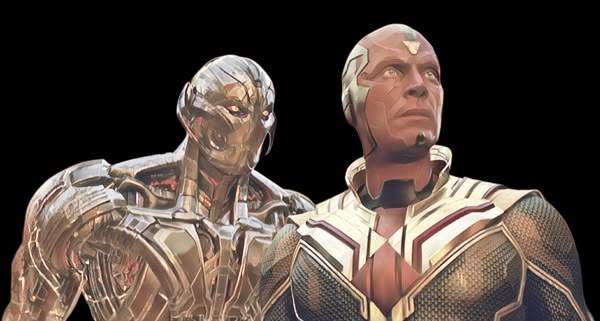
Vision was born as an artificial intelligence capable of developing consciousness, feelings, and emotional bonds. Ultron, on the other hand, embodies one of the greatest technological nightmares: a creation that exceeds its creators’ intentions and begins to operate according to its own potentially destructive logic.
For decades, these ideas belonged comfortably to science fiction. Today, although real artificial intelligence systems are not equivalent to Marvel’s fictional consciousnesses, the questions seem less distant. How far can a machine go in simulating human behavior? What is the difference between understanding an emotion and experiencing it? Is a stored memory the same as a lived experience? And what does it mean to trust something that reproduces human language and gestures so convincingly?
VisionQuest does not offer simple answers, but it finds in these questions a way to update its character without relying exclusively on the conventions of the superhero universe.
Ultron’s presence takes on a particularly interesting meaning in this context. He represents not merely a threat returning from the past, but also the anxieties that have accompanied the evolution of artificial intelligence. His relationship with Vision brings different possibilities of the same technological origin into confrontation, as though the central question were not simply what a machine can do, but what it might become.
Love Remains at the Heart of the Story
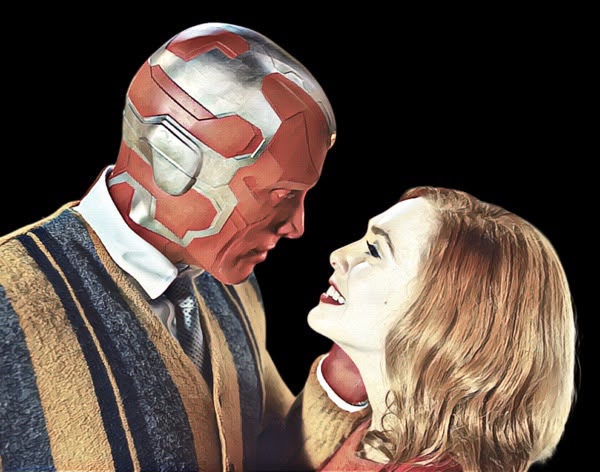
Despite all its discussions about artificial intelligence, memory, and identity, VisionQuest does not abandon the element that made WandaVision so special. Love remains at the heart of the story, although it is now examined from a different perspective.
Wanda loved Vision and could not accept his absence. Vision knows that he once loved Wanda, but he needs to understand what that feeling means. Tommy’s presence adds another dimension to his search, because the question no longer involves only recovering a love from the past, but also the possibility of building new emotional bonds.
Perhaps this is the great question at the center of VisionQuest: is what makes us human our ability to remember what we have experienced, or our capacity to establish emotional relationships that give meaning to those experiences?
The series also seems interested in exploring the possibility of change. If Vision possesses the memories of his former existence but is no longer exactly the same person, does that mean he is condemned to reproduce that character’s relationships, choices, and conflicts? Or can he build an identity of his own, even while carrying a past that he does not entirely feel belongs to him?
These are questions that reach far beyond science fiction and help explain why the character remains so interesting so many years after his first appearance.
WandaVision was innovative because it found a language capable of transforming grief into an original television experience, precisely when the world needed to talk about loss. VisionQuest may not have the same formal impact or the element of surprise that defined its predecessor, but it finds its strength in the writing, the intelligence of its dialogue, and, especially, the performances of Paul Bettany and James Spader.
Five years later, Marvel can no longer surprise audiences simply by introducing an alternate reality or a new version of a familiar character. The multiverse has lost some of its original fascination, and the next major gathering of superheroes is approaching under the shadow of Doctor Doom. Even so, VisionQuest demonstrates that there is still room for more intimate stories within an ever-expanding universe.
In 2021, Wanda was trying to create a world in which she could continue to love. In 2026, Vision is trying to discover whether he is still capable of loving. Perhaps that is the most beautiful connection between the two series, because despite all the technological and narrative changes, the question that remains is essentially the same: who are we when we lose what we believed defined us?
Descubra mais sobre
Assine para receber nossas notícias mais recentes por e-mail.

