
WARNING: SPOILERS FOR THE SEASON 4 PREMIERE
Julian Fellowes wastes no time. After ending the third season of The Gilded Age with George and Bertha Russell’s marriage in crisis, Marian and Larry’s romance interrupted, and Oscar van Rhijn discovering an unexpected opportunity to rebuild his life, the series returns with a succession of developments that could permanently alter its characters’ destinies. And this time, the consequences seem far more serious than a social snub or an unfavorable seat at the dinner table. Intensity is the new rule.
“Ring the Bells,” the opening episode of Season 4, begins with a wedding and ends with another kind of commitment, one far more dangerous for a young woman in the 1880s. Between these two events, a storm sweeps through New York, Gladys endures a traumatic childbirth in England, and George Russell discovers that surviving an assassination attempt may have been only the beginning of his troubles.
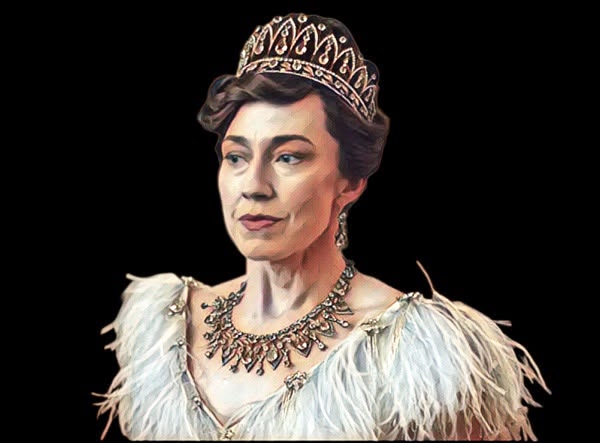

Oscar and Enid: A Marriage That Defies Convention
The first major event is the wedding of Oscar van Rhijn and Enid Winterton. Their union offers an ingenious solution for two people who, for very different reasons, need to reinvent their lives. And the approaching storm is a perfect metaphor for both of them.
After all, Oscar has found in Enid a woman who knows about his sexuality and the restrictions society places on his romantic life, and who is willing to accept a marriage without traditional romantic expectations. She, in turn, gains the family name, social standing, and respectability that her fortune alone cannot secure. It is a mutually beneficial arrangement, but not necessarily one entirely devoid of affection or companionship.
They intend to turn their marriage into an opportunity for independence, perhaps even hosting artistic gatherings and creating a social circle of their own. The problem is that escaping society’s rules does not necessarily mean escaping their consequences.
Enid even suggests consummating the marriage so they might have an heir, but Oscar refuses. The understanding they have reached does not eliminate the practical difficulties of a marriage designed to conceal essential aspects of their lives. Oscar cannot simply abandon his sexuality, just as Enid cannot erase her past.
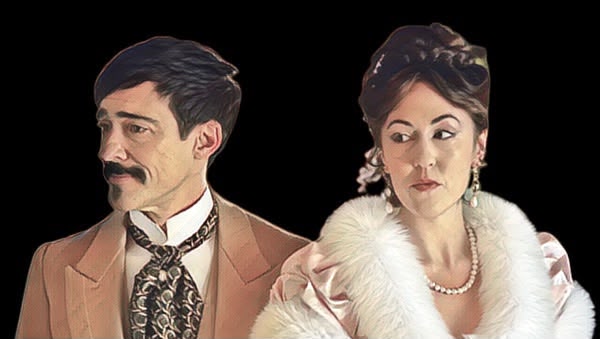

And that past finally catches up with Agnes, in a continuity error so glaring that it is genuinely disappointing. Her surprise upon discovering that her new daughter-in-law once worked as a maid seems to ignore the fact that, back in Season 1, Agnes herself made Bertha dismiss Enid precisely because she suspected some sort of connection between the young woman and Oscar. The problem is not merely that Agnes discovers her daughter-in-law’s social origins, but that she apparently fails to recognize someone with whom she had already been directly involved.
For a woman whose entire identity is rooted in tradition and family standing, the revelation is particularly humiliating. After everything Oscar has already put her through, Agnes discovers that restoring her social position also depends on a woman she would never have considered an acceptable wife for her son. Circumstances have changed, and money speaks louder than ever.
It is one of the episode’s most interesting ironies: the survival of New York’s old aristocracy increasingly depends on the very people it once looked down upon.
Marian and Larry: The Storm Changes Everything
Marian Brook and Larry Russell enter the fourth season separated, despite the feelings that clearly remain between them. As Marian explains to Ada, who strangely seems unaware of the situation, the couple tried to reconcile but failed. Why? We will get to that. What matters is that Larry spent some time in Chicago, and Marian is clearly suffering from his absence.
He attends the wedding ceremony but skips the reception. And that brings us to the not-exactly-surprising explanation.
After the official celebrations, Oscar and Enid take Marian downtown to a house she spent much of last season criticizing. And whom does she find there? No prizes for guessing. Larry, of course, who not only never apologized for what he did last season but is apparently still frequenting the same sort of establishment.
Whatever the case, their reunion is sweet and rekindles a relationship that never truly ended. The red flags are already flying when, at the end of the evening, Larry offers to take Marian home.

The storm is raging, and on their way uptown, their carriage is damaged, making it impossible to continue the journey. Conveniently, they find themselves right outside a hotel. At first, they book separate rooms, at least formally respecting social conventions. But Larry goes to Marian’s room, and the two spend the night together.
It is a decisive moment because Marian, who has always demonstrated greater independence of thought than her aunts, finally crosses a boundary that society considers unthinkable for an unmarried woman.
There is an undeniable romantic element to their encounter. They love each other, they have been kept apart by circumstances neither has fully managed to resolve, and when an unexpected opportunity presents itself, they stop resisting. But the following morning destroys any illusion that they might simply resume their lives as though nothing had happened.
Marian wakes up frightened by what she has done and by the possible consequences. A pregnancy, an indiscreet witness, or even the circulation of rumors could be enough to ruin her reputation. Larry, being a man, would face no comparable judgment.
And once again, he seems remarkably unconcerned about her predicament. Not only is he in no hurry to leave the hotel to help protect her reputation, but he also fails to reassure her by renewing their engagement.
When Marian returns home, the extent of the danger becomes clear as she hears Agnes and Ada worrying about the possibility that someone might believe she spent the night with a man. Her aunts have no idea what actually happened, but their reaction demonstrates precisely why Marian has every reason to be afraid.
Fellowes usually handles the show’s romances with a lightness that contrasts with the severity of the social rules governing his characters’ lives. This time, however, Marian and Larry’s relationship takes on a dimension that goes far beyond the usual obstacles facing a couple in love. What might once have been resolved with a conversation, a declaration, or a marriage proposal now carries potentially irreversible consequences.

What will be most interesting to watch is whether Marian can distinguish between what she genuinely wants and what she feels compelled to do. After all, choosing Larry out of love is one thing. Feeling obligated to marry him to save her reputation is something else entirely.
Gladys Becomes a Mother, but Pays a Terrible Price
While New York prepares for another round of social battles, Bertha is in England, attending the birth of Gladys’s first child with the Duke of Buckingham.
The delivery is extremely difficult. The baby, a boy, survives, but complications place Gladys’s own life in danger. During the procedure, doctors remove her uterus, making it impossible for her to have any more children.
The news is devastating for a young woman whose entire life has been arranged around a marriage intended to secure status and prestige. Gladys survives, but loses the possibility of having more children, a particularly painful consequence in a society where the continuation of an aristocratic bloodline was directly associated with motherhood.
Bertha must confront the situation as a mother rather than the social strategist we have grown accustomed to watching. Her money, determination, and ability to manipulate circumstances cannot change what has happened.
There is a cruel irony in this outcome. Bertha fought to marry Gladys to a duke, against George’s wishes and initially against her daughter’s as well. Now, faced with an event that no amount of ambition could have prevented, she must acknowledge the limits of her power.

Gladys and the baby’s survival brings some relief, but the revelation that she will never be able to conceive again casts a shadow over the young duchess’s future. The marriage Bertha considered her greatest social triumph begins the fourth season marked by an intimate and permanent loss.
And somehow, neither Hector nor Bertha tells Gladys the truth.
George Russell: An Empire Under Threat
George remains estranged from Bertha, and the distance between them can no longer be dismissed as a passing disagreement over Gladys’s marriage.
He stays in New York, recovering from the injuries sustained in the assassination attempt at the end of last season. The identity of the person responsible remains unknown, and George hires Pinkerton detectives to discover who tried to kill him.
At the same time, his business empire faces a growing political threat. The possibility of measures against railroad monopolies under President Grover Cleveland threatens the very model of power that enabled his rise.
His dispute with John D. Rockefeller, particularly over railroad rates, adds another dimension to the conflict. George is not merely confronting rival businessmen, but also the possibility of a government willing to intervene in the operations of major corporations.
It is an especially interesting situation for a character who has always believed in his ability to control his own destiny. His financial power remains enormous, but it no longer appears sufficient to guarantee his physical safety, the stability of his businesses, or the survival of his marriage.
And Bertha, who for so long was his closest ally, remains far away. Larry, perhaps tired of his father’s constant bad mood or perhaps having reconsidered the situation, suggests that George ask her to return. But he quickly falls silent when his father reacts badly to the suggestion.
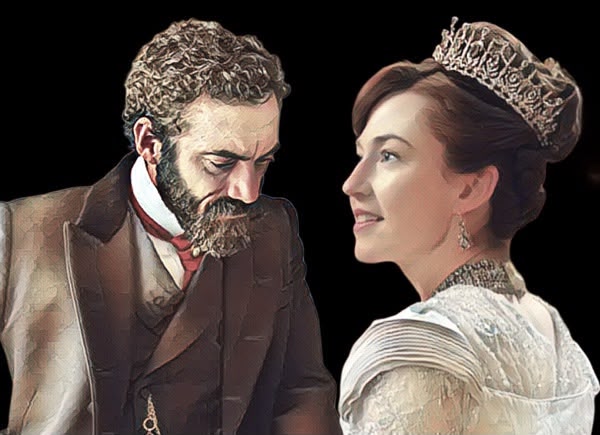
Agnes, Ada, and the Presidential Dinner
Agnes van Rhijn receives an opportunity to reclaim the prestige she believes she has lost: the New York Heritage Society chooses her to host President Grover Cleveland at her home.
For Agnes, it is an almost providential recognition. Her position within her own household has changed dramatically since Ada took control of the family’s financial resources. Now she has an opportunity to return to the center of society.
Naturally, there is a problem. Ada must pay for the dinner.
The situation places the sisters in a confrontation that is no longer simply another variation of their familiar domestic arguments. Agnes continues to behave as the unquestioned authority of the household, but the financial reality no longer supports that position. Ada, meanwhile, must decide how far she is willing to allow her sister to use her fortune to preserve a hierarchy that no longer exists in quite the same way.
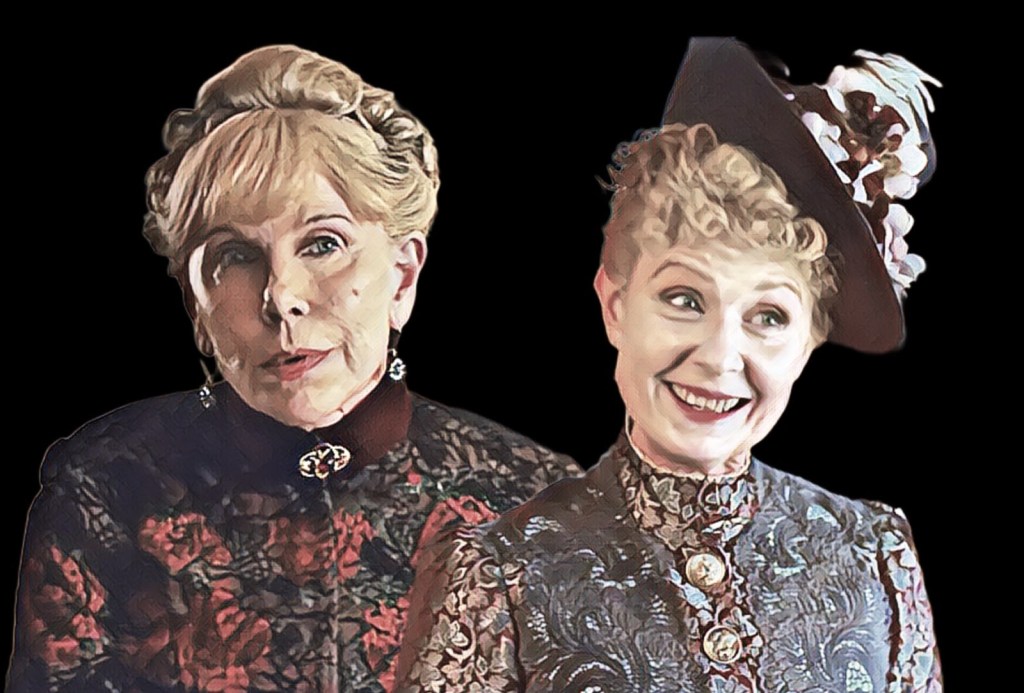
Enid’s arrival in the family also introduces an unexpected possibility of financial support, although Agnes has compelling reasons to feel uncomfortable with her new daughter-in-law’s social origins.
The presidential dinner promises to restore Agnes to the center of New York society. But perhaps the greatest challenge will be accepting that, to reclaim that position, she must depend on women she cannot control.
Peggy: Professional Success and Family Resistance
Peggy Scott also returns at the beginning of a new chapter in her life. Her relationship with Dr. William Kirkland is moving toward marriage, while her career as a writer continues to earn recognition.
Although Elizabeth Kirkland, her future mother-in-law, pretends to be comfortable with her son’s choice, she remains intrusive and unpleasant, even as Peggy agrees to everything to avoid confrontation. The potential conflict is merely being postponed by Peggy’s endless willingness to say yes to wedding arrangements. And we all know that strategy cannot last much longer.
Jack: A New Life
Jack Trotter is finally living his dream. No longer working in partnership with Larry, he meets with potential investors but has little idea how to conduct himself socially. He needs a crash course in etiquette from his friends at the van Rhijn household.
Bridget, meanwhile, is beginning to feel the consequences of his success. She has already realized that it will not be long before Jack starts pursuing other women, or finds himself pursued by them.

Women Are Beginning to Pay for Everyone’s Choices
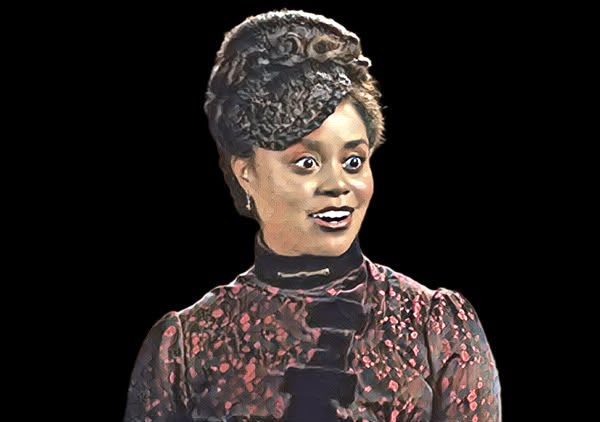
What stands out most in this premiere is the way The Gilded Age seems to be shifting the weight of consequences onto its female characters.
Marian and Larry finally share a night of passion, but Marian is the one who risks social ruin. Gladys gives birth to a son who secures the continuation of her husband’s bloodline, but loses the possibility of another pregnancy. Enid gains the family name she wanted, only to discover that her freedom will be limited by the very rules she hoped to circumvent. Peggy achieves professional recognition, yet finds her independence becoming a source of disapproval.
Even Agnes and Ada, whose relationship has always functioned as a kind of domestic comedy, must now negotiate very real questions of power and financial dependence.
Bertha, meanwhile, remains the woman who succeeded in changing the rules of an entire society but cannot figure out how to repair her own marriage. Her greatest victory, her daughter’s aristocratic marriage, cannot protect her from the pain of watching Gladys suffer.
The contrast with George is equally revealing. While the women face judgments concerning their bodies, sexuality, social origins, and marriages, he must contend with violence and the economic and political forces threatening his empire.
Season 4 therefore begins with less comfort for everyone. The battles over invitations, seating arrangements, and family names remain, but they no longer conceal the deeper conflicts beneath them.

Julian Fellowes seems interested in exploring what happens after his characters achieve the very things they wanted most. Oscar has found a wife who accepts his secret, but must still discover how to live within that arrangement. Bertha succeeded in making her daughter a duchess, but cannot control her fate. Agnes has regained an opportunity for social prestige, but depends on her sister to finance it. Marian finally experiences the love she longed for, only to wake up terrified.
The episode ends with a particularly interesting question: how many of these victories actually represent freedom?
“Ring the Bells” opens the season with a reminder that, in that society, no one could simply desire something without considering the price. And that, more often than not, it was the women who were left to pay the bill.
Descubra mais sobre
Assine para receber nossas notícias mais recentes por e-mail.

