
The tackiness is back, along with everything wonderful we love about it: the tableware, the clothes, the exaggerated Los Angeles, the oversaturated colors and the melodrama. The combination of Kim Kardashian and Ryan Murphy seems to have found its most perfect expression in All’s Fair. For those of us raised in a culture of serialized melodrama, recognizing the pleasure of this soap opera takes very little effort. The excess is part of the invitation, and the second season seems particularly comfortable with that.
We begin again with magnificently dressed women, carefully preserved resentments and an almost touching willingness to move forward without explaining too much about what happened before. Sarah Paulson remains responsible for the most outrageous lines, delivered with an intensity that makes Carrington Lane irresistible. At times, you get the impression that her fellow actresses almost break character to laugh. Paulson embraces the excess with a conviction that is an essential part of the fun.
This article contains spoilers for the first episode of Season 2.
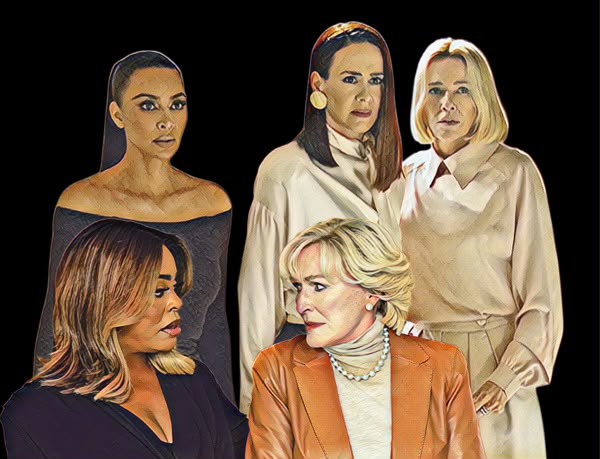
Dina is free. Shall we move on?
The first surprise is finding Glenn Close’s Dina Standish out of custody. After ending the previous season under arrest for the murder of Lloyd Walton, the man who sexually assaulted Emerald, she returns with a very practical explanation: she provided an alibi, establishing that she was out of state when the crime occurred.
And there we are, ready to move on. After all the investment in the murder, Carr’s revenge and the friends’ suspicions about their own mentor, the premiere removes Dina’s immediate obstacle and changes the subject. I was waiting to understand how the arrest would affect the group and how the women would deal with how readily they had agreed to discredit her. But there is a party to organize.
This does not mean the murder has been solved. What happens is a shift in narrative priorities, very much in keeping with this soap opera: a seemingly unavoidable conflict loses ground as soon as another opportunity for chaos appears. Dina is free, everyone is still beautifully dressed, and the resentments can return to their regular programming.
Dina deserves a new romance, too
Dina’s freedom comes with another development: Brody, a much younger waiter, takes an interest in her. Dina eventually accepts his advances, beginning a relationship she prefers to keep private for now. After watching her grief over Doug’s death, we see her allow herself desire, pleasure and the possibility of being desired again.
Part of the fun is that the young man makes the first move. Dina does not have to go looking for a new love life; it appears before her, handsome and rather determined. Glenn Close gets room to explore this willingness to experience something she does not need to introduce to her friends immediately, much less submit to anyone’s approval.
It is still too early to know who Brody is beyond that interest. The episode opens the door to romance, but I am already watching with some suspicion. The series has been teaching us to distrust the charming men who enter these women’s lives, and the new suitor’s good looks hardly guarantee peace of mind.
Carr returns to being the usual rival
It also seems to make very little difference that Carr came so close to joining the partnership. The dynamic returns to that familiar mixture of love and hate. She remains attached to the competing firm, openly envies the other women’s success and announces her desire to destroy them. Even so, she keeps finding opportunities to get close.
Dina insists on forgiving her and tries to persuade the others to do the same. There is something deliciously frustrating about this willingness to give another chance to someone who practically presents her revenge plan before walking through the door. We already know the likely outcome, but Dina seems to believe that, this time, goodwill might accomplish something.
The attempt at reconciliation ends with Dina slapping Carr. Later, remorseful and guided by a tarot reading, Dina insists that her rival be invited to Allura’s ball. The ability to turn hostility into another opportunity to socialize remains intact.
And Paulson does all of this with wonderful intensity. The absurdity grows because she performs it with absolute conviction. Carr may be cruel, inappropriate and envious, but it is difficult to imagine this series without her. Each reconciliation creates the possibility of another line nobody at a remotely civilized gathering should utter.


Liberty has a girlfriend. Carr has an opinion
Another change concerns Liberty Ronson’s love life. Naomi Watts’s character comes out as a lesbian, has a girlfriend and finds acceptance among her friends. The news becomes part of the group’s everyday life without turning into a problem, allowing Liberty to explore another romantic possibility after her previous disappointments.
The problem remains Carr and how easily she gets inside Liberty’s head. Finding a girlfriend does not make Liberty’s vulnerability or her need for recognition disappear. That is precisely the space her rival tends to occupy, alternating between closeness and hostility.
There is an attentiveness between the two worth following, but in this opening chapter it emerges primarily through the provocations. The conversation about flexibility and the concert invitation belong to the following episode. What matters here is that Liberty is beginning a new phase and Carr finds another way to hurt her.
Allura has moved on. Chase is still around
Carr is now officially dating Chase Munroe, Allura’s ex-husband. Given the history between the two women, it would be easy to expect this relationship to reignite their romantic rivalry. But Allura seems indifferent to the new arrangement. She has moved on.
Chase, played by Matthew Noszka, also remains part of that world through his custody dispute with Teyana Taylor’s Milan, with whom he has a daughter. The marriage is over, but the relationships he has left in his wake keep generating conflict and connecting his life to the women at the firm.
It is an important detail in understanding where Allura stands. The story no longer depends on whether she wants her ex-husband back. Another problem is occupying her attention, and it involves a much more immediate danger.
Someone is after Allura
The premiere introduces a threat against Allura. The presence of a man lurking outside her house turns her luxurious surroundings into a vulnerable space. For an attorney accustomed to confronting powerful men in multimillion-dollar divorces, the list of potential enemies would hardly be short. A husband unhappy with the outcome of a separation seems a natural possibility, but that remains a theory.
It is curious to see the series open another front when it already had a crime and a revenge plot perfectly available to pursue. All’s Fair prefers to refresh the danger and give us a different question: who wants to hurt Allura, and why?
This threat lays the groundwork for the security guard played by Cauã Reymond, whose role develops in the second episode. Thoroughly objectified, the Brazilian actor fits a production in which almost everything also seems chosen to be admired. But the premiere is still establishing the problem that will justify his protection.
Even the prenup joins the fun
Emerald and Liberty still find time for a divorce case. Their client, Aphrodite, signed her prenuptial agreement in invisible ink and now maintains that she never signed it. It is precisely the kind of maneuver that belongs in this reality, where professional competence frequently becomes indistinguishable from the ability to produce an unbelievable situation.
The case receives little space compared with the personal disputes. Multimillion-dollar separations remain part of the setting, but the relationships among these women determine the episode’s rhythm.
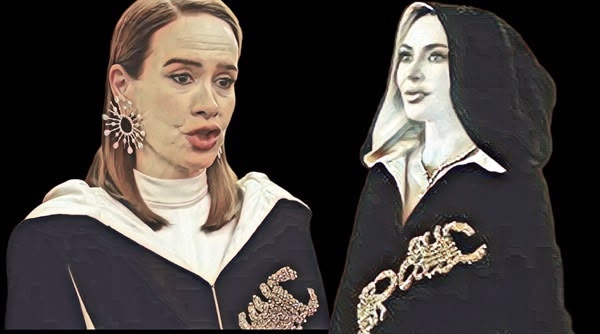
Elizabeth Taylor, a ball and the final sting
Allura organizes her Scorpio Ball, inspired by Grace Kelly’s party. Guests must be Scorpios or accompany someone born under the sign. Carr qualifies and, after Dina’s insistence, receives her invitation.
The story Allura tells feeds Kim Kardashian’s fixation with Elizabeth Taylor once again. In 1969, Taylor attended the ball celebrating Princess Grace of Monaco’s 40th birthday with Richard Burton, who was a Scorpio. The black Tiziani cape decorated with scorpions that Kim wears in the series is Taylor’s original piece, lent by her mother, Kris Jenner. Murphy incorporated the party into the plot after learning the garment’s history.
It is a very particular fusion of character and actress. Kim’s admiration for a Hollywood star finds a place within a production that makes luxury and excess its language. Allura tells the story, wears the reference and organizes her own version of the party. The tackiness comes with provenance.
Naturally, gathering these women does not produce the harmonious evening Dina seems to keep believing is possible. Carr turns Liberty’s sexuality into ammunition, and the argument becomes a physical confrontation. The sophistication of the clothes does nothing to help anyone manage their feelings.
Then comes the final sting: Allura is stung by a scorpion and collapses. The party’s theme acquires a literal consequence, ending the chapter with its hostess in danger.
Suspicion immediately falls on Carr. How could we not think of her? She declares her hostility, fuels the rivalry and stands at the center of much of the chaos. But suspecting her does not solve the mystery, nor does it establish that the sting was orchestrated by whoever is threatening Allura.
Allura is no longer hung up on her ex-husband. Now she needs to discover who is after her. And we, who already had a previous murder to solve, leave the ball with another question: who is trying to kill Allura Grant?
Descubra mais sobre
Assine para receber nossas notícias mais recentes por e-mail.

