
Warning: This article contains spoilers for Season 2, Episode 2, “Put Your Head on My Shoulder.”
The second season of Black Doves moves quickly into its international conspiracy, but the second episode also makes it clear that the greatest dangers facing Helen (Keira Knightley) and Sam (Ben Whishaw) do not necessarily come from the people who want them dead. Reed’s (Sarah Lancashire) past begins to reveal a clandestine operation carried out during the Cold War, while Sam discovers that the contract he accepted to escape prison involves far more than eliminating a few former agents. As always, Joe Barton’s series combines violence, espionage, and humor so morbid that, at times, we almost forget we are watching characters capable of committing murder with astonishing ease.
The episode picks up immediately after the death of Erik Klein, the Black Dove agent Sam was hired to eliminate. Helen had discovered that her friend was working for someone interested in destroying members of her own organization, but she failed to warn him in time. Now, the two must understand who is behind the killings and, more importantly, why an operation apparently forgotten for decades has suddenly become a threat again.

Wildflower and the Secrets of East Berlin
A luggage tag leads Helen and Sam to King’s Cross station, where they manage to recover a bag belonging to Klein. Their investigation also brings them back to Ida Povetkin, the former Chernov housekeeper found dead in Moscow, who was secretly working for the Black Doves and had uncovered information connected to Operation Wildflower.
In a recording, Ida reveals that Wildflower was linked to a mission carried out in East Berlin during the Cold War, from which apparently only one person survived. The identity of that survivor remains unknown, but the fact that someone is searching for them suggests that the events of that period are still dangerous. Ida had reported her findings to Reed before realizing that her own identity had been compromised, making her subsequent death even more suspicious.
Helen and Sam approach Lenny Lines in search of information about whoever is arranging the assassinations, but she claims to know nothing about anyone interested in eliminating Black Doves agents. Their investigation therefore continues along parallel paths, with Helen attempting to understand the connection between Reed’s disappearance and Wildflower, while Sam must continue carrying out the orders of his mysterious employers.
His second target is a woman known by the codename Spitfire, a seemingly harmless elderly lady who welcomes him into her home and offers him biscuits. Their conversation begins in an almost domestic atmosphere, although both know that the encounter is unlikely to end well. Spitfire also worked for the Black Doves but retired many years ago, and she knows details about the operation carried out in Berlin.
When Sam asks about Wildflower, she confirms that those involved had been given an opportunity to act without restraint and had used it to reveal their wildest instincts. Her observation suggests that the mission may have involved something far more disturbing than a failed intelligence operation, but she never gets the chance to elaborate. Before she can explain further, she attempts to draw a weapon, forcing Sam to react and kill her.
The most unsettling detail comes afterward, when he simply eats one of the biscuits his victim offered him. It is exactly the kind of morbid humor that Black Doves seems determined to intensify this season, turning a murder into an almost absurd situation in which brutality coexists with small, everyday gestures.
Helen Confronts the New Black Doves Leadership
While Wallace (Andrew Buchan) meets Cecile Mason, an American representative played by Neve Campbell, Helen continues trying to preserve her independence within the organization. Her new position as the British prime minister’s wife should represent a strategic advantage for the Black Doves, but in practice it appears to be limiting her participation in field operations.
Robert Conteh (Babou Ceesay), who took over as Helen’s handler following Reed’s disappearance, grows increasingly suspicious of the agent. He wants to know how much she knows about Sam and Laila, her partner during the Paris mission, and reveals that two members of the Black Doves have been murdered over the past month. The organization is also searching for Reed, whose absence is beginning to raise questions about her possible involvement in the events.
Conteh makes it clear that Helen does not enjoy the freedom she imagines and that her association with Sam could place her in a particularly difficult position. The warning fails to produce the desired effect because Helen remains convinced that she can investigate the conspiracy without the authorization of her superiors.
She seeks out Laila (Ambika Mod), the agent who accompanied her during the theft of the files in Paris, but their reunion quickly turns into a pursuit by armed men. The two women are forced to escape through an art gallery at Somerset House, in a sequence that uses the location and its installations to create a combination of action and comedy.
It is one of the episode’s most entertaining scenes precisely because of the contrast between the sophisticated surroundings and the violence unfolding among the artworks. Helen and Laila must improvise to escape their pursuers, while the series explores their contrasting personalities and the ease with which they turn a potentially fatal situation into an exchange of ironic remarks.
Once they manage to get away, Helen suggests that they continue working together, but Laila refuses and asks her not to make contact again. The rejection reinforces Helen’s growing isolation, as she begins to realize how her political position, once considered an advantage, may be distancing her from the activities and people that sustained her professional identity.

Reed Is Alive, but What Happened During Wildflower?
One of the episode’s major revelations confirms that Reed has not been murdered. Helen’s former handler is being held by the Black Doves themselves, and Conteh believes she may bear some responsibility for the elimination of agents connected to Operation Wildflower.
During the interrogation, he plays Ida Povetkin’s recording and demands an explanation of what happened in East Berlin. We then discover that Reed spent more than five years infiltrating a terrorist organization called Kestrel, during one of the earliest assignments of her career. The operation took place in the 1980s and involved people connected to Soviet intelligence, including Alexi Chernov, the Russian diplomat Helen encountered in Paris.
Chernov worked for the KGB and maintained connections with Kestrel, an organization apparently involved in violent events that have yet to be explained. According to Conteh, everyone who participated in the operation is dead except Reed, although Ida had discovered that Chernov was searching for someone identified as Wildflower’s sole survivor.
The contradiction is obvious and raises new questions about the organization’s version of events. If Reed really is the only survivor, who is Chernov trying to find? And why has an operation conducted decades earlier suddenly begun provoking murders again?
Reed remains evasive and refuses to clarify what actually happened, behavior that only intensifies suspicions about her involvement in the conspiracy. The character who seemed to control virtually every relevant piece of information in the first season now finds herself in a vulnerable position, pressured by people who may know considerably less about her past than they imagine.
It is also interesting to observe how Black Doves is beginning to shift its mystery toward events that precede the story we already know. While the first season concentrated on the consequences of a murder and Helen’s personal relationships, the narrative now seems interested in exploring the origins of the clandestine operations that sustain the organization itself.
Sam Discovers Who Is Behind the Assassinations
Meanwhile, Sam continues investigating the contract he accepted to escape prison, even though he knows his employers will not tolerate any attempt to discover their identities. Lenny obtains information about another professional who received a similar offer, although his assignment did not involve killing anyone but storing weapons at a property in London.
Sam visits the address and encounters Patrick (Sam Riley), the man responsible for hiring him. Patrick is far from pleased, making it clear that Sam was supposed to follow his instructions without investigating who was paying for his services or what interests were involved.
To ensure his obedience, Patrick produces incriminating footage of Helen murdering a man and threatens to release it if Sam refuses to continue working for him. The blackmail is particularly cruel because it demonstrates that his employers know about the relationship between the two friends and understand exactly where the assassin is most vulnerable.
Sam also discovers that he is working for Kestrel, the same terrorist organization Reed infiltrated during the Cold War. The revelation establishes a direct connection between the murders, the disappearance of the former Black Doves handler, and Operation Wildflower, although the ultimate objective of the conspiracy remains unclear.
Patrick, however, has no intention of giving Sam time to evaluate his discoveries and announces that there is a new target, someone who must be eliminated that very night. The choice of victim demonstrates that his employers are interested not only in exploiting his abilities but also in ensuring that he remains completely under their control.
Wallace Begins to Suspect Helen
Meanwhile, Wallace is facing an increasingly obvious marital crisis. Dani, his former assistant, has suggested that Helen might be having an affair, deepening the suspicions of a man who had already acknowledged, in the first episode, that living with his wife felt like a performance.
The situation is particularly delicate because Wallace has just become prime minister and needs to project an image of family stability at precisely the moment when he is beginning to question almost everything he knows about the woman he married.
During a conversation, he asks Helen directly whether she intends to leave their marriage, and her response combines sincerity and manipulation in a way that makes it difficult to identify where one ends and the other begins. Helen admits that she is not always happy and that there are moments when remaining by his side requires effort, but insists that she loves him, arguing that she would never have endured so many years of political commitments if her feelings were entirely false.
The exchange is interesting because the audience knows the fraudulent origins of the relationship but has also witnessed the development of feelings that do not appear to be entirely invented. Helen may have approached Wallace as part of an assignment, but she has built a family, had children, and shared years of her life with a man who knows virtually nothing about her true identity.
The problem is that she can no longer completely separate the life she chose from the one she was required to perform. Wallace, meanwhile, seems increasingly close to recognizing that something is profoundly wrong with his marriage, even though he still lacks the information necessary to understand the full extent of the deception.
Sam Is Forced to Kill His Own Chance at Happiness
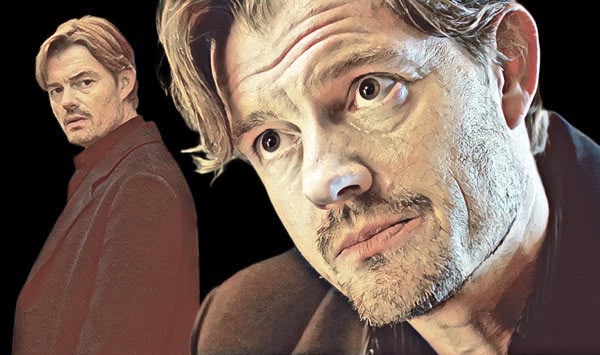
The most painful part of the episode, however, belongs to Sam, who had begun developing a romantic connection with Jerry (Samuel Barnett), the concierge at the hotel where he is staying. The two spent a night together and started discussing the possibility of a relationship, offering the assassin an unexpected opportunity to build something outside the world of violence.
Sam’s loneliness has always been one of the most interesting aspects of his character, particularly because his apparent ease with death contrasts so sharply with his difficulty handling his own emotions. In the first season, his relationship with Michael had already demonstrated how his professional life interferes with any attempt to achieve emotional stability, but Jerry seemed to represent another possibility.
Patrick, however, chooses Jerry as Sam’s next target, using the incriminating footage of Helen to force him to commit the murder. The decision reveals the cruelty of those responsible for the conspiracy, who do not merely need to threaten the assassin’s life to control him but can destroy the very things he is beginning to care about.
Before carrying out the assignment, Sam meets Williams (Ella Lily Hyland) at a bar and realizes that she is in love with Eleanor (Gabrielle Creevy), although she has not yet managed to acknowledge her feelings. He advises his friend not to waste the opportunity to pursue the relationship, reminding her that regret over the things we fail to do can remain with us throughout our lives.
The conversation takes on a particularly tragic dimension because Sam is about to destroy his own chance at happiness, even as he advises someone else not to allow fear or hesitation to prevent an emotional connection.
Later, he positions his rifle, watches Jerry through the scope, and fires, obeying the order he received to protect Helen. The murder closes the episode with a cruelty that contrasts directly with the humor of the earlier sequences, because violence now ceases to feel like a stylized form of entertainment and begins to produce emotional consequences that are impossible to ignore.
Jerry was not involved in the conspiracy, posed no threat, and apparently knew nothing about the conflicts surrounding Sam. His death serves only to demonstrate how far Patrick is willing to go to control the assassin and, more importantly, how Sam’s life prevents him from building lasting emotional relationships.
Humor, Violence, and the Price of a Double Life
The second episode of Black Doves works particularly well when it confronts the casual way its characters commit murder with the suffering those same actions can cause. At the beginning, Sam kills an elderly woman and eats one of her biscuits, in a sequence designed to provoke uncomfortable laughter. By the end, he murders a man with whom he was beginning to develop a romantic relationship, forcing viewers to reconsider the violence that had previously been presented almost as a joke.
The contradiction is hardly new in stories about charismatic assassins, but Joe Barton seems interested in exploring it more explicitly this season. Helen and Sam are characters for whom we have developed sympathy, even though both are capable of morally indefensible acts, and the series frequently invites us to understand their choices without necessarily requiring them to acknowledge the seriousness of what they do.
There is also an interesting parallel between the protagonists’ journeys. Helen is desperate to prove that she is still a spy, while Sam is beginning to realize that he may no longer know how to be anything other than an assassin. She fears losing the professional identity she has built over the years, while he seems to understand that this very identity has robbed him of almost every possibility of building a different future.
The moment when Sam advises Williams to declare her feelings for Eleanor is especially revealing because it demonstrates that he understands perfectly well the importance of love, yet believes he must sacrifice it to protect the person with whom he shares his most important relationship. His friendship with Helen remains his strongest emotional bond, although protecting her now means accepting orders from people who have no hesitation about using his feelings against him.
Wallace, on the other hand, may be the character coming closest to a genuine understanding of his own reality, precisely because he is beginning to suspect the performance on which his marriage is built. While Helen and Sam continue trying to control the consequences of their choices, the prime minister realizes that something is wrong, even without understanding the full extent of the problem.
The conspiracy involving Wildflower and Kestrel is still far from resolved, but the episode establishes an important connection between Reed’s past and the murders threatening the Black Doves. The existence of an unidentified survivor, Chernov’s involvement, and the former handler’s silence suggest that the events in East Berlin will have much greater consequences than we initially imagined.
For now, however, the most significant revelation may have less to do with the espionage mystery than with Sam’s decision to sacrifice the possibility of love to protect a friend whose own life is also built on lies. In a world where almost everyone works for someone else and no information is truly secure, feelings seem to be the one thing that can still turn a professional obligation into a personal tragedy.
Descubra mais sobre
Assine para receber nossas notícias mais recentes por e-mail.

