
Ten years ago, on November 4, 2016, Netflix premiered The Crown, an ambitious series that set out to revisit the reign of Elizabeth II, exploring not only historical events but also the personal relationships, political choices, and family conflicts that shaped one of the world’s most recognizable monarchies. The project came from Peter Morgan, who had already demonstrated his fascination with the Queen in The Queen (2006), directed by Stephen Frears and starring Helen Mirren in an Oscar-winning performance.
Morgan was never particularly interested in making a conventional biographical drama. His intention was to explore the relationship between the woman and the institution, between the person Elizabeth might have become and the sovereign she was required to be. It was a question he had already examined in his play The Audience, about the monarch’s weekly meetings with her prime ministers. With The Crown, he gained the time, budget, and creative freedom to explore characters, conflicts, and contradictions in greater depth.
The result was one of the most important productions of Netflix’s first decade as a major force in original programming, both for its investment and for the bold decision to cover decades of history while replacing its principal cast every two seasons.
Looking back, however, The Crown also became something Morgan himself might not have entirely anticipated: a series that helped humanize Elizabeth II, renewed worldwide interest in the British monarchy, and, as it approached more recent events, began confronting the contradictions inherent in turning real people into fictional characters.
Young Elizabeth and the Burden of a Life She Never Chose
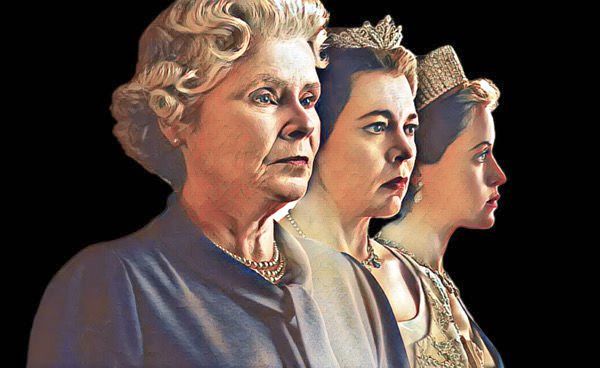
The first two seasons, starring Claire Foy, remain, in my opinion, the most delicate and consistently accomplished of the series. We meet a young Elizabeth, deeply in love with Philip, still learning to navigate the rules of her position when the premature death of her father, George VI, forces her to assume a responsibility for which no one can ever be truly prepared.
There is something profoundly melancholic about her journey. Elizabeth did not choose to become Queen at that moment, nor could she decide how to carry out her duties without confronting centuries of tradition. Gradually, we witness the transformation of a woman into a symbol, with all the sacrifice, restraint, and, frequently, loneliness that such a transformation demands.
Morgan was particularly effective in exploring the tensions with Philip, her relationship with her sister Margaret, the influence of her advisers, and her connection with Winston Churchill. What might have been a succession of historical events acquired a human dimension. The series allowed us to understand decisions without necessarily agreeing with them.
And that was precisely how it conquered an audience far beyond those interested in royalty. One did not need to admire the monarchy to recognize the tragedy of a woman imprisoned by her own destiny.
The series also offered Elizabeth a rare opportunity: to reveal her insecurities and sacrifices to generations who knew her only as an elderly woman wearing brightly colored coats, immaculate hats, and an almost impenetrable expression. It is difficult to measure how much this actually contributed to her popularity, but the role of The Crown in renewing interest in the Queen during the final years of her life cannot be ignored.
History Seen from Another Perspective
Another achievement of the early seasons was their ability to revisit events that many viewers knew only superficially, if at all. London’s Great Smog, the Suez Crisis, the Profumo affair, the Aberfan disaster, and the tensions between the Crown and successive governments received renewed attention.
The series did more than reconstruct these episodes with remarkable visual precision. It invited audiences to reconsider historical figures and their decisions. Churchill, for example, could simultaneously be an extraordinary statesman and an aging, proud man resistant to change. Margaret, so often reduced to the image of a rebellious princess, emerged as a woman whose desire to love and be recognized repeatedly collided with the role assigned to her.
Of course, The Crown was never a documentary. Private conversations, emotions attributed to the characters, and many situations were imagined by Morgan. But in the early seasons, historical distance seemed to favor dramatic freedom. The characters belonged to a sufficiently distant past to allow interpretation without every invented conversation immediately becoming a controversy.
When Olivia Colman took over as Elizabeth in the third season, the series moved on to a more experienced monarch, less inclined to question the rules she had learned to embody. The change of cast, initially a risky decision, reinforced the passage of time and the characters’ personal transformations. We were no longer following the young woman who became Queen, but the Queen who had almost disappeared into her own position.
Charles, Camilla, and the Inevitable Arrival of Diana
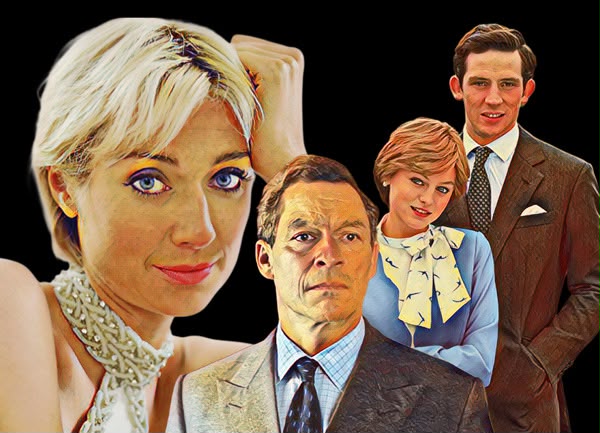
The introduction of an adult Charles and, later, Diana changed the emotional center of the narrative. Until then, the series had built its strength on showing how the institution shaped Elizabeth’s choices. With Charles, we began to see what happened to those who grew up in her shadow.
Josh O’Connor portrayed a vulnerable, insecure, resentful Charles, often incapable of understanding the impact of his own behavior. His relationship with Camilla, played by Emerald Fennell, acquired a complexity that had long been absent from popular accounts of the couple.
Morgan did not erase Charles’s mistakes or the humiliation Diana endured, but he tried to show that there was a story preceding the marriage that collapsed before the eyes of the world. Charles and Camilla ceased to be merely the villains of an interrupted fairy tale and became people trapped by family decisions, conventions, and expectations that did not correspond to their desires.
This approach helped make a relationship that had provoked enormous public hostility for decades more understandable. The eventual acceptance of Charles and Camilla cannot be attributed to the series alone, as it resulted from a much longer process, but The Crown certainly participated in the cultural reconstruction of their images.
Then Diana arrived.
Played first by Emma Corrin and later by Elizabeth Debicki, the Princess altered the balance of the production. Her presence introduced a character whose story audiences did not need history books to remember. The tragedy, the marital conflicts, the interviews, and her treatment by the press still belonged to the emotional memory of millions.
Where The Crown had previously been able to suggest what Elizabeth thought when confronted by Churchill or how she reacted to Margaret’s decisions, it now had to deal with events documented in considerable detail, conflicting testimonies, and people directly involved who were still alive.
And, above all, with a woman who had never stopped inspiring strong emotions.
When Fiction Began to Make People Uncomfortable
From the fourth season onward, and particularly during the final two, The Crown faced increasingly intense questions about its historical responsibility. Was it legitimate to invent conversations between Charles and Diana? To attribute emotions and intentions to real people? To reconstruct private encounters as though we knew exactly what had been said?
These questions had, of course, existed before. But they acquired a different significance when the series stopped revisiting a distant past and began dramatizing events that many viewers had watched unfold on television.
The fifth season, released in November 2022, arrived just two months after Elizabeth II’s death. The coincidence made its reception even more delicate. The Queen was no longer a living historical figure but a character whose memory was being contested through different interpretations.
By then, tensions between William and Harry had also become public. The younger prince’s departure from royal duties, his move to the United States, and his accusations involving the press and his own family made it almost inevitable that each new episode would be interpreted in light of contemporary conflicts.
Curiously, it was Harry who offered one of the most interesting observations about the production.
In 2021, during an interview with James Corden, he said he felt far more comfortable with The Crown than with stories published about his family in the British tabloids. His explanation was simple: the series presented itself as fiction, while newspapers frequently offered questionable versions of events as though they were facts.
Two years later, during an interview with Stephen Colbert, he confirmed that he watched both older and more recent episodes and, when asked whether he fact-checked what he saw, replied that he did.
The statement was particularly significant because Harry, perhaps more than any other member of his generation, had publicly denounced the impact of media exposure on his life and that of his mother.
There was, however, an obvious irony. While acknowledging the fictional nature of The Crown, Harry was himself involved in a public dispute over who had the right to tell his family’s story. His memoir Spare, his interviews, and the documentary he produced with Meghan for Netflix also presented a personal interpretation of events shared with other people.
Ultimately, everyone was trying to control their own narrative.

The Ending That Did Not Unfold as Originally Planned
The production plans for The Crown also changed along the way. Morgan had originally envisioned six seasons, but in January 2020 announced that he would conclude the series with its fifth. A few months later, he reconsidered, explaining that he needed more room to explore the complexity of the events he intended to portray.
The solution was not to extend the story into the present but to divide the final years of the narrative into two seasons. As a result, Imelda Staunton, like Claire Foy and Olivia Colman before her, spent two seasons playing Elizabeth.
The series ultimately ended its story in 2005, with the marriage of Charles and Camilla and the Queen approaching the later years of her reign, although Elizabeth’s actual death, in September 2022, had already occurred by the time the final episodes were completed.
Morgan chose not to dramatize Elizabeth’s death directly. Instead, he constructed a symbolic farewell, bringing together the different phases of the character’s life and making the passage of time the emotional center of the finale.
The sixth season arrived in two parts, in November and December 2023, and ended amid divided reviews. The treatment of Diana’s death, the inclusion of imagined apparitions, and the increasing concentration on family drama drew criticism. For some viewers, the series had lost precisely what had made it special: its ability to connect the Windsors’ private conflicts with the political and social transformations of Britain.
I also believe that, as The Crown moved closer to Diana, it became increasingly dependent on events audiences already knew. Curiosity about what would happen to the characters gave way to anticipation over how Morgan would choose to portray each event. And that shift profoundly changed our relationship with the story.
Ten Years Later, What Is The Crown’s Legacy?
Perhaps the greatest achievement of The Crown was presenting the British monarchy not as a fairy tale, but as an institution sustained by people who were frequently required to sacrifice their own desires to preserve an image of continuity.
Young Elizabeth understood and accepted that logic. Margaret suffered because she could not adapt to it. Charles spent much of his life trying to reconcile it with his emotional needs. Diana, in turn, exposed its contradictions to the public in a way the institution could never entirely control.
It is interesting to observe how a series that began almost as an elegy to duty ended by questioning the psychological cost of that very duty. The rigidity that appeared to guarantee the Crown’s stability also contributed to resentment, isolation, unhappiness, and profoundly troubled family relationships.
Yet there is another contradiction worth remembering. By humanizing its characters, The Crown also helped preserve the fascination with an institution whose political and social relevance is constantly questioned. The series exposed its privileges, mistakes, and limitations, but transformed all of them into irresistible entertainment.
In a sense, Peter Morgan did for the monarchy something few public relations advisers could have achieved: he gave dramatic depth to people who, by definition, had been raised to conceal their feelings.
Ten years later, the first seasons remain extraordinary. Claire Foy is still, to me, the most convincing Elizabeth, not necessarily because of her physical resemblance, but because of the way she captured the conflict between what her character wanted and what she believed she was obliged to do.
The series may have lost its way somewhat when it moved too close to the history it was attempting to interpret. But that does not diminish its importance, or the fact that it transformed how millions of viewers came to see Elizabeth II and her family.
In the end, The Crown began by telling the story of a woman who had to disappear so that the Crown could survive. And it ended by demonstrating how impossible it was to demand the same sacrifice from everyone who came after her.
Descubra mais sobre
Assine para receber nossas notícias mais recentes por e-mail.

