
Elke Sommer’s death on October 28, at 85, immediately made me think of A Shot in the Dark. Not necessarily her most important role, although it is one of her best-known, but it is the one I will always remember her for. For me, the 1964 film ranks among the greatest comedies ever made, an extraordinary combination of direction, cast, and music that still works even when we know exactly what is coming next.
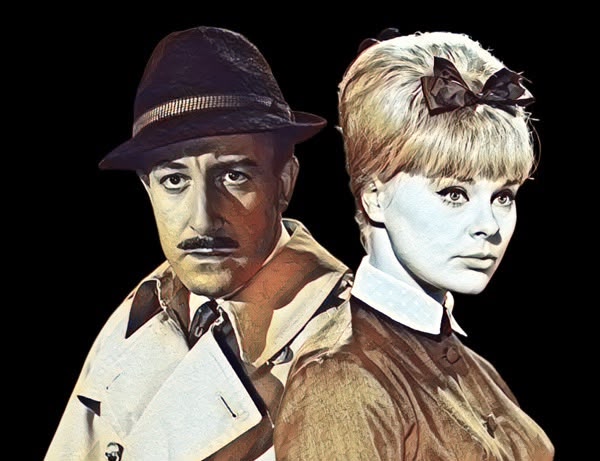
Born in Berlin in 1940, Sommer found her way into cinema after attracting attention during a trip to Italy in the late 1950s. She made her debut in Italian productions, worked in several European countries, and found that languages—she spoke seven—were an important means of crossing borders. Her arrival in Hollywood gained momentum with The Prize, released in 1963, opposite Paul Newman, for which she won the Golden Globe for Most Promising Newcomer.
She was one of the European actresses Hollywood embraced during that period, capitalizing on an image of beauty and sophistication that did not always reflect the range of her interests. She worked with Peter Sellers, James Garner, Dick Van Dyke, Bob Hope, and Dean Martin, ventured into Mario Bava’s horror films with Baron Blood and Lisa and the Devil, and also devoted herself to television, theater, and painting. She would later complain that she had been used as decoration in too many films. In A Shot in the Dark, however, her presence contributes directly to the construction of the comedy.
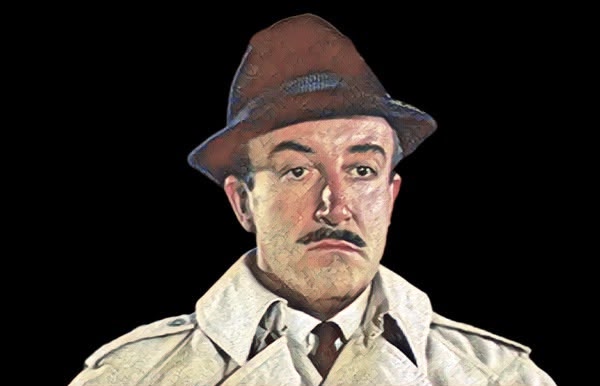
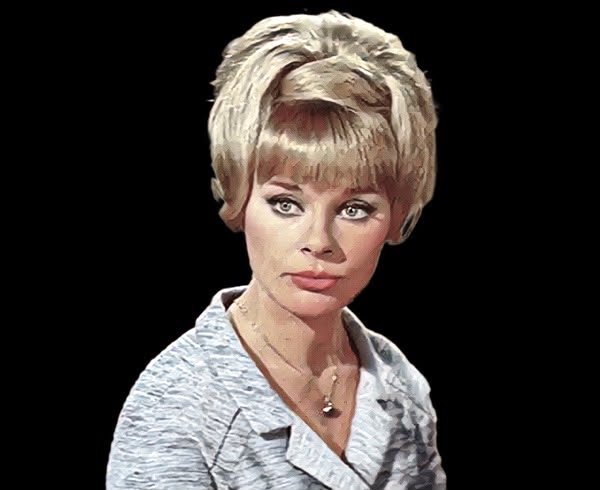
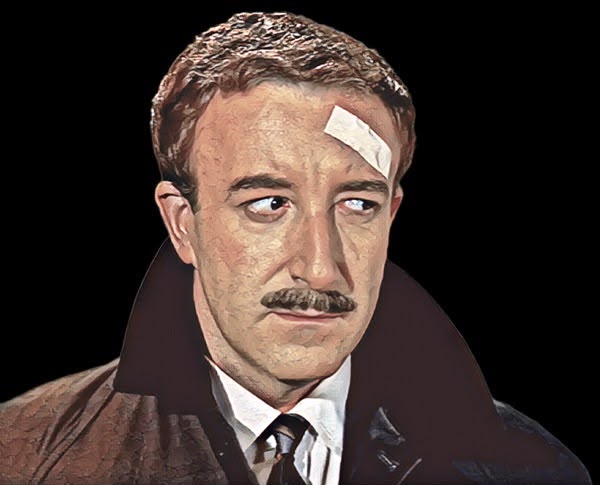
Sommer plays Maria Gambrelli, a maid suspected of murder whose innocence Inspector Jacques Clouseau immediately accepts as a certainty. His attraction to her undoubtedly contributes to that conviction, but, as with almost everything concerning Clouseau, he prefers to believe he is simply exercising his extraordinary professional abilities. The humor depends as much on Peter Sellers’s absurd confidence as on the naturalness with which Sommer navigates a succession of compromising circumstances.
Before the two even meet, Blake Edwards has already won us over. Four minutes and forty-six seconds pass before the animated credits begin, in a prologue that introduces a house, its inhabitants, and a network of clandestine encounters with virtually no need for dialogue. We follow people entering one room, leaving another, waiting for someone, and finding somewhere to hide. Each movement adds information, sets up a possible discovery, and turns us into increasingly interested observers of that night.
It all unfolds to “Shadows of Paris,” composed by Henry Mancini, with lyrics by Robert Wells and performed by Gina Carroll. The song lends a romantic elegance to the movements of people who are, for the most part, deceiving someone. Then gunshots interrupt the choreography, and the title takes on its literal meaning. Edwards shows us the movements preceding the crime, placing clues before our eyes while saving the full explanation of what happened in the bedroom for later.
Then comes “A Shot in the Dark,” Mancini’s instrumental theme accompanying Clouseau’s animated credits. For me, it is one of the composer’s finest themes, a piece of jazz even more entertaining than the music from The Pink Panther. There is a personality to it that seems to anticipate the inspector, his movements, and his ability to proceed confidently toward disaster.
The animation has an interesting history, too. The Panther had already appeared in the credits of the previous film, released in 1963, and the character’s popularity would lead to a series of standalone shorts. In A Shot in the Dark, Clouseau takes over the animated opening, while Mancini’s theme would later be used in The Inspector cartoons. Cinema, music, and animation were building a universe that would become part of many people’s childhoods.
Curiously, this adventure began far from Clouseau. Its source is L’Idiote, Marcel Achard’s play, which opened at the Théâtre Antoine in Paris in September 1960, directed by Jean Meyer. Annie Girardot played Josefa, the maid caught up in a murder investigation, alongside Jean-Pierre Cassel and Daniel Ceccaldi. The female character was at the center of the story before it became an opportunity to explore Sellers’s talents.
Adapted by Harry Kurnitz as A Shot in the Dark, the play arrived on Broadway in October 1961. Produced by Leland Hayward and directed by Harold Clurman, it starred Julie Harris, Walter Matthau, and William Shatner. It ran for 389 performances, and Matthau won the Tony for Best Featured Actor in a Play. There was, therefore, a successful stage comedy behind what now seems inseparable from the French inspector.
The film adaptation was initially intended to be directed by Anatole Litvak and to star Sophia Loren. Sellers signed on in 1963, but the project changed substantially when Litvak withdrew for health reasons, and Edwards took over. Loren also had to leave following throat surgery. Romy Schneider was chosen to replace her, but her commitments to another production cleared the way for Sommer.
Sellers was unhappy with the screenplay and his character. Edwards, who had just worked with him on The Pink Panther, found a solution by bringing Clouseau into the investigation. In the previous film, the inspector had shared the screen with David Niven’s elegant thief; now he could take center stage. Alongside William Peter Blatty, the future author of The Exorcist, Edwards reworked the adaptation to explore the actor’s comic possibilities.
The rewrite took about five weeks and moved the film away from the stage production. Matthau, who had signed on to reprise his Broadway role, left the project following the changes. Sommer, meanwhile, used part of her salary to free herself from film commitments in Germany. Filming began in England in November 1963, and the film opened in New York in June 1964.
The precision of the result conceals a turbulent working relationship between director and star. Edwards and Sellers fought over creative control and finished the production vowing never to work together again, a decision they fortunately reconsidered. On screen, their partnership turns falls, pauses, objects, and gestures into extensions of Clouseau’s personality. The disaster may be obvious to everyone, but he always finds a way to preserve his dignity.
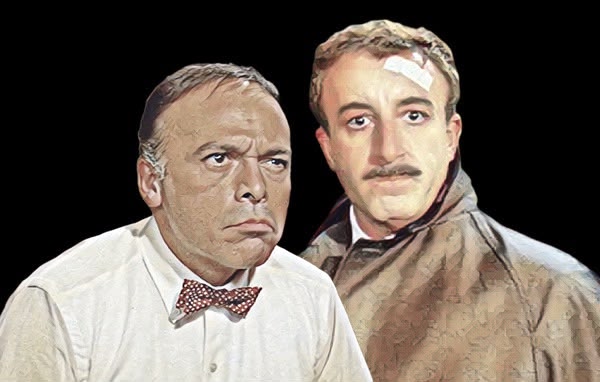
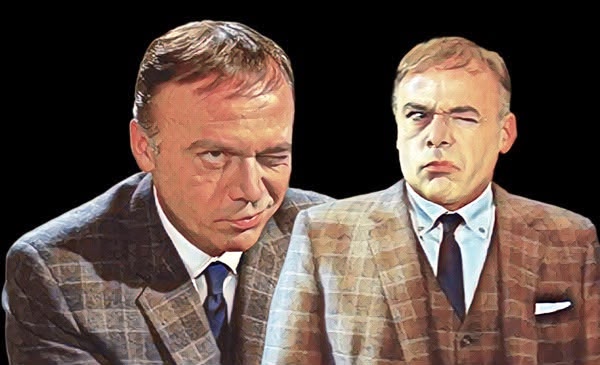
Herbert Lom is essential to that construction. This is the first appearance of his Dreyfus, who progressively loses his composure in the presence of someone incapable of recognizing his own absurdity. While Sellers sustains the inspector’s confidence, Lom plays the cost of having to live with it. Every reaction adds something to the irritation gradually consuming the character’s authority and common sense.
Sommer offers a different rhythm. Maria seems to move through the confusion without fully understanding why everything keeps placing her at the center of suspicion. The actress sustains that apparent innocence without competing with Sellers for every gag, giving the film a crucial balance. Her presence allows Clouseau’s determination to remain funny even when all the evidence seems to contradict him.
It is one of the reasons I return to A Shot in the Dark so often. Alongside Clue, inspired by the board game, it is among my five favorite comedies. Knowing the twists does not diminish the pleasure of watching how they are set up. And remembering Elke Sommer through Maria Gambrelli means recognizing that, in such a precisely constructed comedy, the person who moves naturally through the chaos can be just as important as the one causing it.
Descubra mais sobre
Assine para receber nossas notícias mais recentes por e-mail.

