
Remember the season when a charity bazaar could take three episodes to happen? Well, in the new season of The Gilded Age, we’re moving at bullet-train speed. Even though the story picked up about six months later, I suspect we’ll reach 1886 in just one more episode. And I’m barely exaggerating.
The second episode of Season 4 is titled “You Won’t Hear Me Beg,” and that phrase applies to quite a few people. It also finally answers one of the biggest questions left over from the previous season: who tried to kill George Russell? The revelation is not nearly as surprising as its consequences. George (Morgan Spector) is becoming increasingly disturbed, drinking laudanum straight from the bottle and seemingly unable to decide what he wants to do with his life. Meanwhile, Bertha (Carrie Coon) returns from England to discover that her domestic empire no longer functions quite as it used to.
Julian Fellowes also forces his characters to confront the contradictions of the very society they have worked so hard to conquer. Peggy faces prejudice from her future mother-in-law, William discovers that his competence as a doctor is not enough to overcome institutional racism, Marian searches for a purpose beyond the drawing rooms of Fifth Avenue, and Larry begins to realize there may be a professional life outside his father’s railroads.
Between business meetings, opera performances, artistic salons, and an attempted execution, this is a busy episode that brings back some of the series’ finest qualities.
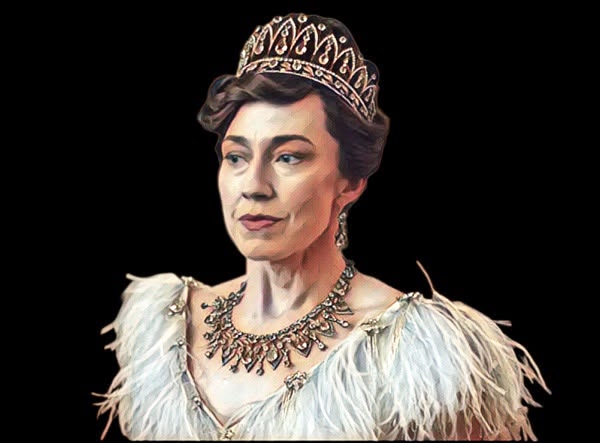
George Russell Discovers Who Tried to Kill Him
The Pinkerton detectives hired by George finally identify the man responsible for the assassination attempt. It is Will Morris, the son of Patrick and Anne Morris, characters we met in Season 1. Yes, that Anne Morris, who refused to let Bertha help with a simple charity bazaar and managed to be unpleasant to practically everyone.
And for those who need a reminder, Patrick Morris was involved in the attempt to block the construction of George Russell’s railroad station. When George discovered the conspiracy, he retaliated devastatingly. Morris lost his fortune and eventually committed suicide. Anne blamed the Russells for the destruction of her family and never recovered from what happened. Now living in a tenement and struggling to survive, she had no idea her son had decided to seek revenge.
Even so, George does not hand Will over to the police. Instead, he orders his men to capture him and hold him prisoner in a warehouse, where he intends to settle the matter personally. The man who has always controlled his business through a combination of intelligence, aggression, and determination is beginning to cross some very dangerous lines.
The situation also reveals something important about Bertha. Anne Morris approaches her in desperation, begging her to intervene and save her son’s life. This is not the first time the two women have met. In the past, Bertha rejected Anne’s plea for help, unable to acknowledge the extent of the suffering caused by George’s actions. This time, however, she listens.
Anne has already lost her husband and insists she cannot bear to lose her son as well. Bertha, who has just witnessed Gladys’s difficult childbirth, seems to understand this mother’s desperation differently. When she approaches George, she tries to persuade him not to turn the assassination attempt into another tragedy.
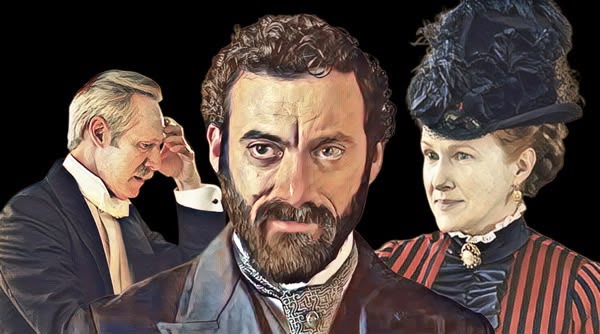
George Is Taking Laudanum
The episode confirms something that has been suggested since George’s recovery: he is taking laudanum, an opium-based preparation widely used during the nineteenth century to relieve pain.
His behavior has become unpredictable. He reacts aggressively to the slightest contradiction, interprets expressions of concern as attempts to control him, and seems to oscillate between a desperate need to reassert his authority and a profound sense of emptiness.
His confrontation with Will Morris is the most disturbing expression of this transformation. Facing the young man, George recalls the shooting and the moment he believed he was going to die. He remembers remaining conscious during surgery and the devastating realization that his life might end right there.
With a gun pointed at Will, George seems ready to carry out his revenge. Anne is present, helpless at the prospect of losing another member of her family. George fires, but he does not hit Will. The bullet strikes another part of the room. For a second, quite a few people on Reddit thought he had killed Mrs. Morris instead. He then allows mother and son to leave, on the condition that they disappear from New York.
The relief does not diminish the gravity of what we have just witnessed. George Russell, a businessman who has always considered rational thinking one of his greatest virtues, kidnapped a man and came dangerously close to committing murder.
Laudanum may help explain his instability, but the shooting also seems to have triggered a much deeper crisis. George survived, and now he does not seem to know what to do with the life he has been given back.

Rockefeller and Larry Add to the Pressure
As if his personal troubles were not enough, George must also deal with John D. Rockefeller, the founder of Standard Oil.
The two businessmen argue over oil transportation rates, and Rockefeller makes it clear that he has no intention of making Russell’s life easier. The dispute involves much more than prices: George controls railroads, but Rockefeller commands enough freight to put considerable pressure on the companies responsible for transporting it.
Larry attends the meeting and attempts to take a conciliatory approach. George, however, reacts irritably and treats his son harshly, making it clear that he does not consider Larry’s opinions particularly valuable. It is another example of how the businessman is alienating the very people who might be able to help him.
Larry, and we’ll get back to him in a moment, receives a proper dressing-down from his father after playing the successful businessman. George reminds him that he only achieved success because he already had capital, and that capital came from the Russell family fortune.
You know those moments when someone deserves to be told off, just not necessarily right then? Well, this was one of them. I didn’t feel particularly sorry for Larry, but the scene was clearly designed to make us disagree with George. Unfortunately, that was difficult, because his argument was true.
And so, after buying mines and patenting watches, Larry starts exploring yet another professional interest. His friend Simon, the same one who took him to the brothel and helped bring about the end of his engagement to Marian, reappears and introduces him to the possibility of investing in operetta productions, particularly works by Gilbert and Sullivan, such as The Pirates of Penzance.
It is a proposal that seems far removed from the Russell railroad empire, but it represents an opportunity to participate in the expansion of the American entertainment industry. And to have some fun with women along the way, as Marian gets to witness from a distance.
George, consumed by his own problems, is hardly in a position to understand or encourage his son’s ambitions.

Bertha Returns to a House She No Longer Controls
After accompanying Gladys in England, Bertha returns to New York and finds a rather unwelcoming situation. George remains distant, Larry greets her affectionately but is busy with his own life, and Gladys is still on the other side of the Atlantic, now devoted to motherhood.
There is a certain irony here for a woman who has spent years organizing her family’s life around her social ambitions. Bertha succeeded in turning the Russells into one of New York’s most important families, but her efforts have also contributed to alienating the very people she intended to benefit.
She visits George at his office and tries to persuade him to come home. She notices his exhaustion and expresses concern, but he reacts as though she is searching for a weakness she can exploit. Their conversation moves between accusations and desire. George kisses her, making it clear that their marriage is far from emotionally over, but he remains unable to commit to a reconciliation.
Their relationship takes a small step forward when he finally returns home after releasing Will Morris. Bertha wants to know what is happening to him. George admits that he has lost his sense of direction. He no longer knows exactly what he wants or how to answer his wife’s questions.
She, in turn, makes it clear that she has no intention of remaining indefinitely in such an uncertain situation. She wants to save their marriage, but she needs to know whether George wants the same thing. Perhaps it is the most honest conversation they have had since Gladys got married.
A New Footman, Pumpkin, and Changes Downstairs
We finally get a glimpse of life downstairs at the van Rhijn household, although the Russells’ servants remain conspicuously absent from the episode. And frankly, I miss them.
With Jack now pursuing his own fortune, the household needs a new footman. Ada takes charge of the interviews and chooses Oliver (Taylor Trensch), an enthusiastic young man who seems to possess almost none of the qualifications required for the position.
Bannister is understandably horrified. He knows perfectly well how much work goes into maintaining the standards of a household like the van Rhijns’, particularly with Agnes watching everyone’s every move. Ada, however, sees potential in Oliver and believes he deserves an opportunity to learn.
His first performances are hardly encouraging. During Agnes’s interview with a journalist, Oliver manages to mishandle the tea service, adding another little embarrassment to a situation Agnes already finds uncomfortable.
What makes the subplot entertaining is that Ada is now exercising the authority that once belonged almost exclusively to her sister. She is not simply choosing curtains and spending money. She is making decisions about the people who work in the house, whether Agnes approves or not.
And yes, we finally get to see Pumpkin again! A small pleasure for those of us who have become attached to the household’s four-legged resident.
But where is everybody downstairs at the Russell mansion? After three seasons of following the servants’ romances, rivalries, secrets, and ambitions, their absence is becoming noticeable. The series has always been more interesting when it remembers that the Gilded Age was not experienced exclusively by the people living upstairs.
For now, Oliver seems ready to provide some much-needed comic relief. Whether Bannister will survive training him is another question entirely.
Peggy Discovers That Her Book Makes Newport’s Elite Uncomfortable
Peggy Scott (Denée Benton) accompanies her mother, Dorothy, to Newport, where they attend a gathering of the Daughters of Friendship, an association frequented by women from the Black elite.
Her arrival should represent another step toward social acceptance ahead of her marriage to William Kirkland. But Peggy quickly realizes that her literary success does not impress these women as much as she had imagined. When she talks about the book she has written, she encounters superficial reactions and very little enthusiasm. One woman compares her literary achievement to a relative publishing a cookbook.
Things get worse when Peggy discovers that her own mother has only recently read her work and offers praise that is hardly convincing. But it is Elizabeth Kirkland, her future mother-in-law, who causes the greatest embarrassment. When introducing Peggy to the other women, she describes her as a widow. This is a distortion of Peggy’s personal history, apparently intended to make her past more acceptable to that social circle.
And, frankly, if we stop looking at the situation through twenty-first-century eyes, after Peggy’s father decided to annul her marriage and take away her child, placing him for adoption, the widow narrative actually makes more sense than whatever he thought he was accomplishing.
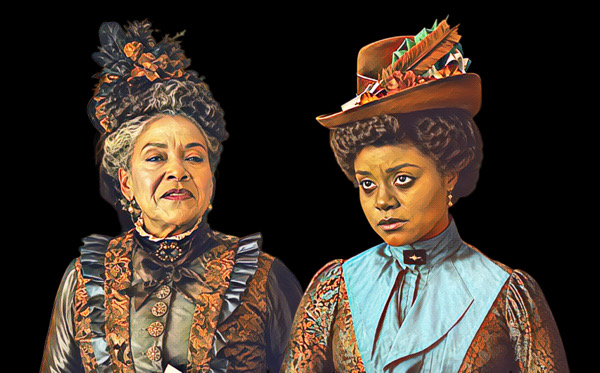
Even so, Peggy and Dorothy approach Elizabeth to question her introduction. Her reaction makes it clear that she considers Newport’s social conventions more important than Peggy’s right to tell her own story.
After everything she has endured to build an independent identity, Peggy discovers that the family of the man she loves seems determined to rewrite her life.
And the problem is not merely social prejudice. Elizabeth also shows little respect for her future daughter-in-law’s professional ambitions.
William Faces Racism at Bellevue Hospital
While Peggy discovers the limits of social acceptance, William Kirkland (Jordan Donica) confronts an even more brutal manifestation of discrimination.
He accompanies a longtime patient to Bellevue Hospital, where the man urgently needs treatment. William knows his medical history and wishes to participate in his care, but a white physician prevents him from remaining on the case.
The justification is openly racist: Black doctors are not permitted to practice medicine at that institution.
William is removed despite his education and experience. The patient eventually dies.
The sequence exposes the violence of a society in which a qualified physician could be prevented from saving a life because of the color of his skin.
It also adds an important dimension to William’s character. He belongs to a wealthy family, is educated, and enjoys considerable social prestige, but none of these achievements protects him from the institutional barriers imposed on Black professionals.
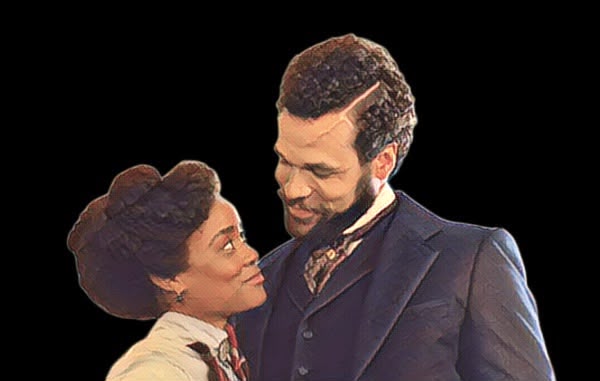
The episode therefore presents two parallel conflicts. Peggy must defend her right to be recognized as a writer and as a woman with a past she refuses to conceal. William must confront a medical establishment unwilling to acknowledge his competence.
They love each other, but they are discovering that building a life together will not allow them to escape the injustices of the world around them.
Marian Finds Work but Cannot Resolve Her Relationship with Larry
Now, let’s get to our very own Miss Headache. Marian Brook (Louisa Jacobson) remains tormented by the night she spent with Larry at the hotel. And he is certainly not helping.
Instead of writing to her, arranging a quiet meeting, and discussing what happened with the seriousness it deserves, Larry spots her leaving the house while he himself is heading to work and rushes over for a conversation. What follows is a rather casual exchange along the lines of, “Well, we got carried away,” followed by an accusatory “You left me at the hotel,” and so on.
Marian, who associates their sexual encounter with shame and fear of the social consequences, cannot bear having to spell out just how complicated their situation has become. The obvious solution is marriage. Larry sees what happened as one more reason for them to wed, but Marian interprets his proposal very differently: she fears he is offering marriage only because he now feels obligated to do so. And yes, here we are again, watching yet another misunderstanding between the two.
Let’s look at both sides of this mess.

Marian should not have slept with Larry. She should not have run away from a calm, serious conversation the following day, either. Marriage is now the only possible solution, and it had already been on the table before. But what she cannot articulate is that Larry’s immaturity, which often looks remarkably like indifference, makes her feel insecure.
She was betrayed by her father and by Tom Raikes, and she watched Aurora Fane become a social outcast when her husband decided to stay with his mistress. Nothing in Larry’s words is particularly convincing when it comes to reassuring her that she is not walking straight into another disaster.
And then there is Larry, who has had practically everything handed to him and cannot seem to focus long enough to notice his girlfriend’s pain.
He behaves as though he has ADHD, or perhaps as though he is simply a man with no responsibilities whatsoever. He sees Marian suffering and does not insist on resolving the situation. Instead, he heads off to the opera and nights out with his friends. He says all the right things, but his actions increasingly distance him from the sensitive, honorable man we once thought he was.
While the series continues to pull the couple apart, Marian finds satisfaction working at a social welfare institution on the Lower East Side. The center provides food, medical care, education, and other services to families in need.
Ada visits the institution and learns more about her niece’s activities. Marian finally seems to have found a way to be useful outside the social expectations of the van Rhijn family. She also helps care for a young boy who suffered burns while working in a factory, coming into direct contact with a reality far removed from the elegant drawing rooms she usually inhabits.
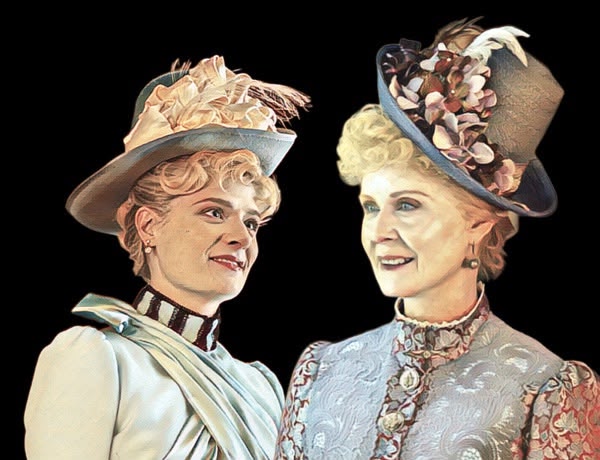
Agnes, naturally, disapproves of her niece working in a poor neighborhood, especially at night. That’s right: we are being warned that Marian is putting herself in actual danger, not merely social danger, but physical danger as well. And the lack of subtlety makes me worry about what might happen to her.
Ada, however, defends Marian, comparing her work to Jesus’s dedication to those in need. Agnes replies that Jesus did not have to travel across New York to get home. Her aunt’s resistance does not prevent Marian from continuing. Of course not. This is the Marian we know.
Her work may represent a path toward independence, but it also serves as a way of avoiding Larry and the emotions she still cannot fully understand.
Agnes Goes to the Opera, and Oscar Plans His Salon
Life at the van Rhijn residence is also changing, although Agnes (Christine Baranski) continues doing her best to resist every development. Ada insists on exercising her financial authority over the household, even deciding to purchase new curtains, while Agnes faces the challenges of organizing a dinner in honor of President Grover Cleveland.
A journalist manages to persuade her to give an interview, which eventually leads to her attendance at the Metropolitan Opera.
For Agnes, visiting the opera house associated with Bertha Russell’s social triumph is hardly an appealing prospect. But times have changed, and the old social order no longer carries quite the same authority.
Oscar and Enid Winterton, meanwhile, begin organizing an artistic salon. Among the names connected with their project is the painter William Merritt Chase, a real figure in American cultural history.
The couple also attracts the attention of the Fricks, suggesting that Enid and Oscar intend to establish their own sphere of social influence.
Bertha’s former maid is now moving confidently through the very world her former employer spent years fighting to enter.


The Opera Brings Old Rivalries Together
The performance at the Metropolitan Opera allows several characters to cross paths again, just as they do in some of the best social scenes of The Gilded Age.
Mrs. Astor reappears and speaks with Bertha about the difficulties of living with an absent husband. Her advice suggests that a woman in their position must learn to manage the public appearance of her marriage, even when the domestic reality is considerably less comfortable.
Enid also takes the opportunity to inform Bertha about the dinner Agnes intends to host for President Cleveland, implying that there may not be a place for her.
It is a particularly effective provocation. Bertha, who helped transform New York society by challenging the boundaries imposed by the old elite, must now contemplate the possibility of being excluded from an important social event. The battle is far from over.
But the truly worrying development is that Mrs. Astor is irritated because her daughter Carrie is still unmarried and apparently incapable of choosing a suitable husband. And who would be the ideal candidate? Larry, of course. Carrie has known him for years and seems to find the suggestion rather interesting. I’m telling you, Larry is going to disappoint us even more before he finally returns to being the hero who fooled us all!
What Does the Ending Mean?
“You Won’t Hear Me Beg” ends with George Russell acknowledging that he has lost his sense of direction and Bertha demanding a decision about the future of their marriage.
His decision to release Will Morris demonstrates that George is still capable of pulling back from a terrible act, but it does not mean he has recovered his balance.
His consumption of laudanum, his business conflicts, and his aggression toward Larry remain troubling signs.
Bertha also seems different. The woman who once dismissed Anne Morris’s suffering now understands the possibility of losing a child. Her attempt to save Will reveals a capacity for empathy she has not always demonstrated in the past.
Marian, meanwhile, is trying to find an identity through her work that does not depend on Larry, while Peggy discovers that her marriage may demand compromises incompatible with the independence she has fought so hard to achieve.
There is a contradiction connecting these women: they are all searching for some degree of control over their own lives, yet they remain surrounded by people determined to define what they may desire, do, or accomplish.
The episode’s title, “You Won’t Hear Me Beg,” seems particularly appropriate at a moment when almost every character must decide how far they are willing to compromise.
George no longer knows how to exercise the power he has accumulated. Bertha refuses to beg for reconciliation. Peggy refuses to accept the erasure of her past. And Marian cannot seem to understand that love and shame do not necessarily have to go hand in hand.
Julian Fellowes is beginning to dismantle his characters’ certainties. And after so many seasons spent watching them build their fortunes and reputations, perhaps it is precisely this loss of control that will make their stories even more interesting.
Descubra mais sobre
Assine para receber nossas notícias mais recentes por e-mail.

