
The first few trumpet notes are enough to bring the images back. We do not even need a screen in front of us to see Rocky running through the streets of Philadelphia, training until he can barely continue and finally racing up the steps of the Philadelphia Museum of Art. “Gonna Fly Now” became one of those exceedingly rare pieces of film music that escaped the movie it was written for and developed a life of its own. Fifty years later, it is still used to evoke effort, perseverance and victory, even by people who may never have watched Rocky from beginning to end.
There is a wonderful contradiction at the heart of all this: Rocky Balboa does not win the fight. Apollo Creed is declared the winner at the end of the bout, but the official result was never the true center of the story. The night before the fight, Rocky admits to Adrian that he probably cannot beat Apollo. What he wants is to remain standing until the end, something no one else has managed against the champion. If he can go the distance, he will know that he is not simply another insignificant man trying to survive in Philadelphia.
That may be precisely why “Gonna Fly Now” still works so powerfully. It does not necessarily celebrate defeating somebody else. It celebrates the moment when a person begins to believe that something previously thought impossible might actually be within reach.
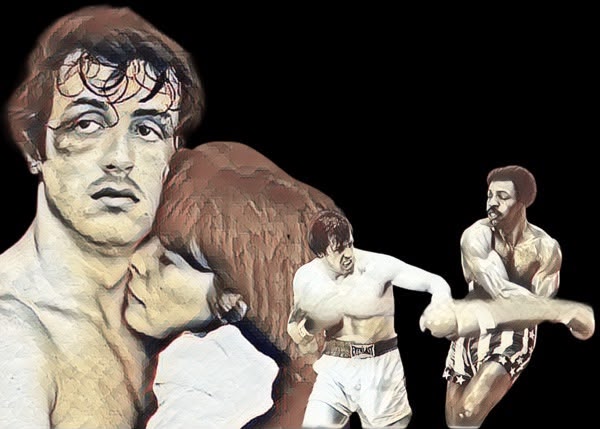
The music itself was born in circumstances far less grand than its later reputation would suggest. John G. Avildsen initially needed roughly 90 seconds of music for the training sequence, because a montage is much easier to edit when the images can be organized around a musical pulse. Bill Conti wrote what he was asked to write; Avildsen began cutting the footage and soon realized he had far more material than expected. He asked for another 30 seconds, then a little more, until the composition eventually reached the nearly three minutes we know today.
There was no great initial epiphany in which Conti sat down fully aware that he was about to create an anthem that would last for generations. The piece was assembled in sections while the sequence itself gradually found its shape, which only makes what happened afterward more remarkable.
Avildsen had used Beethoven’s Eroica Symphony as a reference when trying to explain to Conti what he wanted from the music. The two men watched boxers in slow motion and recognized a certain choreographic beauty in their movements, but Conti had a particular interpretation of heroism. To him, battle called for brass, volume and a melody capable of moving forward alongside Rocky. From that idea came the trumpets that can now announce the character before Stallone even appears on screen.
Originally, however, the piece was essentially instrumental. Avildsen was the one who suggested that Rocky’s arrival at the top of the steps needed some kind of human voice, just a few words capable of expressing what the images were showing. Conti turned to Carol Connors and Ayn Robbins, who wrote lyrics containing only about 30 words. That was enough. They are about trying, becoming stronger and finally flying, perfectly mirroring the transformation taking place before us.
Connors later said that the phrase “gonna fly now” came to her while she was in the shower. Excited by the idea, she immediately called Conti to tell him she finally knew what Rocky needed to say. One of the most recognizable phrases in film music history was born that casually, far removed from any grand studio meeting.
The recording itself retained the same improvised quality. Conti had been given $25,000 to create the entire score and had to cover the production costs from that amount. As a result, he recorded all of the music for Rocky in just three hours, using 39 musicians and six trumpet players. For the vocals, he asked his wife Shelby, who worked at Los Angeles radio station KHJ, for help. She came to the studio during her lunch break with colleagues including DeEtta West and Nelson Pigford. They quickly recorded their parts and went back to work.
The song that would eventually accompany professional athletes, major advertising campaigns, stadium crowds and public celebrations was created in part because a few people happened to have some free time over lunch.
Even the defining image of the sequence contains a small trick. Conti believed that the final shot of Rocky celebrating at the top of the steps needed to pull away from him, making the character appear smaller within the enormous landscape and expanding the emotional sense of achievement. The footage had been shot in the opposite direction, with the camera moving toward Stallone. The solution was simply to reverse it. If you watch closely, his movements look slightly odd because we are literally watching Rocky backward, but emotionally the choice works perfectly.
More importantly, by that moment Rocky has already achieved what he truly needed. He has not yet faced Apollo and has no idea what the outcome of the fight will be, but he has changed the way he sees himself. The steps that once seemed impossible are now beneath his feet. “Gonna Fly Now” accompanies exactly that transformation.
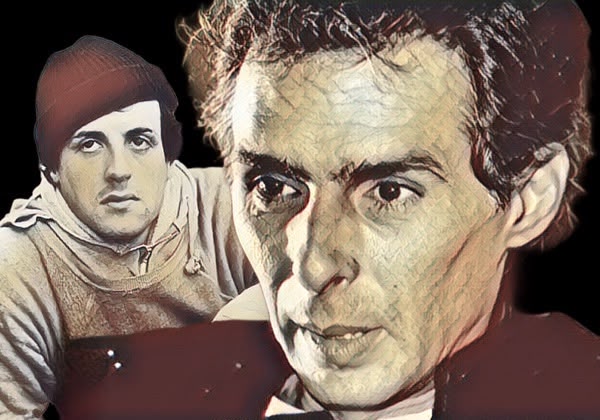
After the film became an enormous hit, the song also developed a life beyond it. Other recordings reached the charts, including trumpeter Maynard Ferguson’s version, before Conti’s own recording climbed to No. 1 on the Billboard Hot 100 in July 1977. The song was also nominated for the Academy Award for Best Original Song, although it lost to “Evergreen,” from A Star Is Born, written by Barbra Streisand and Paul Williams.
Conti later told a particularly funny story about that Oscar ceremony. He was conducting the orchestra when Streisand mentioned during rehearsal that she ran every morning while listening to “Gonna Fly Now” because it gave her energy. Conti told his wife that he thought it was wonderful to know Barbra Streisand loved his song so much, but he still hoped she would lose the award. She won.
In the end, “Gonna Fly Now” never needed the Oscar. The music returned in other films in the franchise, appeared in new arrangements and remained associated with Rocky even after “Eye of the Tiger” became the dominant musical theme of Rocky III. Over the decades, it has been used, copied and parodied so many times that it has become an instant cultural shorthand. The first notes are enough to tell us that somebody is trying to overcome something.
What is remarkable is that the song has survived its own cliché. Music repeated this often can lose its emotional power. “Gonna Fly Now” has not, because what it represents was never really about belts, titles or championships.
Very few people will ever know what it feels like to enter a boxing ring and fight for the heavyweight championship of the world, but almost everyone knows what it means to fail, try again and discover that they have managed to go a little farther than they thought they could. That is the victory Rocky turns into an image and Bill Conti turns into sound.
At the end of the film, Rocky loses the fight. Once those trumpets begin, it still feels like the least important thing in the world.
Descubra mais sobre
Assine para receber nossas notícias mais recentes por e-mail.

