
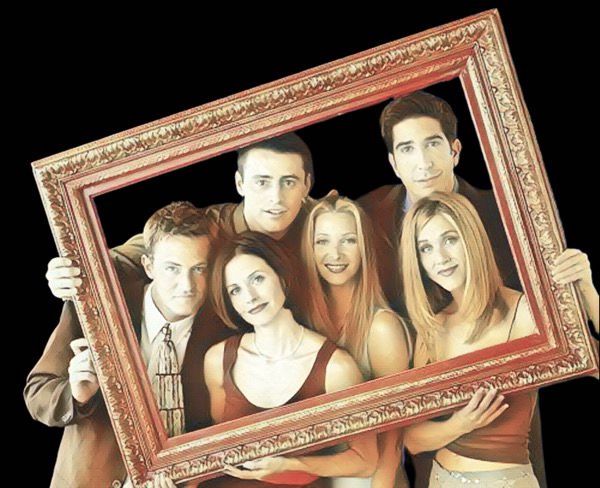
I belong to the generation that is supposed to have a timeless, almost obsessive passion for Friends. I don’t. That does not mean I don’t love the show or recognize its importance. I simply never turned its six protagonists into that kind of imaginary family so many viewers still return to in search of comfort.
Perhaps that is why Matthew Perry’s premature death was terribly sad, but not exactly surprising to me. I followed Hollywood stories for many years and, in his case, the signs were never hidden. His physical transformation, repeated hospitalizations, periods of absence, and difficulty expanding his career beyond Chandler Bing were all part of a public struggle with addiction.
Perry himself made a point of telling us everything. Or almost everything.
In interviews and, most notably, in his 2022 memoir Friends, Lovers and the Big Terrible Thing, he was brutally honest about the disease, his relapses, the harm he caused those around him, and the millions of dollars he spent on treatment. He did not try to cast himself as an innocent victim or conceal how difficult, self-centered, and destructive he could be. But he also used his own experience to advocate for people struggling with addiction and to remove the layer of shame that so often prevents someone from asking for help.
That is precisely why The One About Matthew Perry, Netflix’s three-part documentary, does not find its greatest revelation in Perry’s addiction. He had already told that story himself. What the production adds is a more disturbing perspective: everyone knew about his vulnerability, and yet it became a business.
The Man Behind Chandler
Directed by Mary Robertson, the documentary chooses not to make Friends its protagonist. The show is present, naturally, because it would be impossible to separate Perry from the character who made him famous around the world. But this is not another nostalgic celebration of Central Perk.
None of his five castmates participates. Also absent are well-known friends and collaborators such as Hank Azaria, Bradley Whitford, and Aaron Sorkin. Their absence is noticeable and prevents the production from becoming a definitive portrait of Perry as an actor. We learn a great deal about the disease, but relatively little about his creative process, his ambitions, or even the comic talent that made Chandler work.
In return, the absence of major stars creates room for a more intimate account. Relatives, longtime friends, former partners, and people who shared the experience of recovery with him speak about Perry with affection, exhaustion, admiration, and despair. They do not try to canonize him. Nor do they reduce him to an addict who could never remain sober.
His half-sister, Mia Perry Bowick, functions almost as the story’s emotional narrator. Through her, we understand the prolonged effect of addiction on those who love someone suffering from it: the hope that returns, the fear of believing again, the constant vigilance, the guilt, and the realization that no demonstration of love can guarantee another person’s survival.
The documentary is at its strongest when it abandons the conventional celebrity biography and becomes a story about addiction as a family disease. Perry was not the only person trapped in that cycle. Everyone around him was waiting for the next phone call.
What We Still Didn’t Know
There is no major bombshell. There are, however, details that alter the emotional dimension of facts we already knew.
His opioid addiction began after a jet ski accident while filming Fools Rush In in 1997. A doctor prescribed a painkiller, and Perry immediately recognized the euphoria he would spend decades trying to recapture. Over the years, he reportedly spent around $7 million on treatment and rehabilitation facilities.
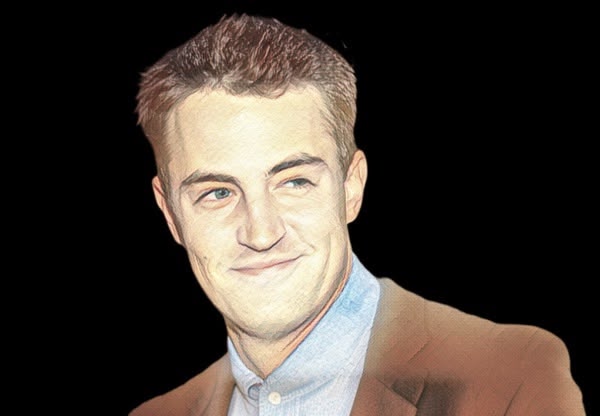
While Chandler and Monica were getting married in front of millions of viewers, Perry was moving in and out of rehab. For his family, watching the scene was almost like witnessing Matthew’s own wedding without knowing whether he would survive until the next episode.
In 2018, after his colon ruptured and he developed severe sepsis, Perry was given only a 2% chance of survival. Mia had to take responsibility for his medical decisions. Perry survived, but his body had aged brutally. When he appeared in the Friends reunion in 2021, the public responded with cruel comments about his appearance, without knowing — or perhaps without wanting to know — what that body had endured.
After the reunion, Mia began to understand addiction not as a succession of bad choices or disappointing relapses, but as a potentially terminal disease. That change in perception runs throughout the documentary and may be one of its most important contributions.
When Illness Finds a Market
Much is said about spoiled, abusive Hollywood stars surrounded by people who are incapable of telling them no. Matthew Perry certainly had money, power, and access. He could manipulate, lie, and use his fame to get what he wanted. The documentary does not erase his responsibility.
But there is another, less explored perspective: What happens when a vulnerable person encounters people willing to turn his illness into a source of income?
In the months before his death, Perry sought ketamine as a new treatment option. What might have remained under medical supervision became uncontrolled access to the drug. Doctors, intermediaries, a dealer known as the “Ketamine Queen,” and his own assistant participated, at different levels, in the network that placed the substance within reach of a man whose addiction had been known for decades.
The involvement of his assistant, Kenneth Iwamasa, is especially painful for the family. He had known Perry for about 30 years, but admitted to obtaining and administering ketamine to the actor. For Mia, it was not simply negligence but betrayal: someone so close to him could have warned the family. Instead, he helped sustain the cycle that ended in death.
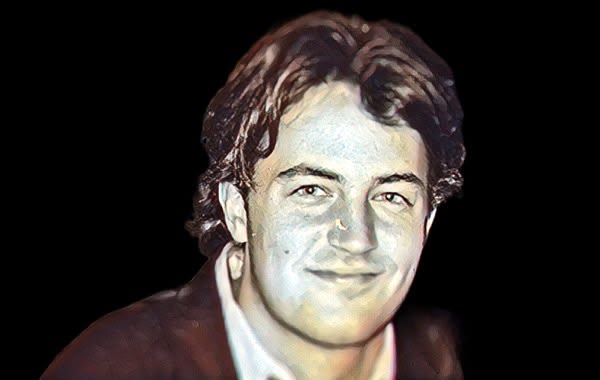
This is where the documentary finds its most urgent subject — and also where it could have gone further. The criminal investigation appears only in the final minutes, almost as a factual appendix after three hours of memory and suffering. The production identifies those responsible, but it does not examine deeply enough the system that allows a celebrity’s wealth to eliminate every safety barrier.
Matthew Perry did not die because no one knew he was an addict. He died after making his disease public knowledge, repeatedly asking for help, and surviving a medical emergency that should have removed any remaining doubt about his vulnerability.
Even then, there was always someone willing to provide more.
A Story Bigger Than Friends
The documentary reached No. 1 globally on Netflix with 9.5 million views in its first six days. It would be easy to attribute its success to the enduring devotion surrounding Friends, but that explanation is not enough. There is obvious curiosity about the circumstances of Perry’s death, and the three-episode format makes it easy to binge. There is also the promise of finding Chandler again, a character who remains associated with the comfort of another era.
But there is something more universal in this story. Perry represents the fantasy that money and fame can guarantee protection. His life proves otherwise. His wealth gave him access to the best treatments, but it also enabled him to finance his own destruction. The more resources he had, the more people were willing to satisfy his wishes — even when those wishes were symptoms of a disease.
The One About Matthew Perry is an affectionate, sad, and often devastating tribute. It is neither a definitive investigation into his death nor a complete examination of his career. It could have been tighter and more courageous in its exploration of the industry that formed around his addiction.
Even so, it manages to release Perry from two prisons: being remembered solely as Chandler Bing and being reduced to the man who could not stay sober.
He was funny, generous, difficult, needy, manipulative, and profoundly ill. He spent his final years trying to show that addiction should not be treated as a moral failing. His death added an even more disturbing layer to that legacy: admitting to the disease is not enough when an entire economy is prepared to exploit it.
Matthew Perry asked for fame and received it on a scale few ever achieve. What he perhaps could not have anticipated was that, once he became famous, even his fragility would acquire commercial value.
Descubra mais sobre
Assine para receber nossas notícias mais recentes por e-mail.

