
There is something deeply ironic about Agnes Van Rhijn’s fate in The Gilded Age. The character played by Christine Baranski has spent four seasons defending a world that has practically ceased to exist around her. She has lost her fortune, her authority within the household, and much of the influence she once believed she possessed, yet she continues to cling to the same rules, the same prejudices, and the conviction that her way of life is the only acceptable one. While everyone else moves forward, Agnes stands still. And perhaps for the first time, that resistance may cost her something she still considers essential: her reputation.
What makes this particularly curious is that even Caroline Astor, the legendary Lina, once considered the ultimate authority in New York society, has learned to compromise. The woman who initially regarded the Russells as socially contemptible intruders eventually welcomed Bertha into her circle and now considers Larry a possible husband for her daughter Carrie. Lina remains a snob, of course, but she has understood that the wealth and influence of the new millionaires can no longer be ignored. She adapted in order to preserve her power.
Agnes has not. And the contrast between these two women is particularly revealing because, in a sense, they both represent old New York. The difference is that Caroline Astor understands she must negotiate to remain in control, while Agnes seems to believe that simply repeating the rules will eventually make everyone obey them again.

The Woman Who Rarely Leaves the House
Since the premiere of The Gilded Age, Agnes has been portrayed as a woman of rigid principles, equipped with a razor-sharp tongue and an extraordinary ability to summarize her opinions in memorable one-liners. Christine Baranski masters this type of character like few other actresses, and comparisons with Maggie Smith’s unforgettable Dowager Countess in Downton Abbey have always been inevitable. Both women are aristocratic, conservative, intolerant of social change, and frequently responsible for some of the funniest moments in their respective series.
But there is one fundamental difference. Violet Crawley actively participated in the conflicts around her. She manipulated, schemed, sought allies, and interfered in events, sometimes to preserve tradition, sometimes to protect those she loved. Agnes, by contrast, almost always remains inside her house, indignantly commenting on other people’s choices while the world continues to function without her permission.
Keep updated with all about The Gilded Age: A Full Guide (2022-2026)
Her residence, which should represent the authority of old society, rarely hosts major social events. Nor does Agnes show much interest in circulating around the city and competing for influence with other powerful women. When she finally ventures outside, her appearances are generally marked by disapproval. We have seen Agnes attend the Metropolitan Opera, appear at the Russells’ parties, and, more recently, agree to an interview with a women’s magazine. But leaving the house does not necessarily mean participating in the changing world.
Rather than using these opportunities to recover her influence, Agnes seems determined to prove that she remains exactly the same woman she has always been. And perhaps that is precisely her greatest problem.
A Series of Defeats That Has Produced No Change
Agnes has more than enough reasons to reconsider her convictions. Oscar, her only son, lost the family fortune in a financial scam, leaving his mother dependent on Ada, who inherited money from her husband. The sister who spent years living under Agnes’s authority now possesses the resources that keep the household running, although Agnes continues behaving as if nothing has changed.
Ada’s marriage, initially met with resistance, demonstrated that her sister was perfectly capable of building an independent life. Her widowhood was painful, but it did not return her to the position of the submissive woman Agnes had always known. Now, Ada’s encounter with Dr. Harris, announced for the fourth episode, suggests the possibility of another transformation in her romantic life. If the series develops a relationship between them, we may have another opportunity to observe Agnes’s reaction to choices that challenge her social and racial expectations.
Oscar also remains a source of contradictions for his mother. Agnes knows that her son is gay, but both remain trapped by the need to preserve appearances in a society that would not allow him to live openly with his sexuality. Her moral position therefore depends on silently accepting a reality that her own rules would otherwise condemn.
Marian, meanwhile, has never fulfilled Agnes’s ideal of an obedient niece. She insists on working, challenges conventions, makes romantic decisions Agnes disapproves of, and now faces a delicate situation involving Larry Russell. Agnes understands the consequences a woman might suffer in that society, but her way of expressing concern is still frequently reduced to prohibitions and reprimands.
Even the presence of Enid Winterton, now connected to the family through her marriage to Oscar, demonstrates how thoroughly Agnes’s old certainties have been dismantled. The woman Agnes once despised for her background and her past has ended up entering the very family circle she was so determined to protect.
It is an extraordinary succession of events for a character who seems incapable of learning anything from them. Agnes’s world has changed completely, but her attitude remains almost untouched.


Has the Rivalry With Bertha Russell Arrived Too Late?
Carrie Coon and Christine Baranski have celebrated the opportunity to finally bring Bertha Russell and Agnes Van Rhijn into direct conflict. The fourth season promises to turn the longstanding hostility between the neighbors into an open confrontation, centered on a dinner honoring President Grover Cleveland. The prospect is entertaining, especially because it brings two extraordinary actresses face to face. But it also raises a question: why did this confrontation take so long?
For years, Agnes had very little to do beyond criticizing the Russells. The family built an extravagant mansion across from her residence, Bertha organized magnificent parties and climbed ever higher in society, while Agnes watched everything with indignation. But Bertha’s true adversary was never Agnes. It was Caroline Astor, the woman who actually possessed the power to determine who would be accepted into society.
The historical framework of The Gilded Age helps explain this choice. Bertha Russell is a fictional character clearly inspired by Alva Vanderbilt, whose rivalry with Caroline Astor left its mark on New York’s social history. Julian Fellowes chose to keep the real Mrs. Astor in the narrative, leaving Agnes in a curious position: sufficiently snobbish to despise Bertha, but without comparable influence to challenge her.
Now, with Lina Astor having established a friendly relationship with Bertha, the old neighbor emerges as her new antagonist. It is an interesting reversal, but one that requires a more convincing motivation than Agnes’s simple dislike of the nouveaux riches.
And that motivation may have appeared precisely where we least expected it: Enid Winterton.
The Presidential Dinner and Bertha’s Opportunity
Agnes is preparing a dinner for President Grover Cleveland, an event that could represent her social rehabilitation. After so many losses, entertaining the president of the United States would allow her to reaffirm the importance of the Van Rhijn name and remind society that she still belongs to New York’s most respectable circle.
But Enid has revealed the plans to the very person Agnes would least like to see interested in the occasion: Bertha Russell.
It is difficult to imagine Bertha allowing such an opportunity to pass. The synopsis for the third episode announces that she will turn her attention to the presidential dinner, while the fourth reveals that Agnes will attempt to regain control of the occasion. Everything suggests another battle over who will have the privilege of entertaining the season’s most important guest.
Bertha’s interest, however, may extend beyond the satisfaction of defeating her neighbor. George Russell is facing business difficulties, and gaining access to the president could represent a significant political and commercial opportunity. If Cleveland’s presence becomes important to her husband’s business interests, Bertha will have an even stronger motivation to move the event to her own home.
The possibility also offers an opportunity for George and Bertha to reunite around a common goal. After so many marital tensions, she could demonstrate that her social ambitions, so often responsible for their domestic conflicts, are also capable of serving her husband’s interests.
For Agnes, however, it would be another humiliation. And possibly the most public one of all.
The Interview That Could Ruin Agnes
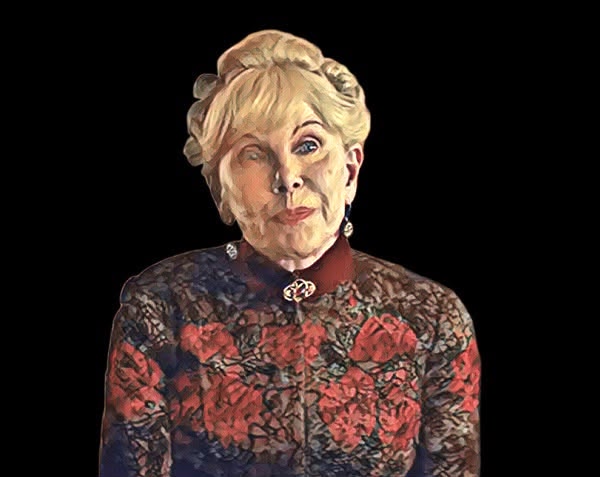
The real problem may not be Bertha, but Agnes herself. By agreeing to an interview with Ladies’ Home Journal, she found an opportunity to present herself to the public as a representative of traditional values. Instead of recognizing that she was addressing a much broader audience, however, she allowed her arrogance and prejudices to emerge, producing material that could be used against her.
The synopsis of Ain’t That Good News reveals that Ada, Marian, and Aurora will try to prevent Agnes from seeing the article. Their concern suggests that the published interview will be considerably less flattering than she expects.
The episode could represent a particularly interesting turning point. Agnes is accustomed to judging others, but she seems unprepared to discover that she, too, can be judged. For years, her social position protected her from the consequences of her words. Now, a magazine may expose to the public what her relatives and acquaintances have learned to tolerate in private.
If the interview really does compromise Agnes’s reputation, Bertha will have the perfect argument for claiming the presidential dinner. After all, why expose the president to a hostess involved in public controversy when the Russell family can offer a magnificent and socially convenient reception?
We do not yet know how the dispute will be resolved, but the combination of the article and Bertha’s ambitions seems destined to place Agnes in a deeply uncomfortable position.
Why Won’t Agnes Change?
The most important question, however, is not who will entertain the president. It is what Agnes will do after yet another defeat, should it occur.
The character has spent her life believing that her social position, her family name, and her observance of convention would guarantee security and respect. It was an understandable survival strategy for a woman who endured an unhappy marriage and had to rebuild her life in a society that offered women few alternatives. But what once protected her has gradually become a kind of prison.
Agnes continues defending rules that can no longer protect her. She no longer possesses the fortune that sustained her independence, she does not fully control her own household, and she lacks the influence necessary to prevent her relatives from making their own choices. Her authority survives far more in the way she speaks than in her actual ability to determine events.
Perhaps the saddest aspect is realizing that she does not seem to know who she would be without that authority.
Ada discovered that she could love, marry, manage money, and make decisions. Marian insists on building a life that extends beyond the limitations of marriage and convention. Caroline Astor has learned that preserving power requires concessions. Even Bertha, for all her mistakes, understands that changing circumstances demand new strategies.
Agnes continues waiting for the world to return to the way she once knew it.
But that world is not coming back.

Can Agnes Van Rhijn Still Change?
It would be an extraordinary waste if Christine Baranski spent another season limited to witty remarks, disapproving expressions, and successive defeats. Agnes possesses intelligence, experience, and a profound understanding of social rules. The problem is that she has never learned to use those qualities outside a system that is disappearing.
The rivalry with Bertha may finally offer an opportunity to change that dynamic, provided Agnes stops being merely a victim of circumstances and begins to act. There is no need to turn her into a progressive woman, force her to abandon her convictions, or transform her into an admirer of the new millionaires. It would be enough to allow her to recognize the difference between preserving her dignity and clinging to a pride that no longer serves her.
In fact, perhaps her greatest transformation would be learning something from Caroline Astor herself. Lina did not surrender her power simply because Bertha Russell became wealthy. She understood that influence depends on knowing when to resist and when to negotiate.
Agnes, who has always considered herself superior to her neighbor, may need to acknowledge that Bertha possesses a quality she lacks: the ability to adapt.
The presidential dinner may turn out to be just another lost battle, accompanied by the inevitable biting remarks Christine Baranski delivers so brilliantly. But it could also represent the moment Agnes realizes that there is no longer a world waiting to obey her commands.
After four seasons, it would be fascinating to discover what this extraordinarily stubborn woman might accomplish if she finally decided to leave her house, take control of her own destiny, and participate in the society that continues to transform itself beyond her window.
Because Agnes Van Rhijn’s real problem is not that she is growing older. It is that she continues living in a past that not even Lina Astor wishes to bring back.
Descubra mais sobre
Assine para receber nossas notícias mais recentes por e-mail.

