
We talk so much about Marian and Larry’s romantic setbacks that we sometimes leave Peggy Scott in the background. It is curious, because when we consider what each woman has endured since The Gilded Age began, Peggy’s story encompasses losses and violence on an entirely different scale. That does not make Marian’s feelings less important, but it does make us realize how much suffering the series has piled onto its other heroine before offering her the possibility of reciprocated love.

Peggy ran away to marry the man she loved, had a son, and was led to believe that her baby had died. Her marriage was annulled through the intervention of her father, Arthur, who also gave the child up for adoption. When she discovered that the boy was alive, she regained a hope that would soon be taken from her: Thomas had died before she could be reunited with him. Peggy had to grieve the same child twice, first because of a lie, then in the face of an irreversible loss.
I still struggle to accept Arthur’s reasoning. He believed he was protecting his daughter, but how could inventing a child’s death possibly be a solution to anything? His justification rested on respectability and the future he wanted for Peggy. The problem is that, to preserve that future, he gave himself permission to destroy the family she had chosen to build. Protection became a form of violence, with consequences that no reconciliation can erase.
Add to that her involvement with a married man, T. Thomas Fortune, the threat of racist violence during her trip to the South, and the obstacles to getting her writing published. Even in the van Rhijn household, where she finds employment and Agnes’s support, Peggy must confront racism. Being educated, talented, and from a family with financial means does not protect her from humiliation. The position she earns remains subject to other people’s willingness to acknowledge her right to occupy it.
When William Kirkland appears during a serious illness, it is understandable that the possibility of happiness brings some relief. Handsome, accomplished, interested in her, and willing to stand up to his own mother, he offers a relationship that does not have to remain hidden. After Fortune, there is an enormous difference between being desired by a man and being able to openly build a life with him.

We should be careful, however, with the idea that William “accepts” Peggy’s past as though he were making an extraordinary concession. She does not need forgiveness for losing a child, being deceived by her father, or having had a life before meeting him. Her history is not a debt she will carry into the marriage. William shows sensitivity by listening to her and refusing to turn her experiences into grounds for rejection. It is a good quality in him, but it should also be the starting point of a relationship.
Elizabeth Kirkland sees things differently. Peggy’s future mother-in-law scrutinizes her background, skin color, family, and ambitions as though she were assessing an application. Colorism and classism expose hierarchies within the Black elite itself, where proximity to certain standards of appearance and ancestry becomes a measure of prestige. The fact that Arthur was enslaved is treated as a social disadvantage, rather than making the life he has built all the more significant.
There is an uncomfortable parallel between Elizabeth and Arthur. Each, in their own way, believes they know what kind of life would be appropriate for their child. Their actions and the consequences differ, but both subordinate their children’s wishes to an idea of protection and social standing. Peggy already knows the cost of allowing someone else to decide what is best for her. Now she must contend with a woman who also intends to have a say in those decisions.
That is why the engagement does not end the story. Peggy reaches this stage with a literary career gaining momentum, after fighting to be recognized as an author. Her work is not a pastime meant to fill the hours while she waits for her husband. Writing is part of how she asserts her place in the world, gains independence, and gives shape to her thoughts.
The professional conflict teased for Peggy and William could be more interesting than another attempt by his mother to separate them. So far, he has stood up to Elizabeth to choose the woman he loves. The next question is how the couple will negotiate desires that may not lead them to the same place. When an opportunity for one requires changes in the other’s life, love will need to translate into listening, choices, and compromises that do not always fall to the same person.
This does not require turning William into a villain. He can be a loving, generous man and still carry expectations about marriage that will only become clear when they are challenged. Peggy, too, will have to discover what she wants to share and what she is unwilling to abandon. It is in this meeting between two people, each with plans of their own, that the romance gains depth.
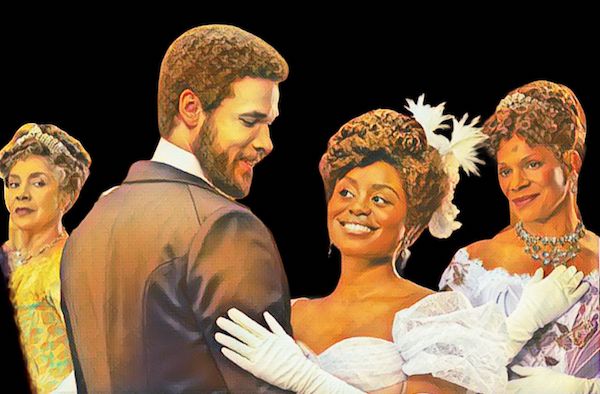
After so many stories in which Peggy had to survive what others did to her, it would be good to see her take part in deciding what comes next. I am rooting for the couple, but this character’s happiness needs to include the author she fought to become. William knows her past. Marriage will show how they intend to build a future together.
Descubra mais sobre
Assine para receber nossas notícias mais recentes por e-mail.

