
We live in binary times, even when watching a period soap like The Gilded Age, which enters its fourth season with its worldwide popularity on the rise. On social media, discussions about one of its most beloved couples seem to follow the same principle: either we defend Marian and condemn Larry, or we do the opposite. Curiously, amid all the disagreements, a point of consensus is beginning to emerge: people are getting tired of both of them.
For those unfamiliar with Julian Fellowes’s series, set in 1880s New York, Marian Brook, played by Louisa Jacobson, is a young woman left penniless after her father’s death who moves in with her aunts in New York high society. Larry Russell, played by Harry Richardson, is an architect and the heir to a newly wealthy family seeking acceptance among the established elite. Friends before they became lovers, the two have endured a series of missed opportunities, arriving at an impasse that now involves spending a night together before marriage.
Marian fears the consequences. Larry wants to marry her. She questions whether his proposal comes from love or a sense of obligation after what happened. He seems not to grasp the full extent of the problem. And we debate who is being more immature, when perhaps we should be asking how the writing reconciles their feelings with the period they live in.
There is a difference between a historically credible predicament and an equally credible response to it. Marian’s fear belongs to that world. But does refusing to marry the man she loves because he would be obliged to marry her belong there too? And what about his surprise at consequences that a man of his upbringing should understand?
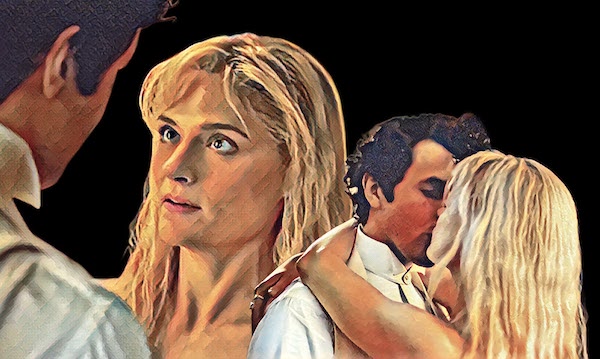
Marian did not invent this suffering
When discussing the character, Louisa Jacobson acknowledges how difficult it is to convey the gravity of that experience to a contemporary audience. Viewers need reminding that a night of intimacy could jeopardize a woman’s reputation, family relationships and marriage prospects. We can feel frustrated with Marian and still understand her panic.
The series has also established that insecurity. Marian swings between impulsiveness and fear, wants a degree of independence and tries to trust her own choices after romantic experiences that ended badly. Before Larry, the lawyer Tom Raikes abandoned her for a wealthy woman; later, she broke off her engagement to the widower Dashiell Montgomery, realizing that the marriage was not what she wanted.
To understand her contradictions, I like to return to Edith Wharton and Henry James. These were writers who lived in that world and created characters whose problems help us recognize hers. Their novels do not document every possible experience, but they offer literary testimony to the workings of money, reputation, marriage and exclusion that shaped those lives.
Women who want autonomy, turn down proposals or challenge convention were not invented by the twenty-first century. They are right there, with doubts, mistakes and aspirations. The difference is that these writers closely trace the cost of each choice.

Ellen, May and the man between them
In The Age of Innocence, published in 1920, Wharton revisits 1870s New York. Ellen Olenska tries to build a life after an unhappy marriage. Her cousin May Welland seems to embody the young woman perfectly suited to society’s expectations. Newland Archer, May’s fiancé and later her husband, begins at ease with those expectations and ends up suffering because he loves Ellen.
Ellen challenges conventions, but she knows their power. May shows that she understands far more than Newland imagines and uses the resources available to protect her marriage. By telling Ellen about a pregnancy before she is certain of it herself, she decisively influences all three of their futures.

Newland offers an important male perspective: he too suffers under the rules, even as he helps uphold them and benefits from them. Wanting to escape does not mean being able to break away. Wharton does not need to make any of the three incapable of understanding the society they grew up in to create a devastating conflict.
The danger of becoming Lily Bart
My greatest concern about Marian, from the beginning, has always been her potential resemblance to Lily Bart, from The House of Mirth. To me, she is one of the saddest characters in this literature. That reference also informed Louisa’s preparation: she read Wharton and James to develop her performance.
Lily moves in wealthy circles without possessing the fortune needed to remain in them. Her beauty and social ease create opportunities, but offer no lasting protection. She believes she can still choose until she realizes that her alternatives have vanished. The prospect of marrying the wealthy Percy Gryce comes to nothing. The financier Simon Rosedale proposes and is turned down; by the time she reconsiders, her social position has already deteriorated.
A proposal does not remain tucked away, untouched, until a woman feels ready. Time changes the terms, as does reputation. That is what makes some of these choices so frightening.
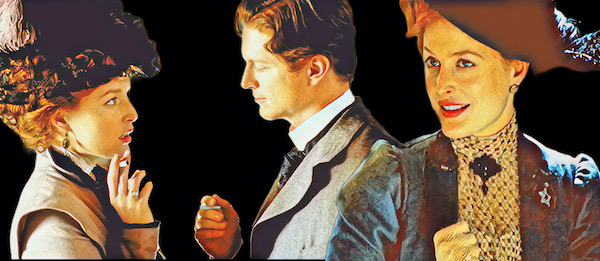
Nor does Lily simply lose her integrity along the way. At crucial moments, holding on to her principles contributes to her downfall. She refuses to use compromising letters against Bertha Dorset, an influential woman who helps bring about her social exclusion. Lily has vanity, prejudices and errors of judgment, but she also has a decency that her circle does not reward.
Lawrence Selden, the lawyer she loves, is another man who deserves a place in this discussion. Played by Eric Stoltz in Terence Davies’s film, he has always struck me as capable of maintaining an emotional distance that Lily cannot preserve. He likes to imagine himself above that society, yet continues to judge the woman he loves through its assumptions. When he decides to act and propose to her, he is too late.
The Gilded Age does not usually suggest that its heroines might suffer such an irreversible fall. Perhaps that gives us confidence that Marian will find a way out. But who knows? We may be surprised. Fearing that she might come to resemble Lily does not mean wanting her to accept just any husband. It means recognizing that, in that world, turning someone down and then reconsidering did not guarantee finding the same doors open.
James and the limits of choice
Henry James also offers examples that help us discuss the couple. Isabel Archer, from The Portrait of a Lady, wants to choose her own life and possesses resources Marian does not have. Even so, her marriage to Gilbert Osmond shows that money and freedom of choice do not guarantee discernment or prevent a relationship built on domination.
In Washington Square, set earlier than the series’s central period, Catherine Sloper is an heiress courted by the charming Morris Townsend, for whom the prospect of her fortune is decisive. Her eventual rejection of him represents an achievement of autonomy, without needing to be rewarded with another romance.
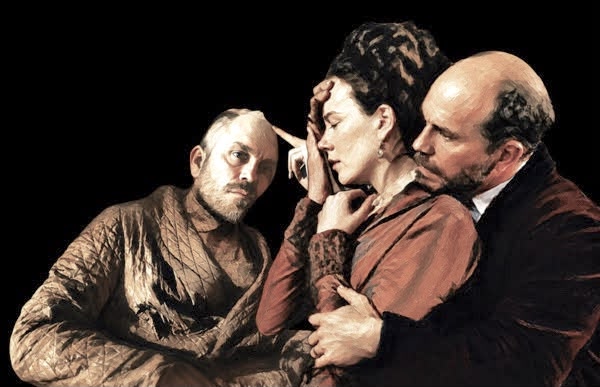
Daisy Miller, meanwhile, is a young American woman in Europe whose freedom of behavior becomes grounds for suspicion about her character. Winterbourne is interested in her, but tries to understand her through his circle’s conventions. Affection does not prevent him from judging her.
These men are not equivalents of Larry. Morris allows us to consider financial interest; Osmond, marriage as control; Winterbourne, judgment; Selden, the distance between feeling and action; Newland, the difficulty of confronting a structure that also protects him. All help us see that knowing the rules does not necessarily mean behaving well. But knowing them is part of the conflict.
Peggy and William broaden the discussion
There is another couple within the series itself who allow us to examine these differences. Peggy Scott, the writer and journalist played by Denée Benton, is engaged to the physician William Kirkland, played by Jordan Donica. Both come from financially established Black families, in a world where respectability, social standing and marriage also carry enormous importance, further complicated by racism and colorism.
Peggy’s past exposes a particularly cruel contradiction. She eloped with Elias Finn, a man her father did not approve of. Arthur Scott intervened to have the marriage annulled and gave the couple’s son up for adoption, making his daughter believe that the baby had died. He wanted to remove her from a marriage he considered unsuitable and preserve her future. But what future did he imagine giving back to her after destroying her family life?
Peggy is not simply a young woman who had a child outside marriage. She had married. Her father’s interference left her vulnerable to judgment. The label of “fallen woman” could be imposed on her despite that distinction, as though annulling the marriage erased the life she had lived.
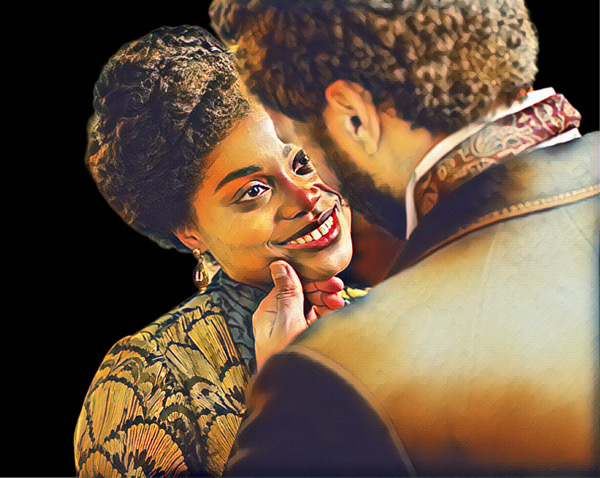
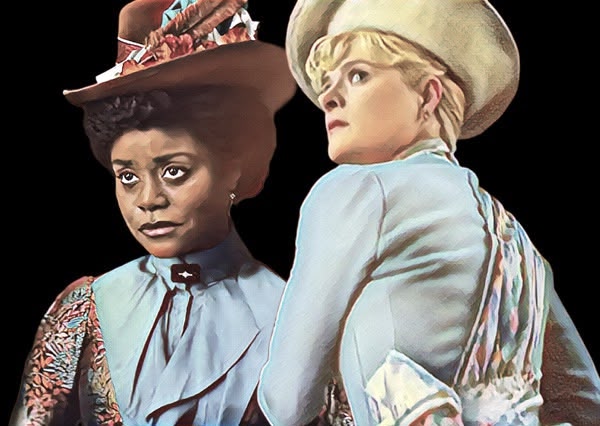
The reaction of Elizabeth Kirkland, William’s mother, is consistent with her circle’s concern for reputation and family alliances. That does not justify her cruelty, but it makes her reasoning understandable. William, meanwhile, knows the story and decides to marry Peggy.
Is his acceptance anachronistic? Not necessarily. A man of that period could recognize an injustice, love a woman and stand up to his family. The difference lies in knowing what he is confronting. William can understand convention and choose to defy it. That awareness is missing when Larry seems to need Marian to explain the danger she has been exposed to.
Work also creates an important tension for Peggy and William. A stable, respectable marriage offered a security that cannot be measured solely by contemporary priorities. But wanting to preserve an intellectual vocation was not a historical impossibility. Black women such as Frances Ellen Watkins Harper and Anna Julia Cooper were already advocating education, writing and participation in public life. For some, that work also carried a sense of responsibility toward their community.
What matters is how Peggy negotiates her aspirations, what she fears losing and how much William is willing to support her. The existence of a powerful social expectation does not mean that every woman accepted it without resistance. The writing needs to give weight to the choice and its consequences.


The fear belongs to the period. Does the refusal?
That brings us back to Marian and Larry. Her suffering has clear precedents in this literature. Her hesitation has a history within the series itself. What strikes me as odd is the move from that fear to rejecting a solution that, in that context, would be expected.
Larry had already expressed his intention to marry her before their night together. Obligation might therefore explain the urgency of his proposal, but not its entire origin. Why would accepting responsibility become evidence that his love is insufficient or untrue?
A nineteenth-century woman could suffer at the thought that a man might marry her solely out of duty. It would be strange to deny that possibility after reading writers so attentive to their characters’ inner lives. But acknowledging the suffering does not resolve the question of her refusal. Marian loves Larry, he says he loves her, and he offers precisely the commitment that would protect their future together.
Under those circumstances, would it not be more understandable for her to accept, even if she had to live with the doubt? Love and obligation could coexist. Accepting the duty to marry would not necessarily contradict the feeling. The idea that the man has found an “excuse to marry” strikes me as misplaced when applied to a responsibility that his world would demand of him.
I am not claiming that no woman could refuse. I am asking whether the series has established sufficient reasons for this woman, faced with this man and their shared history, to do so. Her fear is convincing. Treating the proposal as a reason to remain apart seems much less so.
Larry introduces another difficulty. A young man raised in that environment would know that the risks were unequal and that his intentions, however good, did not in themselves protect Marian. He could act impulsively, but afterward he would understand the need to take responsibility.
What feels strange is seeing him surprised. As though certainty about his own love should be enough to reassure her. That confidence brings him closer to us as contemporary viewers, but distances him from his upbringing. If he intends to challenge convention, we need to recognize that decision. If he simply does not understand it, the writing needs to explain such convenient ignorance.

When rooting for a couple becomes exhaustion
Some viewers may judge Marian without considering the period. It is also possible that the series asks us to remember that period to understand her panic, then forget it to accept the impasse that follows.
That inconsistency helps explain why each selective reading produces a different culprit. She seems indecisive; he seems irresponsible. Fans defend one or the other, but their complaints converge on the feeling that enough is enough. The couple who once inspired anticipation are beginning to inspire impatience.
In its fourth season, while other relationships find their way forward, the romance that seemed to have the fewest obstacles keeps producing reasons to postpone marriage. There is a difference between following two people constrained by convention and feeling that their behavior is being adjusted to keep them apart.
I would like to see Marian and Larry face the problems of a shared life. Marriage would not end conflicts over family, money, work and autonomy. Perhaps it would allow those issues to be explored in greater depth than repeatedly questioning whether they will make it to the altar.
Wharton and James help us understand why Marian is afraid. Peggy and William allow us to discuss different ways of confronting similar expectations. The remaining question is whether The Gilded Age is using this world to deepen its characters or bending its logic to prolong their separation. Because we can spend many episodes debating who is right. Winning back our investment will be harder if we stop caring about the answer.
Descubra mais sobre
Assine para receber nossas notícias mais recentes por e-mail.

