
The Gilded Age is rapidly becoming two shows within one. On one side, we have the battle between the newly wealthy and New York’s old aristocracy, with its balls, marriages, fortunes, and seemingly insurmountable social rules. On the other, a story that is gaining more space and narrative independence with every episode: that of America’s Black elite in the late nineteenth century. Curiously, it is within this second storyline that Julian Fellowes and his writing team seem to be finding something increasingly absent from the first: purpose.
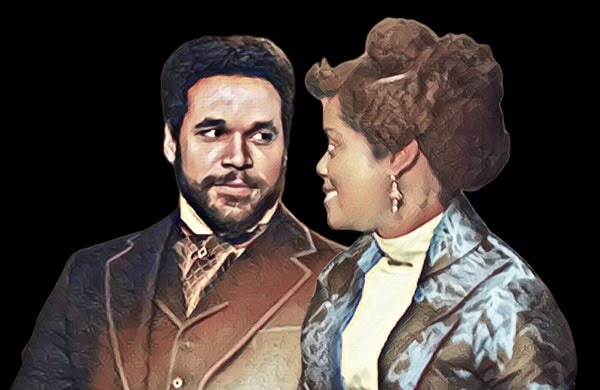
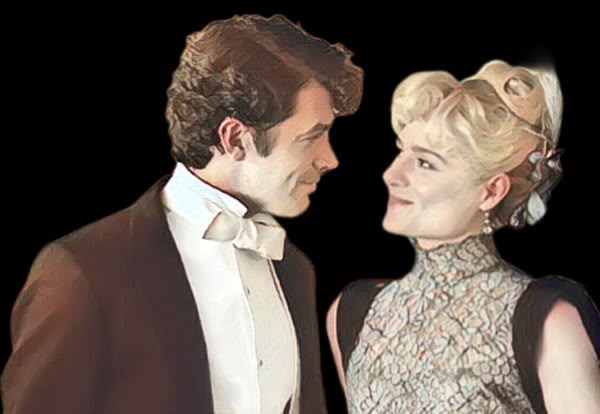
The wedding of Peggy Scott (Denée Benton) and Dr. William Kirkland (Jordan Donica), in the third episode of Season 4, makes this transformation particularly clear. While Marian Brook (Louisa Jacobson) and Larry Russell (Harry Richardson), the couple whose romance has kept fans invested for years, remain trapped in an increasingly unconvincing succession of misunderstandings and indecision, Peggy and William have been given a love story with genuine obstacles, family tensions, class conflicts, and, above all, consequences.
It is almost as though the story we expected Marian and Larry to experience has been handed over to Peggy and William. Except that the latter couple does not need endless misunderstandings to justify its importance.
And perhaps this reversal is doing the series a world of good.
A Black Elite Television Taught Us Not to Know
In an article published in Town & Country, writer and executive producer Sonja Warfield reveals that a significant part of Peggy’s journey was inspired by her own family history. Warfield, who worked closely with Julian Fellowes in developing this world, explains that one of the greatest surprises for viewers is discovering that a Black elite existed in America in the 1880s, less than twenty years after the abolition of slavery.
For her, however, this society was never a revelation.
Raised in an environment familiar with debutante balls, private schools, and rigid social conventions, Warfield immediately recognized the world Fellowes wanted to portray. The two shared an interest in Edith Wharton, Newport, and opera, despite coming from very different backgrounds.
The meeting of these perspectives allowed The Gilded Age to expand its narrative beyond the white families that have traditionally monopolized period dramas set in this era.
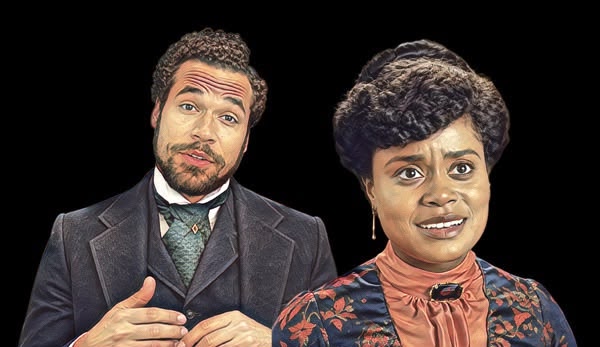
The existence of this Black bourgeoisie does not mean racism had disappeared, much less that emancipation had brought equality of opportunity. It means that, despite discrimination, free Black communities built institutions, accumulated wealth, developed professional networks, and established their own social structures.
Newport, so closely associated with the Vanderbilt mansions and the summer seasons of the white elite, also had an organized Black community long before the Civil War. In 1780, it became home to one of America’s earliest mutual aid societies for free Black people. Over the following decades, schools, churches, and other institutions helped consolidate a community with a history and identity of its own.
What the series is showing us, therefore, is not a contemporary fantasy inserted into the nineteenth century, but a part of American history that has frequently been left off our screens.
The Kirklands and the Russells Have More in Common Than It Seems
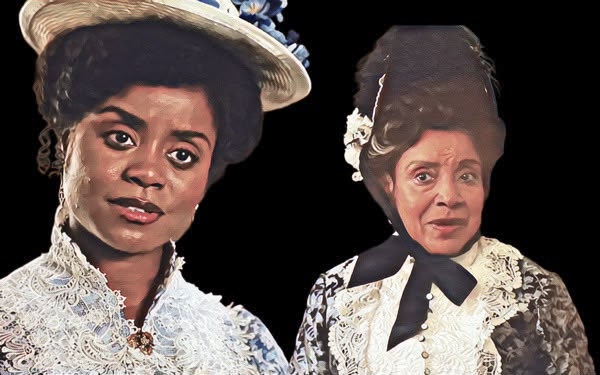
The arrival of the Kirkland family has added a particularly interesting dimension to this historical recovery. Elizabeth Kirkland, played by Phylicia Rashad, is practically a Black counterpart to Agnes van Rhijn (Christine Baranski).
Both women value ancestry, defend tradition, and believe that social prestige depends as much on family history as on present behavior. Both regard change as a threat to an established order they consider legitimate.
Elizabeth takes pride in the fact that her family has been free in Rhode Island for five generations, while looking down on the Scotts, particularly because Peggy’s father was once enslaved. Her rejection also involves colorism, discrimination based on skin tone that creates hierarchies within the Black community itself.
In this world, wealth does not eliminate prejudice, just as social advancement does not guarantee acceptance.
The parallel with the Russells is obvious. George and Bertha have enough money to buy practically anything, yet they continue to face resistance from families that regard their recently acquired fortune as some kind of hereditary defect.
The difference is that, in Peggy’s world, these distinctions also carry the violence of a society built on slavery and racial segregation.
By presenting the Kirklands and the Scotts as families with rivalries of their own, the series allows its Black characters to experience conflicts that do not depend exclusively on their relationships with white characters. They are not there merely to represent the suffering caused by racism. They also love, compete, judge, work, and struggle for power.
That is a significant narrative achievement.
A Wedding That Tells More Than One Story
Peggy and William’s wedding perfectly represents this new direction. Elizabeth’s opposition to the participation of the Fisk Jubilee Singers and, above all, to the tradition of jumping the broom transforms a romantic ceremony into a discussion about identity and memory.
Associated with marriages between enslaved people, who were often denied legally recognized unions, the ritual symbolizes a heritage Elizabeth would rather forget. To her, recalling that past threatens the respectability her family has achieved. To Peggy, erasing it would mean denying a fundamental part of her history.
Warfield acknowledges that the series took some historical liberties by portraying the ceremonial celebration of this tradition in 1885, when its revival as a form of cultural affirmation would gain greater prominence only in the twentieth century.
But the choice also exposes a debate that stretches across generations: does social advancement require abandoning the past, or acknowledging what made that advancement possible?
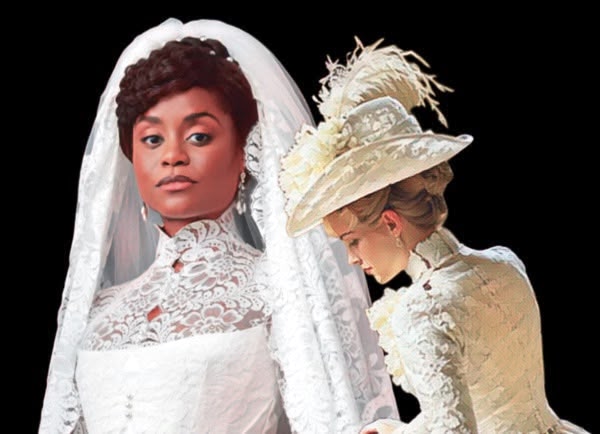
What makes the conflict especially compelling is that Elizabeth is not simply a villain. Her resistance reveals a mindset shaped by generations that had to fight for respect in a hostile society. She believes she is protecting her son and her family’s reputation, even as that protection reproduces prejudice.
Peggy, meanwhile, does not have to surrender her identity to gain acceptance. And William demonstrates that his choice is not merely romantic. He is willing to stand up to his own mother and defend the woman with whom he has decided to build a life.
They talk, disagree, establish boundaries, and make decisions.
What a difference from Marian and Larry.
Marian and Larry: The Romance That Lost Its Own Story
For three seasons, we watched Marian and Larry grow closer, their relationship becoming one of the show’s great romantic promises. There was chemistry, family opposition, and a difference in social standing that, within the conventions of the period, could have generated fascinating conflicts.
Marian belongs to a traditional family whose financial circumstances no longer match the prestige of its name. Larry is heir to an extraordinary fortune, but he still belongs to a family that had to fight for its place in New York society.
There was an excellent story waiting to be told.
Instead, their relationship has gradually been reduced to hesitation, mistaken interpretations, and behavior that does not always seem consistent with either the characters or the period in which they live.
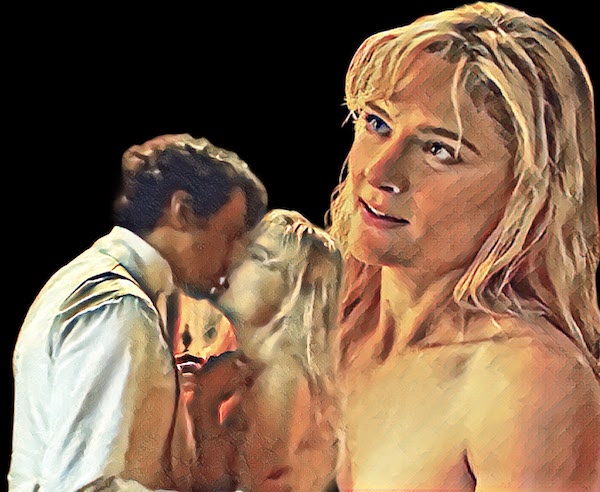
Marian, in particular, has begun acting so inconsistently that her decisions threaten to undermine the character herself. Larry, meanwhile, appears to have lost much of his initiative. The intelligent young man interested in architecture, willing to challenge his parents when he believed in something, has become a relatively passive participant in his own love story.
It is hardly surprising that some fans are growing tired. A romance can survive separation, family opposition, and even tragedy. What it can rarely survive for very long is a complete lack of development.
Marian Brook on the Therapist Couch: Why Does Love Repeat Abandonment?
Meanwhile, Peggy and William have faced opposition, negotiated their differences, and made it to the altar without that wedding signaling the end of their narrative possibilities. Quite the opposite: their marriage opens the door to new discussions about family, careers, marriage, and female independence.
Marian and Larry, who were supposed to be living one of the show’s great romances, remain adrift.
Two Shows, One Opportunity
It is important to acknowledge that the white social world of The Gilded Age continues to produce compelling stories. The rivalry between Agnes and Bertha, now reignited by the battle over the presidential dinner, demonstrates how social conventions can be wielded as instruments of power. George Russell faces financial, political, and personal challenges, while characters such as Jack are beginning to experience the tangible consequences of social mobility.
But the expansion of Peggy’s storyline allows the series to attempt something even more ambitious: reconsidering what historical fiction has taught us to regard as the only possible story of nineteenth-century America.
There is particular value in the way Warfield draws on her own family experiences to develop these characters. Her grandmothers’ concerns about spending too much time in the sun helped inspire the storyline about colorism. A family warning about the dangers of traveling to the segregated South informed Dorothy’s fears when Peggy traveled to Alabama.
These are personal memories helping to fill the gaps in collective memory.
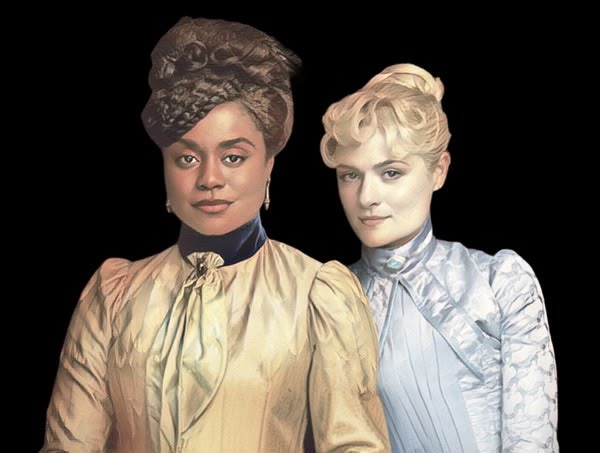
There is an irony in all this. For decades, stories about the Black elite were ignored precisely because they did not fit the image Hollywood preferred to construct of America’s past. Now, when they are given room in one of television’s most lavish period dramas, they reveal a society every bit as complex, hierarchical, and contradictory as that of the Astors and Vanderbilts.
The difference is that we are not simply watching who has more money, who manages to enter a particular drawing room, or who will be invited to the next dinner. We are discovering characters who negotiate their place in society while deciding which parts of their history they wish to preserve.
Sonja Warfield hopes that future generations will no longer regard characters like Peggy Scott as rarities in period dramas. It is a reasonable aspiration, especially because the series demonstrates that the absence of these stories never meant they did not exist.
Perhaps The Gilded Age is accomplishing something greater than chronicling the conflicts of American high society. By allowing two social worlds to coexist, intersect, and reveal their differences, it is challenging the way we have learned to recognize who belonged in History.
And there is something deeply revealing about the fact that the character who began her journey helping Marian Brook find her place in New York now has a far more clearly defined life than her friend.
Marian is still searching for her destiny. Peggy is building hers.
If The Gilded Age can balance these two stories without sacrificing the quality of either, it may achieve a relevance that extends far beyond costumes, ballrooms, and family rivalries. Because retelling History also means restoring the spotlight to those who were part of it all along, but were rarely given the right to tell their own stories.
Descubra mais sobre
Assine para receber nossas notícias mais recentes por e-mail.


1 comentário Adicione o seu