
From its debut on Netflix exactly ten years ago, in 2016, to its sixth and final season released in 2023, The Crown accumulated awards, prestige, and enormous popularity, including among those who do not closely follow the British Royal Family. By proposing to cover different decades of Elizabeth II’s reign, the series never intended to be a definitive documentary about the Windsors, but rather a historical drama guided by perspective and emotional construction. Still, over six seasons, it consolidated itself as the primary cultural reference for that reign for an entire generation, which makes the question increasingly unavoidable: how was Prince Andrew portrayed and, above all, what was left out?
The answer lies directly in Peter Morgan’s narrative logic. He chose to prioritize the direct line of succession as the central axis of the drama. The Queen, then Charles, then William. The throne as the gravitational center of the story. Those not immediately connected to the inheritance of the Crown orbited in the background, regardless of the public magnitude of their scandals. (Except for Diana, who, as the mother of the future King, was included).
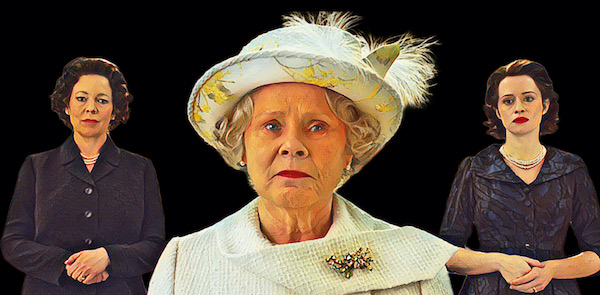
This structural choice allowed the series to move through delicate territory without confronting it head-on. By concentrating the drama on the direct heirs, Morgan found a narrative justification for keeping lateral crises outside the main focus. In doing so, he managed to sidestep, even amid strong criticism, both Megxit, Prince Harry’s departure from royal duties after marrying Meghan Markle, and a problem that was already real and growing at the time: the crisis surrounding Andrew Mountbatten-Windsor, who today no longer formally holds an active role within the monarchy.
How Andrew Appears in The Crown
Andrew appears primarily in seasons three and four, still young, framed as the Queen’s favored son, confident, impulsive, and protected by his position as the second son. The contrast with Charles is deliberate. While the heir is portrayed as pressured, insecure, and alienated within his own family, Andrew seems comfortable within the hierarchy, benefiting from not carrying the institutional weight of the firstborn. There are suggestions of arrogance and a certain carelessness in his treatment of staff, but overall, the series does not construct a truly critical portrait.
His marriage to Sarah Ferguson, known as Fergie, is treated with lightness and even a degree of freshness. The series suggests modernity and spontaneity, presenting the couple as more accessible and informal than the rigid axis formed by Charles and Diana. There are hints of immaturity, difficulty adapting to protocol, and discomfort with media exposure, yet the dominant tone is one of social inadequacy rather than institutional crisis.
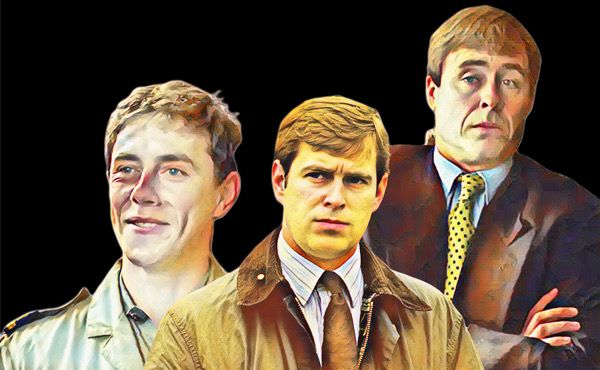
The divorce appears almost as an administrative procedure, without the dramatic depth dedicated to the collapse of Charles and Diana’s marriage. There is no consistent dive into the public erosion of the couple’s image, nor into the symbolic weight of yet another royal marriage failing during the particularly devastating decade of the 1990s.
Even more significant is what does not appear. The series ignores the scandals that already surrounded Andrew and Fergie during that period, especially those that directly damaged her reputation in the British press. For those who followed events at the time, the absence is striking. Many viewers may have accepted it in favor of narrative cohesion, but ten years later, as the series has come to function as a historical reference point for a global audience, that simplification ceases to be merely a debatable dramatic choice and begins to contribute to an incomplete memory of events.
What Was Left Out of the Narrative
The 1974 kidnapping attempt on Princess Anne, an episode with enormous dramatic and political potential, was simply never dramatized. The historical fact exists, but it does not form part of the visual memory constructed by the series.
Prince Edward’s trajectory, including his early aspirations to work in theater and television before assuming royal duties, also did not receive substantial exploration, despite representing a compelling tension between personal vocation and dynastic obligation. Sophie Rhys-Jones’ entrance into his life was portrayed functionally, as a sign of stability, without deep psychological or narrative development.
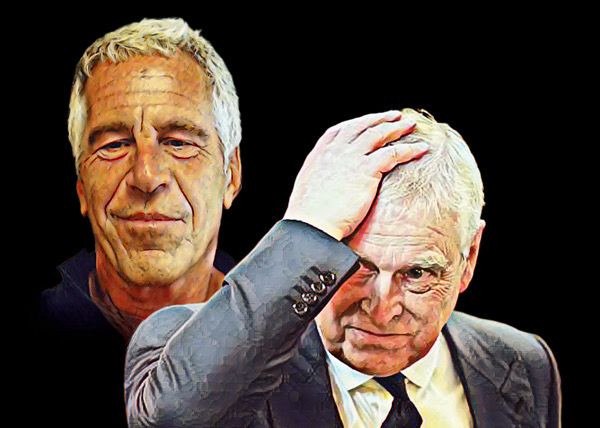

The most sensitive chapter, however, remains entirely outside the final frame of the production. Andrew’s connections to Jeffrey Epstein and Ghislaine Maxwell, his disastrous BBC interview, the settlement with Virginia Giuffre, and his subsequent withdrawal from public duties were not dramatized. The series concludes before entering the most corrosive phase of the crisis, the one that effectively called into question not only a family member but the moral credibility of the institution itself.
Other films and miniseries, including productions within Netflix itself such as Scoop, have addressed this chapter directly, demonstrating that the dramatic material exists and engages audiences. The Crown, however, chose to conclude its trajectory before touching the subject.
This decision can be defended as a chronological matter and as coherence with the succession-centered framework established from the beginning. Even so, the effect is unmistakable. The most significant recent moral scandal involving the British monarchy does not form part of the audiovisual mythology built by the series that most shaped global perceptions of the Windsors over the past decade.
Hence the irony of reports suggesting that the platform might eventually revisit the universe of the production with new episodes or spin-offs. Should that occur, the story would inevitably be more current, more uncomfortable, and perhaps less protected by the elegant argument of historical distance.
Peter Morgan’s Argument and Structural Shielding
Peter Morgan has consistently maintained that he works with emotional truth rather than exhaustive journalistic reconstruction. By structuring the series around succession, he built a solid narrative argument for keeping lateral crises outside the main focus. The story follows those closest to the throne because that is where the conflict between individual and institution acquires tragic magnitude. The weight of the Crown falls on the heir, and that is where the drama intensifies.
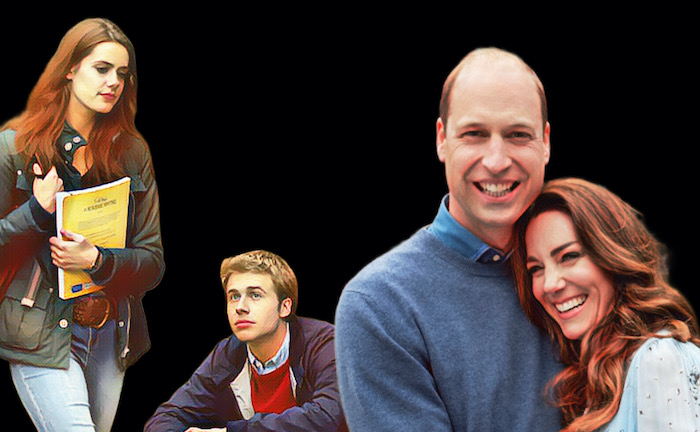
In multiple interviews, Morgan has also defended the need for historical distance in order to contextualize and assess events. Going back more than four decades to portray a young Elizabeth II is narratively distinct from dramatizing events that are still unfolding. This reasoning helps explain why even Prince William’s wedding was not depicted. The series concludes by showing only the beginning of his relationship with Kate Middleton, as if acknowledging a boundary between consolidated history and a present still in formation.
The problem is that this same logic also functions as shielding. By not dramatizing the Andrew and Epstein scandal, the series avoids directly confronting the most disturbing dimension of the contemporary monarchy. By not deeply exploring Andrew and Fergie’s deterioration in the 1990s, it softens earlier signs of instability that were already running through the dynasty long before the most recent crisis.
This is not an accusation of deliberate omission, but rather an acknowledgment that every narrative choice constructs selective memory. When a work achieves global impact and becomes a historical reference for millions of viewers, what it chooses not to show also shapes collective perception.
Is There Pressure for The Crown to “Tell the Story as It Is”?
The criticism exists, but not in the form of a popular scandal comparable to the reactions surrounding Charles and Diana. Some sectors of the British press and cultural analysts have questioned why the production avoided the most explosive arc involving Andrew, especially after the issue dominated international headlines.
At the same time, there are those who argue that the series never promised to be a complete inventory of the Windsor family. It chose its focus and followed it to the end. The debate, therefore, is not only about Andrew, but about the limits between historical fiction and cultural responsibility.

As speculation grows about possible returns or derivative productions that could address later periods, the question resurfaces: to what extent was The Crown bold, and to what extent was it institutionally comfortable?
Perhaps the answer lies less in what the series dramatized and more in what passed intact through its six seasons. By privileging the direct line of succession, Peter Morgan constructed a cohesive and sophisticated narrative. In doing so, he also left contaminated zones outside the frame.
And in television, what remains outside the frame can be just as revealing as what occupies the center of the scene.
Descubra mais sobre
Assine para receber nossas notícias mais recentes por e-mail.


1 comentário Adicione o seu