
There is a quiet trap in every work that approaches reality wearing the makeup of fiction. It may begin as homage, as aesthetic curiosity, as something “loosely inspired by true events,” but for many people it ends as a verdict. The recent outrage from relatives of John F. Kennedy Jr. over the way his life has been dramatized by Ryan Murphy is simply the latest chapter in an old conflict: who has the right to narrate a life that is not their own?
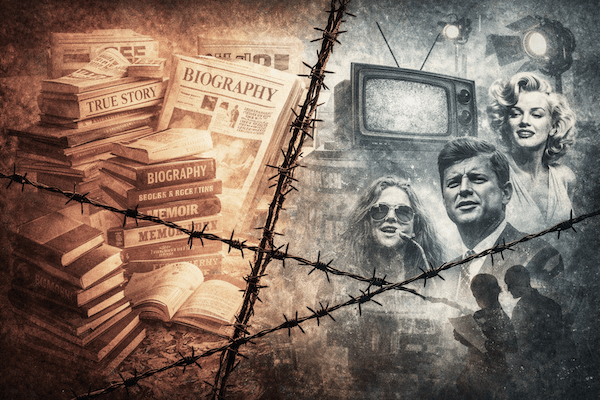
There are compelling arguments on both sides: one maintains that distance allows for objectivity and critical perspective, while the other argues that this same distance prevents true contextualization of events. When an audiovisual production chooses to revisit public figures, the process is, in theory, supported by research, interviews, documents, and historical reconstruction. Yet one essential element is missing: the subjectivity of the biographical subject. What existed in intimacy, what remained an unresolved contradiction, what was doubt rather than certainty, disappears. In its place, the subjectivity of the screenwriter and director takes hold. They observe public moments, speeches, photographs, scandals, silences, and from these fragments imagine motivations and private realities.
This is where the trap lies.
Drama cannot tolerate gaps. It must explain. If there is no record of a private conversation, it creates one. If there is no access to an intimate motivation, it implies one. The audience — particularly younger viewers — rarely distinguishes inference from fact. Impeccable production design and historical realism build a sense of documentation. Fiction begins to function as an official version.
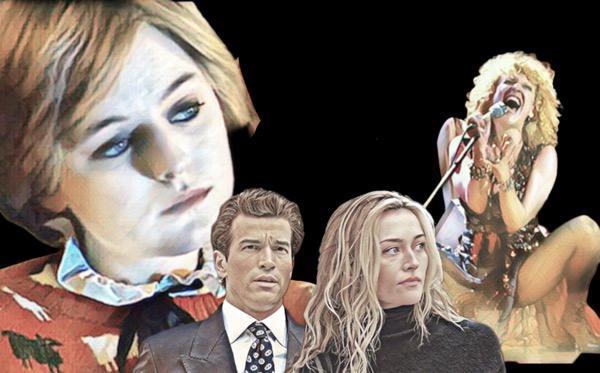
If we want to observe this tension on a larger scale, we need only look at Peter Morgan’s work on The Crown. The series began protected by historical distance. Revisiting the youth of Queen Elizabeth II, it allowed an entire generation to “discover” her humanity. The dramatization contextualized her choices, invited empathy, even admiration. The long-running conflict between Charles and Camilla was reframed with nuance, encouraging audiences to reconsider old judgments.
But when Diana entered the narrative, the dynamic shifted. The historical distance narrowed. The collective memory was still raw. The reception changed. Tolerance shrank. The same fiction that had felt like careful excavation began to feel like intervention. Morgan concluded the series before reaching the open drama between William and Harry, maintaining a narrative buffer. Yet rumors persist about the possibility of revisiting the story, perhaps even touching more directly on Prince Andrew, whose presence in earlier seasons was minimized, long before his controversies became institutionally destabilizing.
The reaction, then, is not static. It evolves according to proximity. The closer fiction moves toward living memory, the more it feels like an intrusion rather than an interpretation.
It was this concern that made The Rose, the movie starring Bette Midler and inspired by the life of Janis Joplin, stand out. For many years, Janis’s family refused to authorize a traditional official biography precisely because they disagreed with how her life was often reduced to the archetype of the self-destructive artist. The Rose is not Janis, but it is recognizable enough to shape the public memory of her.
The case of John F. Kennedy Jr. and Carolyn Bessette introduces a different, but equally delicate layer. Both are deceased. Their story has a beginning, middle, and end. Death closes the factual timeline. But it does not close interpretation. Carolyn never granted extensive interviews that revealed her inner world. Those who remain alive largely choose silence. And silence creates a gray zone.
Fiction does not tolerate emptiness. It fills it.
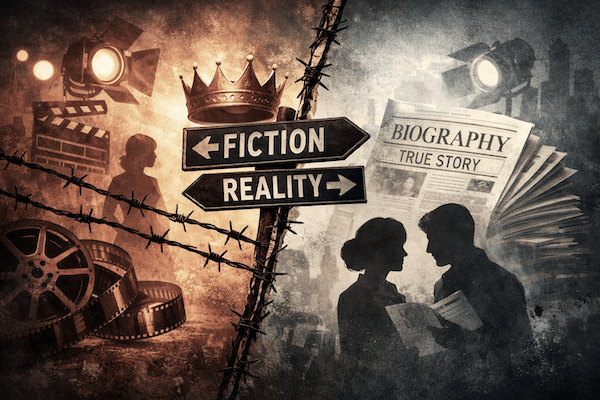
When the protagonists are no longer here to confirm, correct, or contradict, dramatization acquires greater power. The absence of testimony becomes narrative space. And in that space, imagination can begin to resemble authority. Families may react out of denial, loyalty, or a desire to protect the legacy. But they may also be reacting to something more fundamental: the realization that once a life is transformed into a series, it no longer belongs solely to those who lived it.
Legally, defamation requires the false attribution of a crime or damaging fact. Culturally, the boundary is more elusive. A work may not be legally defamatory and still be ethically irresponsible. It may not fabricate events outright, yet still arrange them in a way that implies motives that cannot be proven. The difference between artistic freedom and distortion often lies not in the facts themselves, but in the framing, in what is emphasized, simplified, dramatized.
There is also an economic dimension that cannot be ignored. Telling other people’s stories is an industry. There is symbolic and financial capital in transforming real lives into narrative products. The storyteller gains visibility and authority. The subject loses control. The family often realizes this only after the dramatized version has already solidified into collective memory.
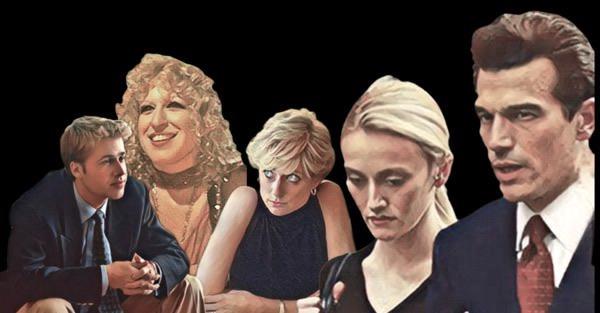
Love Story, though fictional, helps explain the phenomenon. It never presented itself as a biography, yet it was absorbed as a universal emotional truth. The audience does not merely believe the story; it internalizes it as a model. When this narrative power approaches real lives, the absorption becomes even more intense. Convincing emotion begins to function as proof.
Perhaps the most mature position in this debate is to accept that every dramatization based on real events is interpretation, never documentation. Poetic license is part of art. But freedom is not an unlimited license to fill gaps with any hypothesis that produces impact. The difference between responsible imagination and sensationalist exploitation lies in intention, complexity, and care.
In the end, what is at stake is not only the reputation of public figures such as John F. Kennedy Jr., nor the creative right of Ryan Murphy. It is something larger: our capacity to distinguish fiction from historical record. As long as we confuse plausibility with truth, we will continue to surrender collective memory to those who narrate most persuasively, not to those who actually lived it.
Descubra mais sobre
Assine para receber nossas notícias mais recentes por e-mail.


1 comentário Adicione o seu