
After watching Michael in its “sanitized” version, I immediately thought of how other legends have gone through similar processes—albeit by different means—of dispute over their own memory. And, almost ironically, what “remained” from that impossibility was a great film.
It is impossible to escape the pun: The Rose, to me, is a pearl. And it is deeply revealing that it began as a film that could not be made. Before becoming the fictional portrait of Mary Rose Foster, the project was a direct biopic of Janis Joplin, still very close in time to her death, less than ten years later. The original title, Pearl, left little room for doubt; after all, it was the name of the singer’s final album.

At that moment, however, turning Janis into a narrative was still impossible. Her memory was not organized, nor stabilized enough to fit into a definitive portrait. Unlike Michael, where there is a clear attempt to control and preserve an image, the impasse here was different: there was not yet a consensual version to be told.
And perhaps that is precisely why The Rose works so well. By abandoning the obligation of fidelity, the film finds something closer to emotional truth. Fiction, in this case, does not soften—on the contrary, it exposes. It allows access to the exhaustion, contradiction, and self-destruction of an artist on stage without the need to protect a contested legacy.
What could not be made as a biography ultimately became more revealing as an invention. And, in this shift, The Rose may say more about Janis Joplin than a film bearing her name could ever have managed to say at that moment.
Why Janis Joplin’s family blocked the film
The family’s refusal to grant the rights was not merely a contractual issue. There was a clear concern about how the singer was being publicly portrayed. Even then, her image was beginning to crystallize as that of a self-destructive artist, marked by excess, substance abuse, and a life out of control.
By preventing the official biopic, the family also prevented Hollywood from organizing that trajectory into a predictable dramatic arc. The solution found by the producers was to turn the project into fiction, creating Mary Rose Foster. The change did not erase the obvious inspiration, but it allowed the film to exist without the obligation of being faithful to specific facts, ultimately expanding its strength as a character study.
How the project changed direction
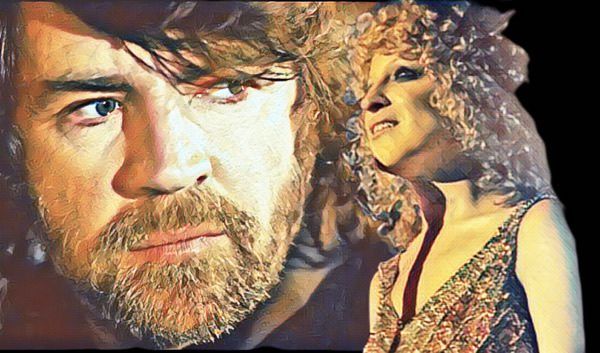
The film that reached the screen could have been very different. The project was initially offered to Ken Russell, known for his excessive, operatic visual style. His refusal opened the way for Mark Rydell, whose approach is more restrained, less interested in spectacle, and more focused on behavior.
This shift profoundly alters the final result. Instead of a stylized biopic, The Rose becomes a drama that observes the emotional deterioration of its protagonist. The absence of a grand aesthetic shifts the weight of the film toward performance and toward the sense of exhaustion that runs through the entire narrative.
How Bette Midler got the role
The casting of Bette Midler is central to understanding the film’s impact. The role was not originally conceived for her, but came through a recommendation after Suzy Williams turned it down. At the time, Midler was known for her stage performances, with an intense presence not yet shaped by cinema.
That lack of traditional cinematic framing becomes a strength. Her Mary Rose Foster is not a controlled construction, but a presence in constant tension. There is a sense of risk in every scene, as if the character might escape the film itself. Rather than smoothing out that instability, the direction incorporates it as a central element.
Who Suzy Williams was and why she matters to The Rose
It is worth pausing here to understand how Bette Midler became the star she still is today because of a name that no longer carries the same international weight.
Suzy Williams is not a name that has endured across decades with the same impact as other figures from the 1960s and 1970s music scene, and perhaps that is precisely why her presence at the origin of The Rose is so intriguing. She belongs to a group of artists who existed far more intensely within the music circuit than within the consolidated memory of pop culture.
An American singer, Williams built her career mainly within the rock and soul scene of the late 1960s, circulating in environments very close to those that shaped figures like Janis Joplin. She was not a star of the same magnitude, but she shared that universe of bands, tours, and live performances in which vocal intensity and stage presence were central. Above all, she was a performer with credibility within that milieu, someone who understood through lived experience the kind of character The Rose sought to construct.
That is precisely why she emerged as the first choice for the role of Mary Rose Foster. At that moment, casting a singer with real experience in that circuit made perfect sense, especially for a project that still carried the initial intention of being a Janis biopic. Williams would bring not only technique, but authenticity.
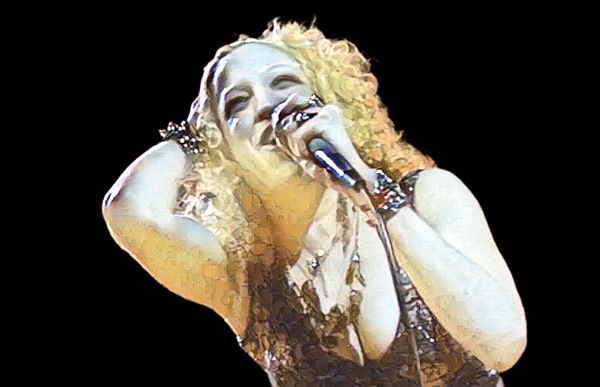
She turned it down for personal reasons, and her career did not follow a path of major cinematic projection or mainstream musical recognition. But what followed is what ultimately inscribes her—albeit indirectly—into the film’s history: she was the one who suggested Bette Midler for the role.
That detail changes everything.
Because Midler did not come from the same place. Her background was different, more tied to cabaret, theatrical performance, and a highly self-aware construction of persona. Where Williams would have represented continuity and verisimilitude, Midler brought interpretation and intensity. And in doing so, she shifted the film from a more naturalistic register to something more performative, more unstable, more unpredictable.
There is a quiet irony in all of this. The actress who could have given the film a closer proximity to reality ended up being the one who pointed to the performer who would transform it into something else—less faithful, perhaps, but far more striking.
Suzy Williams did not get the role. But in a way, she is still in the film.
The shoot and its almost documentary energy
One of the production’s most important decisions was to film the concert scenes with real audiences, creating an energy that is difficult to reproduce in a studio. The result brings the film closer to an almost documentary register, especially in the musical sequences, which function less as staging and more as the capture of a moment.

Vilmos Zsigmond’s cinematography reinforces this feeling by building images with a warm, unstable texture, as if everything were on the verge of collapse. The intention was to expose the character, not protect her, creating a visual environment that mirrors her emotional deterioration.
The soundtrack and the success of “The Rose.”
The soundtrack expands the film’s reach in a decisive way. Rather than relying on any of Janis’s immortalized hits, the film builds its own musical identity, including the title song.
The Rose, written by Amanda McBroom, was not originally composed for the project, which prevented it from competing at the Oscars, but it ultimately became inseparable from it.
Performed by Midler over the closing credits, the song offers a delicate counterpoint to the narrative, functioning almost as an emotional response to what has been seen. Its success was immediate, becoming one of the biggest hits of Midler’s career and solidifying the film’s cultural impact beyond cinema.
Oscars, nominations, and the loss to Norma Rae
The Rose received four Academy Award nominations, including Best Actress for Midler and Best Supporting Actor for Frederic Forrest.
Sally Field’s win for Norma Rae follows the Academy’s logic, which tends to favor more structured narratives and performances tied to clearly defined social themes. Midler’s work, on the other hand, is less organized, more instinctive, and marked by contradictions, making it less easily framed within that pattern. To me, one of the great injustices of the awards.
Revisiting The Rose today, in the era of music biopics
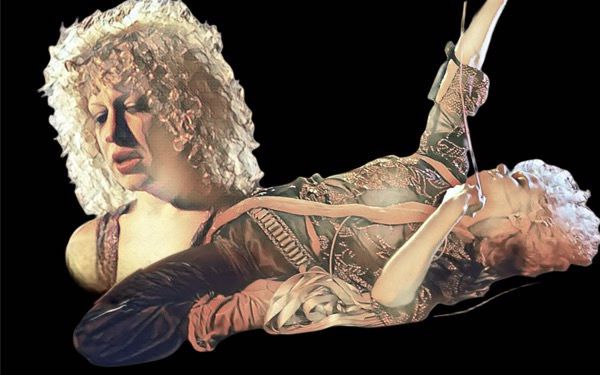
Revisiting The Rose today, after decades in which music biopics have become a consolidated genre, produces an interesting shift. The film does not follow the structure that now seems almost mandatory, with carefully organized arcs of rise, fall, and redemption.
Instead, it refuses to fully explain its protagonist. There is no attempt to turn Mary Rose Foster into a symbol or example. What exists is a continuous observation of a character in decline, without the need to justify or redeem her.
At a moment when cinema often organizes the past into clean and recognizable narratives, The Rose remains a more unstable portrait—and precisely for that reason, one that feels closer to what these stories so often try to simplify.
Perhaps that is why, decades later, Hollywood still returns to this impasse. Since 2021, a new version of The Rose, with Cynthia Erivo, has remained in development—as if this story, even at a distance, still resists a definitive form.
Descubra mais sobre
Assine para receber nossas notícias mais recentes por e-mail.

