
I’m opening this week’s Hacks recap with a bit of a mea culpa. I know I’ve sounded like a broken record complaining about how the recent seasons have felt stretched thin, even if Jean Smart’s indescribable talent manages to carry any perceived flaw. But when the show delivers something like episode four of season five, we are reminded of what Hacks does best: the journey of a complex, unapologetic woman. A character that Smart brings to life while excavating deeper emotional layers, turning Deborah into something truly legendary. Readers, Who’s Making Dinner is the Emmy episode of Hacks’ farewell season, and Jean Smart is once again firmly in the conversation for Best Actress.
The episode takes Deborah to the Paley Center for the 50th anniversary of Who’s Making Dinner?, the sitcom she created alongside her ex-husband Frank. She clearly wants nothing to do with the central trauma surrounding it — the end of their marriage after Frank cheated on her with her sister — but with Madison Square Garden as the ultimate goal, she is once again forced to reconsider that discomfort through a new lens.
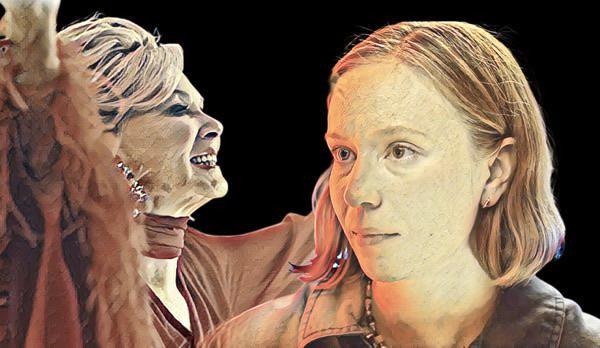
The fact that she is still legally barred from speaking publicly might seem like an advantage. She will be present, but she won’t have to say anything. The downside is that she moves through the event as a silent figure, revisiting through flashbacks and physical objects the construction of a show that defined her career while simultaneously erasing her place within it.
While her partnership with Deborah is now established, Ava continues trying to get her own project off the ground. The script that had been under consideration by a network is praised, but ultimately rejected. The scene is genuinely funny because it captures both sides of the industry. The executive — a figure often ridiculed by showrunners — carefully explains the reasons for passing while outlining exactly what they are looking for: a very specific combination of audience targeting, inclusion, algorithms, and originality. If you’re someone who dreams of working in TV or streaming, memorize this scene. It is far more accurate than the humor might suggest.
This pushes Ava to search for a viable idea while navigating an industry that claims to want originality but consistently favors established intellectual property.
The scene and the symptom
The episode revolves around a subtle but crucial shift. Deborah is not simply revisiting the past; she is trying to reorganize how that past has been recorded. There is a meaningful difference between remembering and rewriting, and Hacks operates precisely in that space.
Her relationship with Frank carries most of that weight. For decades, Deborah has sustained the narrative that she was sidelined, overlooked, and underestimated. She was the star of the show, and we see that she was also responsible for the comedic voice that made it iconic. Yet Frank was the showrunner, the one who received the awards, the credits, and ultimately the legacy.
Because that wound never fully closed, her impulsiveness resurfaces. Even though she is not supposed to speak publicly — the event is being livestreamed — Deborah decides to introduce the clip anyway, using the moment to voice the truths she has held onto for years. None of the jokes land. She comes across as bitter and out of place.
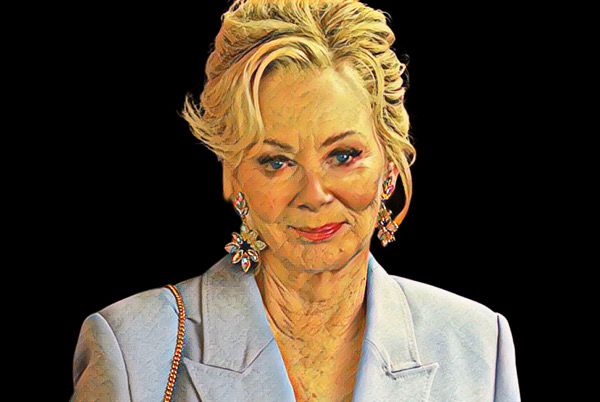
And then comes the moment that feels like an inevitable Emmy submission. Deborah steps away to avoid watching an unreleased interview with Frank, recorded before his death. To her surprise, he openly acknowledges her as the driving force behind the show’s success. But this long-awaited recognition does not function as a repair. It disarms her.
The praise arrives too late to fulfill the role Deborah needed it to play. Instead of liberating her, it exposes something deeper: her continued dependence on that specific validation. She condemns herself for still needing Frank’s approval after more than half a century, for still carrying the pain of betrayal, for not having moved past it. It is emotionally devastating.
When resentment takes up all the space
The episode also directly confronts the relationship between pain and comedy. Deborah leans into material fueled by resentment, holding onto the idea that making people uncomfortable is enough. It isn’t.
Ava serves as a structural anchor here. She understands Deborah in a way few others do and reminds her of something fundamental. Comedy, first and foremost, has to make people laugh. She is not diminishing Deborah’s experience; she is reestablishing a principle Deborah herself has lost sight of.
When resentment takes up all the space, comedy loses its language. And without language, there is no connection.

A return to instinct
Two key developments unfold toward the end of the episode. Ava realizes that a reboot of Who’s Making Dinner? is the direction she wants to pursue, though she has yet to bring it to Deborah. At the same time, after leaving the event, Deborah is arrested for violating her legal restriction, and Ava has to handle her bail.
It is outside of that controlled environment that something begins to shift. In jail, stripped of any image management, Deborah reconnects with her instinct. The humor returns not as strategy, but as reflex. She is sharp, immediate, and once again able to engage an audience.
The issue was never that Deborah lost her ability to make people laugh. The issue was the constant interference with everything she was trying to resolve while performing. When that disappears, even temporarily, what remains is the comedian she has always been.
She walks out determined, now with new material for her Madison Square Garden set.
Who gets the credit
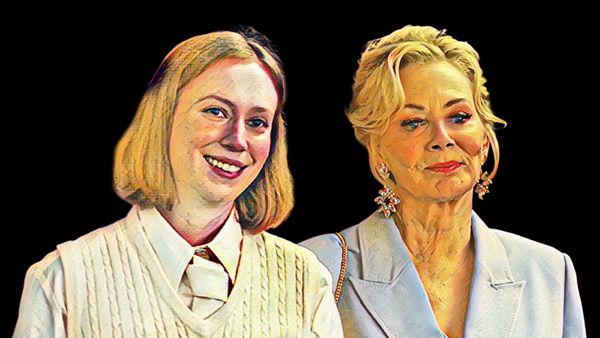
By revisiting Who’s Making Dinner?, Hacks is not indulging in nostalgia. It is reorganizing the season’s core. The past stops being a reference point and becomes something that must be repositioned for the future to exist.
Ava understands this before Deborah does, recognizing the potential not for repetition, but for reinvention. The reboot emerges less as a creative pitch and more as a synthesis of the season’s thesis: legacy is not preservation, it is transformation.
Instead of offering closure, Hacks places Deborah in a more unstable but also more honest position. A place where making people laugh is no longer automatic, but necessary. And there are still many challenges ahead.
Descubra mais sobre
Assine para receber nossas notícias mais recentes por e-mail.

