
Fans of television have always loved speculating about what is really happening inside a mystery series or trying to predict where a story might be heading. With social media, that obsession has practically become a sport — or even a profession, if YouTube is any indication. And ever since Lost, whenever a sci-fi, fantasy, or horror series truly captures the audience’s imagination, entering that cycle of theories and collective investigation almost becomes inevitable.
Of course, the excellent Widow’s Bay, which somehow also manages to be genuinely funny amid all its supernatural chaos, has become one of the most discussed shows of the moment. And looking at everything the series has revealed so far, one theory seems to be dominating online discussions: maybe the island is not simply haunted. Maybe it is alive.
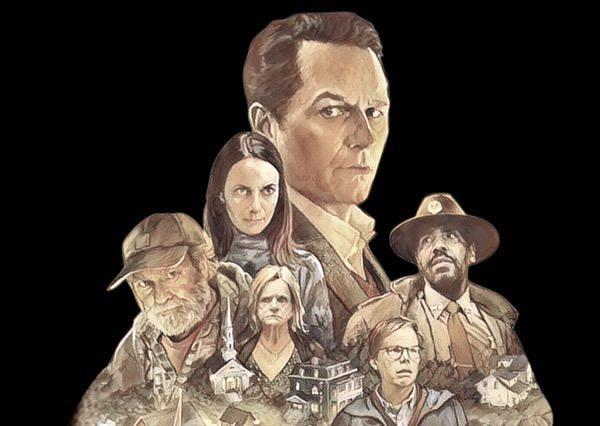
I think that possibility is exactly what transforms the Apple TV production into one of the most fascinating horror experiences of the year. Up to this point, the series has carefully built a very intelligent balance between classic supernatural horror, psychological trauma, and collective paranoia. The black mold, the psychedelic mushrooms, the induced visions, the shared delusions, and the gradual mental deterioration of the residents constantly offer viewers a rational explanation for everything that is happening. The problem is that the narrative itself keeps sabotaging that logic.
The church bell rings on its own. The fog affects dozens of people simultaneously. Physical wounds remain even after the supposed “hallucinations” end. More importantly, there is clearly something operating within that town in a way that feels far too organized to be dismissed as collective hysteria.
The revelation of the underground structures hidden beneath Widow’s Bay may be the biggest clue of all. Not only because an entire buried settlement exists underneath the present-day town, but because the series repeatedly emphasizes the fungal roots connecting nearly every structure on the island, almost as if they function like a subterranean nervous system.
And that is where the show begins, flirting with a much more disturbing idea: the possibility of an organism.
If those roots truly connect the houses, the tunnels, the church bell, and the ancient sacrificial altars, then Widow’s Bay stops being merely a cursed location. It becomes something biological, spiritual, and historical all at once — a creature built upon collective guilt.
The ritualistic cannibalism of 1846 feels central to that interpretation. The series repeatedly insists that the original colonists did not simply survive the brutal winter; they consumed their own dead to remain alive. Maybe that is where everything truly began. Not with an external curse cast upon the town, but with a kind of moral infection contaminating the island at its foundation.
Widow’s Bay may have evolved into a collective body sustained by trauma, flesh, memory and repetition.
That interpretation completely changes the meaning of the Sea Hag. Perhaps she is not an isolated creature at all, but merely a physical manifestation of the island defending itself. A monstrous immune response emerges whenever the pact is threatened. The fact that she explodes into mud and seawater when Wyck attacks her feels too deliberate to be just another grotesque body-horror visual. The creature does not bleed like a human being. She dissolves back into the environment itself, as though she is made from the same organic material as the island.
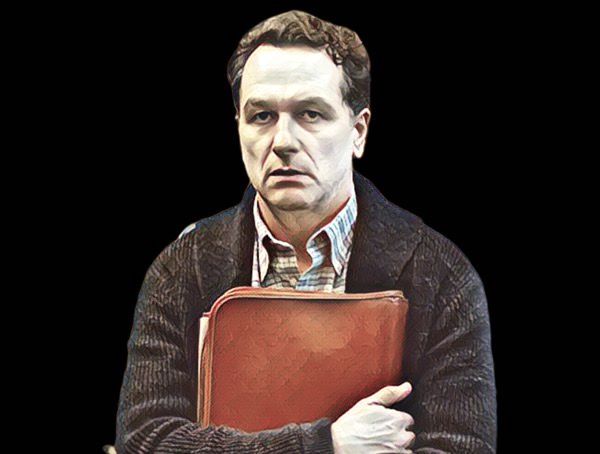
The same idea applies to the Boogeyman. Maybe it does not exist as a fixed entity either. Maybe Widow’s Bay turns fear into physical matter. That would explain why the monsters seem to adapt themselves to each character’s emotional vulnerabilities. Patricia sees social acceptance and validation. Bryce sees “the truth.” Tom relives the trauma surrounding Laura’s death. Evan appears to be drawn specifically toward fantasies of escape and freedom.
And Evan may ultimately be at the center of the entire story.
The theory that people born on the island die if they attempt to leave completely changes the role of Mayor Tom Loftis. It transforms Widow’s Bay into both a biological and emotional prison. Tom probably knows that already. His obsession with tourism may never have been purely financial. Perhaps he is desperately trying to bring the modern world to Evan because he understands that Evan may never truly be able to leave the island himself.
That possibility makes Tom far more tragic than he initially appeared. He is not trying to save Widow’s Bay. He is trying to prevent his son from discovering the truth.
Reverend Bryce’s death also takes on an entirely different meaning under this interpretation. “My eye is open” stops sounding like a simple supernatural revelation and begins to resemble a complete psychological rupture. The Truesight mushrooms may not create visions at all. They may remove the illusions necessary for the residents’ psychological survival. Bryce may have finally seen Widow’s Bay for what it truly is: a town literally constructed upon corpses, collective guilt, and a subterranean entity sustained by generations of sacrifice.
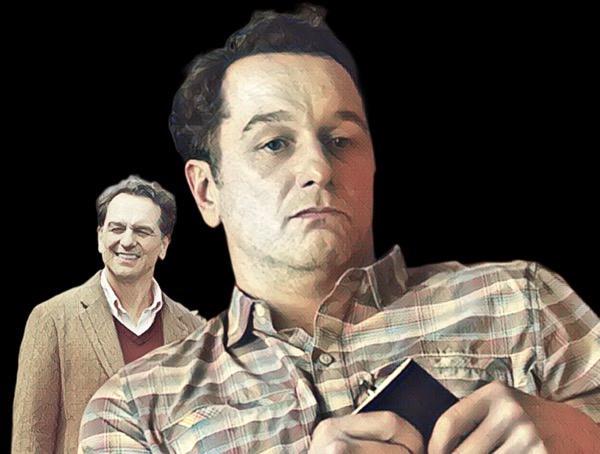
That is why I suspect the well Bryce investigated before his death will ultimately become more important than the church bell itself. In folk horror, wells rarely function as merely physical locations. They represent passageways, repressed memory, and the return of what has been buried. And Widow’s Bay clearly seems fascinated by the idea of something long buried slowly forcing its way back to the surface.
What makes the series so effective is that every interpretation continues working simultaneously. Cosmic horror coexists with plausible scientific explanations. Absurd humor coexists with generational trauma. Satire about tourism and consumption coexists with genuinely disturbing imagery.
And perhaps the humor is the cruelest part of all.
Widow’s Bay continues trying to sell itself as a charming tourist destination while people are losing their minds, disappearing, and dying. Even the ironic episode descriptions feel almost like advertisements produced by the island itself, constantly softening its violence to keep attracting new victims.
The more I think about it, the more convinced I become that the series is heading toward one terrifying revelation: the real monster was never the Sea Hag.
It was the town itself.
Or perhaps something even worse, the collective need to pretend that the town can still continue existing as if nothing is wrong.
Descubra mais sobre
Assine para receber nossas notícias mais recentes por e-mail.

