
Half Man may be one of the most uncomfortable series in recent years precisely because it refuses to treat toxic masculinity as caricature. Richard Gadd does not seem interested in violent men merely as obvious aggressors, nor in romanticizing them as broken victims. What the series does instead is far more disturbing: it portrays men who are emotionally incapable of dealing with desire, intimacy, and vulnerability without turning everything into destruction.
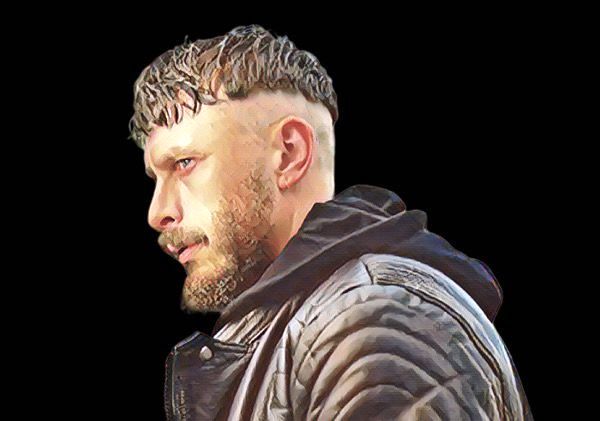
The series begins at the end. Right from the opening, we see Ruben brutally beating Niall in a physical confrontation that seems to condense decades of resentment, dependency, repressed desire, and hatred. The narrative structure quickly suggests that Ruben likely dies after the encounter, even though what the audience mostly witnesses is the violence directed by him toward Niall. And that choice matters because Half Man seems far less interested in discovering “who did what” than in understanding why these two men were always inevitably moving toward mutual destruction.
The story follows Ruben and Niall from youth into adulthood, trapped in an emotionally intense, obsessive, and deeply symbiotic relationship. There is competition, humiliation, manipulation, and a constant physical proximity between them that the series films almost like suffocation. Their bodies never fully separate. The gaze lingers too long. The other’s presence feels inescapable.
But perhaps the most interesting aspect of the series is that violence operates differently in each of them because Ruben is physically brutal. Niall is not.
Niall rarely explodes through bodily aggression. His violence is intellectual, emotional, and psychological. He uses words, silence, manipulation, and intelligence as weapons. There is something almost deliberate in the way he wounds those who threaten to expose him emotionally — especially women. Niall attempts to perform a normative heterosexual life: dating, marriage, building a family, and having children. And that makes everything even more complex because he himself is the son of a homosexual woman. The series seems to suggest that precisely because he recognizes so intimately what he is trying to reject, his repression becomes even more aggressive.
He rejects within himself what he knows is possible, and that is why Ruben becomes necessary, because Ruben functions as the physical extension of what Niall cannot execute alone. Ruben’s brutality protects him. Does the dirty work for him. Externalizes the violence that Niall prefers to intellectualize. The two complete each other within a deeply destructive dynamic where each provides exactly what the other lacks: Ruben offers physical force and impulsiveness; Niall offers elaboration, language, manipulation, and emotional direction.
From a psychoanalytic perspective, the two almost become a shared psychic structure.
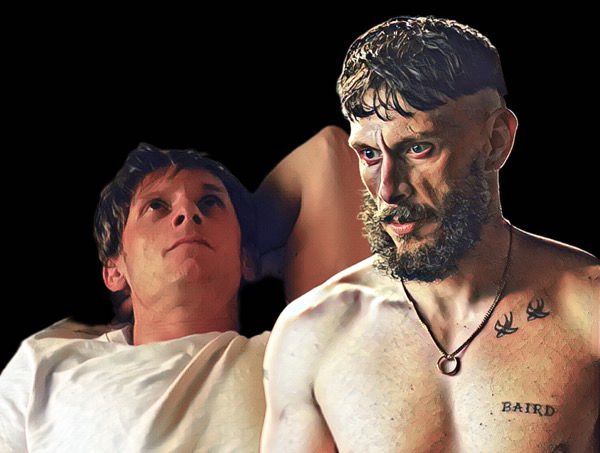
Freud never treated homoaffectivity simply as “moral deviation,” as reductive readings often suggest. His position was far more complex: human sexuality is fluid, shaped by identifications, repression, and unconscious conflict. The issue is not desire itself, but what the subject must do to survive socially while carrying that desire. And Half Man is built precisely around that impossibility.
The desire between Ruben and Niall can never be named directly. So it returns in distorted form. Freud would call this the return of the repressed: what is pushed into the unconscious never truly disappears. It resurfaces instead through compulsion, lying, violence, self-sabotage, and destruction.
Niall seems to exist permanently inside that repression and lies compulsively because his very identity depends on it. Lying becomes a psychic survival mechanism. He constructs narratives about himself to sustain a masculinity he constantly experiences as threatened. Perhaps one of the series’ cruelest ironies is the moment he chooses to tell the truth instead of trying to save Ruben, ultimately destroying Ruben’s life irreversibly.
Psychoanalytically, this is fascinating because it reveals how incapable Niall is of emotionally calculating the real consequences of his actions once the conflict between desire and guilt explodes. The repressed subject often oscillates between absolute control and impulsive collapse. Truth emerges almost like an unconscious act of punishment. And Ruben, despite all his brutality, may actually be the most vulnerable character in the series.
Without Niall’s verbal intelligence, social capital, emotional support, or symbolic resources to elaborate on his suffering, Ruben operates almost entirely through instinct and survival. He acts before he thinks because perhaps nobody ever taught him another emotional language. That makes his violence more visible, but not necessarily more complex than Niall’s.
Because Half Man seems to suggest something deeply cruel: Ruben destroys with his fists; Niall destroys by emotionally organizing the conditions for destruction to happen. And then there is the competition between them.
Their relationships with women frequently take on a narcissistic and territorial dimension. One becomes involved with the other’s partner, tests boundaries, invades emotional spaces, and continually tries to prove emotional or sexual superiority. The women often function less as genuine objects of love than as instruments of masculine validation within the central relationship between the two men.
This, too, deeply interests psychoanalysis.
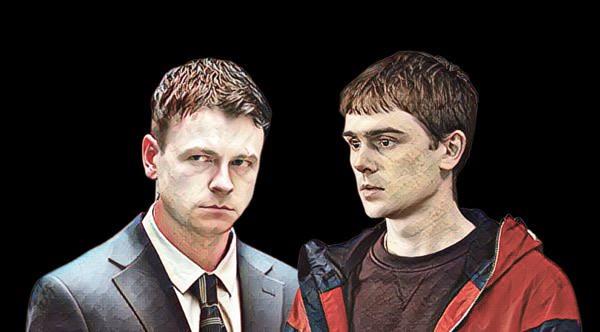
Lacan argued that desire is always mediated by the gaze of the other. The subject desires not only the object itself, but also what that object represents in the eyes of someone else. Ruben and Niall seem to operate exactly this way: every romantic conquest becomes a masculine performance staged for the other man to witness. Their desire for women often feels secondary to the rivalry, recognition, and provocation that define their bond. At its core, the central relationship is never truly with the women. It is with each other.
And perhaps that is why the series produces such a strong feeling of symbolic incest.
Not necessarily literal incest, but psychic incest. Ruben and Niall seem unable to maintain emotional boundaries. They function almost like extensions of one another. Each carries what the other desperately tries to expel from himself.
Ruben externalizes physical violence, raw desire, and impulsiveness. Niall externalizes repression, rationalization, and control. Apart, they seem incomplete. Together, they become unsustainable. This is where Melanie Klein becomes especially useful.
For Klein, in primitive emotional states, the subject cannot integrate love and hatred within the same object. The other person becomes simultaneously loved and attacked because they represent pleasure and threat at once. Ruben and Niall appear trapped exactly in that dynamic. They cannot love without destroying. Nor destroy without continuing to desire.
Violence stops being accidental and becomes emotional language, which leads directly to Freud’s death drive.
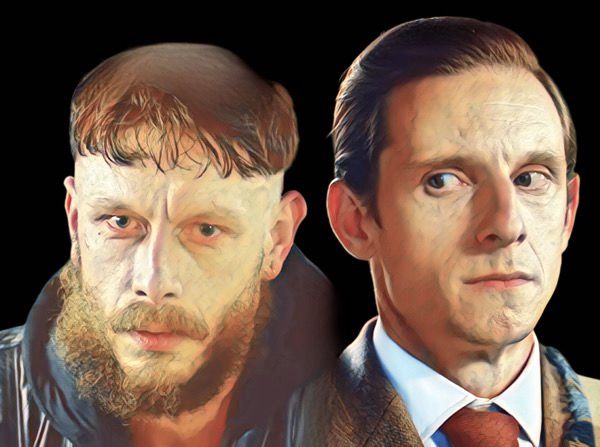
Freud described the death drive as an unconscious impulse toward destructive repetition and self-sabotage. The subject continually returns to familiar suffering because chaos itself becomes emotionally recognizable. In Half Man, Ruben and Niall seem trapped precisely inside that repetition. The more the relationship destroys them, the more inevitable it becomes. It is as if destruction itself becomes the only available form of intimacy.
And perhaps that is ultimately what Richard Gadd is dismantling in the series: the idea that toxic masculinity emerges solely from explicit misogyny or a desire for power. Half Man suggests something deeper and more uncomfortable: that many men have been taught to transform vulnerability, desire, and emotional dependency into brutality because they were never allowed to learn another way to love.
In the world of the series, admitting emotional need feels far too dangerous, so what remains is competition. Lying. Possession. Hurt.
And finally, destruction before desire itself can ever be named.
Descubra mais sobre
Assine para receber nossas notícias mais recentes por e-mail.

