
Much has been said about the battles ahead in House of the Dragon, the shifting alliances, and the inevitable betrayals of the Dance of the Dragons. All of that is part of the experience. But to me, the show’s greatest challenge was never escaping the shadow of Game of Thrones. The more delicate problem lies elsewhere: guiding Rhaenyra Targaryen toward the fate George R. R. Martin ultimately gave her in Fire & Blood.
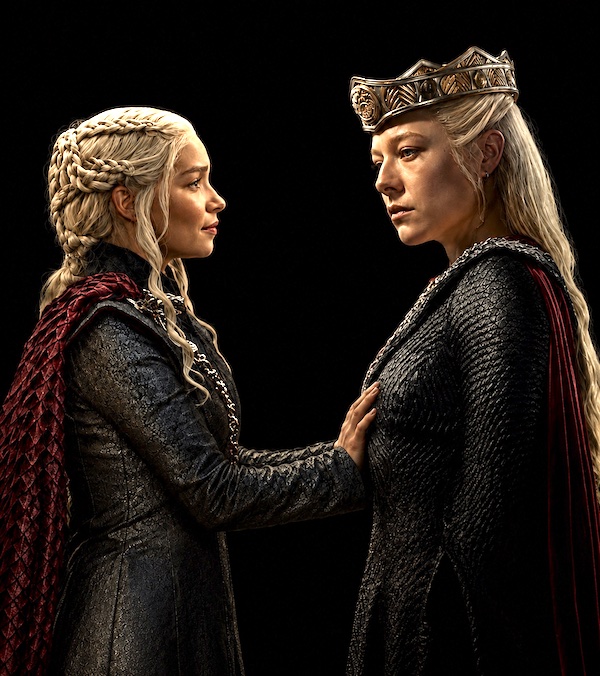
Anyone who read the book — myself included — probably had a very different queen in mind. The Rhaenyra of the pages is remembered by the victors as vain, jealous, self-centered, and increasingly paranoid. There is something deeply ambiguous about her because the history is told through competing accounts and conflicting perspectives. There is always room for doubt. The television series, however, made a very different choice.
From Milly Alcock to Emma D’Arcy, we have been introduced to a more vulnerable, gentle, and even idealistic Rhaenyra. A woman who genuinely seems to believe she can prevent war and who carries the burden of something larger than herself. It is an interesting choice because, knowing that she will lose everything — the war, her allies, and, ultimately, her life — we end up following a far more sympathetic figure than the one immortalized by history.
But perhaps we are witnessing the same journey that once divided fans over Daenerys Targaryen.
To this day, many people reject the fate given to the Mother of Dragons in Game of Thrones. Emilia Clarke herself still speaks about her shock, and a significant portion of the fandom still argues that Daenerys’ transformation came out of nowhere. I never believed that. Burning King’s Landing deliberately may have been poorly executed, but the tragedy itself had been building for years.
In truth, Daenerys eventually fell victim to the same illusion she once condemned in Viserys III — another curious parallel with Rhaenyra, who also finds her destiny intertwined with a Viserys. Her brother believed in a divine right to the Iron Throne and in a grand destiny reserved for House Targaryen. Over time, she came to believe exactly the same thing. Cersei’s malicious brilliance lay in dismantling, one by one, the emotional pillars supporting her rival until she was isolated, suspicious, and convinced that fear was the only path to victory.
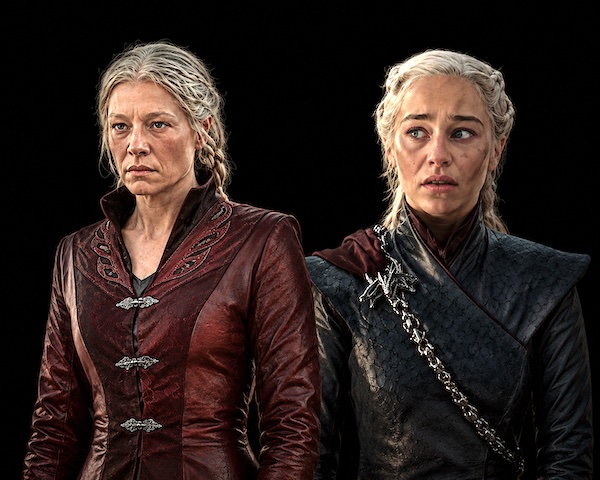
Perhaps the most fascinating aspect is that Daenerys’ fans and the people around her in Westeros made the same mistake: they fell in love with the legend. For years, Daenerys insisted that she was born to rule and destined for greatness. People embraced the liberator while ignoring the conqueror. Even today, many refuse to acknowledge that contradiction because, much like Tyrion, Jon Snow, and Varys, they believe more in the symbol than in the woman.
In the end, perhaps the only man who truly loved Daenerys for who she was rather than what she represented was Daario Naharis. Everyone else — Jon Snow included — bought into the image of the benevolent liberator. They fell in love with the promise, the hope, and the queen they believed was destined to change the world. Yet, in the end, the Iron Throne remained the goal.
Daario, incidentally, was more honest than most. He understood that Daenerys loved conquest more than the act of ruling and that, when necessary, she was willing to embrace violence to preserve power. For that reason, while the execution of the final season remains open to debate, I have always found the notion that her fate came out of nowhere somewhat strange. The series had spent years laying down signs — including the vision Daenerys experienced in the House of the Undying — that the tragedy had been written long before King’s Landing.
And this is precisely where House of the Dragon appears to be repeating the same trap.
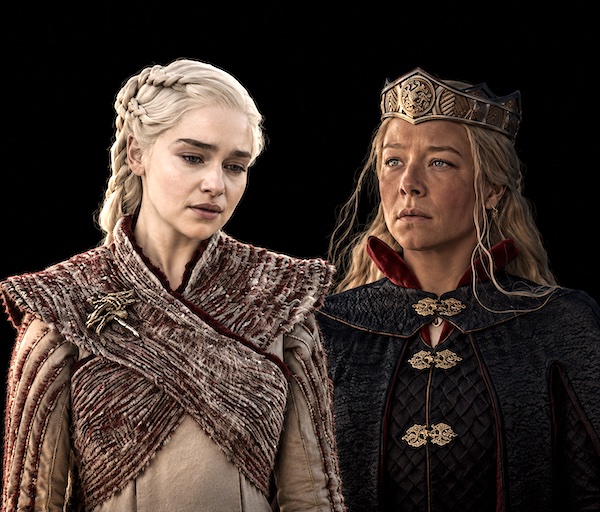
Ryan Condal added a new layer to George R. R. Martin‘s world by introducing Aegon’s prophecy, the White Walker threat, the dagger, and the idea that only the true heirs know the secret that could save Westeros. More than a plot device, it transforms the Targaryens’ claim into something resembling divine right.
The series went even further. The white stag, witnessed by Criston Cole and spared by Rhaenyra, all but eliminates any doubt about who the chosen one is. In the book, there was still room to question who was right. Television decided to answer that question. Rhaenyra is the rightful heir. Rhaenyra is worthy. Rhaenyra is hope.
And perhaps that is where the trap lies.
Because in Fire & Blood, choosing between the Greens and the Blacks was deliberately uncomfortable. Neither side was entirely innocent. Motivations, decisions, and even responsibility for many events remained murky. It was precisely that ambiguity that made the Dance of the Dragons so compelling.
Although the series has shown more empathy toward the Greens than many expected, it has also reduced some of those shades of gray by turning Rhaenyra into an almost messianic figure. Some of her more questionable decisions are framed as products of her integrity or circumstances, whereas the book suggests that ambition, vanity, and jealousy were always part of who she was.
Having children she knew to be bastards was only the beginning. Her initial insecurities were never about being incapable of ruling but about understanding the consequences of her choices. What has largely been absent so far is the more uncomfortable side of the queen, the woman who would gradually be consumed by fear, grief, suspicion, and the desire to win.
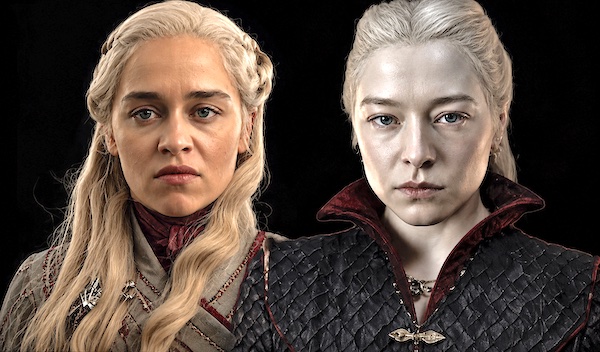
That is why I approach the coming seasons with both excitement and anxiety. Daenerys’ orphans embraced Rhaenyra with the same devotion. The difference is that this time, everyone already knows how the story ends.
We know she will be abandoned, betrayed, and consumed by the very war she seeks to win. We know that the queen destined to save Westeros will eventually become isolated and rejected.
The question is whether audiences are willing to accept that transformation, because perhaps the true Targaryen curse was never madness. Perhaps it was the belief that they had been chosen by the gods. And in Westeros, it is often that conviction that destroys those who believe in it the most.
Descubra mais sobre
Assine para receber nossas notícias mais recentes por e-mail.


2 comentários Adicione o seu