
A few years ago, Hollywood declared movie stars dead. The narrative was simple: stars had been replaced by franchises and brand recognition. Audiences would no longer go to the movies because of Tom Cruise, Brad Pitt, or any other actor, but because of Marvel, Star Wars, or already established intellectual properties. Joseph Kosinski apparently never believed that theory.
In the same week that F1 marked roughly six months atop Apple TV’s movie rankings, another phenomenon caught my attention. Nearly four years after its theatrical release, Top Gun: Maverick still sits in first place among the most-watched films on Paramount+.
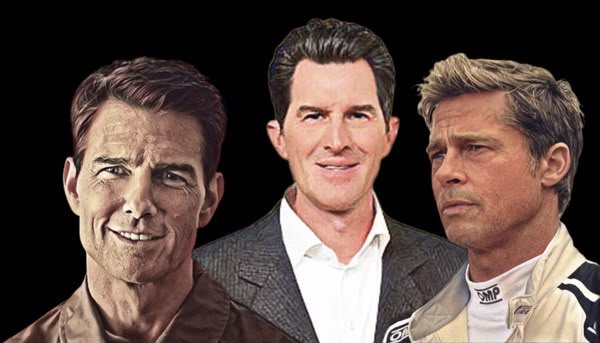
Neither of these stories should be particularly normal. Streaming usually rewards novelty. A new release reaches the top, stays there for a few days or weeks, and is eventually replaced by the next hit. Yet Top Gun: Maverick and F1 seem to follow a different logic. Instead of fading away, they keep being revisited.
The numbers make this behavior even more remarkable. In the United States, Top Gun: Maverick has spent roughly 21 months at the top of Paramount+. Worldwide, the film has accumulated more than 220 days as the platform’s number-one movie. Meanwhile, F1, which became the biggest box-office success of Brad Pitt’s career and Apple’s first true mass phenomenon, has spent approximately six months atop Apple TV and around 182 days among the service’s ten most-watched films.
Those numbers are more commonly associated with library classics than with conventional streaming hits.
This story has less to do with fighter jets or Formula One cars and more to do with a 51-year-old filmmaker who may have quietly discovered how to create popular classics in the 21st century.
A graduate of Columbia and Yale with a degree in architecture, Joseph Kosinski arrived in Hollywood through a rather unconventional path. He made his feature debut in 2010 with Tron: Legacy, a film that eventually became a cult favorite and is still remembered for its futuristic aesthetic and Daft Punk’s iconic score. Three years later came Oblivion, his first collaboration with Tom Cruise. Although the film was later overshadowed by the phenomenon of Top Gun: Maverick, it is impossible to revisit it today without noticing that many of the director’s visual and emotional obsessions were already there.
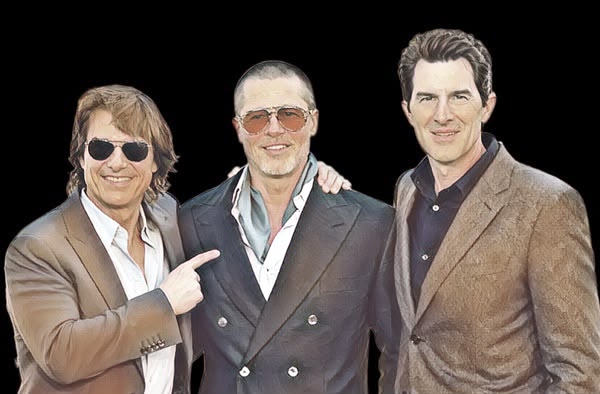
Kosinski’s partnership with Cruise now spans thirteen years. Together, they made Oblivion and later Top Gun: Maverick, which grossed nearly $1.5 billion worldwide, became the highest-grossing film of Cruise’s career, and earned a Best Picture nomination at the Academy Awards. More importantly, the movie came to symbolize the recovery of the theatrical business after the pandemic.
When Top Gun: Maverick became a phenomenon, many people treated its success as an exception, a lightning-in-a-bottle event that could never be repeated.
F1 proves otherwise.
The connections between the two films are numerous. Jerry Bruckheimer produced both. Claudio Miranda served as cinematographer on both. Ehren Kruger contributed to the screenplays of both. And above all, they share a common language. Kosinski films with speed like few contemporary filmmakers. In Top Gun: Maverick, the camera placed audiences inside the cockpit. In F1, that same philosophy was transferred to the racetrack.
But the real Kosinski formula lies in his protagonists.
Pete “Maverick” Mitchell and Sonny Hayes are essentially variations of the same character. Both are extraordinarily talented men working in professions that have changed dramatically. Both are surrounded by younger people and systems that seem determined to replace them. Both carry old wounds and find their identity in the thing they do best.
There is a curious melancholy to these characters. They know the world has changed. They know they belong to another generation. But they refuse to accept that aging means becoming irrelevant.
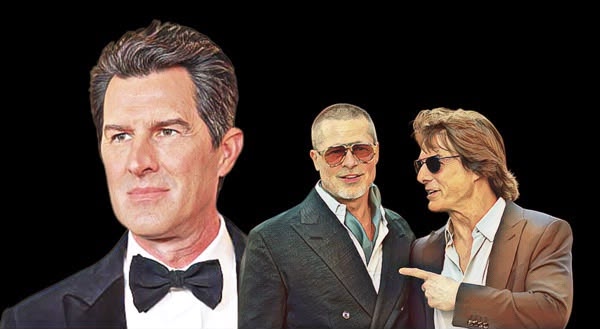
Tom Cruise and Brad Pitt occupy that exact same position in Hollywood. Yet neither actor needed to put on a superhero cape or join a shared universe to remain relevant. On the contrary, Kosinski’s films embrace something Hollywood seemed to have abandoned: the adult blockbuster.
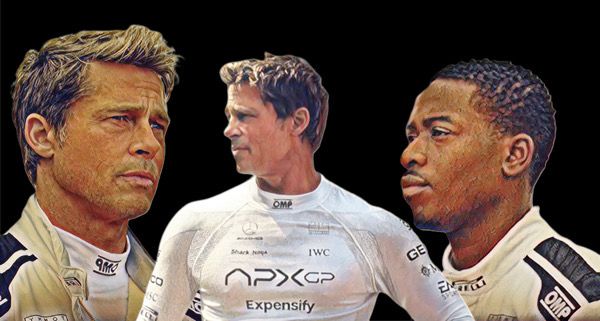

These are expensive, ambitious, and spectacular productions aimed at audiences who grew up with Tom Cruise and Brad Pitt and are still interested in stories centered on adults. There is an almost old-fashioned sincerity to Top Gun: Maverick and F1. These are films that believe in professionalism, excellence, friendship, and second chances. They are not embarrassed by emotion, nor do they treat their characters with irony.
At a time when so many blockbusters seem suspicious of their own emotions, Kosinski’s films embrace precisely what Hollywood used to do so well.
That explains why Top Gun: Maverick and F1 behave less like fleeting hits and more like library classics. As with Titanic, Jurassic Park, or Back to the Future, audiences do not return to these stories because they have forgotten the ending. They come back because they enjoy the experience. They enjoy the company of those characters and the feelings these films leave behind.
There is a beautiful irony in all of this.
The man who helped rebuild Tom Cruise’s screen persona did exactly the same thing with Brad Pitt. In Cruise’s case, the result was the biggest hit of his career. With Pitt, F1 became the greatest commercial success of his career and Apple’s first true mainstream phenomenon.
And all three men are still looking ahead.
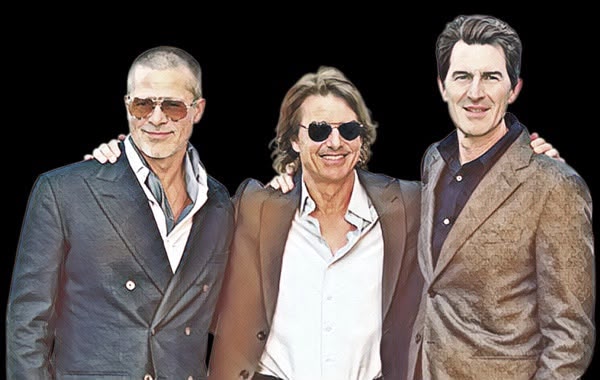
At the moment, Tom Cruise is developing new projects alongside Christopher McQuarrie and has once again begun talking about a sequel to Days of Thunder. Brad Pitt is preparing The Continuing Adventures of Cliff Booth, returning to the character that earned him an Academy Award. Meanwhile, Joseph Kosinski is working on a new version of Miami Vice and an alien-conspiracy thriller for Apple.
None of the three seems interested in slowing down. That makes it easy to say that the director’s successes were no accident. Streaming charts prove it week after week. In an industry obsessed with the next big thing, Joseph Kosinski has found a physical type, a visual language, and a character archetype that fit actors like Tom Cruise and Brad Pitt perfectly, proving that movie stars still matter.
But his greatest achievement may be something else. While Hollywood spends much of its time trying to predict the next trend, Kosinski continues doing something far more difficult. He makes films that people genuinely enjoy returning to. And in the end, the explanation is much simpler than it seems. Audiences come back because they like those characters. Because they enjoy the company of Maverick and Sonny Hayes. Because they enjoy the feeling these films leave behind after the credits roll.
In an industry constantly looking ahead, Joseph Kosinski understood something deeply human: people always return to what they love.
That may be the true Kosinski formula.
Descubra mais sobre
Assine para receber nossas notícias mais recentes por e-mail.


2 comentários Adicione o seu