
The first two episodes of House of the Dragon‘s third season will likely feel, for many fans, like the conclusion the second season seemed to promise. The long-awaited Battle of the Gullet will finally arrive on screen. With its devastating consequences for Rhaenyra and her supporters, it stands as one of the defining moments of the entire Targaryen saga. Not only does a prince and heir lose his life, but another disappears from the line of succession altogether. It remains to be seen exactly how the series will choose to portray these events.
Naturally, anticipation surrounding the battle has divided fans. Many eagerly discuss every detail, speculate about the dragons involved, and count down the days until the episode airs. Personally, I have always been more interested in the political maneuvering, betrayals, and relationships between the characters. But that is beside the point. The real issue lies elsewhere.
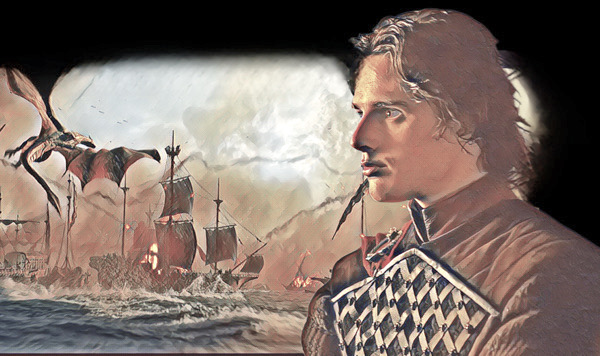
Today, there is one comparison that has become almost impossible to escape: the Battle of the Bastards. Not even Game of Thrones itself managed to surpass that phenomenon with the two major battles of its final season. Miguel Sapochnik‘s masterpiece became a benchmark hanging over the entire franchise. But if it is so exceptional and legendary, why must every battle be judged against it?
The truth is that George R. R. Martin never wrote a single formula for warfare in Westeros. Blackwater is about strategy. Hardhome is horror. The Long Night is survival. Rook’s Rest is a tragedy. The Gullet promises devastation. Some of the most important conflicts in the saga are not even trying to evoke the same emotions.
Perhaps, then, it is more interesting to revisit the franchise’s greatest battles and understand what each one does best.
The Legendary Battles
Battle of the Bastards (Game of Thrones)
It is the standard by which all others are measured. Jon Snow’s confrontation with Ramsay Bolton remains an astonishing technical achievement, capturing the chaos, claustrophobia, and brutality of medieval warfare. Perhaps that is precisely why it cannot truly be replicated. It was the result of years of storytelling and a unique set of circumstances.
Blackwater (Game of Thrones)
The franchise’s first great battle remains among its finest. The episode is less about action and more about strategy, tension, and character. Tyrion Lannister has rarely been more compelling, and the wildfire explosion remains one of the most unforgettable images in the series.

Hardhome (Game of Thrones)
More horror film than traditional battle, Hardhome transformed the White Walkers into a genuinely terrifying threat and ended with one of television’s most iconic images: the Night King raising his army.
Rook’s Rest (House of the Dragon)
House of the Dragon found its first true aerial tragedy here. More than a spectacle of dragons, the episode demonstrates that these creatures were never precise weapons but destructive forces capable of escaping the control of their riders.
Great Battles That Serve the Story
Castle Black (Game of Thrones)
A more intimate battle in which the fates of Jon Snow, Samwell Tarly, and Ygritte matter just as much as the conflict itself.

The Loot Train Attack (Game of Thrones)
Daenerys’ assault on the Lannister army remains one of the series’ most impressive displays of power. At the same time, it marks a turning point in the war and foreshadows the moral dilemmas that will define her story.
The War for the Stepstones (House of the Dragon)
The conflict in the Stepstones primarily serves as an introduction to Daemon Targaryen. It is here that the series establishes him as both brilliant and dangerously unpredictable.
The Battle of the Gullet (House of the Dragon)
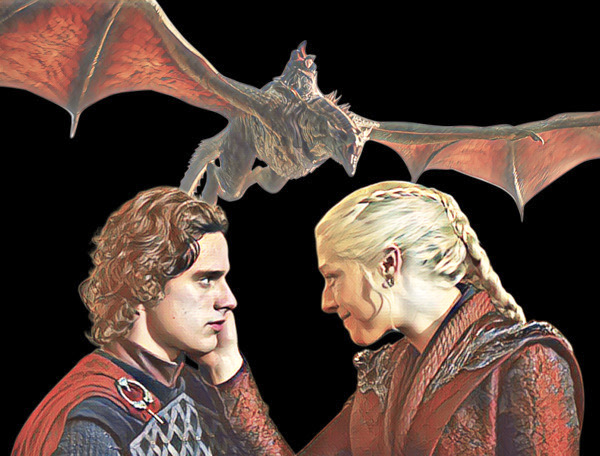
How the show will adapt it remains to be seen, but George R. R. Martin‘s version places it among the most devastating events of the Dance of the Dragons. Its importance lies not only in its scale but in the losses that permanently alter the course of the war.
Important, Though Less Memorable
The Long Night (Game of Thrones)
No battle carried greater expectations. Despite its strengths, it never escaped the shadow of the Battle of the Bastards and remains one of the series’ most divisive episodes.
Whispering Wood (Game of Thrones)
Curiously, one of Robb Stark’s most significant victories happens largely off-screen, reminding viewers that the early seasons of Game of Thrones were far more interested in politics than spectacle.
The Bells (Game of Thrones)
Not beloved by fans, but unforgettable in its imagery. It marks Daenerys’ final transformation and one of the most controversial turns in the franchise.

The Tragedies Yet to Come
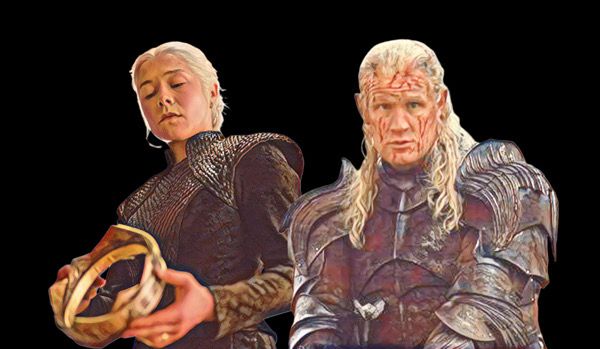
If House of the Dragon adapts the entirety of the Dance of the Dragons, viewers will still witness events capable of rivaling anything in Game of Thrones in terms of dramatic significance. Tumbleton promises absolute chaos. The God’s Eye has all the makings of a legend. And the Fall of King’s Landing may become one of the most heartbreaking chapters in the history of the franchise.
But perhaps the most important lesson is this: not every battle needs to be the next Battle of the Bastards.
Blackwater never tried to be Hardhome. Hardhome never tried to be the Battle of the Bastards. And perhaps the Battle of the Gullet does not need to be anything more than what George R. R. Martin originally intended it to be:
A tragedy.
Descubra mais sobre
Assine para receber nossas notícias mais recentes por e-mail.


2 comentários Adicione o seu