
The argument between Ser Corlys Velaryon and Rhaenyra in the third episode of the third season quickly became one of the most talked-about moments among House of the Dragon fans. On social media, especially on X, many people celebrated the fact that the Lord of the Tides finally said out loud what Westeros had always known: Jacaerys, Lucerys, and Joffrey were bastards.
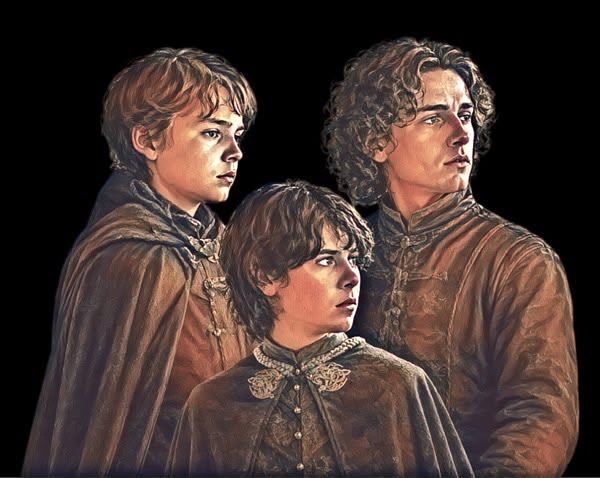

For those viewers, Corlys was simply demanding repayment of an old debt from the queen after spending years protecting a secret that was not his. Others saw the exact opposite: enormous hypocrisy from someone who helped build that lie while it served his own interests. The truth is that both sides have valid arguments. But the series gets it right precisely because it turns a rupture that, in the book, happens relatively abruptly into a conflict built over three seasons.
In Fire & Blood, Ser Corlys remains by Rhaenyra’s side for most of the Dance of the Dragons. The break between them only happens near the end of the war, when the queen, devastated by the deaths of Rhaenys and Jacaerys and traumatized by the betrayal of Hugh Hammer and Ulf White, begins to distrust Addam and Alyn Velaryon as well. Convinced that even her own allies may turn against her, she orders Addam’s arrest. Corlys begs the queen to reconsider, reminds her that both men have always been loyal, and refuses to abandon them. In response, Rhaenyra has her own Hand arrested. That is the true rupture between them in the book. Later freed by Larys Strong, Corlys eventually helps Aegon II regain control of the war.
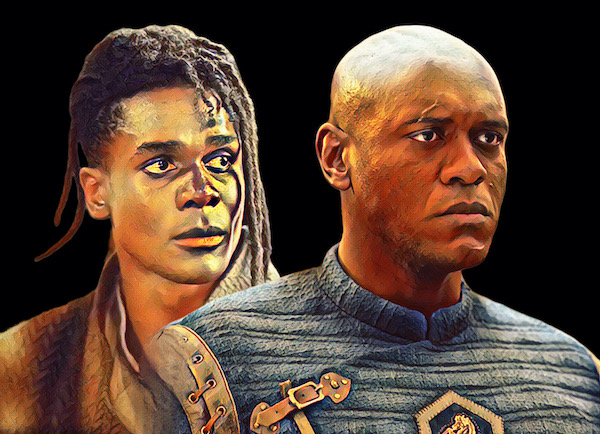
On television, however, that development would hardly have the same impact. The Rhaenyra built by House of the Dragon is very different from the one described by George R. R. Martin. She hesitates, constantly searches for the morally correct path, and avoids rash decisions. Seeing this version of the character imprison Corlys simply because she suspects Addam would probably feel like an abrupt personality shift. The series needed to prepare for that rupture in advance. And it does so quite intelligently.
This works because, unlike the book, House of the Dragon has never built Corlys as an ally of Rhaenyra. He has always been, first and foremost, an ally of House Velaryon.
Since the first season, Corlys has never shown any particular affection for the princess. When Rhaenyra is still a teenager and begins attending Small Council meetings, he practically ignores her. His arguments are always with Viserys. His interest was never the heir. It was the throne.
Even before Laenor entered the story, Corlys tried to marry his daughter Laena, then only twelve years old, to Viserys, a man almost three decades older than her. It was not a decision motivated by affection or concern for the girl. It was another move to place a Velaryon on the Iron Throne. When Viserys rejected the proposal and chose Alicent Hightower instead, Corlys broke with the king for years. He only returned to the negotiating table when a new opportunity appeared: marrying Laenor to Rhaenyra.

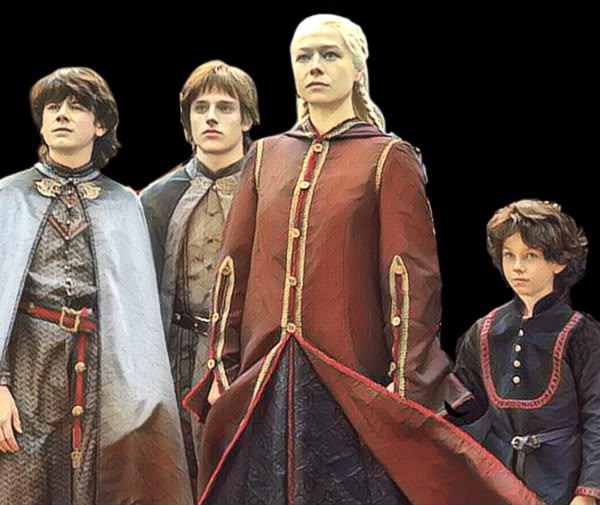
That was not an act of trust either. It was another excellent political deal. Corlys knew Laenor was gay. He knew that marriage would hardly produce biological heirs. Even so, he accepted the union because it kept his great ambition alive: placing the Velaryon name in the line of succession to the Crown.
The birth of Jacaerys, Lucerys, and Joffrey solved, at least politically, an enormous problem. It did not only guarantee heirs for Rhaenyra; it also preserved the appearance of a successful marriage for his own son. As long as those boys were officially Velaryon, no one needed to publicly discuss Laenor’s sexuality or admit that the marriage had failed in its main dynastic purpose.
Corlys was never deceived. He consciously took part in that construction.
Not even when the war begins does the series turn this relationship into a friendship. Unlike Fire & Blood, where Corlys and Rhaenys immediately support Rhaenyra’s claim, the adaptation shows the two hesitating. They consider staying out of the conflict and carefully evaluate whether it is worth entering the war. It is Rhaenys who begins to believe in Rhaenyra, recognizing in her a woman facing the same obstacles she herself faced when she lost the succession. It is Rhaenys who convinces Corlys. The trust never comes from him.

Even so, Corlys recognizes the three boys as his grandsons throughout his life. He names Lucerys heir to Driftmark, prepares Jacaerys to assume responsibilities, and never publicly questions their legitimacy as long as it benefits the Velaryons.
SPOILERS
What Happens to Baela Targaryen After Jace Dies? Her Full Fire & Blood Fate Explained
What Is the Best Battle in Westeros? Ranking the Battles of Game of Thrones and House of the Dragon
That is precisely why the argument in the third episode works so well: we are not watching a friendship end, but a political alliance finally reach its breaking point. And the trigger of the scene matters. Corlys does not confront Rhaenyra simply because, all of a sudden, he has decided to tell the truth about Jacaerys, Lucerys, and Joffrey. He comes to the queen wanting Addam and Alyn, his own bastard sons, to be recognized and legitimized as Velaryons. Rhaenyra refuses because the Black cause depends, to a large extent, on defending the legitimacy of her own line. Officially recognizing Corlys’s bastards at that moment would open a dangerous contradiction: the queen would be using the Crown to legitimize the illegitimate sons of her Hand while demanding that the realm accept her own sons as unquestionable heirs.
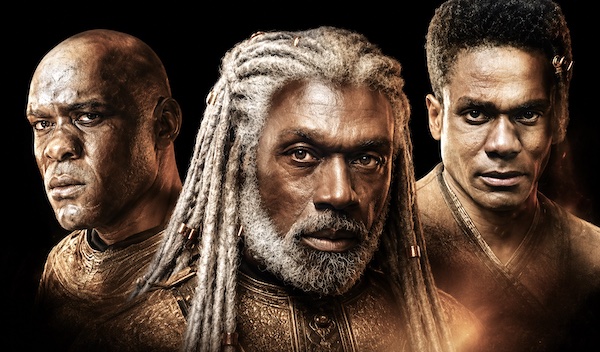
When she denies the request, the wound Corlys had pretended to control for years finally opens. That is when the hypocrisy becomes even clearer. Corlys spent decades upholding the legitimacy of Rhaenyra’s sons because that fiction served House Velaryon’s ambition. But when he asks the queen to make a similar concession for his own bastard sons and does not get what he wants, he turns the old lie into an accusation. This is not a man defending a principle. It is a man furious because the exception that once served him is no longer being granted to him.
That is why, when part of the internet argues that Corlys merely held Rhaenyra accountable for hiding the true origin of her sons for years, that reading ignores one fundamental detail: Corlys never upheld that lie to protect her. He upheld it because it protected his own legacy.
For decades, the Lord of the Tides bet everything on a political project that depended on those three boys. He was the one who insisted that Lucerys inherit Driftmark. He was the one who presented Jacaerys to the realm as his grandson. He was the one who accepted that fiction because it kept House Velaryon at the center of the succession.
Now, after losing almost everything, he acts as if he were only a victim. There is another irony that makes his explosion even more bitter. Jacaerys died trying to save him.
At the Battle of the Gullet, the prince went against the strategy defined by his own mother to protect Corlys and his fleet. The decision cost him his life. To hear the very man he tried to save reduce his entire existence to the word “bastard” is perhaps the cruelest moment of the scene.

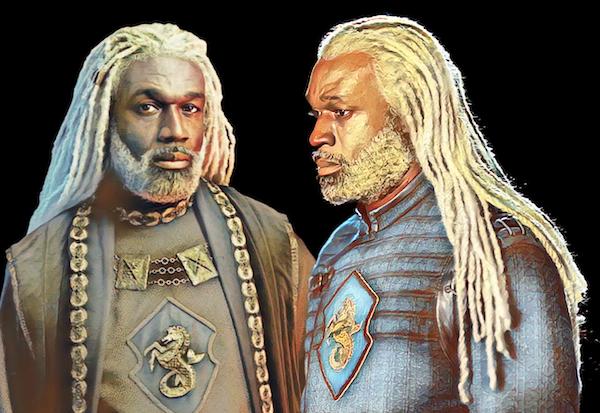
Social media also raised another interesting comparison. Many pointed out that Corlys condemns Rhaenyra for having children with another man, even though he himself kept a second family for years without Rhaenys knowing. The situations are not exactly the same. Rhaenyra and Laenor lived in a political marriage sustained by an understanding between them. Corlys simply betrayed his wife. Even so, the comparison reinforces an important point: his moral outrage only appears when his interests no longer align with the queen’s.
Another detail also caught fans’ attention. Many joked that Corlys only dared to raise his voice because Daemon was not present. The observation may sound like a joke, but it makes sense. Corlys has known Daemon for decades and knows exactly what he is capable of. One need only remember that Vaemond Velaryon literally lost his head after making the same accusation against Rhaenyra’s sons. It is difficult to imagine Corlys repeating that speech in front of the prince.
Even so, perhaps the biggest problem in the scene is not Corlys. It is Rhaenyra.
She does not remind him that Vaemond died for making the same accusation. She does not remind him that Corlys sustained that lie for decades because it also served House Velaryon’s interests. She does not remind him that Jacaerys died trying to save the very man who now reduces him to the condition of a bastard. She does not even react to the fact that her own Hand raises his voice to his queen in front of witnesses, something that, in Westeros, would hardly go unanswered.
Once again, House of the Dragon turns Rhaenyra into a character who merely absorbs the blows.
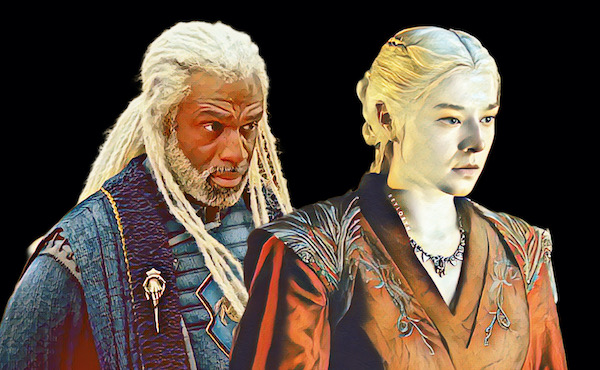
In the end, the series improves on Fire & Blood. Anticipating the erosion between Corlys and Rhaenyra, it makes the betrayal still to come much more convincing and transforms a relatively abrupt change from the book into the natural consequence of a relationship that was never built on trust.
But it does so by repeating a problem that has followed the adaptation since the first season. To preserve Rhaenyra as an essentially good woman, the series frequently gives up her authority as queen. Corlys leaves the room, imposing his version of the facts. Rhaenyra leaves without defending her dead sons, her legitimacy, or the throne itself. And perhaps that is exactly what most weakens the protagonist of the adaptation.
Descubra mais sobre
Assine para receber nossas notícias mais recentes por e-mail.


3 comentários Adicione o seu