
SPOILER WARNING!
Baela Targaryen’s story after the death of Jacaerys Velaryon is one of the most tragic in Fire & Blood (Read here about How Do Rhaenyra Targaryen’s Sons Die? The Fate of Every Heir). Daemon Targaryen’s daughter survives the Dance of the Dragons. Still, she pays a devastating price: she loses the man she loved, her dragon, her father, her queen, and virtually everyone else of her generation. By the end of the war, Baela becomes one of the last survivors of the conflict that destroyed House Targaryen.
With the House of the Dragon season 3 trailer confirming that Baela will be the one to bring Jace’s body back to Dragonstone after the Battle of the Gullet, her story is about to become even more important in HBO’s adaptation. And according to Fire & Blood, Jacaerys’ death is far from the greatest tragedy she will face.
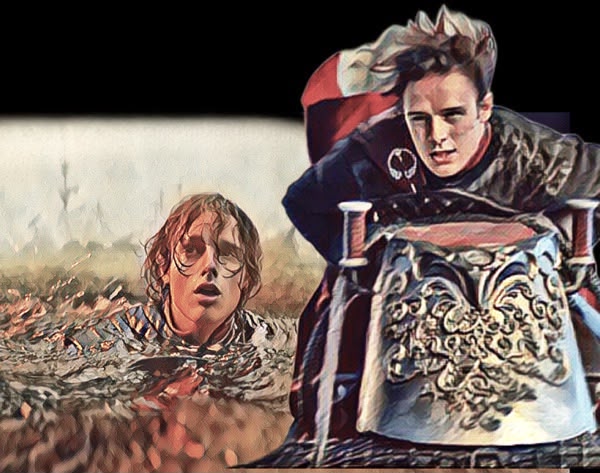

From her very first appearance, Baela is portrayed as the child most similar to Daemon Targaryen. Brave, impulsive, and fiercely independent, she inherited from her father not only his courage but also his inability to accept the destiny others chose for her.
The daughter of Daemon Targaryen and Laena Velaryon, Baela was born at the center of two of the most powerful families in Westeros. She was the granddaughter of Corlys Velaryon and Princess Rhaenys Targaryen, and she grew up surrounded by expectations, privilege, and dragons. Yet from childhood onward, she repeatedly refused to play the role of noble lady that others expected of her.
Her relationship with Daemon always appeared to be particularly close. Unlike Rhaena, who inherited some of her mother’s diplomacy and sensitivity, Baela inherited almost entirely her father’s temperament. Daemon recognized something of himself in his daughter: her courage, her stubbornness, and her absolute refusal to submit.
It was precisely this personality that placed her at the center of one of the most important events in recent Targaryen history: the fight at Driftmark that resulted in Aemond losing his eye.
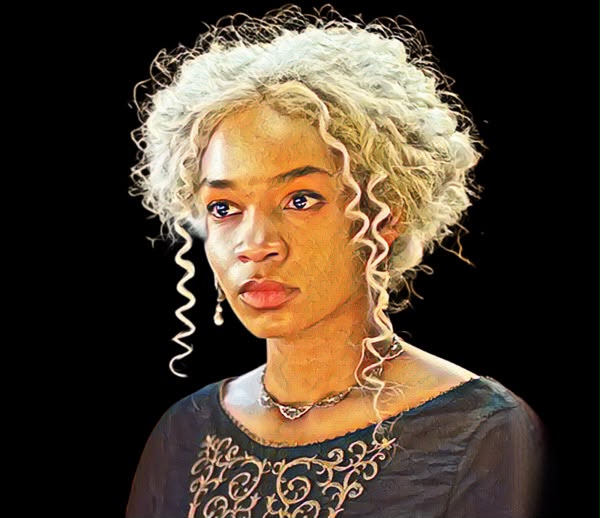

After Laena’s funeral, Baela and Rhaena confronted Aemond for claiming Vhagar. The argument quickly turned physical. Jacaerys and Lucerys intervened to defend their cousins, and the confrontation ended with Lucerys taking Aemond’s eye. The war that would destroy House Targaryen had begun long before it was officially declared, and Baela was standing at its center.
The irony is that, at that moment, she was simply a little girl defending her mother’s memory.
Baela had also been promised to Jacaerys Velaryon since childhood.
In Fire & Blood, George R. R. Martin leaves some ambiguity as to whether the two were formally married before the war. House of the Dragon, however, has transformed Baela and Jace into one of the franchise’s few genuinely romantic relationships. Raised together and betrothed from childhood, the two developed a bond based not only on political alliance but also on friendship, admiration, and genuine affection.
That is precisely what makes the Battle of the Gullet so devastating.
In the television adaptation, Jace dies trying to save Baela during the Triarchy attack. Flying lower to protect her, he becomes vulnerable and is ultimately shot down. Baela witnesses his death. Baela recovers his body. And Baela returns to Dragonstone carrying not only the remains of the man she loved, but also the definitive proof that the war had destroyed everything Rhaenyra had hoped to preserve.
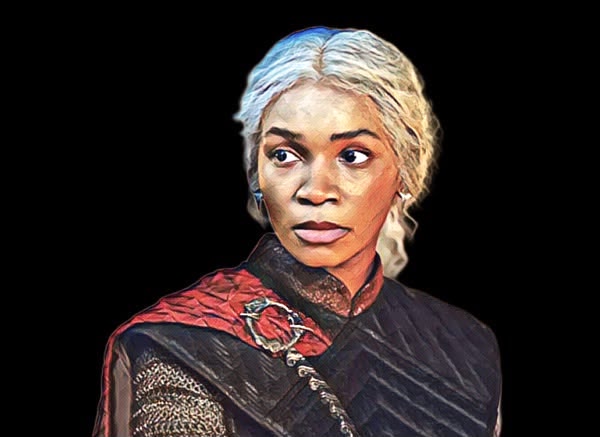

Baela and Rhaena’s relationship also takes on a far more tragic dimension in House of the Dragon.
In Fire & Blood, the sisters have very different personalities, but there is no explicit rivalry between them. HBO’s adaptation, however, transformed Rhaena’s lack of a dragon during childhood into a lasting emotional wound. While Baela inherited Moondancer, was betrothed to the heir to the Iron Throne, and received the kind of attention from their father that Rhaena often perceived as unequal, her sister grew up carrying a profound sense of inadequacy and abandonment.
The series’s decision to transfer part of Nettles’ storyline to Rhaena makes this dynamic even more painful. By the time Jacaerys dies, and Baela returns to Dragonstone carrying his body, the two sisters no longer occupy the same place in the war. Baela has become the political and emotional heir of the Black faction; Rhaena, meanwhile, has finally found the dragon she believed would give her value.
Paradoxically, it is at precisely this moment that their destinies begin to reverse. Baela loses the man she loved, loses the war, loses her dragon, and loses nearly her entire family. Rhaena, by contrast, emerges from the Dance as one of the few Targaryens to preserve not only her own life, but also her dragon. In many ways, House of the Dragon transforms the sisters’ long-simmering rivalry into one of the greatest ironies of the story: the daughter who always seemed destined for greatness survives only to witness the destruction of everything she ever loved.
If Baela inherited Daemon’s fire, Rhaena ultimately inherited his ability to survive.

The season 3 trailer further suggests that Baela will witness one of Rhaenyra’s first major emotional breakdowns following her son’s death. From that moment on, Baela ceases to be merely Daemon’s daughter or Jace’s betrothed. She becomes one of the most important figures on the Black side.
During Rhaenyra’s brief reign in King’s Landing, Baela remains loyal to the queen and becomes a symbol of the continuity of the Black faction. But Rhaenyra’s government quickly collapses. The population revolts, military defeats accumulate, and the family begins to destroy itself from within.
Unlike Rhaena, who remains relatively safe in the Vale, Baela continues to choose danger. After Rhaenyra’s death, she undertakes one of the bravest acts of the entire Dance of the Dragons. Riding her young dragon Moondancer, Baela attacks King Aegon II and his dragon Sunfyre alone.
The battle becomes one of the most extraordinary and tragic confrontations in Fire & Blood. Although Sunfyre is larger, stronger, and far more experienced, Baela succeeds in inflicting devastating injuries. The price, however, is terrible: Moondancer dies, Sunfyre is left grievously wounded, and Baela herself is captured after being badly injured. She spends the final days of the war as the prisoner of the man whose victory had destroyed almost her entire family.
Yet Baela remains Baela.
She refuses to become a political pawn. She refuses to surrender her independence. And when the war finally ends, she once again rejects the future others had planned for her.
During the regency of Aegon III, the son of Rhaenyra and Daemon, Baela becomes one of the most popular women in King’s Landing. Some even suggest that she should be considered heir to the Iron Throne. Others attempt to use her politically through strategic marriages and succession disputes.
She rejects them all. Or almost all of them: she runs away and shocks everyone when she marries Alyn Velaryon.
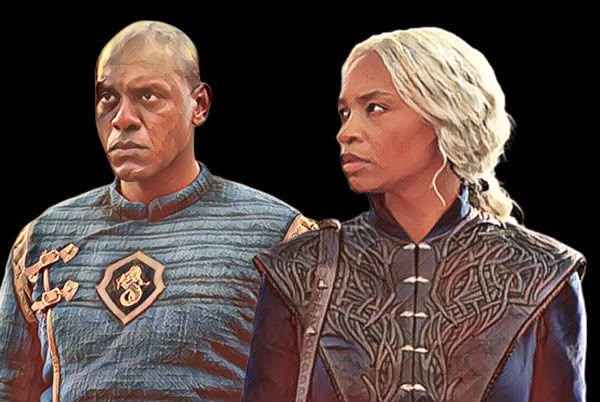
That’s right: the interactions between the two characters in the series deserve close attention. In the book, the true parentage of Alyn and Addam is never fully confirmed; however, in House of the Dragon, it is explicitly established that they are the sons of Corlys Velaryon. That would make Alyn Baela’s biological uncle. Incest was never much of a problem for the Targaryens and, apparently, not for the Velaryons either.
The marriage, however, is far from happy. Alyn spends much of his life at sea, building his own legend, fighting wars, and accumulating lovers. Baela remains on land, transformed into a survivor of a world that no longer exists.
And perhaps that is precisely what makes Baela Targaryen one of the most tragic characters in Fire & Blood.
She survives the mother she lost as a child, the father she admired, the grandparents who raised her, the man she loved, the dragon she rode, and the queen she chose to serve. She survives the war that destroyed her entire generation. But in the world of Fire & Blood, surviving is often far more painful than dying.

Descubra mais sobre
Assine para receber nossas notícias mais recentes por e-mail.


2 comentários Adicione o seu