
When we think about the origins of the Dance of the Dragons, there is a natural tendency to look for a single villain. Otto Hightower’s ambition, Alicent’s resentments, Daemon’s violence, Aemond’s impulsiveness, or even Rhaenyra’s own mistakes all seem like obvious candidates. But as House of the Dragon progresses and finally begins to explore what it actually means to govern rather than merely conquer, it points toward a far more uncomfortable conclusion. The true architect of the Targaryen tragedy may well have been the very man who spent his entire life trying to prevent it: King Viserys I Targaryen.
The king portrayed by Paddy Considine was, in every meaningful sense, a good man. And it was precisely that goodness, when translated into the exercise of political power, that helped engineer the destruction of the dynasty he believed he was protecting.
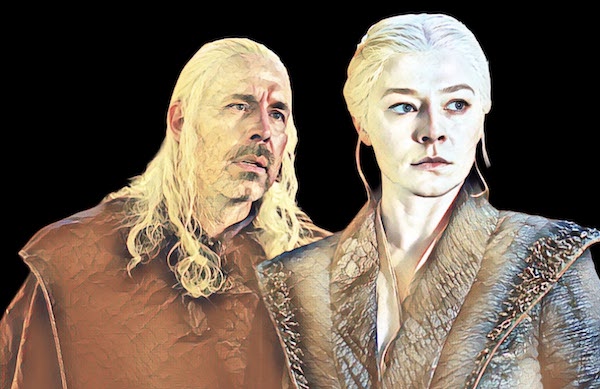
Paddy Considine has always defended the idea that Viserys was not a bad king because he lacked humanity, but because he possessed too much of it. His Viserys wanted to be loved. He wanted to preserve his family, honor the memory of Aemma Arryn, protect the prophecy he believed to be the sacred destiny of House Targaryen, and prevent those he loved most from destroying one another. Unlike so many rulers in Westeros, he never seemed to enjoy exercising power or imposing suffering.
The problem, however, is that Westeros has never rewarded rulers who refuse to confront conflict. Daemon understood this better than anyone else. Throughout the first season, he repeatedly accuses his brother of weakness, not because Viserys lacked intelligence or compassion, but because he could not make painful decisions when they needed to be made. Viserys wanted to believe that goodwill could solve political problems. He wanted to believe that familial love would be enough to prevent civil war. He wanted to believe that respect for his authority would survive his death. On every one of those points, he was wrong.
Game of Thrones always understood that conquering, dominating, and ruling are different skills
One of Game of Thrones‘ greatest strengths was its insistence that political power is far more complex than simply sitting on a throne. The series repeatedly argued that conquering, dominating, and ruling are entirely different abilities. Robert Baratheon knew how to conquer the Seven Kingdoms and failed to govern them. Tywin Lannister was never king, yet he may have been the most effective administrator of his generation. Stannis Baratheon understood the machinery of government but never managed to inspire emotional legitimacy. Daenerys Targaryen was a brilliant conqueror who eventually discovered, painfully, that liberating cities did not necessarily mean knowing how to govern them.
One of the most important scenes in Game of Thrones occurs when Bran Stark, still a child, becomes frustrated while attending audiences in Winterfell. He grows bored listening to disputes between peasants, complaints about harvests, and seemingly trivial administrative problems. Maester Luwin explains to him what may be George R. R. Martin‘s central political thesis: ruling is precisely that. Ruling means listening to repetitive complaints, arbitrating local disputes, managing scarce resources, and accepting responsibilities that rarely produce glory or admiration. The exercise of power is often tedious.
Daenerys eventually learned the same lesson. Much of her storyline in Essos is frequently criticized precisely because it replaces conquest and warfare with administration, uncomfortable alliances, and unpopular decisions. But that delay serves an important narrative purpose: Daenerys realizes that she knows how to conquer, but not how to rule. That is why she postpones her invasion of Westeros. Before claiming the Iron Throne, she attempts to understand what it means to govern people, resources, conflicts, and expectations. She ultimately fails. She loses patience. She burns a city. But she at least recognized that there was something she needed to learn.
Rhaenyra never had that opportunity.
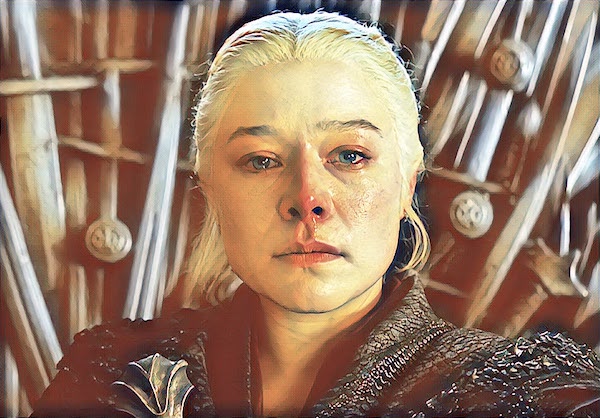
Viserys trained an heir, not a queen
For years, both readers of Fire & Blood and viewers of House of the Dragon interpreted young Rhaenyra’s presence at Small Council meetings as evidence that Viserys was preparing his daughter to rule. She attended meetings, observed negotiations, and became familiar with the machinery of government. The problem is that observing power is not the same thing as learning how to exercise it.
Viserys taught Rhaenyra to think of herself as the rightful heir. He never taught her how to govern a kingdom. He never forced her to make unpopular decisions. He never made her administer scarce resources. He never allowed her to build an independent political structure. He never consolidated her authority through practical experience. What he offered his daughter was symbolic legitimacy, not administrative expertise.
This distinction is essential because it helps explain one of Rhaenyra’s defining characteristics. Even in Milly Alcock‘s portrayal, the character simultaneously develops an absolute sense of entitlement to the throne and a profound insecurity about her ability to keep it. She believes the throne belongs to her because her father said so. But she also understands that Westeros itself never truly accepted that decision. Her personality is built upon that contradiction: certainty and insecurity existing side by side.

Otto Hightower’s plan and Viserys’ fatal mistake
Otto Hightower understood from the beginning something that Viserys never fully accepted: political succession is not determined by affection, but by power. His initial support of Rhaenyra was never motivated by progressivism or fairness. She was merely a temporary solution designed to prevent Daemon from inheriting the throne.
Otto’s plan was remarkably simple and would probably have succeeded had Viserys been a more pragmatic ruler. First, remove Daemon from the succession. Then marry Alicent to Viserys and produce male heirs. Finally, restore traditional male succession once the opportunity presented itself. The strategy worked perfectly in every respect except one: Viserys refused to abandon Rhaenyra.
Yet his insistence on keeping her as heir was never accompanied by the political measures necessary to sustain such a revolutionary decision. He never renewed oaths of loyalty after Aegon’s birth. He never forced the great lords to reaffirm their support. He never built institutional mechanisms capable of protecting the succession. He never made Rhaenyra co-ruler. He never trained her to govern in his name. In other words, he challenged centuries of patriarchal tradition without constructing any structure capable of sustaining that challenge.
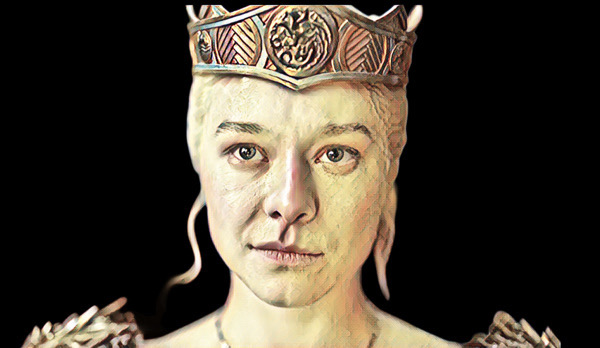
Dragonstone and the abandonment of power
Rhaenyra’s decision to leave King’s Landing and return to Dragonstone represents one of the most important and least discussed moments of her political life. From a human perspective, the decision is entirely understandable. She was exhausted, isolated, humiliated by rumors surrounding her children’s parentage, and increasingly marginalized at court.
Politically, however, it was disastrous.
By abandoning the capital, Rhaenyra surrendered the one advantage that might have compensated for her fragile claim: constant presence at the center of power. While she withdrew, Alicent matured politically, Otto regained influence, Larys expanded his networks, and the kingdom learned to function without the presence of its official heir. Rhaenyra remained heir in theory while gradually ceasing to exist as a practical political figure.
This created a paradox. By the time she finally returned to claim the throne, she discovered that she had inherited a kingdom she no longer understood.
The Greens also failed to create a ruler
The great irony of the Targaryen civil war is that the Greens committed precisely the same mistake as Viserys. Neither Otto, Alicent, nor anyone else at court prepared Aegon II to govern.
Aegon never seriously participated in administration. He was never trained to exercise authority. He never truly believed he would become king. He drank, avoided responsibility, and behaved like someone who always assumed that somebody else would solve his problems.
The series makes clear that the only son who had actually prepared himself to rule was Aemond. He studied history, strategy, philosophy, and warfare. He dedicated his life to preparing for a role he never expected to occupy. The result is deeply ironic: both the Blacks and the Greens produced unprepared successors. The difference is that the Greens knew it.
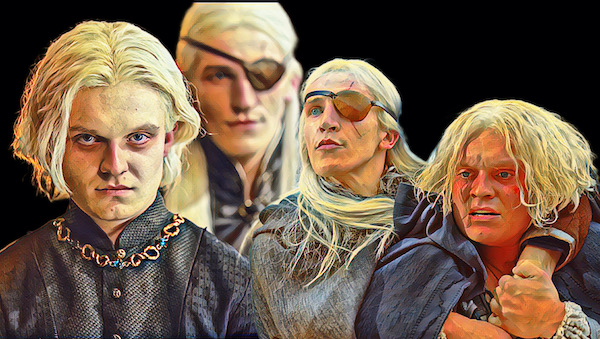
This week’s episode proves that Rhaenyra never learned how to rule
Rhaenyra’s arrival in King’s Landing represents the moment when legitimacy and reality finally collide. She conquers what she has always believed belongs to her by right, only to discover that ruling requires skills she was never allowed to develop.
Larys Strong and Tyland Lannister understand this perfectly. By removing Aegon from the city, emptying the treasury, and dismantling the administrative machinery of government, they are not simply attempting to survive defeat. They are constructing a political trap. Rhaenyra inherits a capital without resources, without stability, and without the ability to immediately satisfy the needs of its population.
This situation possesses a sophisticated political logic. As often happens in real governments, the incoming administration becomes responsible for the consequences of the previous one. If Rhaenyra raises taxes, she will be hated. If she refuses, she will be unable to govern. If she acts harshly, she will confirm her enemies’ accusations. If she acts mercifully, she will appear weak. Larys understands something that Viserys never did: rulers do not survive because they are loved. They survive because they learn to manage the inevitable loss of love.

Alicent and Rhaenyra fail because neither was prepared to wield power
The renewed conflict between Alicent and Rhaenyra is fascinating precisely because it reveals that both women continue to think as daughters, mothers, and victims rather than as rulers.
From Alicent’s perspective, she fulfilled her side of the bargain. She surrendered the city, attempted to deliver Aegon, and played no role in his escape. She even suggests that Rhaenyra use his disappearance politically, since nobody knows his whereabouts and he may not survive anyway.
From Rhaenyra’s perspective, Alicent betrayed her. Aegon is gone. Aemond remains alive. Daeron was never properly accounted for. The kingdom she inherited is economically ruined.
Both interpretations are understandable. The problem is that neither woman was trained to negotiate as a ruler. Alicent thinks as a mother trying to save her children. Rhaenyra thinks as an heir who has finally claimed what was promised to her. Both continue to operate emotionally within a political structure that demands calculation, cruelty, and strategic thinking.

The false Daeron and Rhaenyra’s ultimate humiliation
Ormund Hightower’s decision to deliver a false child in Daeron’s place may be one of the most brutal demonstrations of who truly understands power in House of the Dragon.
Daemon accepts the deception because he does not actually know his own nephew. Rhaenyra accepts it because she desperately needs to believe that she still controls events. Ormund, meanwhile, understands something the Targaryens themselves seem incapable of accepting: wars are won through perception as much as through force.
When Alicent discovers the deception, the situation becomes even more devastating for Rhaenyra. Her authority suffers another blow. Her credibility weakens yet again. And Emma D’Arcy constructs a character who is profoundly aware of this fragility. Adult Rhaenyra is not incompetent because she is evil or unintelligent. She is a ruler who understands, at the deepest level, that she was never properly prepared for the position she now occupies.

Viserys’ final tragedy
In the end, every tragedy of the Dance of the Dragons leads back to Viserys. He believed that love could replace institutions, that goodwill could replace strategy, and that hope could replace difficult decisions. He wanted to protect his family, preserve the prophecy, and avoid conflict. But ruling has never allowed for that kind of innocence.
Viserys’ greatest failure was never choosing Rhaenyra as his heir. His greatest failure was believing that choosing her was enough. He gave his daughter legitimacy, but not authority. He gave her a claim, but not the tools necessary to defend it. He gave her a throne, but never taught her how to govern a kingdom.
And perhaps that is the cruelest irony of House of the Dragon: the man who spent his entire life trying to prevent the destruction of his family was ultimately the person who created all the conditions necessary to ensure it.
Descubra mais sobre
Assine para receber nossas notícias mais recentes por e-mail.


4 comentários Adicione o seu