
Rhaenyra Reached the Throne, but Not Power
In theory, this should have been Rhaenyra Targaryen’s moment of triumph. After years of being challenged, betrayed, pushed aside, and humiliated, she finally returns to King’s Landing, walks back into the Red Keep, and sits on the Iron Throne. The image she has waited for nearly her entire life finally becomes a reality, yet the episode offers no genuine sense of relief or victory. Quite the opposite. Rhaenyra’s arrival in power creates an immediate and profoundly familiar sense of anxiety. It triggered me, it triggered my sister and it certainly triggered many women who have held, or still hold, leadership positions in the corporate world.
That happens because Rhaenyra does not exactly arrive in power. She arrives to take responsibility for everything the men before her destroyed. When she finally claims the place she was always told would be hers, she finds a starving city, a divided court, an empty treasury, a disorganized administration, rats running through the castle, unreliable allies, and an enemy capable of planting an impostor inside her own home.
Rhaenyra receives the title, but she does not receive the structure required to govern. The crown is on her head and the throne is beneath her, but the resources, information, trust, and stability that should sustain her authority simply do not exist.

The CEO Who Finally Opens the Books
Emma D’Arcy found the perfect comparison when discussing the episode. According to the actor, Rhaenyra is experiencing something equivalent to the first day at work of a CEO who is finally allowed to open the books of the company she has just taken over. The corporate metaphor could not be clearer. She enters the executive office, looks at the accounts, and discovers that the numbers do not add up, the cash is gone, the resources have disappeared, the team cannot be trusted, and everyone expects an immediate solution to problems that began long before she arrived.
There is, however, an important aggravating factor. Rhaenyra does not merely inherit a structure that happened to fall into crisis. She receives an administration weakened by a succession of bad decisions, personal vanity, internal power struggles, and deliberate strategies of self-preservation. The state of King’s Landing is not the result of an administrative accident. It is the direct consequence of choices made by men who are no longer there to answer for them when she assumes control.
This scenario does not belong only to fiction. It is often exactly what many women find when they finally reach a leadership position. There is enormous expectation, but very little information; enormous responsibility, but very little autonomy; relentless scrutiny, but almost no trust. Confidence is expected from someone who was not given the data she needs, speed is demanded from someone still trying to understand what was hidden, removed, sabotaged, or destroyed before she arrived, and leadership is demanded from a woman who does not yet know who truly stands beside her, who merely tolerates her, and who is silently waiting for her to fail.
House of the Dragon, Season 3, Episode 3 (Recap): the isolation of the Iron Throne
The fake Daeron twist changes the war in House of the Dragon
Should she manage to restore the structure, she will probably be told that she merely did her job. Should she fail, however, the failure will carry her name. Few people will remember the decisions made before her arrival, the resources that were removed, the alliances that were destroyed or the mistakes that accumulated. The crisis will be retold as proof of her incompetence rather than as the result of the conditions she inherited.
The Disaster the Men Left Behind
Aegon took the throne without any preparation and began governing from a constant need to prove that he was king. Unable to accept that Otto Hightower understood politics, administration, and public opinion better than he did, Aegon dismissed the most experienced man on his council. Otto was ambitious, manipulative, and directly responsible for placing Aegon on the throne, but he understood the mechanisms of government. He knew that ruling required more than wearing a crown, occupying a chair, or inspiring fear.
Aegon removed him because he could not tolerate being contradicted and chose Criston Cole to replace him. Criston may have been an effective warrior and a useful commander on the battlefield, but he was not an administrator. He did not possess the experience, political intelligence, or negotiating ability required to run a government. Aegon confused personal loyalty with competence and military ability with managerial skill, repeating an error that is painfully familiar in the corporate world.
The experienced executive is removed because he irritates the boss, while the most loyal employee is promoted into a role for which he is entirely unprepared, not because he is the best choice, but because he agrees, admires, and obeys. Vanity begins to corrode the structure as the people capable of sustaining the organization are replaced by those who merely confirm the leader’s convictions.
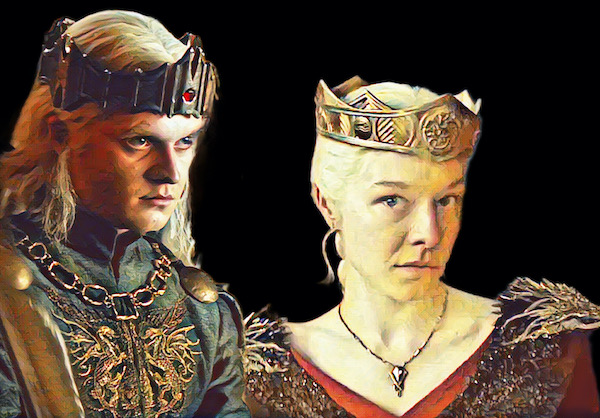
Aegon’s vanity does not merely damage the political structure. It also leads him to expose himself in battle because he feels diminished within his own government. Aegon wants to demonstrate courage, authority, and usefulness, but returns literally burned, mutilated, and unable to fully exercise the power he insisted on taking. The man who claimed the crown to prove that he could rule ends up leaving the kingdom without a functional king.
Meanwhile, Larys Strong watches the collapse with the cold detachment of someone who is already planning his own survival. Cunning, malicious, and always several steps ahead, he anticipates the fall of King’s Landing and begins acting in advance. He is not interested in preserving the city, protecting its population, or ensuring the stability of the government. His loyalty is to his own position and to keeping Aegon alive as a piece that may eventually return him to the center of power.
Larys withholds information, rearranges the board, and prepares to allow everyone else to destroy one another. By the time Rhaenyra arrives, therefore, the people most responsible for the disaster are no longer there. Otto has been dismissed, Aegon has fled, Larys has vanished with his information and his plans, and Criston is far away conducting the war. The money is gone, the food has run out, the population is furious, and the previous administration has abandoned the building before anyone can demand an explanation.
That is when the woman walks in. Rhaenyra is the one who opens the books and finds the cash gone. She is the one who must explain the lack of resources, even though she did not spend the money. She is the one who must feed a population she did not leave starving. She is the one who must rebuild trust in an institution that the men before her discredited.
They were allowed to make mistakes, act out of vanity, choose incompetent allies, and abandon the structure when everything began to collapse. She will be expected to repair what she received in ruins.

When Insecurity Is Created by the Environment
The third episode becomes even more uncomfortable because the series does not merely show a woman taking control of a damaged organization. It shows what that environment begins to do to her. According to Emma D’Arcy, Ormund’s deception marks the beginning of a kind of paranoia in Rhaenyra. He becomes an unpredictable presence, almost a faceless monster, capable of planting an impostor inside the Red Keep and turning her own court into the stage for an elaborate performance.
The deception does more than fool her. It proves that Rhaenyra does not possess all the information, does not fully control her own castle, and does not know who is lying, who is withholding the truth, who is loyal, and who is merely waiting for the right moment to betray her. She is at the center of power but finds safety nowhere. The more she realizes that others possess information she does not have, the more she feels compelled to control her surroundings, and the more she attempts to control them, the more her behavior can be interpreted as distrust, authoritarianism, or paranoia.
This instability is not merely political. It is also emotional. Rhaenyra returns to the Red Keep not only as queen, but as a daughter. The palace is the seat of government and, at the same time, the home where she grew up, the place where she sought her father’s approval, was watched by the court, had her sexuality judged, and learned that her position depended on whether men were willing to respect Viserys’ word.
Emma D’Arcy speaks about the regression produced by returning to the family home, reminding us that not even a queen is immune to the effects of going back to the place where her identity was formed. Rhaenyra reaches the highest point of her political life while simultaneously returning to the bed of her dead father, or at least trying to sleep in it. She must decide what kind of ruler she wants to become while surrounded by memories of the man whose example she still hopes to follow.
Why Does Ser Corlys Velaryon Turn Against Rhaenyra in House of the Dragon?
Viserys’ Greatest Failure Wasn’t Choosing Rhaenyra: It Was Never Preparing Her to Rule
The personal and political become inseparable, and taking control of the government also requires confronting the daughter she once was, the expectations she carried, and the promise Viserys never managed to transform into genuine security. Rhaenyra wants to govern like her father. She wants to be moderate, conciliatory, peaceful, and rational, but Viserys was allowed to display moderation without having his legitimacy questioned every day.
He was a man, and therefore his kindness could be interpreted as virtue, his hesitation as a desire to preserve peace, and his mistakes as individual failings. No one used his limitations to conclude that men were unfit to rule. With Rhaenyra, the same moderation is interpreted as weakness.
When she tries to negotiate, she appears indecisive; when she shows mercy, she is accused of lacking resolve; when she listens to her advisers, she appears insecure; when she ignores their advice, she becomes arrogant; when she hardens, she is called cruel; when she expresses anger, her emotional stability comes under scrutiny. There is no entirely safe response because any characteristic can be rearranged and used against her.
When a woman is given little information, few allies, limited autonomy and no margin for error, she may become insecure, defensive, impulsive or suspicious. She may begin to see threats everywhere and feel that any mistake will be used to remove her from her position. Not every woman reacts in this way, of course, but environments are often constructed precisely to produce that kind of instability. The instability is then used as evidence against them.
Caution becomes indecision, distrust becomes paranoia, firmness becomes authoritarianism, and the need to control information is interpreted as obsession. Almost no one asks how much of that reaction was produced by sabotage, isolation, lack of trust, or the certainty that any mistake would be transformed into proof of incompetence.

That is what happens to Rhaenyra after Ormund’s deception. She was not merely tricked; she was publicly reminded that she does not control her own court. She discovers that a stranger can enter her home, manipulate her advisers, and expose her lack of information. From that moment onward, remaining calm is no longer simply a matter of temperament. It becomes an almost impossible task inside an environment that gives her genuine reasons to be suspicious.
There is also her grief for Jace. Rhaenyra did not merely lose her eldest son. She lost her heir, her ally, and perhaps the person who could have made her feel truly supported in that place. Emma D’Arcy suggests that Rhaenyra’s growing obsession with legitimizing her position may also be an expression of grief. Had Jace been at her side, perhaps she would have felt more stable, more protected, and less alone.
But Jace is not there, and Rhaenyra must continue working. She walks through the corridors of her childhood, sees her dead son where he should still be alive, and, even so, must examine the accounts, manage hunger, confront the nobles, control the council, and appear completely confident. There is no leave for grief. There is only the expectation that she hide her pain so that no one can interpret it as evidence that she is incapable of doing the job.
This, too, is an experience familiar to many women in the corporate world. A woman enters a meeting after going through a personal crisis and knows that any sign of vulnerability may be used as proof that she cannot handle her position. She must remain productive, objective, available and balanced even when there is no balance left in her life.
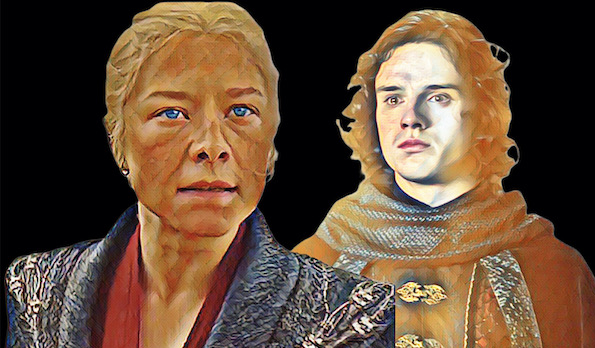
The dinner featuring cooked rats emerges from this context. Emma D’Arcy describes the feast as the first propaganda exercise of Rhaenyra’s reign. Without money to display wealth and without the resources to immediately solve the food shortage, she transforms the humiliation of the nobility into an act of political communication. It is a public-relations maneuver devised by a leader without funds who must control the narrative because she cannot demonstrate power through stability, abundance, or administrative efficiency.
The gesture is intelligent, cruel, theatrical, and impulsive at the same time. It shows that Rhaenyra understands the importance of appearances, but also reveals how much her government already depends on performance. When the concrete structure cannot sustain authority, the leader must create symbols capable of convincing others that she still has some control.
Men Are Challenged; Women Are Undermined
This is a trap familiar to virtually any woman who has entered a meeting room while occupying a position of authority. Men are also pressured, challenged, betrayed, and questioned, but the challenges are not the same. They never are.
Jon Snow had his decisions challenged, Robb Stark was confronted by his own allies, and even Joffrey, despite being king, was despised by nearly everyone around him. Still, the nature of that opposition was different. Jon, Robb, and Joffrey were judged for specific decisions, strategic mistakes, or political conflicts. Even when someone raised their voice against them, their masculinity was not used as evidence that they were incapable of ruling.
Robb is perhaps the clearest exception because he was publicly confronted, had his authority challenged, and paid dearly for personal choices that compromised the war. Even so, he was treated as a king who was making mistakes. The problem was Robb, not the ability of men to rule, although men blamed his wife for his failures.
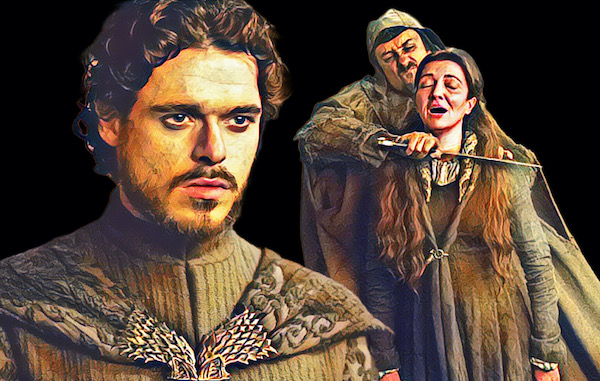
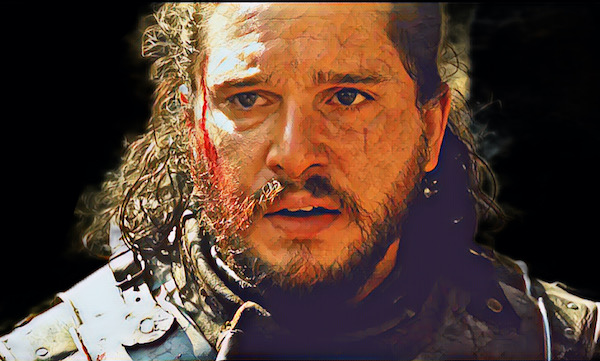
When a woman makes a mistake, however, the mistake rarely remains individual. It quickly becomes evident that women are emotional, unstable, fragile, or unsuited to power. Her failure stops belonging to her and becomes an argument against every woman who wants to lead.
Cersei was underestimated for nearly her entire life. The men around her believed they could control her, use her, marry her off, or discard her. When she began exercising power with the same violence as the men in her family, her ambition was treated as something uniquely monstrous and feminine. Cersei was cruel, paranoid, and responsible for terrible decisions, but her cruelty seemed to confirm something about women in power, while the violence of Tywin, Robert, or Joffrey belonged only to them.
Daenerys conquered cities, freed enslaved people, commanded armies, and brought dragons back into the world, yet she was repeatedly forced to prove that she was capable of ruling. Her advisers did not simply disagree with her decisions; they often behaved as though it were their duty to control her. Men destroyed cities and were called conquerors. When Daenerys threatened to do the same, her entire sanity was placed on trial.
Sansa spent much of the story being ignored. She survived kings, wars, manipulation, violence, and forced marriages, but her intelligence was only recognized once she learned to express it through the codes men respected. She had to earn the respect that male characters often received simply because they had been born with the correct surname.
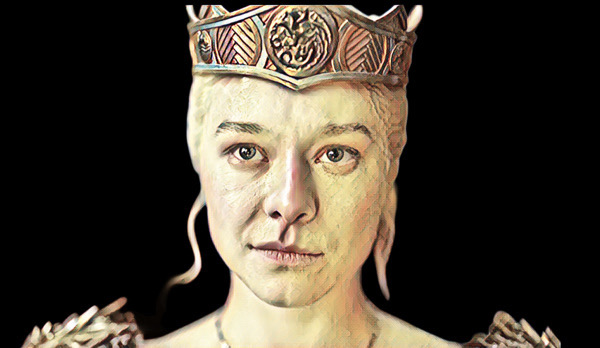
Rhaenyra carries something of all three experiences. She is underestimated like Cersei, monitored like Daenerys, and forced to earn respect like Sansa. House of the Dragon, however, adds an especially modern dimension by showing not only the external resistance to her leadership, but also the psychological impact created by that resistance.
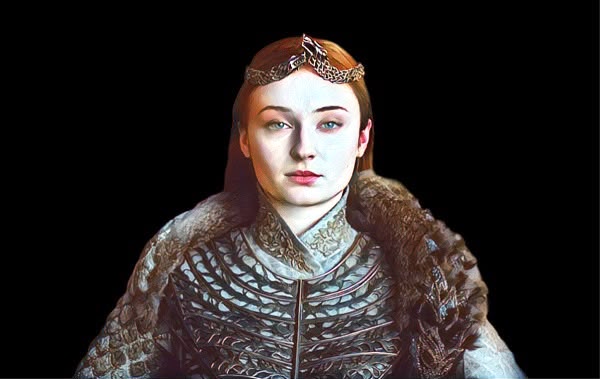
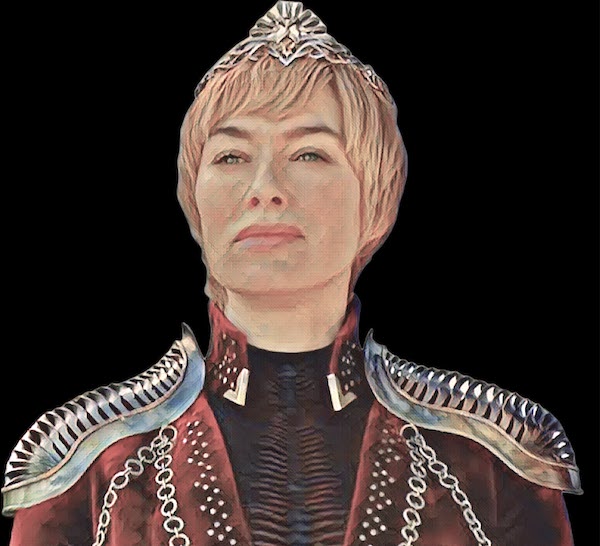
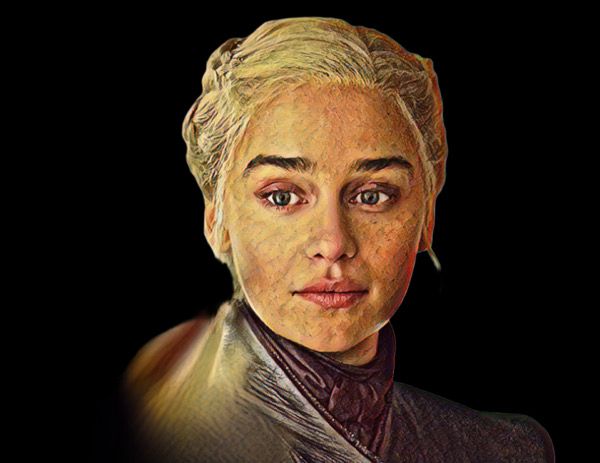
Even Daemon, who finally appears willing to recognize Rhaenyra as queen, remains an ambiguous presence. When Emma D’Arcy was asked whether he now fully accepted her authority, the answer was careful: there are power struggles in every relationship, and theirs is no different.
Daemon may love her, desire her, fight for her, speak High Valyrian with her, and propose that they conquer the world together, but he remains a man accustomed to commanding, occupying space, and believing he knows better than everyone else what must be done. Rhaenyra does not have to negotiate her authority only in the council chamber. She must also negotiate it inside her own marriage.
Men enter her meetings, interrupt her, raise their voices, explain the war she herself is living through, and demand speed, mercy, violence, and caution from her, often all at once. She must make the decision, manage the disagreement, and still absorb the aggression of the men who are theoretically supposed to serve her.
Of course male kings have also been publicly challenged, but it is enough to compare the frequency, tone and ease with which it happens to Rhaenyra. Jon could be opposed, but his position did not need to be reaffirmed in every sentence. Robb was confronted, but he did not have to prove that men were capable of leadership. Joffrey could be incompetent, cruel, and childish, but he was still treated as king.
Rhaenyra is not allowed simply to lead. She must prove that she deserves to lead while she is leading.
Beyond the Glass Ceiling Lies a Glass Cliff
Of course, Rhaenyra makes mistakes. She hesitates when she should act, acts when she perhaps should wait, ignores advice, makes contradictory decisions, and begins to be consumed by the need to legitimize her own position. The point was never to turn her into a perfect victim or explain all her failures through sexism. The point is to recognize that the challenges faced by men and women are never the same.
Men have always been allowed to be bad, vain, impulsive, insecure, mediocre, or disastrous leaders without their failures being used to question the ability of men to rule. A woman is rarely granted the same right to individuality. When she succeeds, she is treated as an exception. When she fails, she confirms the rule.
That is why the third episode of House of the Dragon creates such a powerful reaction in women who know the corporate world. It is not because they have all experienced exactly the same situation, nor because every woman in power is sabotaged in the same way, and certainly not because women are always better leaders. The identification comes from recognizing a very specific feeling: the promotion that arrives attached to an impossible problem, responsibility without autonomy, incomplete information, a team that does not trust you, the less qualified man who speaks louder, the ally who keeps important facts to himself, the former manager who leaves before answering for the disaster and the expectation that you appear confident when there is no security at all.
Many women also recognize the fear of expressing doubt and, at the same time, the fear of appearing too certain. They recognize the feeling that everyone is watching not only the decision they are about to make, but searching for confirmation that the woman should never have been given the job in the first place.
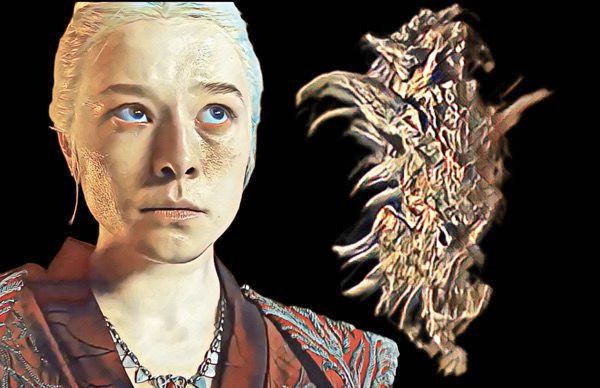
Rhaenyra finally breaks through the glass ceiling and discovers that there is no stability on the other side. There is a glass cliff. She reaches the Iron Throne only to find a bankrupt company, a divided team, an empty account, infiltrated enemies, a partner who challenges her decisions, and a court that still treats her as though she were on probation.
The men before her created the disaster, but she will be expected to fix it. While attempting to do so, she will still have to convince those same men, every single day, that she deserves to remain in the chair. Rhaenyra is queen, but no one allows her simply to be one.
Descubra mais sobre
Assine para receber nossas notícias mais recentes por e-mail.


2 comentários Adicione o seu