
Two years ago, MiscelAna had already explained who Daeron Targaryen was, Alicent’s forgotten son in House of the Dragon. Back then, the question was whether the series had simply erased the fourth child of Viserys I and Alicent Hightower from the adaptation. Now, with the third season finally placing the prince at the center of the war, the question has changed. Daeron has not only entered the story. He has entered it as a mystery, as a threat, and, above all, as a radical change from the book.
In the latest episode, Ormund Hightower deceives Rhaenyra and Daemon by presenting them with a fake Daeron. The trick works for a few minutes as a dramatic surprise, but it immediately opens a series of questions that turn the scene into a joke among fans. After all, who was that boy? Where did a child with a Targaryen appearance come from in the middle of the war? Did Ormund find an available Valyrian-looking bastard in Oldtown, or did he simply dye a child’s hair to make him look like a prince?
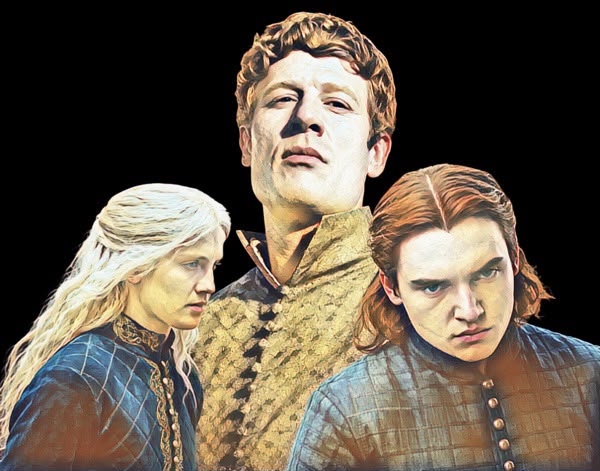
Mistaken or exchanged identities are not foreign to the universe of Game of Thrones. In George R.R. Martin’s books, Jeyne Poole, Sansa Stark’s friend, is forced to pose as Arya Stark and ends up married to Ramsay Bolton in one of the cruelest storylines in A Dance with Dragons. In HBO’s series, that arc was transferred to Sansa herself, which made the story more shocking and gave the character a stronger trajectory within the adaptation. Before that, Sansa herself had spent a few episodes hiding under another identity, presented as Littlefinger’s niece and wearing her hair darkened to disguise who she really was.
In House of the Dragon, the series tries to use a similar logic with Daeron. Only this time, the switch is not meant to hide a victim. It is meant to fool the Blacks. In the book, Daeron is never captured by Rhaenyra and Daemon. He remains in Oldtown, where he was raised far from court, and only enters the war when the conflict moves south. His dragon, Tessarion, the Blue Queen, makes him one of the Greens’ most important weapons.
The series, however, first changed his appearance. When Daeron appears in the episode in which Ormund receives Alicent’s message, he does not have the traditional silver-blond Targaryen hair. He has his mother’s hair color. That was the first major alteration. What seemed like merely a visual choice to bring him closer to Alicent ended up becoming the basis of the trick: if the real Daeron did not look like a classic Targaryen, a fake blond Daeron could confuse Rhaenyra, Daemon, and the audience at the same time.


As a plot twist, the choice has a double effect. On one hand, it creates surprise, plants doubt, shows that Ormund is more dangerous than he seemed, and prepares the way for the battle that should shift the game once again. On the other hand, it reinforces the weakness of the Blacks and Rhaenyra’s inability to act as queen in the middle of a war. She and Daemon are fooled with disconcerting ease, and the scene ends up giving uncomfortable weight to the concerns Otto Hightower had repeated from the beginning: Rhaenyra would be unfit to rule, while Daemon would be too bloodthirsty to be controlled.
The problem is that the series has built Rhaenyra as a woman who suffers, hesitates, tries to be good, and carries the moral weight of every decision. In the book, she is the one who appears determined to extinguish the Hightower-Targaryen men. Daeron is a boy, but his survival represents a real political risk. If he remains alive, he can be used as a successor, a symbol, and an avenger. For Rhaenyra, killing Daeron means eliminating another possible heir and preventing him from one day avenging his grandfather, his uncles and his brothers. In the series, she prefers to exile him to the Wall, which is a good alternative, while Daemon is the one who prefers to turn immediate extermination into policy.
That contradiction could even be interesting. War should, after all, push Rhaenyra toward increasingly brutal decisions. But the series’ execution feels crooked because Ormund’s trick demands too much goodwill from the audience. If the fake Daeron was a Targaryen bastard, who was he? Whose son was he? How did Ormund get hold of a child with Valyrian features at the exact right moment? The series itself has already shown that there were illegitimate descendants of Targaryen blood in King’s Landing, but Oldtown is not King’s Landing. Even if that is the answer, it would need some explanation, or at least more than the “my mother is a merchant” line we hear on screen. Who is the father?
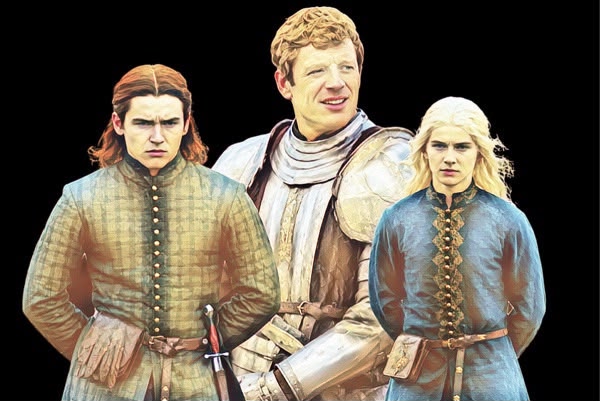
The other possibility is even funnier: Ormund simply dyed or bleached a child’s hair in the middle of a military campaign. And that is where the joke exploded. With what time? With what product? Who, in the middle of a war, managed to turn some random child into a convincing Targaryen prince? The scene became a meme because it feels less like a political strategy and more like the opening of a Hightower beauty salon.
The joke works even better because it touches Rhaenyra’s central trauma. If all it took was hair dye to solve dynastic problems, she might have spared herself years of public humiliation by taking Jace, Luke, and Joffrey to the right colorist. The image of Rhaenyra looking closely at the fake Daeron’s hair practically writes the meme by itself: was that all? Was it just a matter of dyeing it?
- YOU SHOULD READ THESE ARTICLES ABOUT HOUSE OF THE DRAGON
Why did Viserys not prepare Rhaenyra for her role as Queen?
Alicent’s dream and the “good of the realm”
Ormund Hightower: The True Strategist Behind the Greens?
The confusion grows even more with Tessarion. If Daemon suspected Ormund, why did he not order the supposed Daeron to mount the dragon and fly with them to King’s Landing? If the boy really were Daeron, Tessarion should obey him. If he were not, the lie would fall apart right there. Instead, Daemon leaves, and the dragon stays behind with the Hightowers, as if that were a minor detail.
The end of the episode indicates that, as soon as Daemon left, the Hightowers captured the Valyrians who helped handle the dragons, kept Tessarion, and advanced on Tumbleton. The idea may work as a plot turn: Ormund not only fooled Daemon, but also bought time, preserved the real Daeron, and kept the Greens’ dragon. But on screen, it all felt far too convenient. Daemon’s failure to give one simple order for Tessarion to accompany the supposed prince weakens the very strategic intelligence the series still tries to attribute to him.

In the book, Daeron is important precisely because he emerges as a relatively unexpected force. The youngest son of Viserys and Alicent, and brother of Aegon, Helaena, and Aemond, he was sent to Oldtown as a child and grew up under the protection of House Hightower. Because of that, he stayed away from the early intrigues of King’s Landing, but became decisive once the war spread south. With Tessarion, Daeron gains fame at the Battle of Honeywine, when his arrival changes the course of the fight and saves the Hightower army. From then on, he became known as Daeron the Daring.
That is why his presence changes the war. Daeron is not just another son of Alicent. He is the alternative heir, the prince raised far from court, the boy who may seem less corrupted by Aegon’s failures and Aemond’s brutality. For the Greens, he represents hope. For Rhaenyra, he represents a threat. For Ormund, now in the series, he seems to represent something even larger: a chance to reorganize the game without depending on the mistakes made in King’s Landing.
Daeron’s fate in the books is also marked by confusion. He dies during the Second Battle of Tumbleton, but the versions of his death vary. Some accounts say he was killed when his tent caught fire. Others claim he died amid the chaos of the night attack. Because Fire & Blood is constructed as a history full of contradictory sources, Daeron never receives an entirely clear or heroic death. He enters the war as a promise and leaves it as yet another victim of the Targaryen collapse.
The series, however, seems interested in using Daeron first and foremost as a tool of manipulation. By changing his appearance, hiding his identity, and creating a fake prince, House of the Dragon turns the character into a piece in a scheme before exploring him as a warrior. That certainly makes Ormund more dangerous. But it also creates a problem: the smarter Ormund appears, the more distracted Rhaenyra and Daemon need to look for the plan to work.
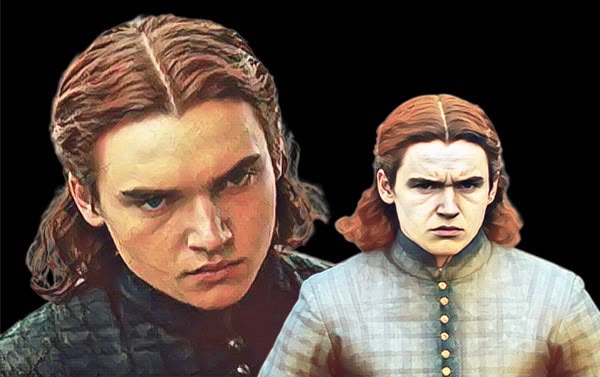
In the end, the fake Daeron sums up the risk of the adaptation’s recent changes. The idea is strong enough to cause surprise and reorganize the expectations of those who read the book. It also helps prepare Tumbleton and places Ormund in a position of real threat. But the dramatic stitching demands too much suspension of disbelief. Rhaenyra seems too vulnerable. Daemon seems too careless. Tessarion is left behind far too conveniently. And Daeron, who should finally enter the story with the weight promised for so long, ends up surrounded by an unintentionally comic question.
Did Ormund Hightower fool Rhaenyra and Daemon with political strategy or with bleach? Maybe that was not the question House of the Dragon wanted to leave behind. But it was the one that finally made Daeron the subject of conversation.
Descubra mais sobre
Assine para receber nossas notícias mais recentes por e-mail.


2 comentários Adicione o seu